- Industrial LCD display
-
Industrial Products
- DC Servo Drive
- AC Servo Drive
- other
- Heidelberg
- FANUC
- IFM
- Meter
- CCD
- Membrane Keypad
- Film
- YOKOGAWA Module
- Card
- ABB
- MITSUBISHI
- FANUC
- KEYENCE
- BECKHOFF
- Honeywell
- HOLLYSYS
- FUJI servo drives
- HP
- solenoid valve
- thermostat
- Siemens adapter
- color oscilloscope
- Fujitsu connector
- CHELIC
- SMC
- CISCO Module
- INTEL
- Key board
- FAIRCHILD
- Motherboard
- Board
- Bearing
- other
- Control Panel
- Contactor
- Circuit
- OMRON
- Relay
- Controller
- Photoelectric Switch
- Photoelectric Sensor
- Original
- Fan
- Motor Driver
- Limit Switch
- Amplifier
- power supply
- LENZE
- Cable
- Encoder
- Sensor
- Transformer
- Fiber Optic Sensor
- Protection Relay
- Temperature Controller
- Proximity Switch
- Switch Sensor
- Siemens
- Industrial board
- HMI Touch Glass
-
HMI Full Machine Whole unit
- OMRON HMI Touch Panel
- Siemens HMI Touch Panel
- Mitsubishi HMI Touch Panel
- Allen-Bradley automation HMI Touch Panel
- DELTA HMI Touch Panel
- EVIEW DELTA HMI Touch Panel
- KINCO DELTA HMI Touch Panel
- HITECH HMI Touch Panel
- WEINTECK HMI Touch Panel
- TECVIEW HMI Touch Panel
- WEINVIEW HMI Touch Panel
- PRO-FACE HMI Touch Panel
- SIMATIC HMI Touch Panel
- AMPIRE HMI Touch Panel
- HEIDELBERG HMI Touch Panel
- PANASONIC HMI Touch Panel
- PATLITE HMI Touch Panel
- KYOCERA HMI Touch Panel
- KEYENCE HMI Touch Panel
- WEINVIEW HMI Touch Panel
- HITECH HMI Touch Panel
- FUJI HMI Touch Panel
- HAKKO HMI Touch Panel
- SCHNEIDER HMI Touch Panel
- SAMKOON touch panel
- other
- Module
- lcd inverter
- Membrane Keypad Switch
- Winni Touch Screens
- Frequency Inverter
- Servo Motor
- PLC


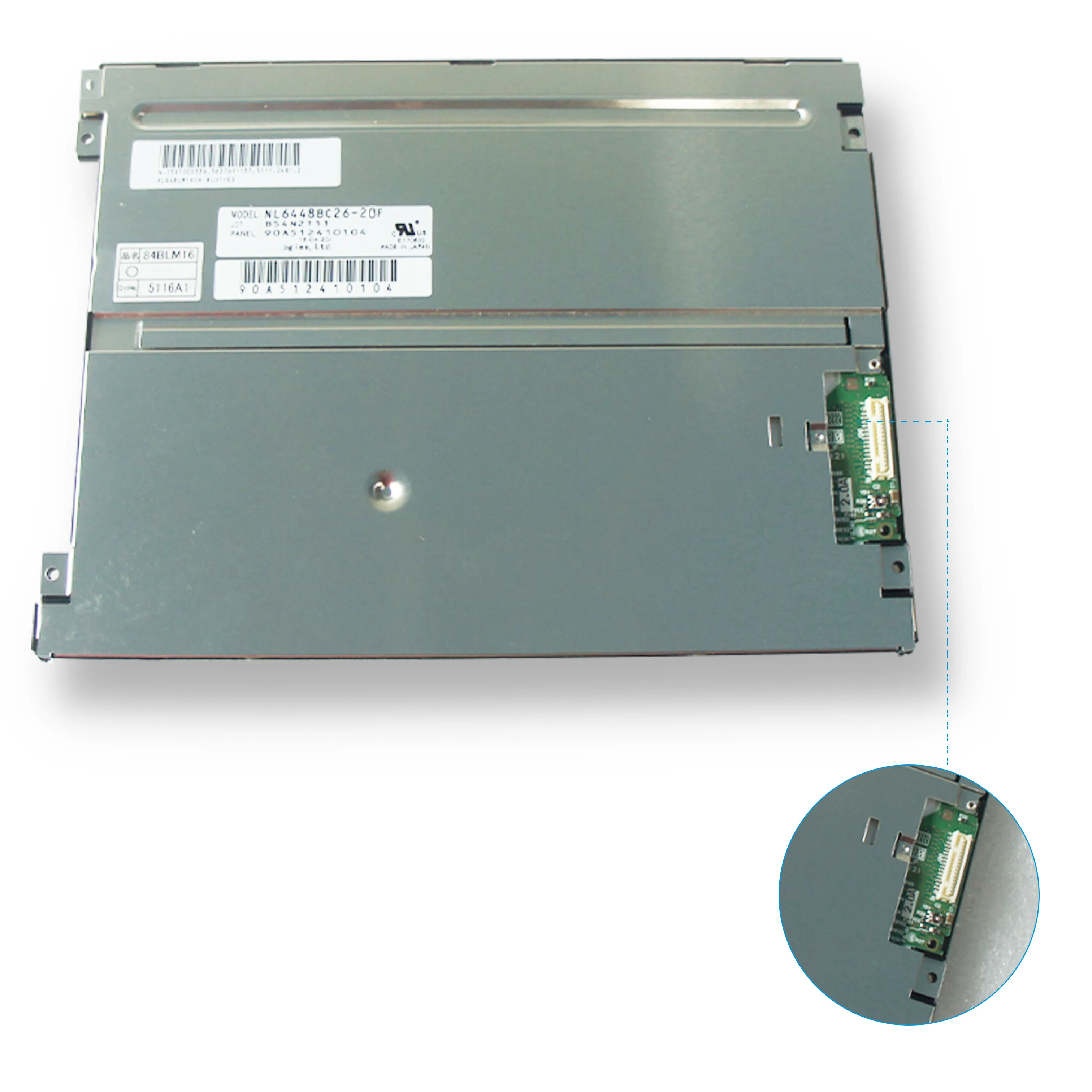


G150XG03 V4 AUO 15.0 inch 1024*768 LCD PANEL G150XG03 V.4
In the intricate ecosystem of electronic components, where specifications dictate functionality and compatibility determines success, certain parts become quietly indispensable. The G150XG03 V4 by AUO (AU Optronics) is one such component. This 15.0-inch LCD panel, with its native resolution of 1024x768 (XGA), represents more than just a display; it embodies a specific era of industrial design and continues to serve critical roles in numerous specialized applications today. While consumer markets chase higher pixel densities and expansive aspect ratios, this panel's enduring relevance lies in its robustness, reliability, and perfect suitability for its intended environments.
This article delves into a comprehensive technical and practical analysis of the AUO G150XG03 V.4. We will move beyond basic datasheet parameters to explore its core technology, dissect its key performance characteristics, and understand the rationale behind its seemingly "standard" resolution. Furthermore, we will identify its primary application sectors, provide crucial guidance for system integrators, and finally, contextualize its position within the broader landscape of display technology, offering insights for sourcing and future-proofing projects that depend on such specialized industrial components.
Unpacking the Core Technology: A Deep Dive into the G150XG03 V4
The G150XG03 V4 is a transmissive, a-Si (amorphous Silicon) Thin-Film Transistor (TFT) Liquid Crystal Display (LCD) module. The "V4" suffix typically indicates a specific revision or version, often incorporating minor improvements in backlighting, power efficiency, or signal compatibility over its predecessors. At its heart, the 15.0-inch diagonal active area utilizes a matrix of 1024 (horizontal) by 768 (vertical) pixels, achieving the XGA standard. Each pixel is controlled by its own TFT, allowing for precise and fast switching of the liquid crystal state.
The module integrates a CCFL (Cold Cathode Fluorescent Lamp) backlight system, a technology now largely superseded by LED in consumer electronics but still valued in certain industrial contexts for its diffuse and uniform illumination characteristics. The panel features an LVDS (Low-Voltage Differential Signaling) interface, which is the industry-standard digital video interface for robust, low-noise transmission of display data from a controller board. Understanding this foundational technology is key to appreciating its performance envelope and integration requirements.
Key Specifications and Performance Characteristics Decoded
Beyond size and resolution, the panel's datasheet reveals its operational profile. The 1024x768 resolution at a 15-inch size yields a pixel pitch of approximately 0.297mm, which is optimal for readability at moderate viewing distances without visible pixelation. Its brightness, typically around 250 nits or higher, ensures visibility in normally lit industrial or commercial settings. The contrast ratio defines the depth between blacks and whites, crucial for text and graphic clarity.
Critical parameters for integration include the power supply voltage (often 3.3V or 5V for logic and a higher voltage for the CCFL inverter), the precise LVDS signal mapping (like JEIDA or VESA standards), and the mechanical dimensions/bezel size. Viewing angles, specified as Left/Right/Up/Down where contrast ratio drops to a minimum (e.g., 10:1), are typically symmetrical and adequate for its intended applications. Response time, while not geared for gaming, is sufficient to prevent smearing in most human-machine interface (HMI) scenarios.
The Rationale Behind XGA: Why 1024x768 Endures
In an age of 4K and beyond, the persistence of XGA (1024x768) may seem anachronistic. However, its endurance is a testament to the principle of "right-sizing" technology. This resolution strikes a powerful balance between information density, cost, compatibility, and system performance. For industrial control systems, medical monitors, point-of-sale terminals, and embedded kiosks, the primary need is for clear, legible display of user interfaces, data readouts, and control schematics—not ultra-high-definition video.
XGA reduces the computational load on the system's graphical processing unit, allowing for the use of simpler, more reliable, and often lower-power controller hardware. Furthermore, a vast library of legacy software and operating systems are designed with XGA as a baseline standard, ensuring flawless rendering without scaling artifacts. This resolution represents a mature, cost-effective, and perfectly adequate solution for a wide swath of non-consumer applications.
Primary Application Sectors and Use Cases
The G150XG03 V.4 finds its home in environments where durability and longevity trump flashy specs. Its primary application sectors are diverse and mission-critical:
Industrial Automation & HMIs: As the main interface for factory machine control, PLC monitoring, and process visualization.
Medical Equipment: In devices like patient monitors, diagnostic instruments, and ultrasound systems, where reliability is paramount.
Point-of-Sale (POS) & Kiosk Systems: For retail terminals, self-checkout stations, and information booths requiring continuous operation.
Transportation & Marine: In control panels for fleet management, navigation systems, and vehicle diagnostics.
Test & Measurement Equipment: As the display for oscilloscopes, signal analyzers, and other bench-top instruments.
In these fields, the panel is valued as a dependable component within a larger, specialized system.
Integration Essentials and Compatibility Considerations
Successfully integrating the G150XG03 V4 requires careful attention to several factors. First is interface matching: the system's LCD controller must support LVDS output with the exact pin assignment and voltage swing required by the panel. Second is power sequencing: the order in which logic power, panel power, and backlight power are applied and shut down is critical to prevent damage.
Third is mechanical integration: designers must account for the panel's exact outline dimensions, mounting hole positions, and bezel size. Fourth is the backlight inverter: for this CCFL-based panel, a compatible inverter module that provides the correct high-voltage, high-frequency AC drive is essential. Finally, considering the panel's lifecycle stage, securing a stable supply chain or identifying compatible alternative models is a crucial part of the integration plan.


The Industrial Display Landscape: Sourcing and Future Outlook
The G150XG03 V.4 exists within a dynamic industrial display market. While it remains a viable and active component, the broader industry trend is moving towards LED backlighting for improved longevity, lower power consumption, and mercury-free designs. Panels with similar form factors and interfaces but with LED backlights (sometimes denoted as a different version, e.g., G150XG03.xx) are increasingly common.
When sourcing, it is vital to work with reputable distributors or directly with AUO to ensure authenticity, as the market for discontinued panels can have counterfeit components. The future for such specialized panels lies in direct replacement and long-tail support for existing equipment, as well as in new designs where engineers prioritize proven reliability, specific optical characteristics of CCFL, or seamless upgrade paths for legacy systems over adopting the very latest technology.
Frequently Asked Questions (FAQs)
Conclusion
The AUO G150XG03 V4 is far more than a simple 15-inch screen; it is a robust, purpose-built industrial component engineered for reliability in demanding environments. Its XGA resolution, CCFL backlighting, and LVDS interface represent a mature technological paradigm that continues to deliver exceptional value in sectors where failure is not an option. Through understanding its technical foundations, performance profile, and integration nuances, engineers and procurement specialists can make informed decisions.
While display technology will continue to advance, the principles embodied by the G150XG03 V.4—sufficiency, reliability, and longevity—will remain eternally relevant in the industrial world. Successfully leveraging such components requires a focus not on chasing specs, but on achieving perfect harmony between the display and the system it serves.