- Industrie-LCD-Display
-
Industrial Products
- DC Servo Drive
- AC Servo Drive
- other
- Heidelberg
- FANUC
- IFM
- Meter
- CCD
- Membrane Keypad
- Film
- YOKOGAWA
- Card
- ABB
- MITSUBISHI
- FANUC
- KEYENCE
- BECKHOFF
- Honeywell
- HOLLYSYS
- FUJI servo drives
- HP
- solenoid valve
- thermostat
- Siemens adapter
- color oscilloscope
- Fujitsu connector
- CHELIC
- SMC
- CISCO
- INTEL
- Key board
- FAIRCHILD
- Der Aufsichtsrat
- Board
- Bearing
- other
- Control Panel
- Contactor
- Circuit
- Omron
- Relais.
- Der controller
- Optoelektronische schalter
- Optoelektronische sensoren
- Original
- Fan
- Motortreiber
- Endschalter
- Verstärker
- power supply
- LENZE
- Cable
- Encoder
- Sensor
- Transformator
- Fiber Optic Sensor
- Schutzrelais
- Temperaturregler
- Näherungsschalter
- Switch Sensor
- Siemens
- PCB
- HMI Touch-Glas
-
HMI-Vollautomat Ganze Einheit
- OMRON HMI Touch Panel
- Siemens HMI Touch Panel
- Mitsubishi HMI Touch Panel
- Allen-Bradley Automatisierung HMI Touch
- DELTA HMI Touch Panel
- EVIEW DELTA HMI Touch Panel
- KINCO DELTA HMI Touch Panel
- HITECH HMI Touch Panel
- WEINTECK HMI Touch Panel
- TECVIEW HMI Touch Panel
- WEINVIEW HMI Touch Panel
- PRO-FACE HMI Touch Panel
- SIMATIC HMI Touch Panel
- AMPIRE HMI Touch Panel
- HEIDELBERG HMI Touch Panel
- PANASONIC HMI Touch Panel
- PATLITE HMI Touch Panel
- KYOCERA HMI Touch Panel
- KEYENCE HMI Touch Panel
- WEINVIEW HMI Touch Panel
- HITECH HMI Touch Panel
- FUJI HMI Touch Panel
- HAKKO HMI Touch Panel
- SCHNEIDER HMI Touch Panel
- SAMKOON touch panel
- andere
- Module
- LCD Wechselrichter
- Membran Tastenfeld Schalter
- Winni Touch Screens
- Frequenzumrichter
- Servo Motor
- PLC




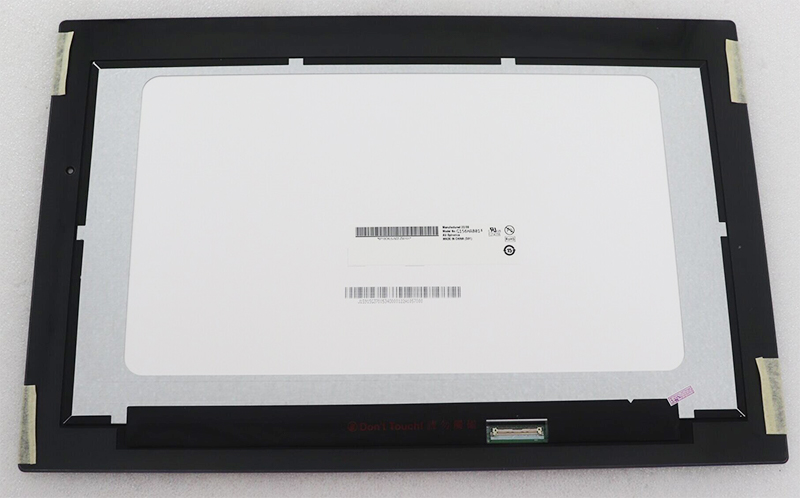
G156HAB01.5 AUO 15.6inch 1920*1080 LCD display
In the intricate ecosystem of electronic components, the display panel often serves as the critical interface between user and machine. Among the myriad of options available to engineers, designers, and procurement specialists, the G156HAB01.5 AUO 15.6-inch 1920x1080 LCD display emerges as a noteworthy subject of analysis. This specific model, manufactured by AU Optronics (AUO), a leader in display technology, represents more than just a part number; it encapsulates a set of engineering decisions and performance characteristics tailored for specific applications. This article delves beyond the basic specifications to explore the nuanced value proposition of this panel.
We will dissect its core technological makeup, evaluate its performance in key areas like color and brightness, and examine its typical integration scenarios. Furthermore, we will consider its position within the competitive landscape and provide practical guidance for sourcing and implementation. Our goal is to transform the alphanumeric code "G156HAB01.5" from a mere identifier into a clear understanding of its capabilities, ideal use cases, and ultimate value in bringing a visual project to life.
Decoding the Model: Anatomy of the G156HAB01.5
The part number G156HAB01.5 is a concise data sheet in itself. Breaking it down reveals AUO's naming logic: 'G' often denotes a generation or series, '156' confirms the 15.6-inch diagonal screen size, and 'HAB' is a unique panel code indicating its specific design attributes, including its resolution, interface, and backlight type. The '01.5' suffix typically refers to a revision or minor variant. The core specification, 1920x1080 (Full HD), offers a balance between sharp detail and system resource demands, providing approximately 141 pixels per inch (PPI). This resolution is a versatile standard for applications ranging from portable monitors to industrial control systems.
Fundamentally, this is an LCD (Liquid Crystal Display) panel, most likely utilizing Twisted Nematic (TN) or In-Plane Switching (IPS) technology, with AUO's proprietary enhancements. The interface is a critical but often overlooked spec; this model commonly uses an LVDS (Low-Voltage Differential Signaling) interface, a robust and widely supported standard for embedded systems. Understanding this anatomy is the first step in assessing its compatibility and performance potential for any given project.
Core Performance Characteristics: Brightness, Color, and Contrast
Moving beyond size and resolution, the panel's performance is defined by its photometric and colorimetric specs. The G156HAB01.5 typically features a brightness rating in the range of 250 to 300 nits, making it suitable for indoor environments with controlled lighting. For use in brighter settings, a higher nit rating would be necessary. Its color gamut coverage is a key differentiator; it likely covers a standard range such as 45% or 72% of the NTSC color space, determining how vibrant and accurate the displayed colors will appear.
Contrast ratio, the difference between the brightest white and the darkest black, directly impacts perceived image depth and clarity. This panel is designed to deliver a static contrast ratio sufficient for general-purpose and many professional applications. Additionally, parameters like viewing angles—specified as CR (Contrast Ratio) angles—determine how much the image degrades when viewed off-center. A panel with wide viewing angles (e.g., 85/85/85/85) is crucial for multi-viewer scenarios or devices with adjustable screens.
Typical Applications and Integration Scenarios
The technical profile of the G156HAB01.5 makes it a versatile component across several domains. In the industrial and medical sectors, its reliability, standard interface (LVDS), and Full HD clarity make it ideal for diagnostic equipment, control panels, and patient monitoring systems, where consistent performance is paramount. For the consumer and professional markets, it serves as the core display for portable all-in-one PCs, compact monitors, and interactive kiosks.
Its integration extends into transportation for in-vehicle infotainment systems and into gaming as a potential panel for DIY laptop upgrades or specific arcade machines. The choice of this panel hinges on a project's specific requirements: does the application need wide viewing angles or high refresh rates? Is power consumption a critical constraint? Answering these questions determines if the G156HAB01.5's balanced profile is the optimal fit.
Comparative Analysis: Positioning in the Market Landscape
To fully appreciate the G156HAB01.5, one must view it within the competitive landscape of 15.6-inch Full HD panels. It competes not only with other AUO models but also with offerings from BOE, Innolux, and LG Display. Its position is often that of a high-reliability, cost-effective workhorse. Compared to entry-level panels, it may offer better color consistency and build quality. Against premium, high-refresh-rate or wide-gamut panels designed for gaming or graphic design, it concedes on those specialized features but wins on price and availability for mainstream applications.
The market for such panels is dynamic, with newer generations offering improvements in power efficiency (e.g., LED backlight advancements) and thinner bezels. The G156HAB01.5 represents a mature, well-understood technology point in this evolution, offering a lower risk profile for integration compared to cutting-edge, but sometimes less stable, newer models.
Technical Integration and Interface Considerations
Successfully implementing the G156HAB01.5 requires careful attention to its technical interface and power needs. As an LVDS panel, it requires a compatible controller board or a system motherboard with an LVDS output. The pin configuration, voltage requirements (typically 3.3V or 5V for the logic and ~20V for the backlight inverter), and signal timing must be meticulously matched. Designers must also account for the physical mounting, ensuring the bezel dimensions and screw hole patterns align with the product chassis.
Furthermore, managing the backlight is crucial. This involves selecting an appropriate inverter for CCFL backlights or configuring constant-current drivers for LED versions. Electromagnetic interference (EMI) shielding and heat dissipation are also critical design factors to ensure long-term stability and prevent flickering or premature dimming. A well-planned integration addresses these electrical and mechanical aspects from the outset.

Sourcing, Authenticity, and Lifecycle Management
For procurement specialists and project managers, sourcing the G156HAB01.5 presents its own challenges. It is available through authorized AUO distributors, independent electronic component suppliers, and on the secondary market. Verifying authenticity is paramount, as counterfeit panels can suffer from poor performance, shorter lifespans, and potential safety hazards. Purchasing from reputable vendors who provide traceability is essential.
Additionally, understanding the panel's product lifecycle is critical for long-term projects. As a mature product, there is always a risk of it being phased out (End-of-Life or EOL). Proactive communication with suppliers about lifecycle status, potential last-time-buy dates, and recommended replacement or compatible models is a necessary part of risk management and ensuring future product serviceability.
FAQs: G156HAB01.5 AUO Display Panel
Conclusion
The G156HAB01.5 AUO 15.6-inch 1920x1080 LCD display stands as a testament to mature, reliable display technology. Through our exploration, we have moved from decoding its part number to understanding its performance profile, ideal applications, and position in the broader market. It is not the brightest, nor the most color-saturated panel available, but its strength lies in its balanced specifications, proven reliability, and suitability for a wide range of industrial, professional, and consumer integrations.
For engineers and buyers, the key takeaway is that successful implementation hinges on a holistic view: matching its technical interface, ensuring authentic sourcing, and planning for its entire product lifecycle. In a world of rapidly evolving display tech, the G156HAB01.5 remains a dependable and effective solution for projects where consistent performance and value are the primary objectives.