- Industrie-LCD-Display
-
Industrial Products
- DC Servo Drive
- AC Servo Drive
- other
- Heidelberg
- FANUC
- IFM
- Meter
- CCD
- Membrane Keypad
- Film
- YOKOGAWA
- Card
- ABB
- MITSUBISHI
- FANUC
- KEYENCE
- BECKHOFF
- Honeywell
- HOLLYSYS
- FUJI servo drives
- HP
- solenoid valve
- thermostat
- Siemens adapter
- color oscilloscope
- Fujitsu connector
- CHELIC
- SMC
- CISCO
- INTEL
- Key board
- FAIRCHILD
- Der Aufsichtsrat
- Board
- Bearing
- other
- Control Panel
- Contactor
- Circuit
- Omron
- Relais.
- Der controller
- Optoelektronische schalter
- Optoelektronische sensoren
- Original
- Fan
- Motortreiber
- Endschalter
- Verstärker
- power supply
- LENZE
- Cable
- Encoder
- Sensor
- Transformator
- Fiber Optic Sensor
- Schutzrelais
- Temperaturregler
- Näherungsschalter
- Switch Sensor
- Siemens
- PCB
- HMI Touch-Glas
-
HMI-Vollautomat Ganze Einheit
- OMRON HMI Touch Panel
- Siemens HMI Touch Panel
- Mitsubishi HMI Touch Panel
- Allen-Bradley Automatisierung HMI Touch
- DELTA HMI Touch Panel
- EVIEW DELTA HMI Touch Panel
- KINCO DELTA HMI Touch Panel
- HITECH HMI Touch Panel
- WEINTECK HMI Touch Panel
- TECVIEW HMI Touch Panel
- WEINVIEW HMI Touch Panel
- PRO-FACE HMI Touch Panel
- SIMATIC HMI Touch Panel
- AMPIRE HMI Touch Panel
- HEIDELBERG HMI Touch Panel
- PANASONIC HMI Touch Panel
- PATLITE HMI Touch Panel
- KYOCERA HMI Touch Panel
- KEYENCE HMI Touch Panel
- WEINVIEW HMI Touch Panel
- HITECH HMI Touch Panel
- FUJI HMI Touch Panel
- HAKKO HMI Touch Panel
- SCHNEIDER HMI Touch Panel
- SAMKOON touch panel
- andere
- Module
- LCD Wechselrichter
- Membran Tastenfeld Schalter
- Winni Touch Screens
- Frequenzumrichter
- Servo Motor
- PLC


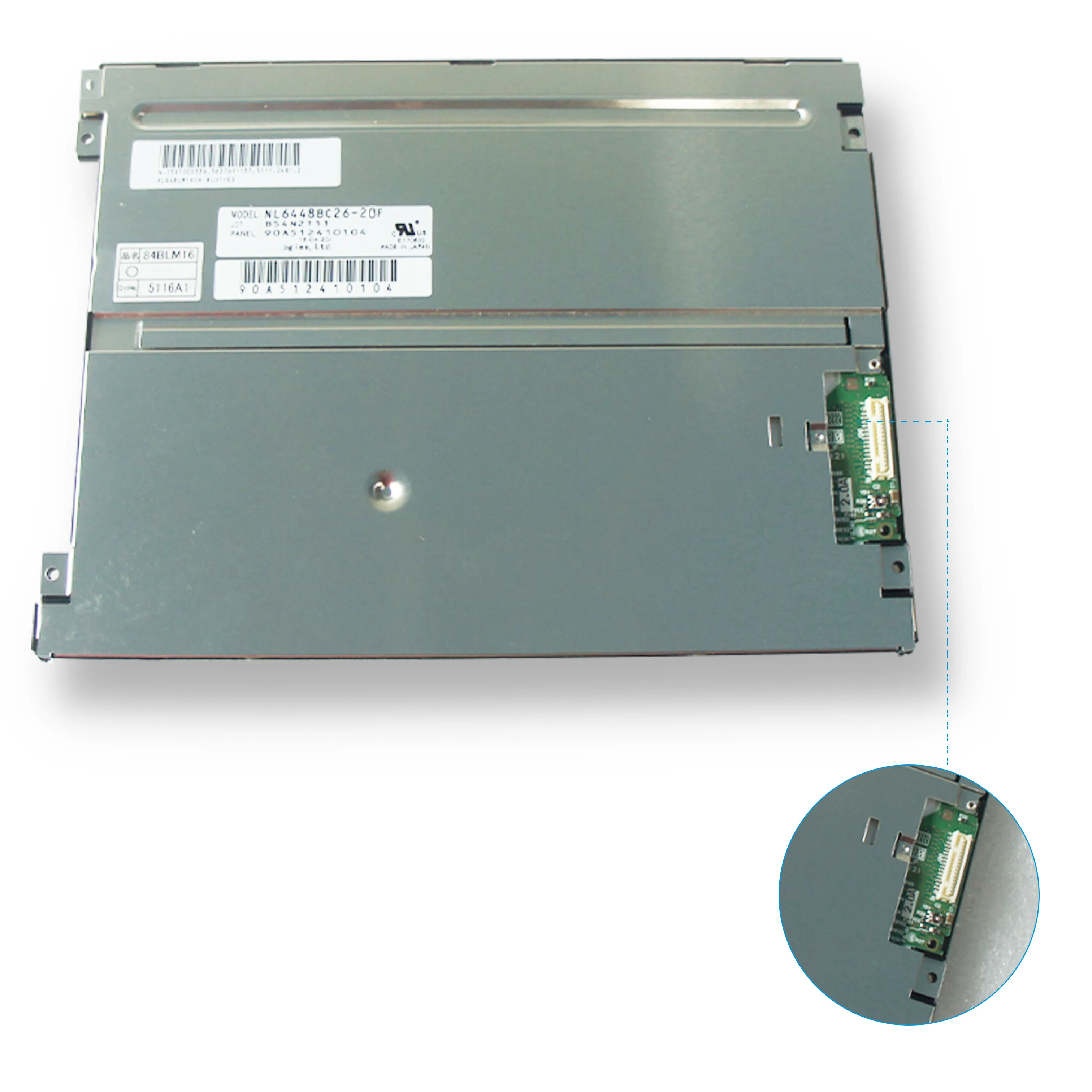


G156HCE-LN1 New Original Innolux 15.6inch 1920*1080 LCD panel
In the intricate world of display technology, where every pixel and refresh rate is scrutinized, the choice of an LCD panel can define the performance and user experience of a device. This article delves into a detailed examination of the G156HCE-LN1, a new original 15.6-inch panel from Innolux, designed with a Full HD 1920x1080 resolution. Far from being just another component, this panel represents a specific convergence of specifications aimed at balancing performance, reliability, and visual fidelity for a range of applications.
Our exploration will move beyond basic datasheet parameters to uncover the practical implications of its technology. We will analyze its core visual characteristics, the underlying LCD matrix technology that drives its performance, and its ideal integration scenarios. Furthermore, we will provide crucial guidance for sourcing authentic units and compare its position within the competitive landscape. This comprehensive guide is crafted for procurement specialists, product developers, and tech enthusiasts seeking a profound understanding of what the Innolux G156HCE-LN1 truly offers and where it stands in the current market.
Unpacking the Core Specifications and Visual Performance
The Innolux G156HCE-LN1 is built around a 15.6-inch diagonal active area with a standard 16:9 aspect ratio, delivering a native resolution of 1920 x 1080 (Full HD). This pixel density strikes a practical balance, offering sharp text and image clarity without imposing the significant scaling or performance overheads associated with higher 4K resolutions, making it highly efficient for many use cases.
Key to its performance are parameters like brightness, typically ranging around 250 nits, which ensures adequate visibility in indoor environments. The contrast ratio defines the depth between blacks and whites, contributing to image solidity. Perhaps most critically for user comfort is the panel's viewing angles, specified using technologies like IPS or similar wide-view variants, which maintain color and contrast consistency even when viewed from the side. These combined specs form the foundation of a reliable, workhorse-grade visual experience suitable for business laptops, industrial monitors, and secondary displays.
The Technology Behind the Screen: LCD Matrix and Backlighting
At the heart of the G156HCE-LN1's performance is its specific type of LCD matrix. While exact nomenclature is model-specific, Innolux typically employs advanced Twisted Nematic (TN) with improvements or In-Plane Switching (IPS)-derived technology for this class. A standard TN panel offers very fast response times, beneficial for basic motion clarity, but often at the expense of narrower viewing angles and color shift. An IPS-type matrix, conversely, prioritizes wide viewing angles and superior color accuracy, making it preferable for applications where consistent color is paramount from various positions.
Complementing the matrix is the LED backlight system. This edge-lit array provides the illumination for the pixels and is central to achieving the panel's brightness and uniformity. The quality of the backlight diffuser directly impacts the presence of "clouding" or uneven brightness patches. The G156HCE-LN1's design focuses on achieving a balance, providing stable, flicker-free illumination that reduces eye strain during prolonged use, which is a critical consideration for productivity-focused devices.
Primary Applications and Integration Scenarios
The G156HCE-LN1 is not designed for high-end gaming or professional color grading; its strength lies in robust, everyday reliability. Its primary application is as a drop-in replacement or original panel for a wide array of mainstream business and consumer laptops. Manufacturers integrate this panel into machines where consistent performance, cost-effectiveness, and good visual ergonomics are key.
Industrial Monitoring and Control Systems: Where reliability and 24/7 operation are crucial.
Point-of-Sale (POS) Terminals and Kiosks: Requiring clear display under various lighting conditions.
Secondary Monitors and All-in-One PCs: For general office work, coding, and content consumption.
Its compatibility with standard LVDS or eDP interfaces ensures it can be adapted into various existing systems with the correct cabling and controller board, making it a versatile choice for OEMs and repair specialists alike.
Critical Considerations for Sourcing and Authenticity
The market for LCD panels is rife with refurbished, remarked, or counterfeit units. Sourcing a new original G156HCE-LN1 is paramount to guarantee advertised performance and longevity. Authentic Innolux panels have specific, laser-etched labels on the rear with precise model numbers, lot codes, and Innolux branding. Purchasers must be wary of sellers offering prices significantly below market rate, as this often indicates used panels passed off as new.
It is strongly advised to procure from authorized distributors or highly reputable specialist suppliers with verifiable credentials. Requesting clear photos of the actual panel, including its label and connector, before purchase is a prudent step. Ensuring the panel comes with protective packaging, such as foam and anti-static bags, is another indicator of a genuine, carefully handled new product, safeguarding your investment and project integrity.
Comparative Analysis: Positioning in the Market Landscape
Positioning the G156HCE-LN1 requires comparison with panels from other major manufacturers like AUO, BOE, and LG Display. Within the 15.6-inch FHD segment, it competes directly with models such as AUO B156HAN series or LG LP156WFH series. Its competitive edge often lies in cost-effectiveness and supply chain availability, making it a favored choice for manufacturers balancing budget and scale.
Technologically, it may not always reach the peak brightness or color gamut coverage of premium-branded panels designed for creative work, but it consistently delivers dependable, no-surprises performance. For bulk procurement in laptop manufacturing or large-scale industrial deployments, the G156HCE-LN1 offers a compelling value proposition, providing a solid baseline of quality that meets the needs of the majority without superfluous, costly enhancements.
Compatibility, Interfaces, and Replacement Guidelines
Successful integration of the G156HCE-LN1 hinges on understanding its physical and electrical interface. The panel utilizes either a standard 30-pin or 40-pin LVDS connector or a more modern eDP (Embedded DisplayPort) interface, depending on the specific version. Matching the connector type, pinout, and voltage requirements with the host device's cable and motherboard is non-negotiable.
Physical Dimensions and Bezel Cutout: Ensuring exact fit into the chassis.
Interface and Pin Configuration: Cross-referencing with the original panel's specifications.
Mounting Hole Positions: To secure the panel properly.
Using an incompatible panel can lead to no display, image artifacts, or even damage. Consulting the official panel datasheet and, when possible, the host device's service manual is the definitive path to a seamless upgrade or repair.


FAQs: G156HCE-LN1 LCD Panel
Q1: What is the resolution of the Innolux G156HCE-LN1 panel?
A1: It features a Full HD (1920 x 1080 pixels) resolution.
Q2: What is the typical brightness of this panel?
A2: It typically offers a brightness of around 250 nits, suitable for indoor use.
Q3: Does it use IPS technology?
A3: It likely uses an IPS-type or advanced wide-view angle technology for consistent colors off-axis, but exact matrix type should be confirmed via the datasheet.
Q4: What is it most commonly used for?
A4: Primarily for business/consumer laptop replacements, industrial monitors, POS systems, and secondary displays.
Q5: How can I ensure I'm buying a new original panel?
A5: Purchase from authorized/reputable suppliers, verify the laser-etched label on the panel's back, and ensure it comes in proper protective packaging.
Q6: What interfaces does it support?
A6: It commonly supports LVDS (30/40-pin) or eDP interfaces. The exact version must be matched to your device.
Q7: Is this a good panel for gaming?
A7: It is not optimized for gaming. It lacks high refresh rates and fast response times of gaming panels, being designed for general productivity.
Q8: Can I use it to replace a different brand's 15.6" FHD panel?
A8: Possibly, but compatibility depends strictly on physical dimensions, interface type, pinout, and voltage. Always cross-reference specifications.
Q9: Who manufactures the G156HCE-LN1?
A9: It is manufactured by Innolux Corporation, a leading Taiwanese display panel maker.
Q10: Where can I find the technical datasheet for this model?
A10: Datasheets can often be requested from Innolux directly or found through authorized distributor and specialist electronic component websites.
Conclusion
The Innolux G156HCE-LN1 emerges as a quintessential component in the ecosystem of display technology—a panel engineered not for flashy extremes, but for dependable, day-in-day-out service. Its value proposition is clear: it delivers solid Full HD visual performance, wide viewing angles, and robust reliability at a competitive price point. This makes it an indispensable choice for mass-market laptop production, systematic industrial applications, and straightforward display replacements.
Understanding its specifications, underlying technology, and ideal use cases empowers buyers and integrators to make informed decisions. In a market saturated with options, the G156HCE-LN1 stands as a testament to the principle that optimal performance is often about selecting the right tool for the job, rather than the most expensive one. For projects demanding a proven, cost-effective, and high-quality 15.6-inch FHD solution, this Innolux panel warrants serious consideration.