- Industrie-LCD-Display
-
Industrial Products
- DC Servo Drive
- AC Servo Drive
- other
- Heidelberg
- FANUC
- IFM
- Meter
- CCD
- Membrane Keypad
- Film
- YOKOGAWA
- Card
- ABB
- MITSUBISHI
- FANUC
- KEYENCE
- BECKHOFF
- Honeywell
- HOLLYSYS
- FUJI servo drives
- HP
- solenoid valve
- thermostat
- Siemens adapter
- color oscilloscope
- Fujitsu connector
- CHELIC
- SMC
- CISCO
- INTEL
- Key board
- FAIRCHILD
- Der Aufsichtsrat
- Board
- Bearing
- other
- Control Panel
- Contactor
- Circuit
- Omron
- Relais.
- Der controller
- Optoelektronische schalter
- Optoelektronische sensoren
- Original
- Fan
- Motortreiber
- Endschalter
- Verstärker
- power supply
- LENZE
- Cable
- Encoder
- Sensor
- Transformator
- Fiber Optic Sensor
- Schutzrelais
- Temperaturregler
- Näherungsschalter
- Switch Sensor
- Siemens
- PCB
- HMI Touch-Glas
-
HMI-Vollautomat Ganze Einheit
- OMRON HMI Touch Panel
- Siemens HMI Touch Panel
- Mitsubishi HMI Touch Panel
- Allen-Bradley Automatisierung HMI Touch
- DELTA HMI Touch Panel
- EVIEW DELTA HMI Touch Panel
- KINCO DELTA HMI Touch Panel
- HITECH HMI Touch Panel
- WEINTECK HMI Touch Panel
- TECVIEW HMI Touch Panel
- WEINVIEW HMI Touch Panel
- PRO-FACE HMI Touch Panel
- SIMATIC HMI Touch Panel
- AMPIRE HMI Touch Panel
- HEIDELBERG HMI Touch Panel
- PANASONIC HMI Touch Panel
- PATLITE HMI Touch Panel
- KYOCERA HMI Touch Panel
- KEYENCE HMI Touch Panel
- WEINVIEW HMI Touch Panel
- HITECH HMI Touch Panel
- FUJI HMI Touch Panel
- HAKKO HMI Touch Panel
- SCHNEIDER HMI Touch Panel
- SAMKOON touch panel
- andere
- Module
- LCD Wechselrichter
- Membran Tastenfeld Schalter
- Winni Touch Screens
- Frequenzumrichter
- Servo Motor
- PLC




In the intricate world of electronic components, the display panel often serves as the critical interface between user and device, defining the visual experience. For engineers, procurement specialists, and repair professionals, sourcing the right panel is a task that balances technical specifications, authenticity, and supply chain reliability. This article provides a comprehensive exploration of the G156HTN01.0, a 15.6-inch LCD display module manufactured by AU Optronics (AUO).
We will delve beyond the basic datasheet to examine what makes this specific model noteworthy, the crucial distinction between "new" and "original" in the component market, and its primary application landscapes. Furthermore, we will analyze its key performance characteristics, provide a clear guide for potential replacements and compatibility, and outline best practices for sourcing this panel to avoid common pitfalls. This guide aims to be an authoritative resource for making informed decisions regarding the G156HTN01.0 display.
Understanding the G156HTN01.0: Core Specifications and Origin
The G156HTN01.0 is a 15.6-inch diagonal LCD panel built on AU Optronics' proven technology. Its model number follows a standard industry nomenclature: "G" likely indicates a generation or series, "156" denotes the screen size in tenths of an inch (15.6"), and "HTN" refers to the specific technology and design family. This panel typically features a standard Full HD (1920 x 1080 pixels) resolution, providing clear and detailed imagery suitable for a variety of computing and display tasks.
As an original AUO product, it is manufactured to precise tolerances, ensuring consistent color performance, backlight uniformity, and long-term reliability. Understanding its origin is paramount; genuine AUO panels are produced under strict quality control, whereas counterfeit or "compatible" versions may use inferior materials, leading to issues like backlight bleed, color shifting, or shorter lifespans. The "01.0" suffix often indicates a specific revision or version, which is critical for compatibility.
The Significance of "New and Original" in Display Procurement
In component sourcing, the terms "new" and "original" carry distinct and significant weight. Original guarantees that the panel is a genuine AU Optronics product, not a clone, refurbished unit, or a panel from a different manufacturer that has been remarked with a false model number. Authenticity ensures the display will perform exactly to the published specifications for brightness, contrast, color gamut, and power consumption.
New, on the other hand, confirms the unit's condition. It means the display has never been used in an end-product, has zero hours of backlight operation, and is free from physical imperfections like scratches or pressure marks. It is not a pull from old inventory or a refurbished item. For integration into new devices or for high-stakes repair work where longevity is key, insisting on both "new and original" is the only way to guarantee optimal performance and avoid premature failure or customer returns.
Primary Applications and Integration Scenarios
The G156HTN01.0 is engineered as a versatile solution for mid-range to high-end display applications. Its most common integration is into laptop computers, particularly business-class and multimedia notebooks where reliable Full HD clarity is a standard requirement. The panel's balance of performance, power efficiency, and physical form factor makes it a preferred choice for OEMs.
Beyond laptops, this display module finds use in specialized industrial monitors, all-in-one PCs, and certain digital signage implementations where its 15.6-inch size is appropriate. Its standard LVDS (Low-Voltage Differential Signaling) or later eDP (Embedded DisplayPort) interface—depending on the specific version—dictates its compatibility with various controller boards. Integrators must verify the interface type, pin configuration, and mounting hole positions to ensure a seamless physical and electrical fit within their device chassis.
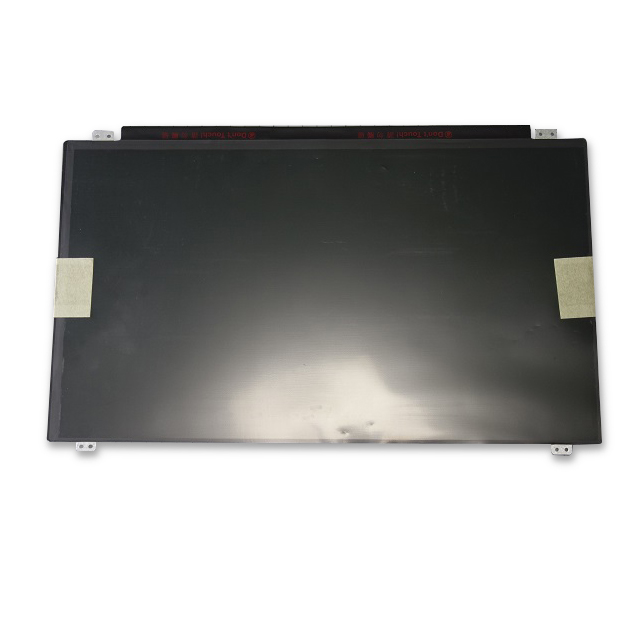
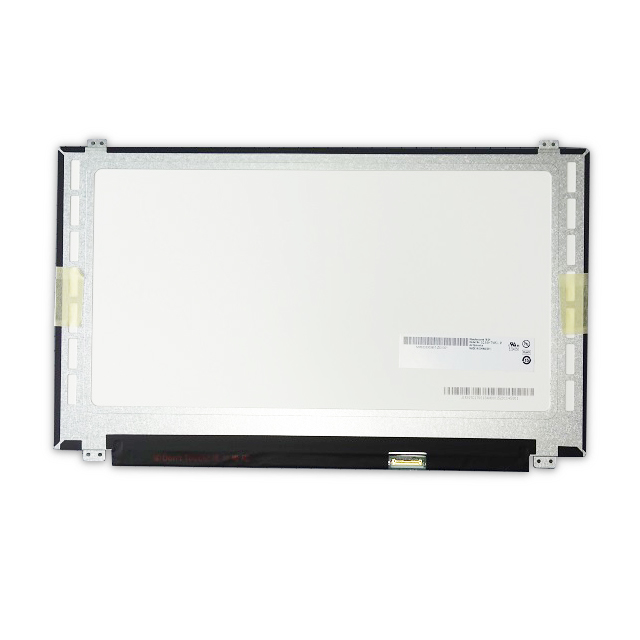
Technical Performance and Visual Characteristics Analysis
Evaluating the G156HTN01.0 requires a look at its core visual metrics. A typical specification includes a brightness level of around 220 to 300 nits, suitable for indoor use. The contrast ratio, crucial for depth perception, is often in the range of 700:1 to 1000:1. Color performance is defined by its gamut coverage, commonly covering a standard 45% to 72% of the NTSC color space, which is adequate for general-purpose and office applications.
Viewing angles are a critical differentiator; as a Twisted Nematic (TN) or potentially an Advanced Hyper-Viewing Angle (AHVA) panel—AUO's technology similar to IPS—its performance varies significantly. A true TN variant will offer fast response times (e.g., 9ms) beneficial for reducing motion blur but will have more limited vertical and horizontal viewing angles compared to IPS-type panels. Understanding this trade-off is essential for matching the panel to the end-user's visual requirements.
Compatibility, Replacements, and Cross-Reference Guidelines
Identifying a correct replacement for the G156HTN01.0 is a meticulous process. While other 15.6" 1080p panels may seem physically interchangeable, compatibility is not guaranteed. Key factors must match exactly: the interface type and pinout (e.g., 30-pin LVDS, 40-pin eDP), the voltage and backlight requirements (e.g., 3.3V logic, LED backlight voltage), and the mechanical dimensions including thickness and bezel mounting points.
Procurement specialists often use cross-reference databases to find alternative part numbers. A panel like the G156HTN01.0 may have direct equivalents or newer revisions (e.g., G156HTN01.1, G156HTN01.2) from AUO with identical physical and electrical properties but potentially improved characteristics. It is strongly advised to consult the official AUO datasheets for both the original and the potential replacement panel to perform a line-by-line comparison before committing to a purchase.
Sourcing Strategies and Authenticity Verification
Securing a genuine, new G156HTN01.0 panel requires a strategic approach to sourcing. Authorized distributors of AUO components are the most reliable but may have minimum order quantities. For smaller volume needs, reputable independent distributors and specialized display module suppliers are viable options. Always request and scrutinize high-resolution photos of the actual item, focusing on the label which should show the exact AUO model number, a lot code, and AUO branding.
Verification tactics include checking for AUO's holographic or security labels on the panel's rear metal shield. Be wary of prices that seem too good to be true, as they often indicate counterfeit, refurbished, or "B-grade" panels. A trustworthy supplier should be transparent about the panel's origin and condition, providing warranty support. Establishing a relationship with a reliable supplier is often more valuable than a one-time bargain purchase.
FAQs: G156HTN01.0 Display Panel
1. What is the G156HTN01.0?
It is a 15.6-inch Full HD (1920x1080) LCD display panel originally manufactured by AU Optronics (AUO).
2. What does "New and Original" mean?
"Original" means it's a genuine AUO product. "New" means it's never been used, with zero hours on the backlight.
3. Is this panel compatible with my laptop?
Compatibility depends on exact interface (LVDS/eDP), pin count, voltage, and physical dimensions. Check your original panel's label.
4. What is the difference between TN and IPS versions?
TN panels offer faster response but narrower viewing angles. IPS-type (like AHVA) offer wider viewing angles and better color consistency off-axis.
5. How can I verify the panel is authentic?
Inspect for official AUO labels, holograms, and precise model number printing. Purchase from reputable suppliers who guarantee authenticity.
6. Can I use a similar 15.6" 1080p panel as a replacement?
Only if the interface, pinout, voltage, and mounting points are identical. Always cross-reference using official datasheets.
7. What is a common interface for this panel?
It commonly uses a 30-pin or 40-pin LVDS interface, but later revisions may use eDP. Verification from the datasheet is crucial.
8. What are typical applications?
Primarily laptops, but also industrial monitors, all-in-one PCs, and some digital signage.
9. What should I do if my replacement panel doesn't work?
Double-check interface compatibility, cable seating, and that the device's BIOS/EDID supports the new panel. Incompatibility is the most likely cause.
10. Where is the best place to buy this panel?
From authorized AUO distributors or well-established, specialized electronic component suppliers with positive reviews and authenticity guarantees.
Conclusion
The G156HTN01.0 display module exemplifies the precision engineering expected from AU Optronics. Successfully integrating or replacing this component hinges on a deep understanding of its specifications, a clear commitment to sourcing only new and original units, and a meticulous approach to verifying compatibility. The distinction between a genuine panel and a counterfeit is not merely semantic—it directly impacts product quality, reliability, and end-user satisfaction.
By treating display procurement as a critical engineering decision rather than a simple commodity purchase, professionals can avoid costly mistakes and project delays. Whether for a laptop repair, a custom system build, or an industrial application, respecting the intricacies of the G156HTN01.0 ensures a superior visual outcome and a robust, lasting solution.