- Industrial LCD display
-
Industrial Products
- DC Servo Drive
- AC Servo Drive
- other
- Heidelberg
- FANUC
- IFM
- Meter
- CCD
- Membrane Keypad
- Film
- YOKOGAWA Module
- Card
- ABB
- MITSUBISHI
- FANUC
- KEYENCE
- BECKHOFF
- Honeywell
- HOLLYSYS
- FUJI servo drives
- HP
- solenoid valve
- thermostat
- Siemens adapter
- color oscilloscope
- Fujitsu connector
- CHELIC
- SMC
- CISCO Module
- INTEL
- Key board
- FAIRCHILD
- Motherboard
- Board
- Bearing
- other
- Control Panel
- Contactor
- Circuit
- OMRON
- Relay
- Controller
- Photoelectric Switch
- Photoelectric Sensor
- Original
- Fan
- Motor Driver
- Limit Switch
- Amplifier
- power supply
- LENZE
- Cable
- Encoder
- Sensor
- Transformer
- Fiber Optic Sensor
- Protection Relay
- Temperature Controller
- Proximity Switch
- Switch Sensor
- Siemens
- Industrial board
- HMI Touch Glass
-
HMI Full Machine Whole unit
- OMRON HMI Touch Panel
- Siemens HMI Touch Panel
- Mitsubishi HMI Touch Panel
- Allen-Bradley automation HMI Touch Panel
- DELTA HMI Touch Panel
- EVIEW DELTA HMI Touch Panel
- KINCO DELTA HMI Touch Panel
- HITECH HMI Touch Panel
- WEINTECK HMI Touch Panel
- TECVIEW HMI Touch Panel
- WEINVIEW HMI Touch Panel
- PRO-FACE HMI Touch Panel
- SIMATIC HMI Touch Panel
- AMPIRE HMI Touch Panel
- HEIDELBERG HMI Touch Panel
- PANASONIC HMI Touch Panel
- PATLITE HMI Touch Panel
- KYOCERA HMI Touch Panel
- KEYENCE HMI Touch Panel
- WEINVIEW HMI Touch Panel
- HITECH HMI Touch Panel
- FUJI HMI Touch Panel
- HAKKO HMI Touch Panel
- SCHNEIDER HMI Touch Panel
- SAMKOON touch panel
- other
- Module
- lcd inverter
- Membrane Keypad Switch
- Winni Touch Screens
- Frequency Inverter
- Servo Motor
- PLC




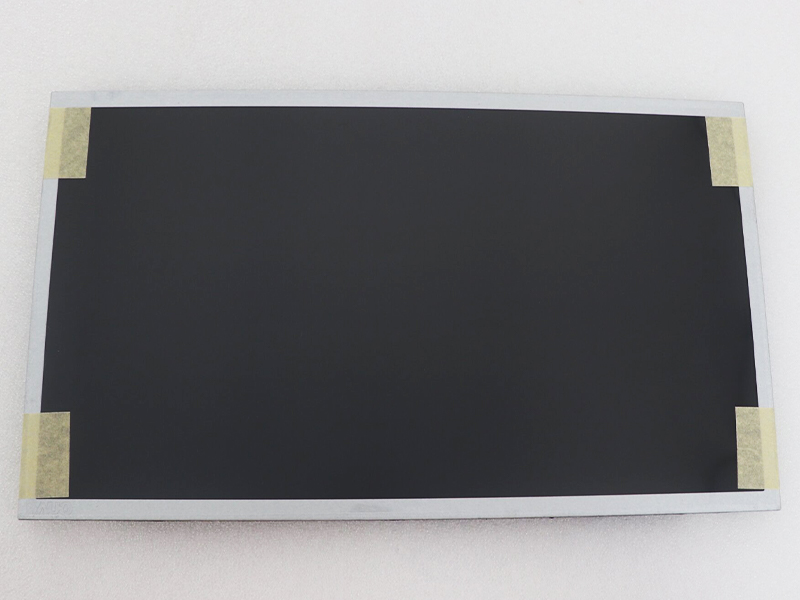
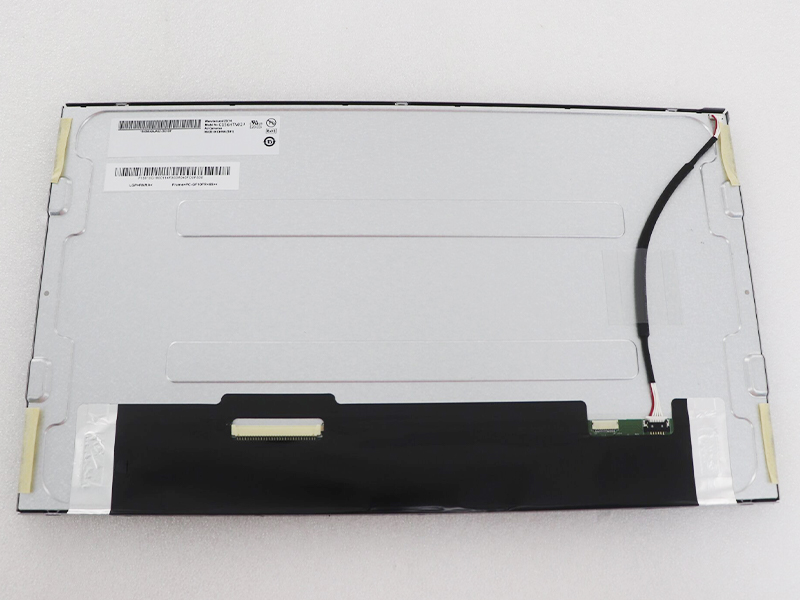
G156HTN02.0 AUO 15.6inch lcd display New
In the intricate world of display technology, where every pixel and refresh rate matters, the arrival of a new panel often signals a quiet evolution. Our focus today is the G156HTN02.0, a 15.6-inch LCD display module developed by AUO (AU Optronics), a leading name in the industry. This isn't a consumer-facing monitor, but a critical component designed for integration into laptops, industrial equipment, and specialized devices. Its "New" designation is key, indicating a fresh supply of an established model, which holds significant interest for manufacturers, repair specialists, and tech enthusiasts involved in system building or refurbishment.
Understanding the specifications and potential of the G156HTN02.0 requires moving beyond basic specs. This article will provide a deep dive into its technical architecture, performance characteristics, and ideal application scenarios. We will explore what makes this panel tick, how it compares to broader market trends, and why it remains a relevant choice in specific engineering and commercial contexts. Join us as we dissect this piece of display engineering.
Decoding the G156HTN02.0: Core Specifications and Architecture
The G156HTN02.0 is built on a Twisted Nematic (TN) panel technology, a mature and cost-effective solution. Its native resolution is Full HD (1920 x 1080 pixels), offering a standard 16:9 aspect ratio suitable for a wide range of applications. The module features an LED backlight system, ensuring brightness and power efficiency. A critical specification is its interface: it typically uses a 40-pin LVDS (Low-Voltage Differential Signaling) connector, which is a common standard for transmitting high-speed video data within embedded systems and older laptop designs.
Beyond these basics, the panel's architecture includes specific optical characteristics. It offers a standard color gamut coverage, typically around 45% NTSC, which is adequate for general-purpose computing and text-based tasks. The viewing angles, a known trade-off with TN technology, are specified at 80/80/80/80 (Left/Right/Up/Down), meaning image quality and color shift noticeably when viewed from off-center positions. This fundamental architecture sets the stage for its performance profile and target use cases.
Performance Analysis: Brightness, Contrast, and Response Time
Delving into performance, the G156HTN02.0 panel is engineered for reliability and clarity under typical operating conditions. Its brightness usually ranges around 220 to 250 nits, sufficient for indoor office or controlled environments. The static contrast ratio is in the realm of 500:1 to 700:1, which defines its ability to distinguish between dark and light shades—a figure that, while not exceptional, is functional for non-critical visual work.
Where TN technology traditionally excels is in response time. This panel boasts a fast gray-to-gray (GtG) response time, often as low as 25ms or less. This minimal lag in pixel transition reduces motion blur and ghosting, making the display theoretically more responsive. However, it's crucial to contextualize this: while beneficial, this speed is primarily noticeable compared to slower IPS panels and is most relevant for basic dynamic content, not necessarily competitive high-refresh-rate gaming.
The Application Ecosystem: Where This Panel Excels
The true value of the G156HTN02.0 is realized in its application. It is not designed to be a premium visual experience but a robust, dependable workhorse. Its primary domain is in the commercial and industrial sectors. You will find it in point-of-sale systems, kiosks, industrial control panels, and basic-function laptops for enterprise or education. These environments prioritize longevity, cost-effectiveness, and compatibility over wide viewing angles and vibrant color reproduction.
Furthermore, it plays a vital role in the device repair and refurbishment market. As a "New" replacement part, it provides a direct, compatible upgrade for countless laptops and devices that originally shipped with this or a similar model. For technicians and DIY enthusiasts, sourcing an authentic AUO G156HTN02.0 ensures seamless integration and restores a device to its original functional state, extending its lifecycle significantly.
TN Technology in a Modern Context: Strengths and Trade-offs
In an era dominated by IPS, OLED, and high-refresh-rate talk, TN panels like the G156HTN02.0 occupy a specific niche. Their enduring strengths are clear: lower production cost, fast response times, and high reliability. They consume less power than some brighter, wider-gamut alternatives, which can be a consideration for battery-powered or always-on embedded systems.
The trade-offs, however, are equally defined. The limited viewing angles and narrower color gamut are intrinsic to the technology. For collaborative work, creative tasks involving color accuracy, or media consumption, these are significant drawbacks. Therefore, evaluating this panel requires a needs-based analysis. It represents a pragmatic engineering choice where the visual performance parameters align perfectly with the device's intended, often singular, function.
Compatibility and Integration Considerations
Successfully integrating the G156HTN02.0 is not merely a plug-and-play affair; it demands attention to compatibility. The 40-pin LVDS interface is the first checkpoint. Integrators must ensure their system's motherboard or controller board supports this interface type and the specific pin configuration. Voltage requirements and backlight inverter compatibility (if not using an LED-only driver) are other critical electrical factors.
Physically, the 15.6-inch diagonal size comes with precise dimensional and bezel specifications. Mounting hole positions, overall thickness, and the location of the connector tab must match the host device's chassis. For refurbishers, matching the exact model number is often essential to avoid backlight compatibility issues or software driver conflicts. Consulting the official AUO datasheet for the G156HTN02.0 is a non-negotiable step in any integration project.
Market Position and Sourcing Authentic Components
As a mature product, the G156HTN02.0 exists in a complex supply chain. Authorized distributors and specialized electronic component suppliers are the primary sources for guaranteed-new, authentic AUO panels. The "New" designation should imply unused, factory-grade quality, not pulled from old equipment. The market also contains compatible panels or "replacements" from other manufacturers, which may have slight variations.
When sourcing, verifying authenticity is paramount to ensure performance and longevity. Key indicators include AUO branding on the module and connector, consistent packaging, and reputable supplier credentials. Price can be a guide—significantly lower costs often signal refurbished, used, or inferior compatibility panels. For mission-critical industrial applications or reliable repairs, investing in a verified new AUO G156HTN02.0 is the only recommended path.
Frequently Asked Questions (FAQs)
Q1: What is the G156HTN02.0?
A: It is a new 15.6-inch Full HD LCD display module with a TN panel and LVDS interface, manufactured by AU Optronics.
Q2: What does "New" mean in this context?
A: It signifies a fresh, unused panel from factory inventory or production, as opposed to a refurbished or used part.
Q3: What is the primary technology of this display?
A: It uses Twisted Nematic (TN) panel technology.
Q4: What are the main advantages of this panel?
A: Key advantages are cost-effectiveness, fast response time, reliability, and low power consumption.
Q5: What are its main limitations?
A: The main limitations are narrow viewing angles and a relatively limited color gamut compared to IPS or OLED panels.
Q6: Where is this display commonly used?
A: It's used in commercial/industrial equipment (POS, kiosks), basic laptops, and as a replacement part in device repair.
Q8: Is it good for gaming or photo editing?
A: Not ideally. Its fast response is good for motion, but narrow viewing angles and color gamut make it poor for creative color work.
Q9: How can I ensure I'm buying an authentic AUO panel?
A: Source from reputable authorized distributors, check for AUO markings, and be wary of prices that seem too good to be true.
Q10: Can I use this to replace a broken screen in my laptop?
A: Only if your laptop's original screen uses the exact same model or a fully compatible equivalent. Always check compatibility first.
Conclusion
The AUO G156HTN02.0 15.6-inch LCD display is a testament to the enduring relevance of well-executed, purpose-driven technology. It may not boast the specs that headline modern consumer gadgets, but its value lies in its reliability, specificity, and cost-effectiveness for defined professional and industrial tasks. This analysis reveals that its worth is not measured in vibrant colors or wide angles, but in seamless integration, proven performance, and extended device lifespans.
For engineers, system integrators, and repair professionals, understanding this panel's architecture and ideal use cases is crucial. It serves as a reminder that in the vast ecosystem of display technology, there is a vital place for components that prioritize function and durability over form. The G156HTN02.0, therefore, is more than just a panel; it is a dependable building block for countless functional devices that power everyday commercial and industrial operations.