- Industrie-LCD-Display
-
Industrial Products
- DC Servo Drive
- AC Servo Drive
- other
- Heidelberg
- FANUC
- IFM
- Meter
- CCD
- Membrane Keypad
- Film
- YOKOGAWA
- Card
- ABB
- MITSUBISHI
- FANUC
- KEYENCE
- BECKHOFF
- Honeywell
- HOLLYSYS
- FUJI servo drives
- HP
- solenoid valve
- thermostat
- Siemens adapter
- color oscilloscope
- Fujitsu connector
- CHELIC
- SMC
- CISCO
- INTEL
- Key board
- FAIRCHILD
- Der Aufsichtsrat
- Board
- Bearing
- other
- Control Panel
- Contactor
- Circuit
- Omron
- Relais.
- Der controller
- Optoelektronische schalter
- Optoelektronische sensoren
- Original
- Fan
- Motortreiber
- Endschalter
- Verstärker
- power supply
- LENZE
- Cable
- Encoder
- Sensor
- Transformator
- Fiber Optic Sensor
- Schutzrelais
- Temperaturregler
- Näherungsschalter
- Switch Sensor
- Siemens
- PCB
- HMI Touch-Glas
-
HMI-Vollautomat Ganze Einheit
- OMRON HMI Touch Panel
- Siemens HMI Touch Panel
- Mitsubishi HMI Touch Panel
- Allen-Bradley Automatisierung HMI Touch
- DELTA HMI Touch Panel
- EVIEW DELTA HMI Touch Panel
- KINCO DELTA HMI Touch Panel
- HITECH HMI Touch Panel
- WEINTECK HMI Touch Panel
- TECVIEW HMI Touch Panel
- WEINVIEW HMI Touch Panel
- PRO-FACE HMI Touch Panel
- SIMATIC HMI Touch Panel
- AMPIRE HMI Touch Panel
- HEIDELBERG HMI Touch Panel
- PANASONIC HMI Touch Panel
- PATLITE HMI Touch Panel
- KYOCERA HMI Touch Panel
- KEYENCE HMI Touch Panel
- WEINVIEW HMI Touch Panel
- HITECH HMI Touch Panel
- FUJI HMI Touch Panel
- HAKKO HMI Touch Panel
- SCHNEIDER HMI Touch Panel
- SAMKOON touch panel
- andere
- Module
- LCD Wechselrichter
- Membran Tastenfeld Schalter
- Winni Touch Screens
- Frequenzumrichter
- Servo Motor
- PLC


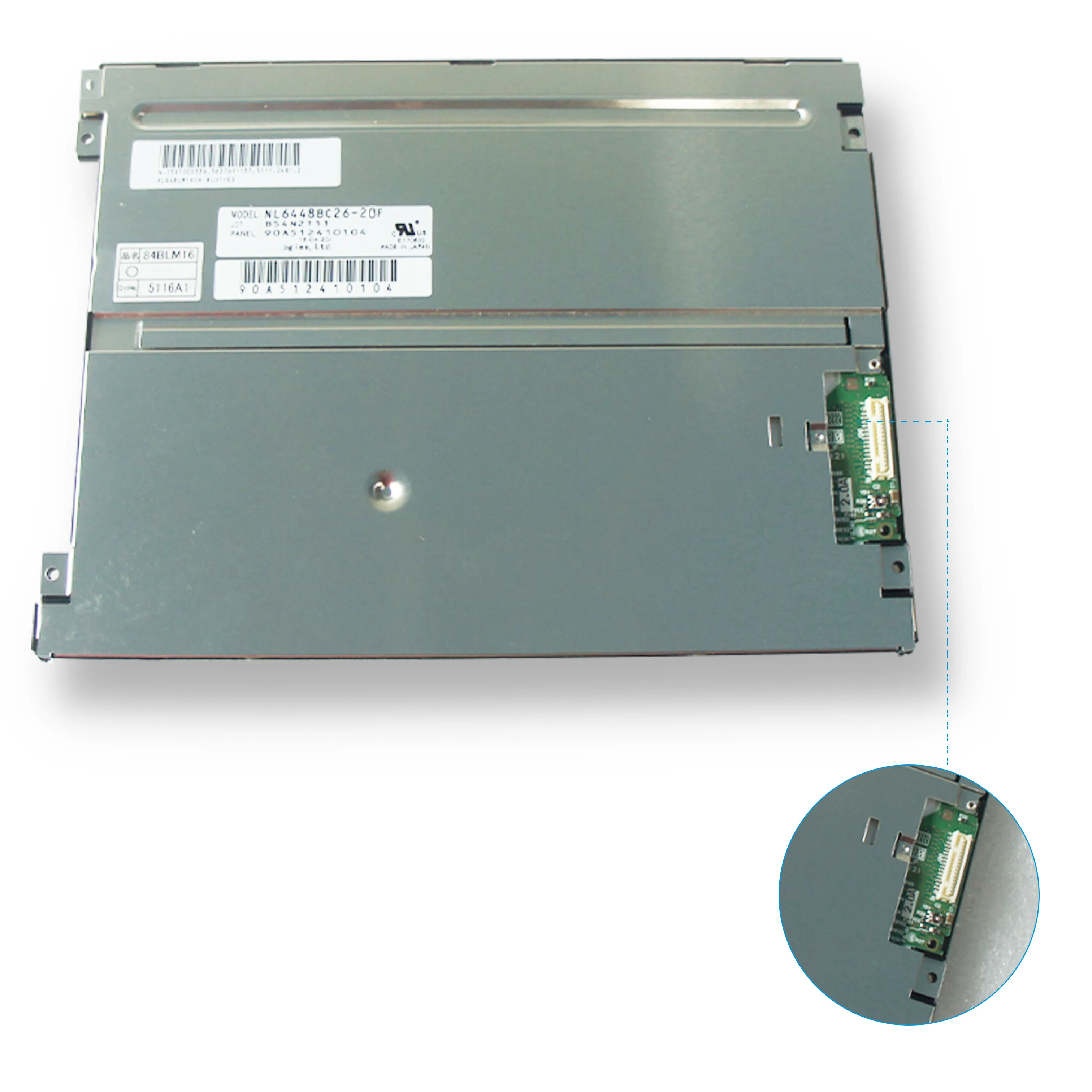


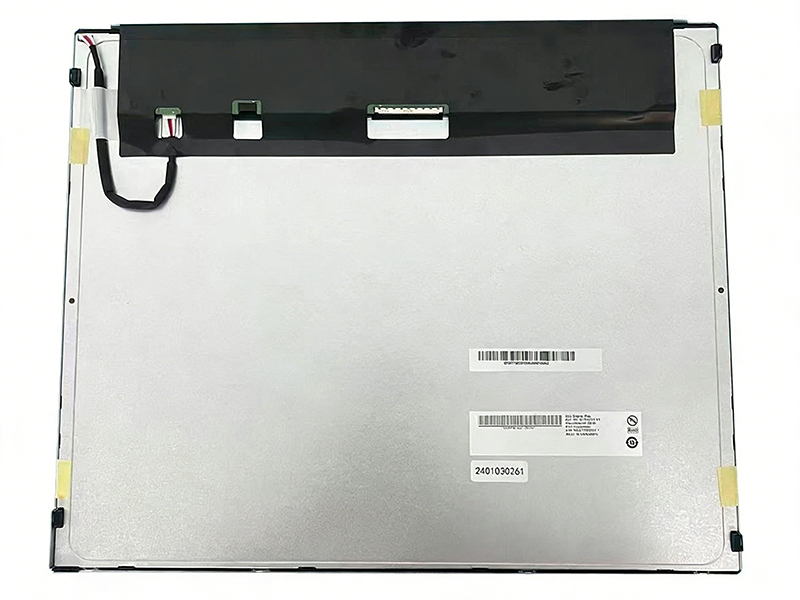
G170ETN02.2 New AUO 17.0-inch 1280*1024 LCD screen
In the ever-evolving landscape of display technology, where 4K and ultra-wide screens dominate headlines, a specific class of components continues to power critical applications behind the scenes. The focus of this in-depth exploration is the G170ETN02.2, a 17.0-inch LCD panel from AUO (AU Optronics). This isn't a screen designed for mainstream consumer entertainment; it is a specialized tool engineered for reliability, longevity, and integration into industrial, commercial, and legacy systems.
This article will dissect the G170ETN02.2 beyond its basic datasheet specifications. We will delve into the practical implications of its 1280x1024 (SXGA) resolution and 5:4 aspect ratio, examining why this "square" format remains relevant in specific sectors. Furthermore, we will analyze its technical architecture, including its CCFL backlighting and LVDS interface, to understand its performance characteristics and compatibility requirements. Our journey will cover its ideal application environments, the crucial considerations for integration and replacement, and a balanced view of its advantages and limitations in the modern technological context. Finally, we will provide essential guidance for sourcing and implementing this specialized display module.
Decoding the Specification: Core Features of the G170ETN02.2
The AUO G170ETN02.2 is defined by a set of specifications that collectively determine its operational profile. Its 17.0-inch diagonal active area provides a substantial viewing space, while its native 1280 x 1024 resolution at a 5:4 aspect ratio is its most distinctive feature. Unlike the ubiquitous 16:9 widescreen, the 5:4 format offers more vertical pixels, which is advantageous for displaying full documents, vertical lists, or control panels without excessive black bars or wasted space.
The panel utilizes a Twisted Nematic (TN) technology, which traditionally offers fast response times and good cost-effectiveness, though often at the expense of viewing angles and color reproduction compared to IPS panels. It is illuminated by a CCFL (Cold Cathode Fluorescent Lamp) backlight system, a technology largely succeeded by LED in consumer markets but still valued in certain industrial settings for its diffuse and even lighting. The standard interface is LVDS (Low-Voltage Differential Signaling), a robust and widely adopted standard for internal display connectivity in embedded systems. Understanding these core features is the first step in assessing its suitability for a project.
The Enduring Relevance of SXGA and the 5:4 Aspect Ratio
In an era of widescreen formats, the 1280x1024 (SXGA) resolution on a 5:4 aspect ratio panel like the G170ETN02.2 might seem anachronistic. However, this format holds persistent value in specific niches. Its primary strength lies in vertical screen real estate. For applications such as industrial control systems (ICS), point-of-sale (POS) terminals, medical monitoring devices, and legacy instrumentation, the ability to view more lines of data, longer forms, or stacked software menus without constant scrolling is a significant operational efficiency.
Furthermore, this resolution and aspect ratio represent a stable and mature standard. Many legacy software applications and hardware controllers were designed for this exact format, ensuring perfect pixel mapping and eliminating scaling artifacts or compatibility issues that can arise when forcing older software onto widescreen displays. The G170ETN02.2, therefore, serves as a direct, drop-in upgrade or replacement for countless existing systems, extending their service life without costly software or hardware redesigns.
Technical Deep Dive: Panel Technology, Backlight, and Interface
A closer examination of the G170ETN02.2's technical construction reveals the rationale behind its design choices. The TN film matrix provides a response time suitable for dynamic data updates without severe motion blur, which is sufficient for most non-gaming industrial applications. The CCFL backlight, while consuming more power and generating more heat than modern LEDs, offers a very uniform brightness profile and a specific color temperature that some calibrated systems rely on. Its longevity, though finite, is predictable, and replacement procedures are well-established.
The LVDS interface is a critical component. It typically uses a single-channel, 8-bit configuration to transmit the display data. This requires a compatible LVDS transmitter on the system's mainboard. Integrators must ensure the pinout, voltage, and signal timing of their controller align with the G170ETN02.2's requirements, often detailed in its datasheet. The presence of CCFLs also necessitates an inverter board to provide the high-voltage AC power needed to ignite and run the lamps, adding a layer to the power supply design.
Primary Application Environments and Use Cases
The G170ETN02.2 is not a consumer-grade panel. Its design targets environments where reliability, readability, and compatibility trump ultra-high resolution or vibrant colors. Key application sectors include:
Industrial Automation & HMI: Factory floor control panels, PLC interfaces, and machine operator stations where the screen must be clear, durable, and interface seamlessly with industrial software.
Medical & Laboratory Equipment: Older but still functional diagnostic devices, patient monitors, and lab analyzers that require a reliable display for critical data.
Point-of-Sale & Kiosk Systems: Retail terminals and self-service kiosks where the 5:4 aspect ratio is excellent for displaying transaction lists and menu interfaces.
Legacy System Maintenance: The primary market is as a direct replacement panel for failed displays in thousands of existing systems across multiple industries, preventing the obsolescence of otherwise functional capital equipment.
Integration Considerations and Replacement Guide
Successfully integrating or replacing with the G170ETN02.2 requires careful planning. First, perform a physical compatibility check: confirm the exact dimensions, mounting hole positions, and bezel cutout of the original module. Second, verify electrical and signal compatibility. Match the LVDS pin assignment (often a 20-pin or 30-pin connector), voltage input (typically 3.3V or 5V for logic, 12V for the backlight inverter), and ensure your controller supports the panel's native resolution and timing.
For replacements, sourcing the exact model number is crucial. Cross-reference with compatible alternatives, but be wary of minor revisions (like the ".2" in G170ETN02.2) which may indicate changes in brightness, connector type, or backlight. Always consult the official AUO datasheet for the specific version. Remember that integrating the CCFL inverter and managing its potential electromagnetic interference are additional steps not required with simpler LED-backlit panels.

Advantages, Limitations, and Modern Context
The G170ETN02.2 presents a clear set of trade-offs. Its advantages are strong: perfect legacy compatibility, superior vertical space for data-dense applications, robust construction for industrial settings, and a stable, mature supply chain for maintenance. It solves the specific problem of keeping older, valuable systems operational.
Its limitations are equally clear when viewed through a modern lens: lower overall resolution and pixel density, restricted viewing angles inherent to TN technology, higher power consumption due to CCFLs, and the eventual phase-out of CCFL components. It is not suitable for media consumption, graphic design, or any application requiring wide viewing angles or high color fidelity. Its value is inherently tied to its role as a specialist component within a broader ecosystem of enduring technology.
FAQs: G170ETN02.2 LCD Panel
Q1: What is the G170ETN02.2?
A: It is a 17-inch industrial LCD panel from AUO with 1280x1024 (SXGA) resolution and a 5:4 aspect ratio, using TN technology and CCFL backlighting.
Q2: What does "SXGA" mean?
A: It stands for Super Extended Graphics Array, a display resolution of 1280 pixels wide by 1024 pixels tall.
Q3: Why is the 5:4 aspect ratio still used?
A: It provides more vertical screen space, ideal for displaying documents, data lists, and control software, and maintains compatibility with countless legacy systems.
Q4: What is CCFL backlighting?
A: Cold Cathode Fluorescent Lamps, an older backlight technology that provides even, diffuse light but uses more power and has a finite lifespan compared to LEDs.
Q5: What interface does this panel use?
A: It uses an LVDS (Low-Voltage Differential Signaling) interface, a common standard for internal display connections in embedded systems.
Q6: Can I replace an old 17" square screen with this?
A: Yes, it is specifically designed as a replacement panel. However, you must verify physical dimensions, mounting holes, connector type, and pinout compatibility.
Q7: What are its main applications?
A: Industrial HMIs, medical equipment, POS systems, kiosks, and as a replacement part for legacy devices with failed displays.
Q8: What are the disadvantages of this panel?
A: Limited viewing angles (TN panel), higher power consumption (CCFL), lower pixel density than modern screens, and eventual CCFL component obsolescence.
Q9: Is it suitable for watching movies or gaming?
A> No. Its 5:4 aspect ratio creates large black bars with widescreen content, and its performance is optimized for static or data-driven applications, not multimedia.
Q10: Where can I find technical details for integration?
A> The official AUO (AU Optronics) datasheet for the G170ETN02.2 provides complete mechanical, electrical, and interface specifications.
Conclusion
The AUO G170ETN02.2 LCD screen is a compelling case study in specialized technological longevity. It defies the mainstream trend toward widescreen, high-DPI displays by excelling in a specific, vital niche: keeping mission-critical industrial, commercial, and medical equipment functional. Its value is not measured in megapixels or color gamut, but in reliability, direct compatibility, and the economic sense of maintaining existing infrastructure.
For engineers, system integrators, and maintenance professionals, understanding this panel is about recognizing that the cutting edge is not the only edge that matters. The G170ETN02.2 represents the pragmatic backbone of countless systems that operate out of sight but are essential to daily operations across industries. When selecting a display, the most advanced option is not always the right one; the right one is the one that solves the problem at hand with precision and durability, a principle the G170ETN02.2 embodies perfectly.