- Industrial LCD display
-
Industrial Products
- DC Servo Drive
- AC Servo Drive
- other
- Heidelberg
- FANUC
- IFM
- Meter
- CCD
- Membrane Keypad
- Film
- YOKOGAWA Module
- Card
- ABB
- MITSUBISHI
- FANUC
- KEYENCE
- BECKHOFF
- Honeywell
- HOLLYSYS
- FUJI servo drives
- HP
- solenoid valve
- thermostat
- Siemens adapter
- color oscilloscope
- Fujitsu connector
- CHELIC
- SMC
- CISCO Module
- INTEL
- Key board
- FAIRCHILD
- Motherboard
- Board
- Bearing
- other
- Control Panel
- Contactor
- Circuit
- OMRON
- Relay
- Controller
- Photoelectric Switch
- Photoelectric Sensor
- Original
- Fan
- Motor Driver
- Limit Switch
- Amplifier
- power supply
- LENZE
- Cable
- Encoder
- Sensor
- Transformer
- Fiber Optic Sensor
- Protection Relay
- Temperature Controller
- Proximity Switch
- Switch Sensor
- Siemens
- Industrial board
- HMI Touch Glass
-
HMI Full Machine Whole unit
- OMRON HMI Touch Panel
- Siemens HMI Touch Panel
- Mitsubishi HMI Touch Panel
- Allen-Bradley automation HMI Touch Panel
- DELTA HMI Touch Panel
- EVIEW DELTA HMI Touch Panel
- KINCO DELTA HMI Touch Panel
- HITECH HMI Touch Panel
- WEINTECK HMI Touch Panel
- TECVIEW HMI Touch Panel
- WEINVIEW HMI Touch Panel
- PRO-FACE HMI Touch Panel
- SIMATIC HMI Touch Panel
- AMPIRE HMI Touch Panel
- HEIDELBERG HMI Touch Panel
- PANASONIC HMI Touch Panel
- PATLITE HMI Touch Panel
- KYOCERA HMI Touch Panel
- KEYENCE HMI Touch Panel
- WEINVIEW HMI Touch Panel
- HITECH HMI Touch Panel
- FUJI HMI Touch Panel
- HAKKO HMI Touch Panel
- SCHNEIDER HMI Touch Panel
- SAMKOON touch panel
- other
- Module
- lcd inverter
- Membrane Keypad Switch
- Winni Touch Screens
- Frequency Inverter
- Servo Motor
- PLC


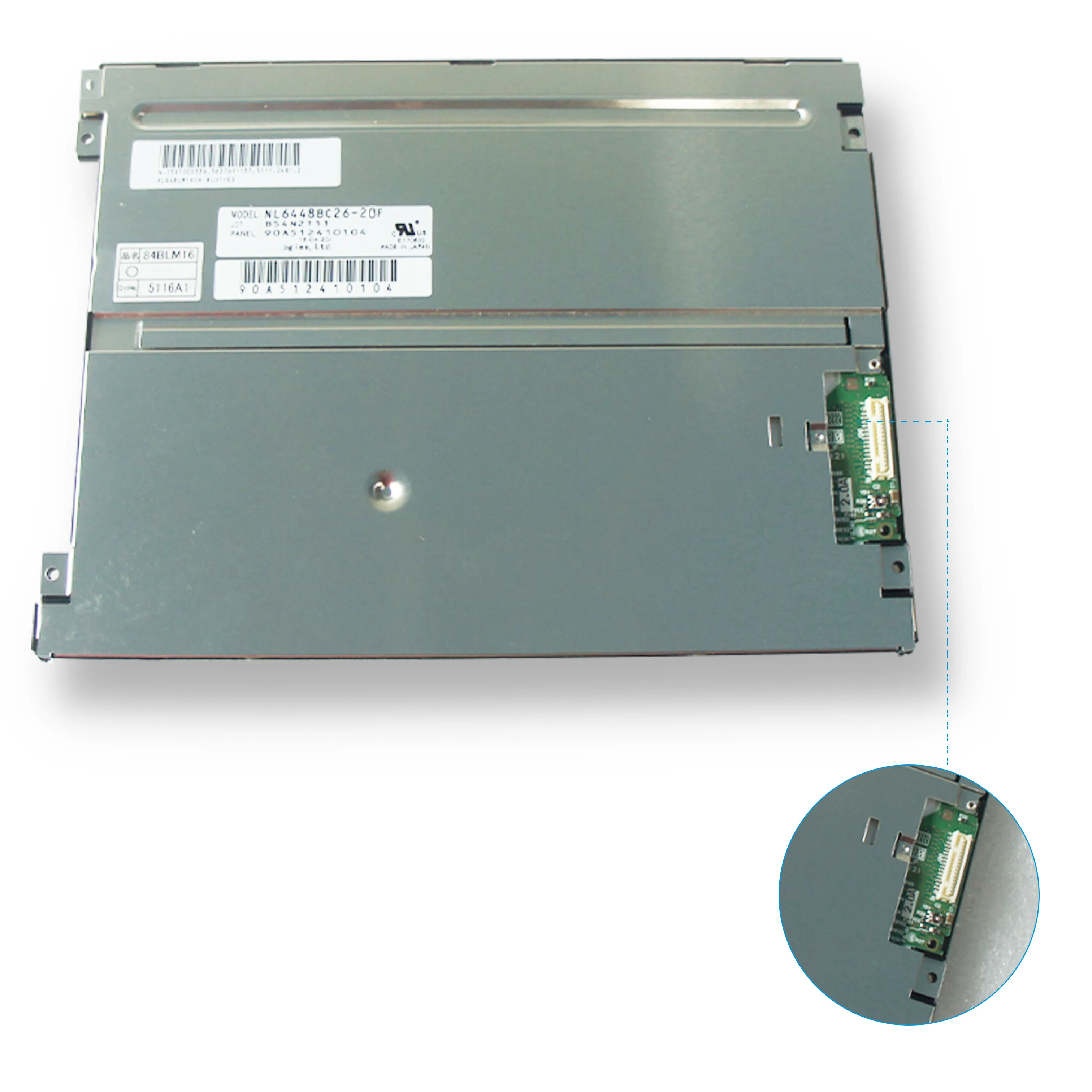

G185XW01 V1 AUO 18.5inch lcd display G185XW01 V.1
The modern industrial and commercial display market demands more than just pixels on a screen; it demands reliability, optical consistency, and precise engineering. Among the workhorses of this sector stands the G185XW01 V1 AUO 18.5-inch LCD Display, a model that has garnered significant attention for its robust performance in point-of-sale (POS) systems, gaming machines, and medical equipment. This article provides a deep dive into the technical architecture and practical application of the G185XW01 V.1 variant, moving beyond superficial specifications to explore its backlight technology, interface logic, and thermal management.
As a revision of the original G185XW01, the "V.1" designation carries specific implications for compatibility and performance tuning. We will dissect the nuances of resolution (1366x768), luminance (250 cd/m² typical), and viewing angles, while addressing the critical question of why this panel remains a preferred choice for 24/7 operation. Whether you are a procurement specialist, an integrator, or an engineer, this analysis aims to provide actionable insights into maximizing the lifespan and visual quality of this specific display module.
The G185XW01 V1 AUO employs a TN (Twisted Nematic) LCD technology, a choice that is often questioned by those accustomed to IPS panels. However, in the context of its target applications, TN offers distinct advantages. The panel delivers a typical luminance of 250 cd/m², which is sufficient for indoor environments. More critical is the contrast ratio, rated at 1000:1. This figure is achieved through precise cell gap control and a normally white mode, ensuring deep blacks for text readability.
Viewing angles are rated at 70/70/50/60 degrees (left/right/up/down). While narrow vertical angles may seem like a limitation, they actually serve as a security feature in point-of-sale or kiosk environments. By restricting the vertical field of view, the panel naturally prevents unintended viewing from above or below, focusing the image squarely on the user. The 5ms response time is another TN advantage, significantly reducing motion blur in dynamic content like slot machine animations, making this display a functional triumph for specific use cases over broader consumer panels.
Unlike modern edge-lit or direct-lit LED panels, the G185XW01 V.1 utilizes a WLED (White Light-Emitting Diode) edge-lit backlight system. What sets this model apart is the 2-string configuration. This design is not arbitrary; it provides redundancy. If one LED string begins to degrade, the second string maintains a baseline level of illumination, preventing immediate catastrophic failure. This is critical for industrial environments where a black screen can cause operational downtime.
The backlight is rated for 50,000 hours of life under normal operating conditions. However, this lifespan is heavily dependent on ambient temperature and current driving levels. The driver board on the AUO G185XW01 V1 includes a dimming function via PWM (Pulse Width Modulation) at a frequency range that minimizes flicker perception. Integrators must note that replacing the backlight is non-trivial; the CCFL-to-LED conversion is built into the module's bezel, meaning any failure typically requires a full panel replacement. Proper thermal management—specifically ensuring the ambient temperature stays below the 70°C maximum—is the single most effective way to extend backlight life.
The electrical interface of the G185XW01 V1 AUO is a standard LVDS (Low-Voltage Differential Signaling) with a single-channel, 1ch/8-bit configuration. This is a 30-pin connector, a departure from the 40-pin found in older larger panels. The voltage supply is 5.0V typical, which is forgiving for standard embedded controllers.
A key consideration for integrators is the signal timing. The panel requires a precise pixel clock of approximately 72 MHz. If the driving board supplies a clock frequency outside this tolerance, the image will exhibit artifacts such as vertical lines or sync drift. The LVDS cable quality is also paramount; any impedance mismatch (target 100 ohms differential) can cause reflections that degrade image stability over longer distances. This makes the G185XW01 V.1 sensitive to poor-quality third-party cable replacements. For reliable integration, always pair this display with a board that outputs an exact 1366x768 resolution at 60Hz to ensure seamless handshaking between the T-Con and the source.
Physically, the AUO G185XW01 V1 measures 430.4 (H) x 254.6 (V) x 13.5 (D) mm. The active area covers exactly 409.8 x 230.4 mm, offering a 16:9 aspect ratio. The bezel is designed for easy screw mounting via specific holes, which is standard for industrial chassis. The module weight is approximately 1.5 kg, a reflection of the metallic back cover needed for heat dissipation.
Thermal design is a critical, often overlooked facet. The panel's operating temperature range is 0°C to 70°C, but the storage range is broader (-20°C to 60°C). In a high-density gaming machine or a small enclosure, heat buildup inside the housing can easily exceed 50°C. This softens the liquid crystal material, increasing response time and potentially causing temporary image sticking (ghosting). We recommend integrators add at least a 5mm gap for airflow behind the panel and avoid direct contact with hot power supply units. Failure to manage heat will reduce both contrast stability and backlight longevity, leading to premature aging of the display unit.
While the G185XW01 V1 is technically an 18.5-inch monitor module, it has found a specific niche that insulates it from commodity pricing. Its primary applications are medical monitors (for patient vital signs), gaming machines (video slots), and industrial HMIs (Human-Machine Interfaces). The key differentiator is its automatic dimming capability via the PWM pin, which allows integrators to adjust brightness based on ambient light sensors—a requirement for medical compliance.
Furthermore, this panel is often chosen as a replacement part for existing equipment. Many older POS terminals and cash registers were designed around this exact form factor and hole pattern. Because AUO does not change the physical outline between the V1 and V.1 revisions, it serves as a drop-in replacement. However, the V.1 revision improved the LC (Liquid Crystal) voltage drive, which means it consumes slightly less power (12.5W typical) than the original. This makes it ideal for systems with constrained power budgets, such as battery-backed embedded systems or tight power-over-Ethernet (PoE) configurations.
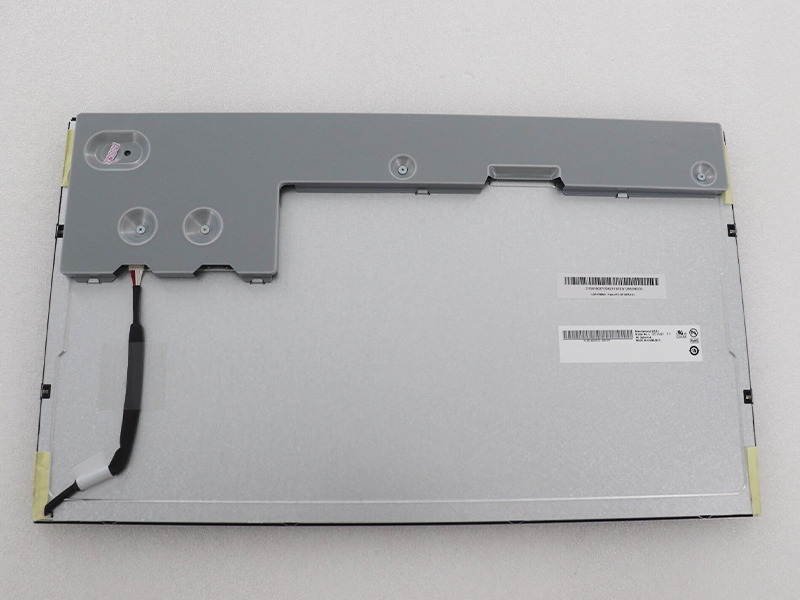
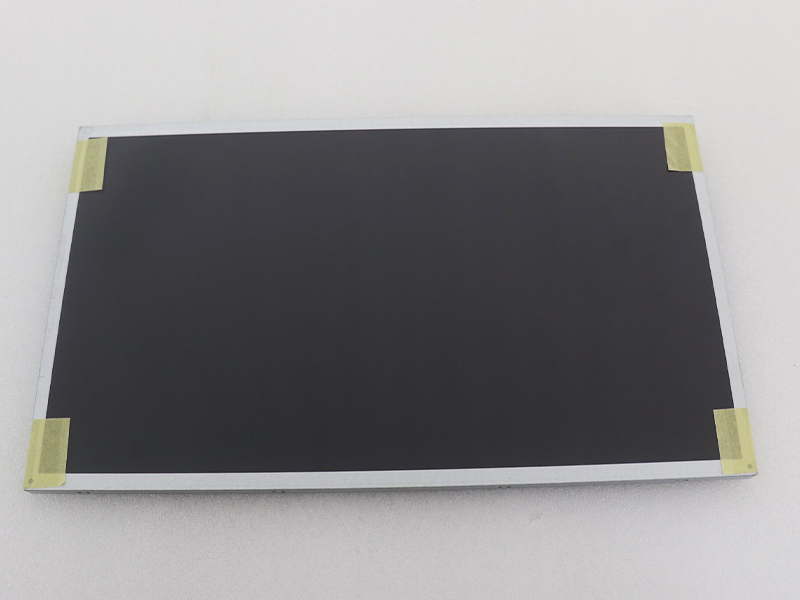
The G185XW01 V.1 competes directly with panels like the Samsung LTM185HT01 or BOE HV185WX1. However, AUO maintains a higher market share for this specific size due to superior reliability testing. AUO's panels undergo rigorous vibration and humidity testing (85°C/85% RH). The V.1 revision specifically addressed a common failure in the original G185XW01—a failure in the gate driver IC due to high-temperature stress. By switching to a different gate driver array, the V.1 offers a 30% reduction in the failure rate in 24/7 operations.
For procurement specialists, the lifecycle status is crucial. As of writing, the G185XW01 V1 AUO is not classified as "end-of-life" (EOL) but is in a "mature product" stage. This means that while it is still widely available via secondary and tertiary channels, AUO has reduced its primary manufacturing volume. Buyers should secure inventory as "last-time buy" options from reputable distributors to avoid supply chain disruptions. The V.1 revision is currently the most stable version to stock, as it incorporates all previous hardware bug fixes.
Q: Is the G185XW01 V1 the same as the G185XW01 V.1?
A: Yes, while the naming indicates a revision (V.1 being newer), they are the same physical model. The V.1 has improved gate driver ICs for better high-temperature reliability.
Q: Can I use this display with a Raspberry Pi?
A: Yes, but you will need an LVDS-to-HDMI controller board. The panel does not have a direct HDMI port; it requires an external LVDS driver board.
Q: What is the maximum resolution supported?
A: The native resolution is 1366 x 768 pixels. It can accept a 1920x1080 input, but the image will be scaled down and may look softer.
Q: How do I control the backlight brightness?
A: The backlight is controlled via a PWM duty cycle on pin 5 (or 6) of the backlight connector. You need to supply a 5V PWM signal.
Q: Is the screen touch-sensitive?
A: No, the G185XW01 V1 is a pure LCD panel. It does not include a touch sensor, though it is often paired with an external touch frame.
Q: Why is my image showing vertical lines?
A: This usually indicates a bad LVDS cable connection or an incompatible timing signal. Ensure your controller board outputs 72 MHz pixel clock.
Q: Can I replace the backlight unit?
A: It is technically possible but difficult. The LED strips are glued to the metal frame. It is more cost-effective to replace the whole panel in most cases.
Q: What is the weight of this panel?
A: The typical weight is approximately 1.5 kg (3.3 lbs).
Q: Does this panel support 24-bit color depth?
A: Yes, with its 8-bit driver, it can display 16.7 million colors, offering true 24-bit RGB representation.
Q: Where can I find the datasheet?
A: The datasheet is available from authorized AUO distributors or technical libraries like Panelook or Displayspectrum. Search for "G185XW01 V1 Specification."
Conclusion
The G185XW01 V1 AUO 18.5-inch LCD Display is a testament to the principle that effective industrial design favors reliability over flashy specifications. We have explored how its TN technology, while seemingly outdated, provides the vertical viewing angle control and fast response times essential for POS and gaming systems. We uncovered the engineering behind its 2-string WLED backlight, which prioritizes redundancy and longevity in 24/7 operation, and clarified the precise interface requirements—specifically the 72 MHz pixel clock and 30-pin LVDS connector—that define its compatibility.
For the engineer or integrator, the V.1 revision represents a mature, stable platform that eliminates the early failure modes of its predecessor. This panel is not a "bargain" display; it is a workhorse component designed for a specific duty cycle. By respecting its thermal limits (below 70°C) and using quality LVDS cables, you can expect years of artifact-free operation. In a world obsessed with 4K and OLED, the humble G185XW01 V.1 quietly powers the machines that run our everyday transactions—a true unsung hero of the industrial display world.