- Industrial LCD display
-
Industrial Products
- DC Servo Drive
- AC Servo Drive
- other
- Heidelberg
- FANUC
- IFM
- Meter
- CCD
- Membrane Keypad
- Film
- YOKOGAWA Module
- Card
- ABB
- MITSUBISHI
- FANUC
- KEYENCE
- BECKHOFF
- Honeywell
- HOLLYSYS
- FUJI servo drives
- HP
- solenoid valve
- thermostat
- Siemens adapter
- color oscilloscope
- Fujitsu connector
- CHELIC
- SMC
- CISCO Module
- INTEL
- Key board
- FAIRCHILD
- Motherboard
- Board
- Bearing
- other
- Control Panel
- Contactor
- Circuit
- OMRON
- Relay
- Controller
- Photoelectric Switch
- Photoelectric Sensor
- Original
- Fan
- Motor Driver
- Limit Switch
- Amplifier
- power supply
- LENZE
- Cable
- Encoder
- Sensor
- Transformer
- Fiber Optic Sensor
- Protection Relay
- Temperature Controller
- Proximity Switch
- Switch Sensor
- Siemens
- Industrial board
- HMI Touch Glass
-
HMI Full Machine Whole unit
- OMRON HMI Touch Panel
- Siemens HMI Touch Panel
- Mitsubishi HMI Touch Panel
- Allen-Bradley automation HMI Touch Panel
- DELTA HMI Touch Panel
- EVIEW DELTA HMI Touch Panel
- KINCO DELTA HMI Touch Panel
- HITECH HMI Touch Panel
- WEINTECK HMI Touch Panel
- TECVIEW HMI Touch Panel
- WEINVIEW HMI Touch Panel
- PRO-FACE HMI Touch Panel
- SIMATIC HMI Touch Panel
- AMPIRE HMI Touch Panel
- HEIDELBERG HMI Touch Panel
- PANASONIC HMI Touch Panel
- PATLITE HMI Touch Panel
- KYOCERA HMI Touch Panel
- KEYENCE HMI Touch Panel
- WEINVIEW HMI Touch Panel
- HITECH HMI Touch Panel
- FUJI HMI Touch Panel
- HAKKO HMI Touch Panel
- SCHNEIDER HMI Touch Panel
- SAMKOON touch panel
- other
- Module
- lcd inverter
- Membrane Keypad Switch
- Winni Touch Screens
- Frequency Inverter
- Servo Motor
- PLC


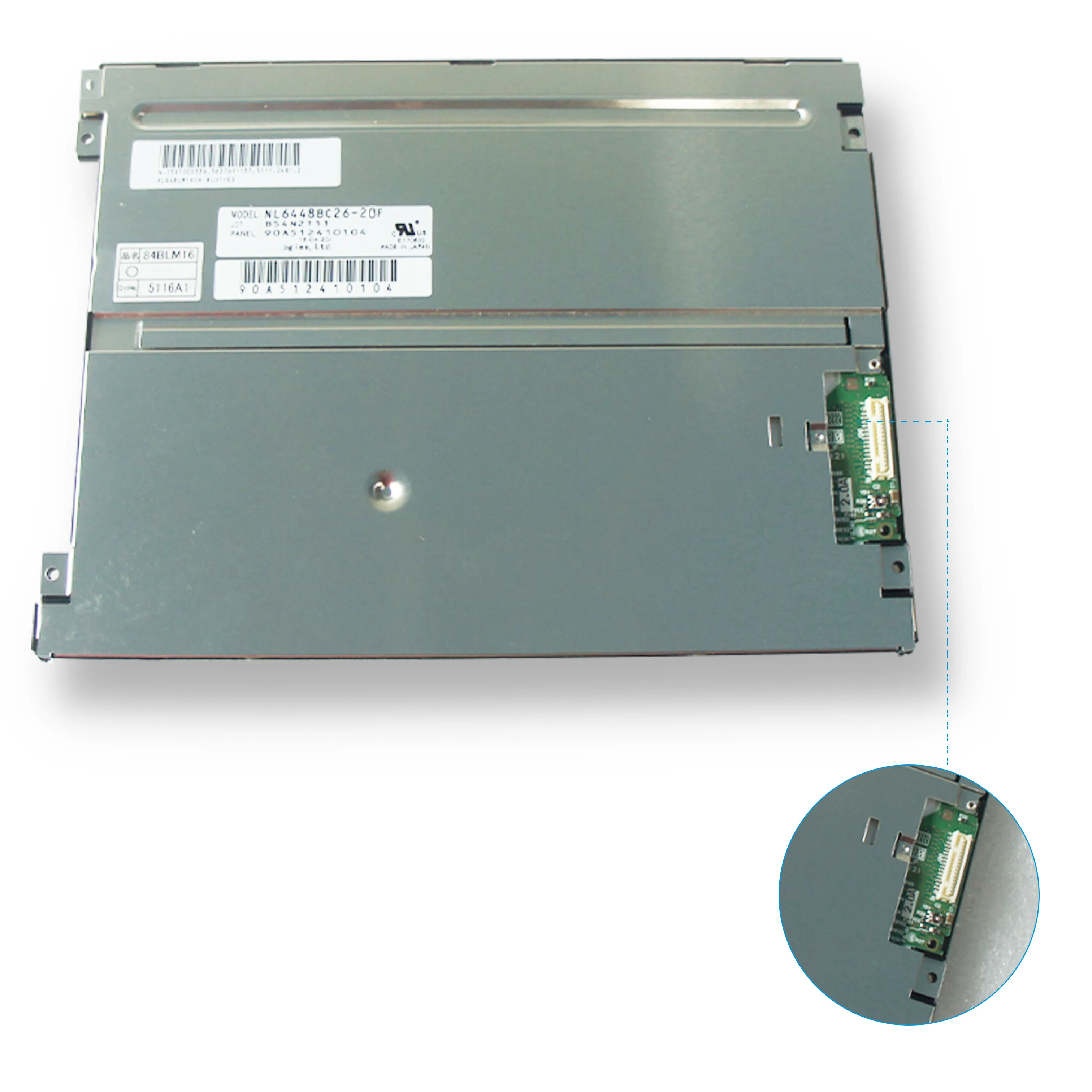

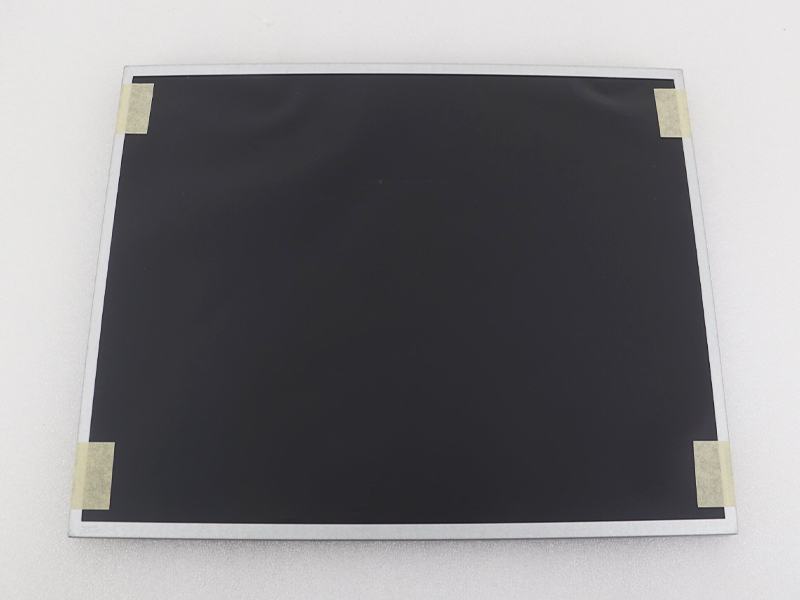
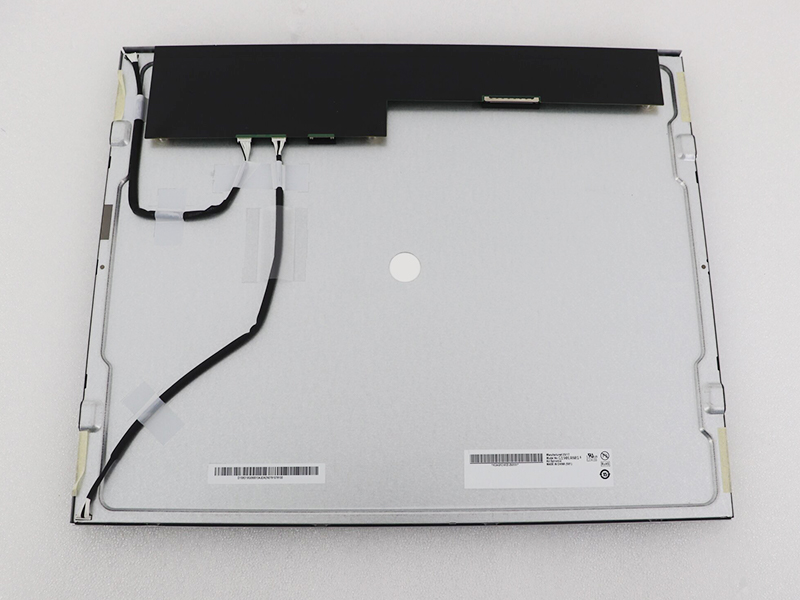
G190EAN01.5 AUO 19inch LCD Display New and Original
In the rapidly evolving landscape of industrial automation, medical imaging, and transportation systems, the demand for robust, high-reliability display solutions remains paramount. The G190EAN01.5, a 19-inch LCD panel manufactured by AU Optronics (AUO), stands as a testament to enduring engineering excellence in a niche market that refuses to be fully displaced by consumer-grade alternatives. This article delves deep into the specifications, technological architecture, and application-specific advantages of this particular model, while also clarifying the critical distinction between new and original sourcing in a market saturated with surplus and counterfeit components. We will explore why this specific panel, with its unique optical characteristics and industrial-grade durability, continues to be a preferred choice for system integrators and OEMs. Rather than a simple product review, this analysis serves as a comprehensive guide for engineers and procurement professionals seeking to understand the G190EAN01.5's role in mission-critical environments, its technical differentiators, and the procurement strategies required to secure genuine, long-lasting units.
The G190EAN01.5 is not a generic off-the-shelf monitor; it is a specifically engineered a-Si TFT-LCD (amorphous silicon thin-film transistor liquid crystal display) module. With a screen diagonal of 19.0 inches, it occupies a classic form factor that balances visibility with space efficiency. However, its true value lies in its resolution and luminance profile. Operating at a native resolution of 1280 x 1024 (SXGA), this panel offers a 5:4 aspect ratio, a format highly favored in industrial and medical applications where vertical screen real estate is critical for reading data lists, patient charts, or control system logs. The panel boasts a typical brightness of 350 cd/m² (nits), making it suitable for brightly lit environments like factory floors or operating rooms. Furthermore, its contrast ratio of 1000:1 ensures clear differentiation between deep blacks and bright whites, which is essential for diagnostic imaging. The viewing angles, specified at 85°/85°/85°/85° (CR≥10), are wide, ensuring readability from various operator positions. This specific model also supports LVDS (Low-Voltage Differential Signaling) interface, a standard for industrial connectivity, ensuring compatibility with a broad range of embedded controllers and single-board computers.
What truly separates the G190EAN01.5 from consumer displays is its industrial-grade operating temperature range and mechanical robustness. Rated for operation between -20°C and +70°C, this panel can withstand the thermal extremes found in outdoor kiosks, cold storage facilities, or near industrial machinery. This is achieved through the use of a wide-temperature liquid crystal mixture and a robust backlight unit. The backlight itself typically utilizes a 4-string LED configuration, designed for longevity and uniform luminance, with a rated life of 50,000 hours or more. The physical construction of the module includes a sturdy metal frame (bezel) that protects the glass and electronic components from vibration and shock. For system integrators, this durability translates directly into lower total cost of ownership, as the need for field replacements is dramatically reduced. The panel’s surface treatment, usually anti-glare (AG) with a hardness rating of 3H, minimizes reflections and resists minor scratches, a critical feature for touch-enabled applications or environments where the screen may be cleaned frequently. This is a panel built for 24/7 operation, not for intermittent home use.
In an era dominated by 16:9 widescreen displays, the 5:4 aspect ratio of the G190EAN01.5 may seem anachronistic. However, for specific workloads, it is a deliberate advantage. In a Picture-in-Picture (PIP) or multi-window environment common in medical PACS (Picture Archiving and Communication System) or industrial SCADA (Supervisory Control and Data Acquisition) systems, the 1280x1024 resolution provides more vertical pixels than a comparable 1280x720 (HD) panel. This allows operators to see more rows of data without scrolling. Furthermore, the panel supports 16.7 million colors (8-bit) with a color saturation of 72% NTSC. While this is not a wide-gamut display for photo editing, it is more than sufficient for precise color coding in alarm systems or for viewing standard grayscale medical images. The pixel pitch of approximately 0.294 mm offers a crisp image at standard viewing distances. The response time (typically 5-8 ms Tr+Tf) ensures that moving data or video feeds do not produce distracting ghosting. The elegance of this panel is its "fitness for purpose": it provides the exact optical performance required for its target applications, without the unnecessary cost or power consumption of higher-resolution, higher-color-gamut panels that would offer no practical benefit.
For procurement professionals, the term "New and Original" for the G190EAN01.5 carries significant weight. The market is flooded with surplus (new-old-stock that may have been stored poorly), refurbished (used panels with replaced backlights or polarizers), and outright counterfeit panels. An original AUO G190EAN01.5 indicates a unit manufactured by AUO, with authentic components and full traceability. A "new" unit implies it has never been used or mounted, but it could still be a grey-market import. The highest standard is a "New and Original" unit sourced directly from an authorized distributor or a reputable surplus broker who guarantees the supply chain. Key authentication markers include the AUO logo and model number printed on the back of the panel, the presence of a standard AUO label with a date code, and the specific pin-out configuration of the LVDS connector. Using a non-original or counterfeit panel in a medical device or safety-critical industrial system can lead to compliance failures (e.g., IEC 60601 for medical equipment), unpredictable failures, and severe liability issues. Therefore, verifying the origin is not just a quality check; it is a risk management imperative. Always request a Certificate of Authenticity (COA) and inspect the physical condition for signs of rework.
The G190EAN01.5 is not a general-purpose display; it is a specialist. Its primary applications are deeply embedded in three sectors: Medical (Patient Monitoring and Diagnostic Imaging), Industrial (Human-Machine Interface / HMI), and Transportation (Kiosks and In-Vehicle Systems). In medical settings, its 5:4 ratio is ideal for displaying multiple vital sign waveforms simultaneously. The high brightness ensures readability in bright surgical suites, while the wide viewing angle allows multiple clinicians to view the screen. In industrial settings, the panel is often paired with a resistive or projected capacitive touch screen and sealed into a panel mount enclosure. The robust construction withstands the dust, vibration, and temperature swings of a factory floor. For gaming machines, the panel's fast response time and high contrast provide a crisp, engaging visual experience for slot machines or video lottery terminals. In public kiosks, the anti-glare surface and high luminance combat ambient light from windows or overhead fixtures. The G190EAN01.5's longevity is a key feature here; a kiosk in a busy train station cannot afford a monitor failure every two years. The panel is designed for a lifecycle that often exceeds 5-7 years of continuous operation, a standard that consumer-grade monitors simply cannot match.
What is the exact resolution of the G190EAN01.5?
It is 1280 x 1024 (SXGA) with a 5:4 aspect ratio.
Can this panel be used outdoors?
Yes, in shaded or semi-outdoor environments, due to its 350 cd/m² brightness and wide operating temperature range of -20°C to +70°C. For direct sunlight, a high-brightness version may be needed.
What is the interface type for this LCD module?
It uses a standard LVDS (Low-Voltage Differential Signaling) interface, typically with a 30-pin connector.
Is the G190EAN01.5 suitable for medical diagnostic imaging? Y
es, it is often used in patient monitors and some diagnostic displays, but it is not typically a primary diagnostic mammography or radiology monitor (which require higher resolution and DICOM calibration).
What is the typical lifespan of the LED backlight?
The rated life is typically 50,000 hours (half-life of brightness). Actual life can be longer at lower brightness settings.
Can I use this panel with a Raspberry Pi?
Yes, with an appropriate LVDS-to-HDMI or LVDS-to-DSI adapter board. It is not a direct plug-and-play connection.
What is the difference between the G190EAN01.5 and the G190EAN01.0?
They are often compatible, but the .1.5 revision may have minor electrical or timing changes. Always check the AUO datasheet for the specific revision notes.
Does the panel come with a touch screen?
No, it is a bare TFT-LCD module. Touch panels are typically added by the system integrator.
How can I verify if a panel is "New and Original"?
Check for the AUO logo, model number, date code, and matching label. Purchase only from authorized distributors or reputable surplus dealers who provide traceability.
What is the power consumption of this panel?
Typically around 12-15 Watts (depending on backlight current), making it relatively energy-efficient for its size and brightness.
Conclusion
The G190EAN01.5 from AUO is a masterclass in industrial design—a component engineered not for consumer excitement but for unwavering reliability in demanding environments. Its 5:4 aspect ratio, wide temperature tolerance, and robust mechanical construction make it a vital building block for medical, industrial, and transportation systems that cannot tolerate downtime. For engineers and procurement managers, the true challenge lies not in the panel's specifications—which are well-documented and performant—but in the integrity of the supply chain. Securing a New and Original unit is not a luxury but a necessity for compliance and operational continuity. As we continue to push toward smarter factories and more connected healthcare, the role of such specialized, high-reliability components becomes even more critical. The G190EAN01.5 proves that sometimes the best technology is the one designed to be invisible, working perfectly behind the scenes for years on end. When sourcing your next project, prioritize authentication over the lowest price, and you will gain a partner in reliability for the long haul.