- Industrial LCD display
-
Industrial Products
- DC Servo Drive
- AC Servo Drive
- other
- Heidelberg
- FANUC
- IFM
- Meter
- CCD
- Membrane Keypad
- Film
- YOKOGAWA Module
- Card
- ABB
- MITSUBISHI
- FANUC
- KEYENCE
- BECKHOFF
- Honeywell
- HOLLYSYS
- FUJI servo drives
- HP
- solenoid valve
- thermostat
- Siemens adapter
- color oscilloscope
- Fujitsu connector
- CHELIC
- SMC
- CISCO Module
- INTEL
- Key board
- FAIRCHILD
- Motherboard
- Board
- Bearing
- other
- Control Panel
- Contactor
- Circuit
- OMRON
- Relay
- Controller
- Photoelectric Switch
- Photoelectric Sensor
- Original
- Fan
- Motor Driver
- Limit Switch
- Amplifier
- power supply
- LENZE
- Cable
- Encoder
- Sensor
- Transformer
- Fiber Optic Sensor
- Protection Relay
- Temperature Controller
- Proximity Switch
- Switch Sensor
- Siemens
- Industrial board
- HMI Touch Glass
-
HMI Full Machine Whole unit
- OMRON HMI Touch Panel
- Siemens HMI Touch Panel
- Mitsubishi HMI Touch Panel
- Allen-Bradley automation HMI Touch Panel
- DELTA HMI Touch Panel
- EVIEW DELTA HMI Touch Panel
- KINCO DELTA HMI Touch Panel
- HITECH HMI Touch Panel
- WEINTECK HMI Touch Panel
- TECVIEW HMI Touch Panel
- WEINVIEW HMI Touch Panel
- PRO-FACE HMI Touch Panel
- SIMATIC HMI Touch Panel
- AMPIRE HMI Touch Panel
- HEIDELBERG HMI Touch Panel
- PANASONIC HMI Touch Panel
- PATLITE HMI Touch Panel
- KYOCERA HMI Touch Panel
- KEYENCE HMI Touch Panel
- WEINVIEW HMI Touch Panel
- HITECH HMI Touch Panel
- FUJI HMI Touch Panel
- HAKKO HMI Touch Panel
- SCHNEIDER HMI Touch Panel
- SAMKOON touch panel
- other
- Module
- lcd inverter
- Membrane Keypad Switch
- Winni Touch Screens
- Frequency Inverter
- Servo Motor
- PLC


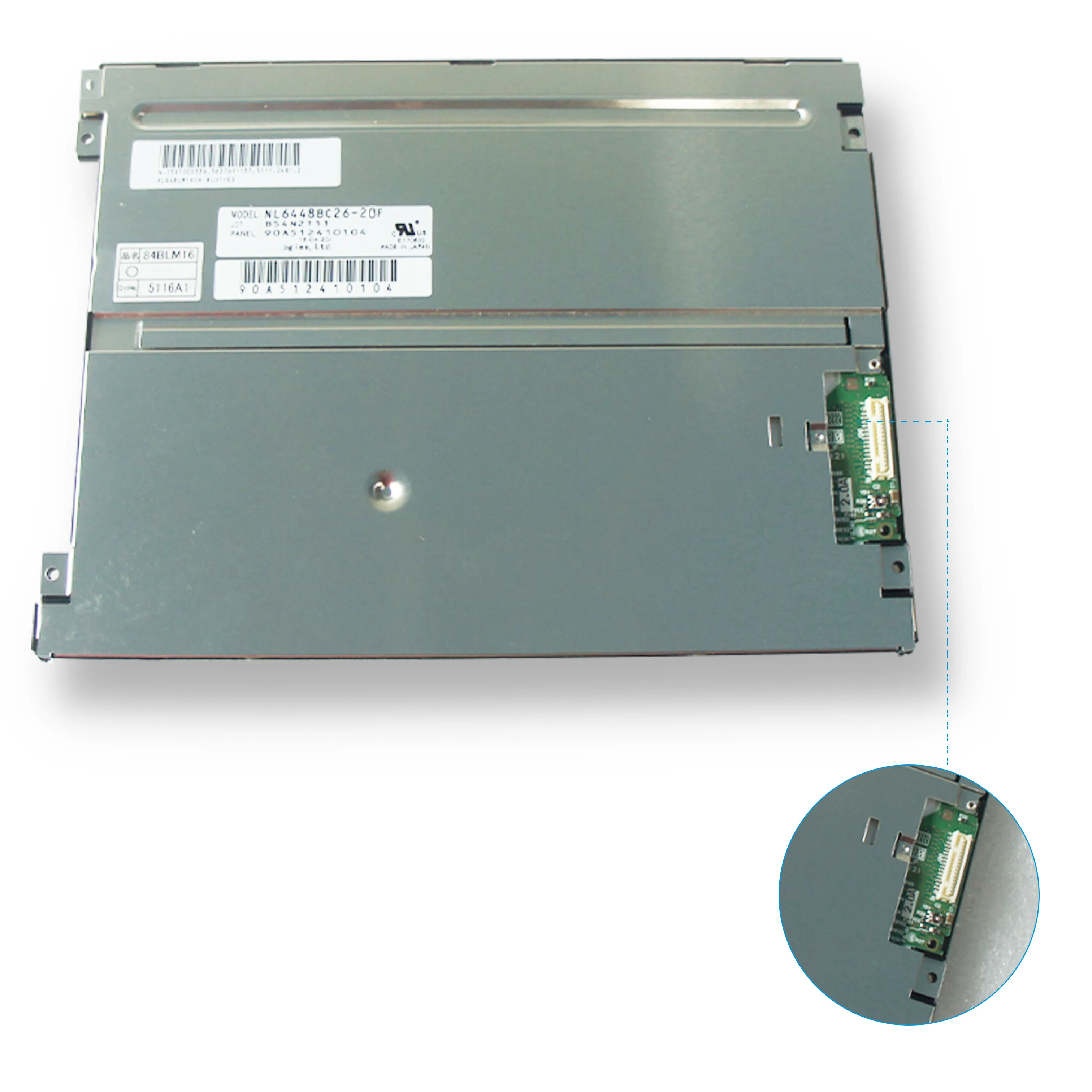

G190ETN01.00 New in stock AUO 19.0" 1280*1024 LCD display
In the specialized world of industrial and medical-grade LCD displays, the pursuit of reliability, longevity, and consistent performance often overshadows the allure of consumer-grade specifications. The AUO G190ETN01.00, a 19.0-inch diagonal LCD module, represents a critical component in this high-stakes market. Recently arriving as new stock, this panel from AU Optronics (AUO) has garnered significant attention from engineers and procurement specialists alike. At its core, the display offers a classic 1280x1024 (SXGA) resolution, a 5:4 aspect ratio that remains a standard in many embedded systems, and the proven robustness of TN (Twisted Nematic) technology. However, the true value of this specific model lies not in its headline specifications, but in its suitability for environments demanding unwavering performance over extended lifecycles. This article delves deep into the technical and commercial significance of the G190ETN01.00, exploring its specifications, target applications, competitive advantages, and the critical factors buyers must consider when sourcing this now in-stock display.
To appreciate the G190ETN01.00, one must first dissect its core technical profile. The "19.0-inch" designation refers to the diagonal viewable area, a size that has become a de facto standard for many Point of Sale (POS) terminals, Human-Machine Interface (HMI) panels, and industrial controllers. The 1280 x 1024 resolution, often called SXGA, provides a pixel density that offers a clear and sharp image for text-heavy interfaces and complex graphical control panels. A key characteristic of this panel is its use of TN (Twisted Nematic) technology. While TN panels are often criticized for narrow viewing angles compared to IPS, they excel in two critical areas for industrial use: response time and cost-efficiency. The typical 5ms response time of the G190ETN01.00 ensures minimal motion blur for any dynamic on-screen data. Furthermore, the panel is designed for a standard LVDS (Low-Voltage Differential Signaling) interface, making it drop-in compatible with a vast ecosystem of single-board computers and controller boards. With a typical brightness rating of 350 cd/m², it is suitable for indoor industrial environments, while the standard contrast ratio of 1000:1 provides adequate color separation for data visualization. The operating temperature range, typically from 0°C to 50°C, confirms its design for controlled indoor settings, not outdoor harsh environments.
In a consumer world dominated by 16:9 and 16:10 widescreen formats, the 5:4 aspect ratio of the G190ETN01.00 might seem anachronistic. However, for industrial and professional applications, this format is not a relic but a deliberate choice driven by ergonomics and software requirements. The 5:4 ratio (1280x1024) provides a nearly square workspace. For Human-Machine Interface (HMI) panels, this extra vertical space is invaluable. It allows operators to see more lines of a process control list or a patient monitoring graph without needing to scroll. In retail POS systems, the 5:4 screen can display a transaction and a detailed receipt preview simultaneously, improving workflow efficiency. Furthermore, legacy software applications, particularly those used in healthcare (PACS viewing) and manufacturing, were written and optimized for this exact resolution. Migrating to a widescreen display often involves scaling issues, black bars, or distorted UI elements. The G190ETN01.00 offers a direct, hardware-level solution to maintain software integrity. This aspect ratio also translates to a taller bezel design, which provides more physical space for integrators to mount touchscreens, protective glass, or custom backlight inverters without interfering with the active display area. It is a classic case of form following function in a reliability-first sector.
The G190ETN01.00's design parameters directly dictate its primary use cases. The most dominant application is in Industrial Automation for HMI panels on factory floors. Here, the display's robustness and consistent performance over long shifts are paramount. It is also a mainstay in Medical Equipment, such as patient monitors and diagnostic imaging stations, where pixel integrity, predictable color rendering (within TN limits), and zero dead pixels are non-negotiable for regulatory compliance. Another critical sector is Retail and Hospitality, specifically for self-checkout kiosks and point-of-sale terminals. Integration of this panel, however, presents specific challenges. While the standard LVDS interface simplifies connection, the pinout, voltage levels (typically 3.3V), and connector type must be meticulously matched with a compatible controller board. Engineers must verify if the standard backlight is CCFL or LED. While many modern iterations of this panel use LED backlights (offering lower power and longer life), older stock might be CCFL-based. The mechanical design of the metal bezel and mounting holes also dictates specific cutouts for the final enclosure. Thermal management is generally straightforward due to low power consumption, but in sealed enclosures, airflow over the backlight driver board should be considered. Sourcing the correct cables and inverter (if applicable) is as critical as sourcing the panel itself.
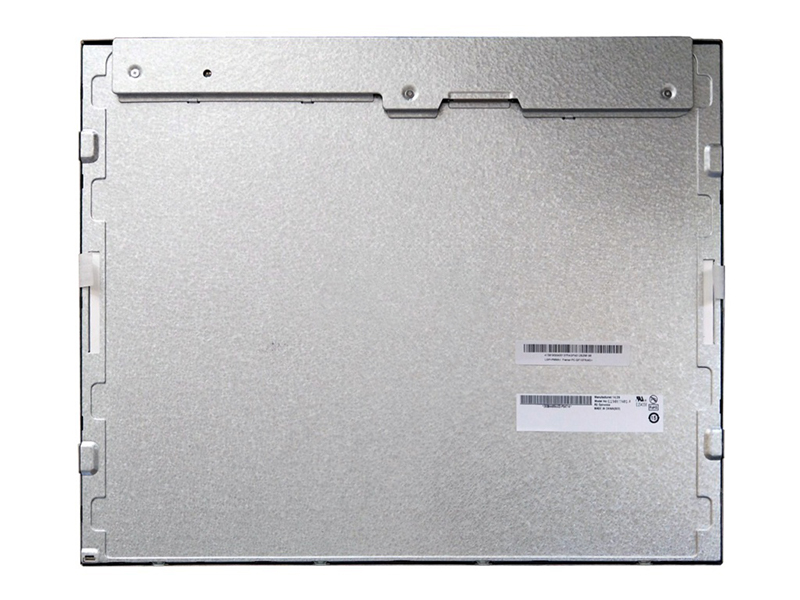

The phrase "New in stock" is the single most important keyword for a procurement specialist in this market. In the lifecycle of industrial displays, parts are often discontinued long before the machinery they serve is obsolete. The G190ETN01.00 being available as new stock offers a strategic opportunity to avoid a costly end-of-life (EOL) crisis. The primary advantage is supply chain continuity. Companies can extend the production run of existing products without undergoing a time-consuming and expensive qualification process for a new panel. This is especially vital in regulated industries like medical devices, where any display change can trigger a re-certification process. Second, it provides a solution for aftermarket service and repairs. Having access to new, original panels ensures that field service teams can perform repairs with components that match the original specifications, preserving warranty and product integrity. Third, buying new stock of a proven model reduces the risk of counterfeits or substandard refurbished units that often flood the market for popular display models. When evaluating "new in stock" offers, buyers must demand verification of the manufacturing date and inquire about the storage conditions (ESD-safe, temperature-controlled). A panel listed as new but stored for years may have degraded internal polarizers, so confirming the "freshness" of the stock is a key due diligence step.
When considering the G190ETN01.00, it is prudent to benchmark it against modern successors like the G190ETN01.1 or entirely new platforms using IPS or higher-resolution panels. The primary advantage of the 01.00 model is its mature driver support. Existing software, FPGA projects, and embedded Linux distributions are fully optimized for it, requiring zero software rework. A modern IPS panel, while offering superior viewing angles, will demand a new driver board, potential timing controller (TCON) updates, and software calibration. This can add 4-8 weeks to a product development cycle. In terms of cost-per-unit, the 01.00 model, as an older design, is typically available at a lower price point than its newest equivalents, making it an excellent choice for cost-sensitive projects that do not require wide viewing angles. The trade-off is the viewing angle performance; in a kiosk used in a high-traffic public area, the narrower TN viewing angles can be a limitation. Conversely, for a fixed-angle, operator-facing HMI panel in a factory, the limitation is negligible. The decision hinges on whether the project values proven reliability and software compatibility over ergonomic flexibility and frills. For many legacy system updates, the G190ETN01.00 is the only viable option to avoid a full platform redesign.
Securing the G190ETN01.00 as new stock requires a forward-looking procurement strategy. The first step is to audit your current inventory and forecast demand for the next 12-24 months. Because this panel is an established model, its availability is finite. A smart strategy is to negotiate a "life-of-type" buy with a reputable distributor, securing a fixed price for a large quantity. This hedges against both price increases and eventual obsolescence. Second, design for modularity. Even after integrating this panel, ensure that the bezel, controller board, and cabling are designed with a secondary panel option in mind (e.g., the 01.1 version). This "drop-in replacement" design philosophy means that when the 01.00 does become truly obsolete, the transition is seamless. Third, invest in a front-of-screen (FOS) validation process. Establish a clear procedure for testing each incoming unit for dead pixels, backlight uniformity, and interface compatibility. This is far cheaper than discovering a defective panel after it has been installed in a finished product. Finally, maintain a relationship with technical support at your display distributor. They can provide early warning of any EOL notices from AUO, allowing you to execute your contingency plan well in advance. By treating the display not as a commodity but as a strategic component, you ensure the longevity of your product line.
Is the G190ETN01.00 a CCFL or LED backlight panel?
The original G190ETN01.00 typically uses a CCFL backlight, but many stock variants exist. Always verify the specific part number suffix (e.g., if it includes an "L" designation for LED) or consult the datasheet to confirm backlight type before ordering.
Does this panel support 1680x1050 (WSXGA+) resolution?
No. The native resolution is strictly 1280x1024 (SXGA). Inputting higher resolutions will force the timing controller to scale, which often results in blurry or distorted images. It is not a high-resolution panel.
What is the exact connector type for the LVDS interface?
Typically, it uses a 30-pin or 20-pin JAE FI-X series or similar connector. Check the specific datasheet for your unit to ensure your cable is compatible, as pinouts can vary slightly.
Can I use a generic universal LVDS controller board with this display?
Yes, but the controller must support SXGA (1280x1024) resolution and a standard 5:4 aspect ratio. You will also need a compatible LVDS cable and, if using a CCFL backlight, a separate inverter.
What is the typical response time of the G190ETN01.00?
The typical Tr/Tf (Rise/Fall) response time is 5ms, making it fast enough for real-time data visualization and simple animation, though not suitable for high-frame-rate gaming.
Is this display suitable for outdoor use or direct sunlight?
Generally, no. The standard brightness of 350 cd/m² is not high enough for sunlight readability. A specific high-brightness version (e.g., a "H" variant) would be required for outdoor use.
What does "New in stock" mean for the lifespan of this panel?
It means the panel has not been previously used. Its operational lifespan (typically 30,000-50,000 hours for the backlight) starts fresh. However, ask for the manufacturing date; displays stored for more than 3-4 years may have component degradation.
What are the typical voltage requirements for the logic board?
The logic board on the G190ETN01.00 typically operates on 3.3V. The backlight inverter (CCFL) will require a separate 5V or 12V power source, depending on the specific inverter model.
What is the viewing angle specification?
As a TN panel, the viewing angles are limited. Typical values are 80°/80°/80°/65° (L/R/U/D). This means the image degrades significantly when viewed from below (65°).
Where can I find the official datasheet and mechanical drawing?
Official documentation is typically available from authorized AUO distributors (e.g., Winstar, Avnet) or through AUO's official support channels. Always request the latest revision to ensure accuracy.
Conclusion: A Strategic Linchpin for Legacy and Reliability-Centric Systems
The AUO G190ETN01.00 is far more than a simple inventory line item; it is a strategic component for any organization that values product longevity, software stability, and operational reliability over the fleeting benefits of the latest consumer display trends. While its TN technology and 5:4 aspect ratio may not win beauty contests, they win where it matters most: in the factory, the hospital, and the retail kiosk. The availability of new stock offers a critical window for manufacturers to maintain production continuity, complete aftermarket repairs, and avoid the substantial costs of obsolescence and re-qualification. The key to leveraging this opportunity lies in meticulous due diligence—verifying backlight type, connector compatibility, and stock freshness—and in adopting a forward-thinking procurement strategy that anticipates the eventual end-of-life. In a world of planned obsolescence, the G190ETN01.00 stands as a testament to the enduring value of engineering for function and longevity. For engineers and procurement professionals, securing this panel today is an investment in the uninterrupted operation of tomorrow's critical systems.