- Industrial LCD display
-
Industrial Products
- DC Servo Drive
- AC Servo Drive
- other
- Heidelberg
- FANUC
- IFM
- Meter
- CCD
- Membrane Keypad
- Film
- YOKOGAWA Module
- Card
- ABB
- MITSUBISHI
- FANUC
- KEYENCE
- BECKHOFF
- Honeywell
- HOLLYSYS
- FUJI servo drives
- HP
- solenoid valve
- thermostat
- Siemens adapter
- color oscilloscope
- Fujitsu connector
- CHELIC
- SMC
- CISCO Module
- INTEL
- Key board
- FAIRCHILD
- Motherboard
- Board
- Bearing
- other
- Control Panel
- Contactor
- Circuit
- OMRON
- Relay
- Controller
- Photoelectric Switch
- Photoelectric Sensor
- Original
- Fan
- Motor Driver
- Limit Switch
- Amplifier
- power supply
- LENZE
- Cable
- Encoder
- Sensor
- Transformer
- Fiber Optic Sensor
- Protection Relay
- Temperature Controller
- Proximity Switch
- Switch Sensor
- Siemens
- Industrial board
- HMI Touch Glass
-
HMI Full Machine Whole unit
- OMRON HMI Touch Panel
- Siemens HMI Touch Panel
- Mitsubishi HMI Touch Panel
- Allen-Bradley automation HMI Touch Panel
- DELTA HMI Touch Panel
- EVIEW DELTA HMI Touch Panel
- KINCO DELTA HMI Touch Panel
- HITECH HMI Touch Panel
- WEINTECK HMI Touch Panel
- TECVIEW HMI Touch Panel
- WEINVIEW HMI Touch Panel
- PRO-FACE HMI Touch Panel
- SIMATIC HMI Touch Panel
- AMPIRE HMI Touch Panel
- HEIDELBERG HMI Touch Panel
- PANASONIC HMI Touch Panel
- PATLITE HMI Touch Panel
- KYOCERA HMI Touch Panel
- KEYENCE HMI Touch Panel
- WEINVIEW HMI Touch Panel
- HITECH HMI Touch Panel
- FUJI HMI Touch Panel
- HAKKO HMI Touch Panel
- SCHNEIDER HMI Touch Panel
- SAMKOON touch panel
- other
- Module
- lcd inverter
- Membrane Keypad Switch
- Winni Touch Screens
- Frequency Inverter
- Servo Motor
- PLC


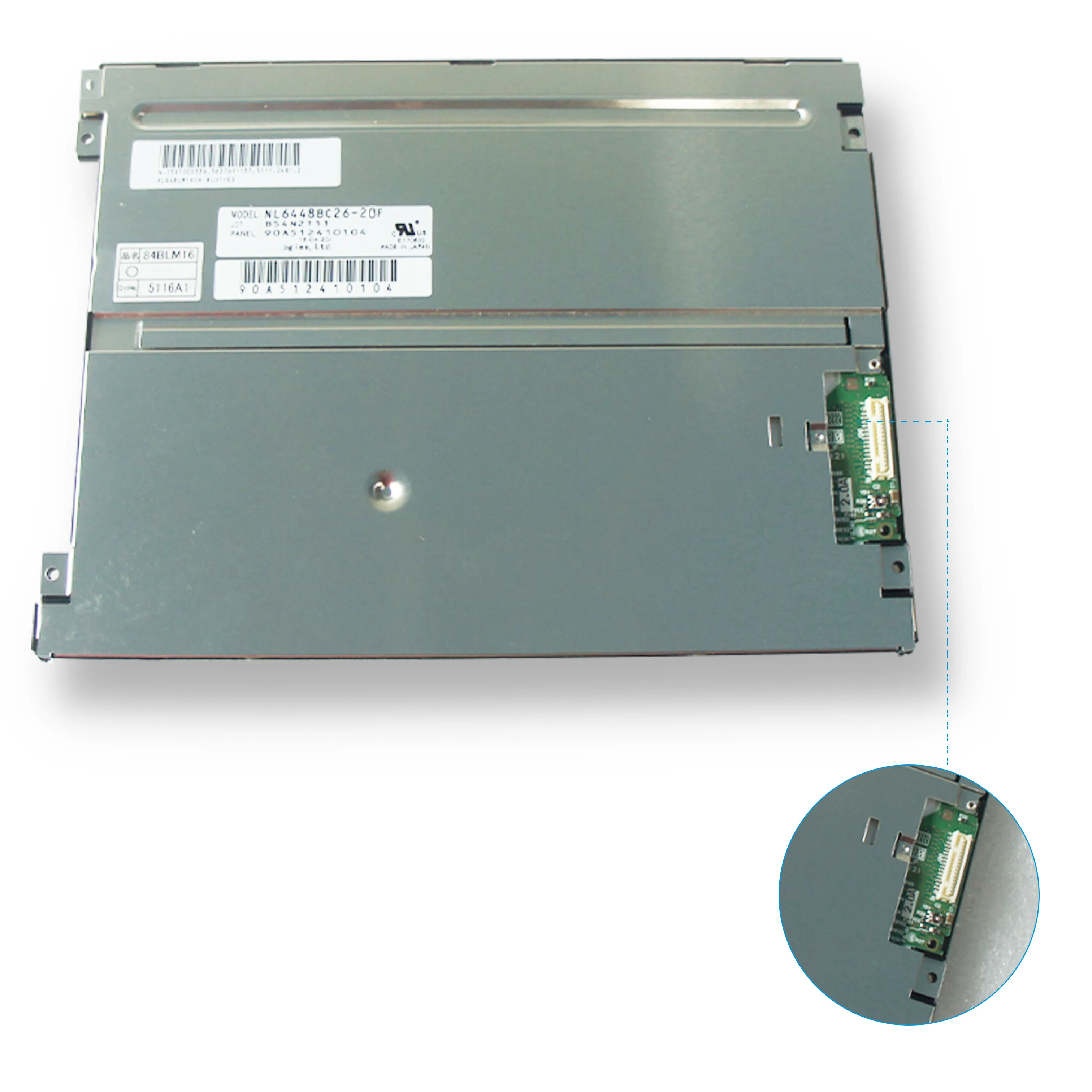

G190ETN01.3 Original AUO 19.0inch 1280*1024 LCD display
In an era dominated by sleek, high-resolution consumer monitors, the industrial display sector often operates on a different set of priorities. Here, reliability, longevity, and precise optical performance outweigh the latest trends in refresh rates or ultra-thin bezels. The G190ETN01.3, an original 19.0-inch LCD panel manufactured by AU Optronics (AUO), stands as a testament to this philosophy. This article delves deep into the specifications, applications, and intrinsic value of this specific model. While many might dismiss a 1280x1024 resolution panel as outdated, the G190ETN01.3 occupies a critical niche in medical imaging, industrial automation, and gaming kiosks where precision and stability are non-negotiable. We will dissect its technical architecture, contrast it with modern alternatives, and explain why “original” and “AUO” are keywords that signify a commitment to quality. This is not a review of a consumer gadget; it is an analysis of a professional-grade component that continues to power critical systems worldwide. By the end, you will understand why this specific model remains a benchmark for its size class.
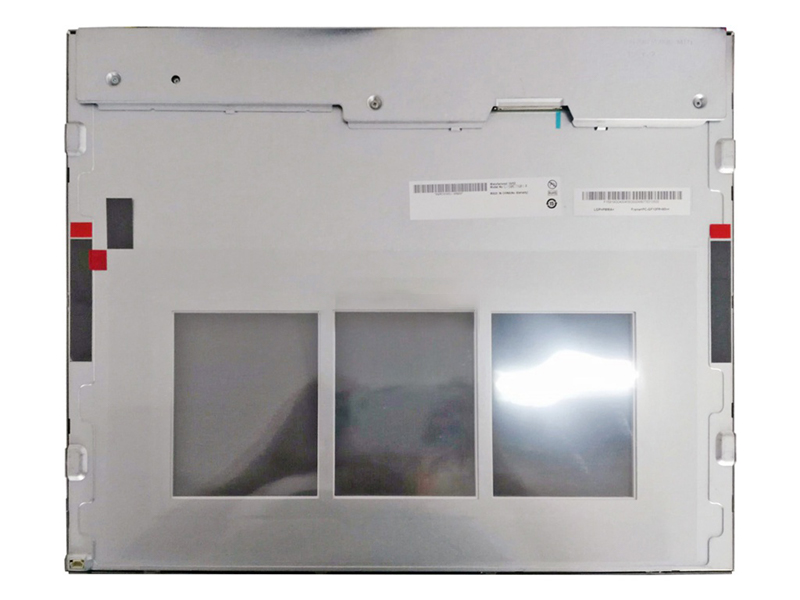
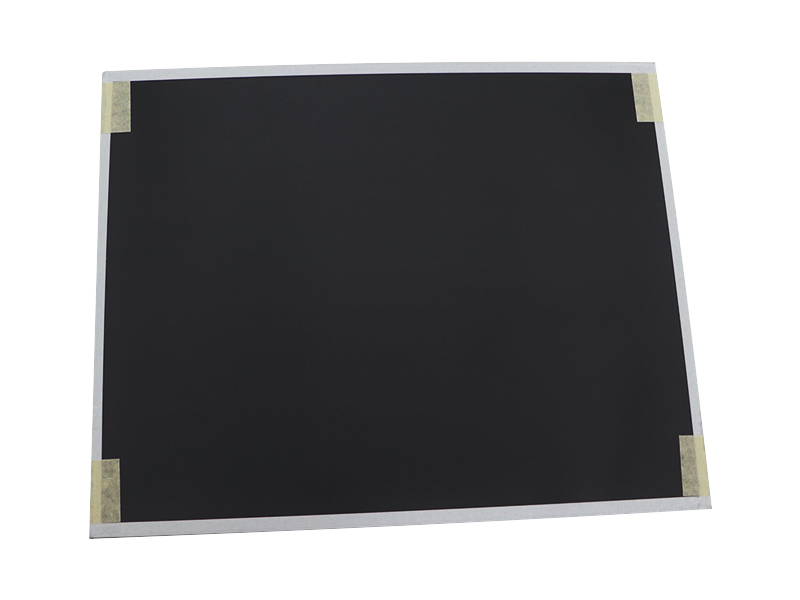
To fully appreciate this display, one must first decode its nomenclature. The G190ETN01.3 is not a random string of characters. The “G190” prefix designates its 19.0-inch diagonal screen size, a standard for 4:3 aspect ratio panels. The “E” typically refers to a specific series within AUO’s industrial lineup, often optimized for embedded systems. The “TN” is crucial—it signifies Twisted Nematic technology. In the context of industrial use, TN panels offer a distinct advantage: they provide the fastest response times and the lowest power consumption compared to IPS or VA panels of the same era. The “01.3” indicates a specific revision, often incorporating subtle updates to timing controllers (TCON) or backlight driver circuitry. The inclusion of the word “Original” is paramount in this market. In industries like medical diagnostics or casino gaming, a “compatible” or “replacement” panel can lead to color variance, timing errors, or premature failure. An Original AUO panel guarantees that the chemical composition of the liquid crystal, the spectral output of the LED backlight, and the firmware in the control board are precisely as the OEM designed them. This ensures plug-and-play compatibility with existing systems, a critical factor for mission-critical equipment where downtime is measured in lost revenue or patient care delays.
While the SXGA resolution of 1280x1024 might seem modest by today’s standards, it is the supporting technical specifications that define this panel’s true utility. The G190ETN01.3 typically operates with an LVDS (Low-Voltage Differential Signaling) interface, a standard that allows for long cable runs with minimal signal degradation—a vital requirement for industrial enclosures where the display may be separated from the computer by several feet. The color depth is typically 16.7 million colors (8-bit), which is essential for applications requiring subtle gradations, such as grayscale medical image viewing. A standout feature is its wide operating temperature range, often rated from -20°C to +70°C. This is a non-negotiable specification for outdoor or unheated factory environments where consumer displays would fail. Furthermore, the panel boasts a high brightness rating, typically around 350-400 cd/m², ensuring readability in high-ambient-light conditions like a production floor or an open-air kiosk. The contrast ratio of 1000:1 is standard for TN technology, but its consistency across the entire viewing angle is what makes it reliable for data monitoring. The viewing angles (typically 80/80/70/70 degrees) are a known limitation of TN, yet in many head-down display applications, where the operator is seated directly in front of the screen, this characteristic becomes a non-issue and allows for greater privacy in multi-monitor setups.
The G190ETN01.3 was not designed for general office productivity; it was engineered for specific, demanding niches. Its primary application is in the medical imaging field, particularly in PACS (Picture Archiving and Communication System) workstations for viewing X-rays, CT scans, and MRIs. The 19-inch diagonal and 4:3 aspect ratio are ideal for displaying standard film sizes without awkward letterboxing. The panel’s stable grayscale performance and consistent backlight ensure that a radiologist can trust the image they see. Another major vertical is industrial automation. Here, the panel is used in Human-Machine Interfaces (HMIs) for controlling assembly lines, CNC machines, and process controllers. The wide temperature tolerance and 24/7 operational capability make it a robust choice. A third, highly specialized market is the gaming and hospitality industry. This panel is a standard replacement for video lottery terminals (VLTs), slot machines, and electronic gaming tables. The 19-inch size fits seamlessly into existing cabinet designs, and the fast response time ensures that animations display cleanly. Furthermore, the “original” tag is critical here due to UL (Underwriters Laboratories) and gaming commission certifications. Using a non-original panel can void the equipment’s regulatory compliance. The kiosk and retail sector also utilizes this model in ATMs and self-service check-in terminals, where the 4:3 aspect ratio is perfectly suited for portrait-mode software interfaces.
The market for 19-inch 1280x1024 panels is flooded with low-cost generic “compatible” replacements. However, the gap in performance between these and an Original AUO is substantial. The most immediate difference lies in backlight quality. Original AUO panels guarantee consistent CCT (Correlated Color Temperature) and chromaticity coordinates, meaning that white will appear as a pure, neutral white across the entire screen, and grayscales will be balanced. Generic panels often have a noticeable color cast (yellow or blue) that is not uniform. This is fatal in medical applications where the ability to distinguish between two shades of gray can be a diagnostic issue. Another critical differentiator is firmware integrity. The TCON board on the G190ETN01.3 contains proprietary scaling algorithms and timing sequences. Generic panels may have incorrect EDID (Extended Display Identification Data), leading to your system not recognizing the correct native resolution, resulting in fuzzy text. The durability of the CCFL or LED edge-strips is also a major factor. Genuine AUO LEDs have a rated lifespan often exceeding 50,000 hours to half-brightness, with a failure curve that is gradual and predictable. Generic panels may use lower-grade LEDs that fail prematurely, causing dark spots or flickering. Finally, the electrical interface on an original panel adheres strictly to standard pinouts. A generic panel might use a different connector or require a specific jumper setting, leading to compatibility headaches or, worse, damage to the host system's LVDS controller. For any application where operational continuity is paramount, the original is the only logical choice.
While AUO has certainly shifted its focus to larger, ultra-high-resolution panels for the consumer market, the G190ETN01.3 remains in active production or is supported by a vast, mature supply chain due to its entrenched use in the aforementioned industries. This creates an interesting dichotomy: the panel is technologically “mature,” but its market is stable and recession-resistant. For engineers designing a new system, opting for this panel offers a significant advantage in product lifecycle management. Unlike a trendy 2K monitor that may be discontinued after 18 months, the industrial 19-inch class has a history of 5-7 year production cycles. This allows manufacturers to design a product around a display that will be reliably available for years, reducing the cost and complexity of re-certification. For procurement managers, the key is to source from authorized distributors or reputable e-waste recyclers that provide genuine, tested pulls. The price premium for an original AUO panel compared to a generic is often offset by the reduction in warranty claims and field failures. As the industry moves toward higher resolutions, the 1280x1024 panel will not become obsolete; it will simply become a value-engineered component, offering a lower-cost, highly reliable solution for applications that do not need 4K pixels. The G190ETN01.3, therefore, is not a legacy product; it is a specialized tool for a specific job.
Q: What does "Original AUO" mean for this panel?
A: It guarantees that the panel is manufactured by AU Optronics with their proprietary materials, firmware, and quality control, ensuring exact specifications and compatibility. "Compatible" panels may have different color, timing, or durability characteristics.
Q: Is the G190ETN01.3 a good choice for gaming?
A: Not for modern PC gaming. It is designed for industrial/kiosk use. However, its fast TN response time makes it suitable for classic arcade cabinets and video lottery terminals (VLTs) where 4:3 aspect ratio is required.
Q: Can I use this panel with a standard desktop computer?
A: Yes, but only if you have a display controller board (also called an LCD controller board or driver board) that converts HDMI/VGA to the panel's LVDS interface. It is not a direct plug-and-play monitor.
Q: What is the typical lifespan of the backlight on a genuine AUO G190ETN01.3?
A: For LED-backlit versions, typical lifespan is rated at 50,000 hours to half-brightness. For older CCFL versions, it is closer to 30,000-40,000 hours, with a gradual dimming curve.
Q: Why is the 4:3 aspect ratio still important?
A: It is the standard for medical imaging (X-Ray film size) and many industrial HMI/SCADA interfaces. A 16:9 screen would require letterboxing or stretching, which degrades usability and accuracy.
Q: Is the viewing angle a problem for this TN panel?
A: Yes, TN panels have narrow viewing angles (typically 80/80/70/70). This is a limitation for group viewing but is acceptable for single-user, head-on applications like a workstation or kiosk.
Q: How do I identify a genuine AUO panel from a fake?
A: Check the manufacturer label on the back of the panel. It must have AUO's logo, the specific model number (G190ETN01.3), and a unique serial number matched against AUO's database.
Q: What is the exact resolution and size?
A: The resolution is 1280 x 1024 (SXGA). The diagonal screen size is 19.0 inches. The active area is approximately 376.3mm x 301.0mm.
Q: Is this panel suitable for outdoor use?
A: Its wide operating temperature range makes it suitable for unheated enclosures. However, its brightness (350-400 cd/m²) is not sufficient for direct sunlight without an external high-brightness backlight upgrade.
Q: What is the difference between G190ETN01.0, .1, .2, and .3?
A: These are engineering revisions. The .3 version is the latest standard version, typically containing a more stable timing controller (TCON) and improved backlight driver circuitry for reduced flicker and better longevity.
Conclusion: A Cornerstone of Industrial Reliability
The G190ETN01.3 from AUO is far more than a 19-inch LCD panel; it is a meticulously engineered component built for the stringent demands of professional environments. From its robust LVDS interface and wide operating temperature to its precise color reproduction and reliable backlight, every specification is a deliberate choice to solve a specific problem. While the consumer world chases the latest trends, this panel remains the backbone of medical workstations, factory floors, and gaming kiosks. Its longevity is not due to a lack of progress, but because it perfectly balances performance, durability, and cost for its target applications. For engineers, procurement managers, and system integrators, choosing the Original AUO product is an investment in reduced downtime, consistent quality, and predictable lifecycle management. It reminds us that in many industries, the best technology is not the flashiest, but the one you can count on day in and day out. When reliability is the metric, the G190ETN01.3 is a standard of excellence that the market continues to respect.