- Industrie-LCD-Display
-
Industrial Products
- DC Servo Drive
- AC Servo Drive
- other
- Heidelberg
- FANUC
- IFM
- Meter
- CCD
- Membrane Keypad
- Film
- YOKOGAWA
- Card
- ABB
- MITSUBISHI
- FANUC
- KEYENCE
- BECKHOFF
- Honeywell
- HOLLYSYS
- FUJI servo drives
- HP
- solenoid valve
- thermostat
- Siemens adapter
- color oscilloscope
- Fujitsu connector
- CHELIC
- SMC
- CISCO
- INTEL
- Key board
- FAIRCHILD
- Der Aufsichtsrat
- Board
- Bearing
- other
- Control Panel
- Contactor
- Circuit
- Omron
- Relais.
- Der controller
- Optoelektronische schalter
- Optoelektronische sensoren
- Original
- Fan
- Motortreiber
- Endschalter
- Verstärker
- power supply
- LENZE
- Cable
- Encoder
- Sensor
- Transformator
- Fiber Optic Sensor
- Schutzrelais
- Temperaturregler
- Näherungsschalter
- Switch Sensor
- Siemens
- PCB
- HMI Touch-Glas
-
HMI-Vollautomat Ganze Einheit
- OMRON HMI Touch Panel
- Siemens HMI Touch Panel
- Mitsubishi HMI Touch Panel
- Allen-Bradley Automatisierung HMI Touch
- DELTA HMI Touch Panel
- EVIEW DELTA HMI Touch Panel
- KINCO DELTA HMI Touch Panel
- HITECH HMI Touch Panel
- WEINTECK HMI Touch Panel
- TECVIEW HMI Touch Panel
- WEINVIEW HMI Touch Panel
- PRO-FACE HMI Touch Panel
- SIMATIC HMI Touch Panel
- AMPIRE HMI Touch Panel
- HEIDELBERG HMI Touch Panel
- PANASONIC HMI Touch Panel
- PATLITE HMI Touch Panel
- KYOCERA HMI Touch Panel
- KEYENCE HMI Touch Panel
- WEINVIEW HMI Touch Panel
- HITECH HMI Touch Panel
- FUJI HMI Touch Panel
- HAKKO HMI Touch Panel
- SCHNEIDER HMI Touch Panel
- SAMKOON touch panel
- andere
- Module
- LCD Wechselrichter
- Membran Tastenfeld Schalter
- Winni Touch Screens
- Frequenzumrichter
- Servo Motor
- PLC



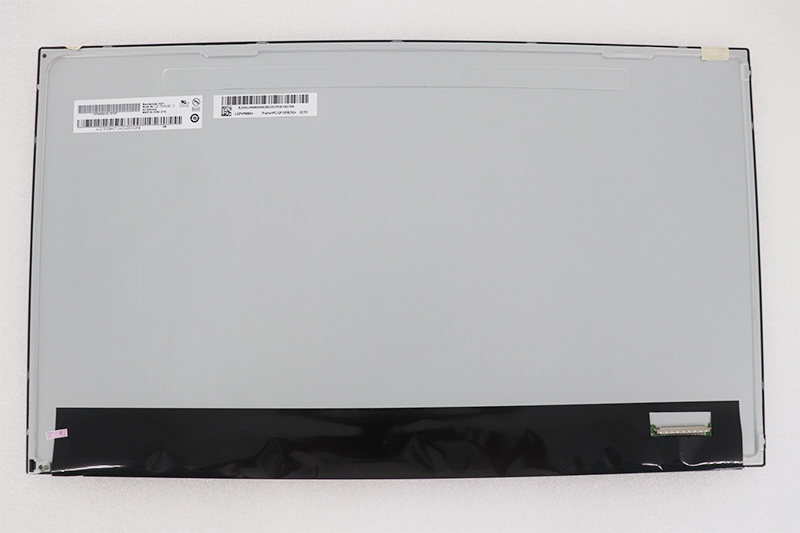
G215HAN01.3 21.5 ' 1920*1080 LCD panel
The industrial display market is often overlooked by consumers who are fixated on the latest OLED or high-refresh-rate gaming monitors. Yet, for many critical sectors—from medical imaging to industrial automation—the reliability, clarity, and longevity of a panel are far more important than its bezel size. The G215HAN01.3, a 21.5-inch LCD panel manufactured by Innolux, stands as a compelling case study in this specialized domain. While its specifications—a standard 1920x1080 Full HD resolution and an IPS-like viewing angle—might seem pedestrian at first glance, the true value of this component lies in its technical architecture, optical performance, and suitability for demanding environments. This article delves beyond the surface-level datasheet, exploring the panel’s underlying technology, its position within the industrial supply chain, and the specific use cases where it excels. We will dissect its luminance characteristics, response time trade-offs, and interface compatibility, providing SEO professionals, procurement specialists, and system integrators with a nuanced understanding of why this specific model remains a relevant and trusted choice in a market flooded with alternatives.

At its core, the G215HAN01.3 utilizes Innolux’s proprietary IPS (In-Plane Switching) technology, which is a critical differentiator for professional applications. Unlike older TN (Twisted Nematic) panels that suffer from significant color shift and narrow viewing angles, this panel delivers consistent color reproduction and contrast when viewed from extreme angles—often specified at 89 degrees in all four directions. For a 21.5-inch diagonal, the native 1920 x 1080 resolution translates to a pixel density of approximately 102 pixels per inch (PPI). This is a deliberate choice; it is high enough to render sharp text and fine interface details, but not so high as to require aggressive scaling that could introduce compatibility issues with legacy industrial software or medical imaging systems. The panel’s color gamut is typically rated at 72% NTSC, which is the baseline for sRGB coverage. While not a high-end gamut for graphic design, this level of color accuracy is more than sufficient for diagnostic imaging in radiology (where grayscale precision is key) and for Human-Machine Interface (HMI) panels, where clear, non-fatiguing visuals are paramount.
One of the most misunderstood specifications in industrial panels is luminance, often measured in nits (cd/m²). The G215HAN01.3 is commonly offered in standard (300-350 cd/m²) and high-brightness (up to 1000 cd/m²) variants. The critical insight here is not just the peak brightness, but the panel’s ability to maintain contrast in high-ambient-light environments. A standard consumer monitor with 250 nits is unusable in a sunlit factory floor or a retail kiosk near a window. The G215HAN01.3 is designed to be paired with optical bonding, where a layer of adhesive is applied between the LCD cell and the cover glass. This eliminates the air gap, drastically reducing internal reflections and glare. The result is that a 450-nit bonded panel appears more readable than a 700-nit non-bonded panel. The contrast ratio, typically specified at 1000:1, is another deliberate engineering choice. In medical imaging, for instance, an excessively high contrast ratio can crush shadow details, making subtle anomalies invisible. This panel’s balanced contrast ensures smooth grayscale transitions, which is a non-negotiable requirement for DICOM (Digital Imaging and Communications in Medicine) compliance.
Connectivity is a silent killer in many industrial display deployments. The G215HAN01.3 supports standard LVDS (Low-Voltage Differential Signaling) interface, typically configured as a 2-channel, 8-bit system. While LVDS is older than eDP (Embedded DisplayPort), it remains the gold standard for industrial robustness for a specific reason: signal integrity over distance. In a typical PC monitor, the controller board is inches from the panel. In an industrial kiosk or a medical cart, the display driver might be located several meters away from the panel itself. LVDS is inherently more resistant to electromagnetic interference (EMI) and signal degradation over longer cable runs compared to many modern high-speed interfaces. Furthermore, the 8-bit color depth (as opposed to 6-bit + FRC) is a crucial detail. It ensures 16.7 million true colors without temporal dithering, which can cause flickering artifacts in video capture or when displaying static medical images. System integrators must also verify the panel’s specific pin-out and power supply requirements (typically 5V or 12V backlight drive) to ensure compatibility with their chosen driver board.
The G215HAN01.3 is designed for a 24/7 operational life cycle, a stark contrast to consumer panels rated for only 8-10 hours of daily use. However, this longevity is heavily dependent on thermal management. The panel’s datasheet specifies an operating temperature range of 0°C to 50°C, but the internal temperature of an enclosed kiosk can easily exceed this. The primary heat generators are the backlight LEDs and the T-con (Timing Controller) board. In high-brightness models, the backlight LEDs are driven at higher currents, generating significant heat that can accelerate liquid crystal degradation and cause permanent image retention (burn-in). To mitigate this, many implementations use a derating strategy: the backlight current is automatically reduced when the ambient temperature rises above a certain threshold. For integrators, a critical success factor is ensuring airflow over the metal chassis of the panel (often using an aluminum frame for heat sinking). Failure to do so can reduce the panel's lifespan from 50,000 hours to under 20,000 hours. The panel’s low power consumption—typically under 20 watts for the standard brightness version—also contributes to reducing thermal load in sealed enclosures.
The true value of the G215HAN01.3 is often realized when it is paired with a touch sensor. The panel’s mechanical design is inherently friendly to resistive, capacitive, or even IR touch frames. The key decision for system designers is whether to use air-bonded or optical-bonded touch. Air bonding (using a gasket between the sensor and the panel) is cheaper but introduces two significant problems: parallax error (the gap between the touch surface and the LCD image) and moisture ingress. Optical bonding, by contrast, fills the gap with a transparent silicone gel or UV-curable resin. This eliminates parallax, making touch accuracy far more precise, especially at the edges of the screen. It also dramatically improves sunlight readability by reducing the Fresnel reflections from the internal air gap. For medical or food-grade applications, optical bonding creates a sealed unit that prevents dust and bacteria from accumulating in the gap. The G215HAN01.3’s flat surface and uniform thickness make it an ideal candidate for high-yield optical bonding processes, a characteristic that often differentiates it from cheaper, non-uniform panels on the market.
Understanding the specific market niches for this panel is essential. It is not a gaming panel, and it is not a budget monitor. The G215HAN01.3 finds its strongest footing in three distinct verticals. First, medical imaging: it is frequently used in PACS (Picture Archiving and Communication System) workstations and surgical displays where DICOM compliance and grayscale accuracy are mandatory. Second, industrial HMI: on factory floors, machine control panels using this display benefit from sunlight readability and robust construction. Third, digital signage and kiosks: in ATMs, ticket vending machines, and retail point-of-sale systems, the 16:9 aspect ratio and Full HD resolution provide a perfect canvas for interactive content. A critical consideration for procurement is compatibility substitution. Many older systems were designed around the "G215HAN01.0" or "G215HAN01.2" variants. The ".3" version is often a direct mechanical and electrical drop-in replacement, offering improved backlight efficiency or a slightly wider viewing angle. However, always verify the backlight voltage and connector orientation (bottom vs. side exit) with the original parts list before swapping models. This backward compatibility is a major reason the G215HAN01.3 remains in active production years after its initial release.
Q: Is the G215HAN01.3 compatible with a standard Raspberry Pi?
A: Not directly. The panel uses LVDS, but the Raspberry Pi outputs HDMI/DSI. You would need an LVDS-to-HDMI or LVDS-to-DSI controller board specifically programmed for the G215HAN01.3 timing.
Q: What is the typical lifespan of the LED backlight in this panel?
A: The standard specification is 50,000 hours to half-brightness (L50), but this is highly dependent on operating temperature and current drive levels.
Q: Can I use this panel outdoors?
A: Yes, but only with a high-brightness (700-1000 cd/m²) variant and optical bonding. A standard 300-nit version is unreadable in direct sunlight.
Q: What is the difference between G215HAN01.3 and G215HAN01.2?
A: The ".3" version often features improved color space stability and a slightly updated T-con firmware for better timing. Mechanically and electrically, they are usually interchangeable.
Q: Does this panel support 10-bit color depth?
A: No. It is native 8-bit (6-bit + FRC is not used). For true 10-bit, you would need a more expensive medical-grade panel.
Q: What is the correct connector type for the G215HAN01.3?
A: It typically uses a 30-pin or 51-pin connector, depending on the specific revision (often JAE or Hirose). Always consult the datasheet for the exact pin-out.
Q: Can I wash the polarizer film on the panel if it gets dirty?
A: Yes, but with caution. Use a microfiber cloth with 70% isopropyl alcohol. Do not use acetone, ammonia, or harsh solvents, as they will cloud the polarizer.
Q: Is this panel suitable for a multi-monitor video wall?
A: Partially. It has standard bezels (not ultra-narrow). For tiled video walls, look for the "V01" or "0A" bezel-less variants of the 21.5-inch family.
Q: What is the refresh rate of the G215HAN01.3?
A: The standard recommended rate is 60Hz. While it can be driven at 75Hz, this may violate timing constraints for certain industrial controller boards.
Q: Why is optical bonding so expensive for this panel?
A: The process requires specialized vacuum chambers and UV curing ovens. It also has a yield loss risk. However, it is the only way to achieve sunlight readability and water-proofing.
Conclusion: The Enduring Relevance of a Purpose-Built Component
The G215HAN01.3 is a testament to the power of engineering for a specific purpose. It does not chase gimmicks or consumer trends; instead, it excels at the demanding tasks of medical imaging, industrial control, and interactive kiosks. For the professional buyer, the key takeaway is that specifications alone are insufficient. The true value of this panel lies in its thermal stability, LVDS signal integrity, compatibility with optical bonding, and its role as a reliable drop-in replacement for legacy systems. When sourcing this component, prioritize verified distributors who can guarantee the backlight grade (standard vs. high-brightness) and provide a precise interface specification. In a world obsessed with high refresh rates and ultra-thin profiles, the G215HAN01.3 reminds us that for mission-critical applications, the most important features are often the invisible ones: reliability, consistency, and the peace of mind that comes from a mature, well-documented platform. It is not the newest panel on the market, but it is, for many applications, the smartest choice.