- Industrial LCD display
-
Industrial Products
- DC Servo Drive
- AC Servo Drive
- other
- Heidelberg
- FANUC
- IFM
- Meter
- CCD
- Membrane Keypad
- Film
- YOKOGAWA Module
- Card
- ABB
- MITSUBISHI
- FANUC
- KEYENCE
- BECKHOFF
- Honeywell
- HOLLYSYS
- FUJI servo drives
- HP
- solenoid valve
- thermostat
- Siemens adapter
- color oscilloscope
- Fujitsu connector
- CHELIC
- SMC
- CISCO Module
- INTEL
- Key board
- FAIRCHILD
- Motherboard
- Board
- Bearing
- other
- Control Panel
- Contactor
- Circuit
- OMRON
- Relay
- Controller
- Photoelectric Switch
- Photoelectric Sensor
- Original
- Fan
- Motor Driver
- Limit Switch
- Amplifier
- power supply
- LENZE
- Cable
- Encoder
- Sensor
- Transformer
- Fiber Optic Sensor
- Protection Relay
- Temperature Controller
- Proximity Switch
- Switch Sensor
- Siemens
- Industrial board
- HMI Touch Glass
-
HMI Full Machine Whole unit
- OMRON HMI Touch Panel
- Siemens HMI Touch Panel
- Mitsubishi HMI Touch Panel
- Allen-Bradley automation HMI Touch Panel
- DELTA HMI Touch Panel
- EVIEW DELTA HMI Touch Panel
- KINCO DELTA HMI Touch Panel
- HITECH HMI Touch Panel
- WEINTECK HMI Touch Panel
- TECVIEW HMI Touch Panel
- WEINVIEW HMI Touch Panel
- PRO-FACE HMI Touch Panel
- SIMATIC HMI Touch Panel
- AMPIRE HMI Touch Panel
- HEIDELBERG HMI Touch Panel
- PANASONIC HMI Touch Panel
- PATLITE HMI Touch Panel
- KYOCERA HMI Touch Panel
- KEYENCE HMI Touch Panel
- WEINVIEW HMI Touch Panel
- HITECH HMI Touch Panel
- FUJI HMI Touch Panel
- HAKKO HMI Touch Panel
- SCHNEIDER HMI Touch Panel
- SAMKOON touch panel
- other
- Module
- lcd inverter
- Membrane Keypad Switch
- Winni Touch Screens
- Frequency Inverter
- Servo Motor
- PLC


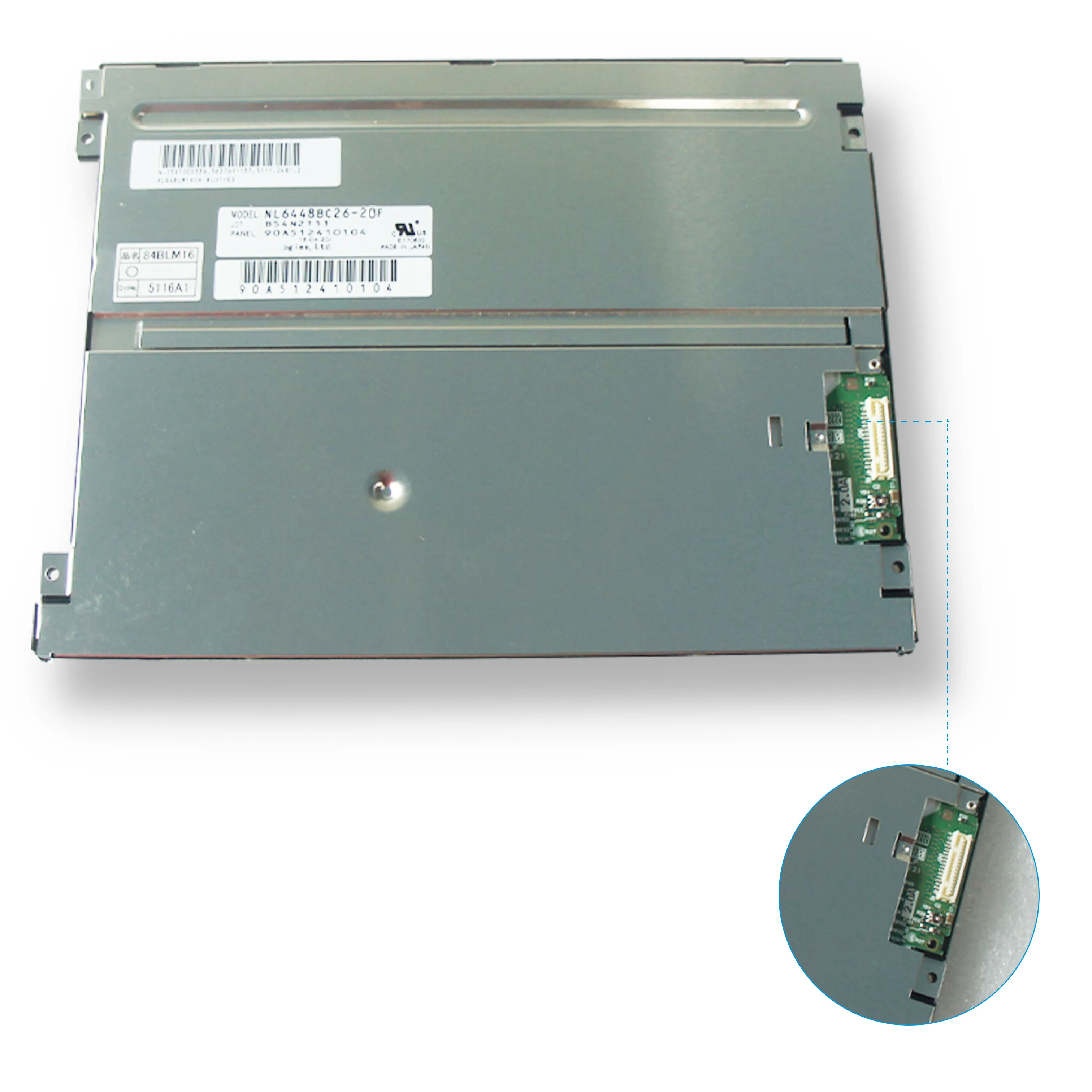

G215HAN01.4 AUO 21.5" TFT-LCD screen 1920*1080 Display
In the vast ecosystem of industrial display technology, the G215HAN01.4 from AU Optronics (AUO) represents a specific, high-stakes intersection of performance, durability, and visual fidelity. At first glance, a 21.5-inch TFT-LCD with a 1920x1080 resolution might seem standard. However, this particular model is engineered for environments where standard consumer monitors fail. Designed primarily for industrial automation, medical imaging, and gaming kiosks, the G215HAN01.4 distinguishes itself through its robust specifications, including high brightness, wide viewing angles, and extended temperature tolerance. This article delves beyond the basic specifications to explore the technology, application logic, and performance nuances that make this screen a critical component in demanding visual systems. We will dissect its optical characteristics, interface architecture, and operational reliability, providing a comprehensive guide for engineers, procurement specialists, and system integrators seeking a reliable display solution for non-consumer applications.
The core of the G215HAN01.4 is an a-Si TFT-LCD (amorphous silicon) active matrix, a mature technology chosen for its balance of cost and performance in the 21.5-inch form factor. However, the true value lies in its implementation. Unlike standard office monitors, this panel utilizes Vertical Alignment (VA) technology rather than the more common TN (Twisted Nematic) or IPS (In-Plane Switching). The choice of VA is deliberate. It delivers a native contrast ratio of 3000:1, significantly deeper than IPS panels, which typically hover around 1000:1. This high contrast is vital for displaying sharp text and rich blacks in dimly lit control rooms or for rendering high-dynamic-range medical images. The panel operates with an 8-bit color depth, capable of reproducing 16.7 million colors, ensuring smooth gradients without the banding seen in lower-bit displays. The timing controller (TCON) is embedded directly on the panel, simplifying integration for system designers and reducing overall bill of materials.
One of the defining features of this AUO model is its high brightness rating. Standard versions of the G215HAN01.4 are rated at 350 cd/m² (nits), but custom variants for outdoor or high-ambient-light kiosks can reach 1000 cd/m² or more. This high luminance is achieved through a powerful LED backlight unit (BLU) designed for longevity and consistent light distribution. The viewing angle is a critical differentiator. Thanks to the VA technology, the panel offers 178° viewing angles horizontally and vertically at a contrast ratio of 10:1. While IPS panels offer similar angle performance, VA maintains its superior contrast at off-center angles, meaning blacks remain dark, and colors do not wash out as severely when viewed from the side. The anti-glare surface treatment (typically 3H hardness) is crucial for industrial environments, reducing reflections from overhead lighting or sunlight, which minimizes operator eye strain during extended monitoring sessions.
The G215HAN01.4 utilizes LVDS (Low-Voltage Differential Signaling) as its primary interface. Specifically, it employs a 2-channel, 8-bit LVDS connector. This is a deliberate architectural choice. LVDS is a robust, low-noise signaling protocol that has been a staple in the industrial display world for over a decade. It allows for the transmission of high-resolution video data over longer cable runs (typically up to 5-10 meters) than newer standards like eDP (Embedded DisplayPort) without significant signal degradation, a common requirement in industrial machinery where the display is physically separated from the processing unit. Power consumption is a key metric. With a typical power draw of approximately 17W to 22W for the full panel (including backlight), it is efficient enough for fanless systems while powerful enough to drive the high-brightness backlight. This low thermal output simplifies thermal management in enclosed kiosk environments, extending overall system lifespan.
Perhaps the most critical aspect for industrial use is the panel’s environmental specification. The G215HAN01.4 is designed to operate reliably across a wide temperature range, typically from 0°C to +50°C for standard use, with storage ranges extending to -20°C to +60°C. This is not a panel designed for a climate-controlled home office. Its construction ensures operation in unheated warehouses or near hot manufacturing equipment. The panel also meets specific vibration and shock resistance standards, a necessity for applications in transportation (in-vehicle infotainment) or heavy machinery. The LED backlight itself is rated for a long lifespan, often exceeding 50,000 hours to half-brightness (L50). This reduces maintenance intervals and total cost of ownership, making it a reliable component in systems that may run 24/7. The absence of a CCFL backlight also means no mercury and easier end-of-life recycling.
Understanding the technical specifications clarifies the ideal deployment scenarios for the G215HAN01.4. The high contrast and wide viewing angle make it a prime candidate for medical patient monitoring and diagnostic imaging where subtle grayscale differences are critical. The high brightness and anti-glare surface are essential for self-service kiosks, ATM machines, and ticketing systems installed in brightly lit lobbies or outdoor shelters. The rugged electrical design and LVDS interface align perfectly with PLC-based HMI (Human-Machine Interface) units in factory automation. For the gaming industry, the swift response time (typically 5-8 ms) and deep blacks provide a more immersive experience than standard office panels. It is important to note that this is a raw panel (open frame), requiring a separate controller board and power supply for use. It is not a drop-in monitor; it is a component for system integrators who need a specific, guaranteed performance matrix for their custom enclosures.


Q1: Is the G215HAN01.4 a touch screen?
A: No, it is a raw LCD panel without touch functionality. It can be integrated with a separate touch overlay (PCAP or resistive).
Q2: What is the specific backlight type?
A: It utilizes a WLED (White Light Emitting Diode) edge-lit backlight system.
Q3: Can this panel be used outdoors in direct sunlight?
A: The standard 350 cd/m² version is not suitable. You require a high-brightness variant (1000+ cd/m²) of this model.
Q4: What is the exact connector type for the signal?
A: Typically, it uses a 30-pin LVDS connector, often from JAE or a similar manufacturer (FI-SE series). Always verify the specific datasheet.
Q5: How is the image quality compared to an IPS panel?
A: It has superior contrast (3000:1 vs 1000:1) but slightly narrower color gamut (72% NTSC) compared to premium IPS.
Q6: Is this panel compatible with a Raspberry Pi or Jetson Nano?
A: Directly, no. You need an LVDS-to-HDMI or LVDS-to-eDP driver board specifically programmed for this panel.
Q7: What is the typical power consumption?
A: Approximately 18W to 22W, depending on the brightness setting and backlight configuration.
Q8: Does it require a cooling fan?
A: In most indoor applications, passive cooling is sufficient. In high-ambient-temperature environments, forced air is recommended.
Q9: What is the surface finish of the screen?
A: It features an anti-glare (AG) surface, typically with a haze value of 25% to reduce reflections.
Q10: Can I run this panel 24/7?
A: Yes, it is designed for continuous operation. The LED backlight rating of 50,000 hours ensures years of service.
Conclusion: The Unsung Component of Reliable Visual Systems
The G215HAN01.4 is a testament to the philosophy that specifications alone do not define a product; it is the application-centric design that determines true value. It is not the fastest, the thinnest, or the cheapest 21.5-inch screen available. Instead, it has been meticulously engineered for durability, optical consistency, and environmental tolerance. For system integrators and industrial designers, its strength lies in its predictable behavior: the high contrast VA technology, the robust LVDS interface, and the extended operational temperature range. When designing a system that must function reliably for years in a harsh environment—be it a factory floor, a hospital corridor, or an outdoor ticket kiosk—the G215HAN01.4 offers a trusted, performance-verified solution. It serves as a reminder that in the industrial world, longevity and reliability are often more valuable than cutting-edge consumer features.