- Industrie-LCD-Display
-
Industrial Products
- DC Servo Drive
- AC Servo Drive
- other
- Heidelberg
- FANUC
- IFM
- Meter
- CCD
- Membrane Keypad
- Film
- YOKOGAWA
- Card
- ABB
- MITSUBISHI
- FANUC
- KEYENCE
- BECKHOFF
- Honeywell
- HOLLYSYS
- FUJI servo drives
- HP
- solenoid valve
- thermostat
- Siemens adapter
- color oscilloscope
- Fujitsu connector
- CHELIC
- SMC
- CISCO
- INTEL
- Key board
- FAIRCHILD
- Der Aufsichtsrat
- Board
- Bearing
- other
- Control Panel
- Contactor
- Circuit
- Omron
- Relais.
- Der controller
- Optoelektronische schalter
- Optoelektronische sensoren
- Original
- Fan
- Motortreiber
- Endschalter
- Verstärker
- power supply
- LENZE
- Cable
- Encoder
- Sensor
- Transformator
- Fiber Optic Sensor
- Schutzrelais
- Temperaturregler
- Näherungsschalter
- Switch Sensor
- Siemens
- PCB
- HMI Touch-Glas
-
HMI-Vollautomat Ganze Einheit
- OMRON HMI Touch Panel
- Siemens HMI Touch Panel
- Mitsubishi HMI Touch Panel
- Allen-Bradley Automatisierung HMI Touch
- DELTA HMI Touch Panel
- EVIEW DELTA HMI Touch Panel
- KINCO DELTA HMI Touch Panel
- HITECH HMI Touch Panel
- WEINTECK HMI Touch Panel
- TECVIEW HMI Touch Panel
- WEINVIEW HMI Touch Panel
- PRO-FACE HMI Touch Panel
- SIMATIC HMI Touch Panel
- AMPIRE HMI Touch Panel
- HEIDELBERG HMI Touch Panel
- PANASONIC HMI Touch Panel
- PATLITE HMI Touch Panel
- KYOCERA HMI Touch Panel
- KEYENCE HMI Touch Panel
- WEINVIEW HMI Touch Panel
- HITECH HMI Touch Panel
- FUJI HMI Touch Panel
- HAKKO HMI Touch Panel
- SCHNEIDER HMI Touch Panel
- SAMKOON touch panel
- andere
- Module
- LCD Wechselrichter
- Membran Tastenfeld Schalter
- Winni Touch Screens
- Frequenzumrichter
- Servo Motor
- PLC



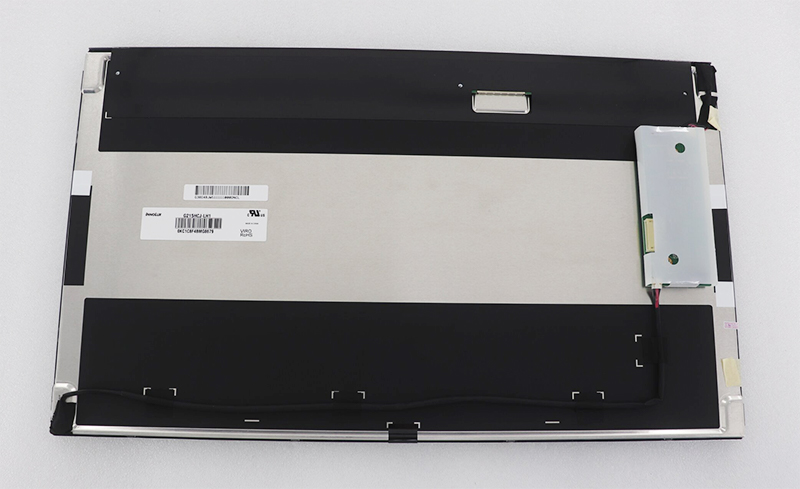
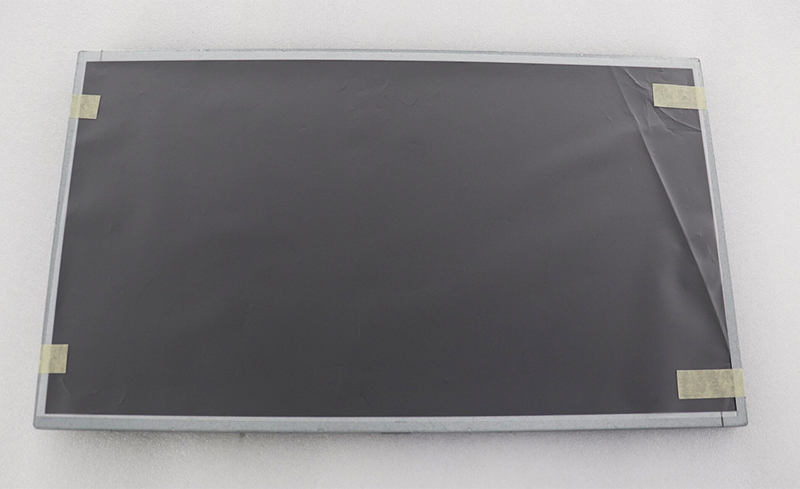
G215HCJ-LH1 Innolux 21.5inch 1920*1080 LCD DISPLAY
In the vast ecosystem of industrial and commercial displays, the G215HCJ-LH1 by Innolux stands as a specialized workhorse, yet it is often misunderstood as a generic monitor component. This 21.5-inch LCD module, boasting a 1920×1080 Full HD resolution, is not designed for the average consumer desktop. Instead, it serves a critical role in high-stakes environments such as medical imaging, banking kiosks, and industrial control systems. Understanding the nuances of this panel requires moving beyond basic specs to examine its construction, optical performance, and interface compatibility. This article will dissect the G215HCJ-LH1 from a technical and practical standpoint, exploring why it is a preferred choice for OEMs and integrators who demand reliability, readability, and longevity. We will journey through its optical engineering, interface architecture, application-specific suitability, and the critical factors that determine its lifespan. By the end, you will have a comprehensive grasp of what makes this display a resilient solution for professional-grade equipment.
The core appeal of the G215HCJ-LH1 lies not just in its 1920×1080 resolution, but in the precision of its optical stack. This panel typically employs Super MVA (Multi-domain Vertical Alignment) technology, a significant upgrade over standard TN panels. Unlike the narrow viewing angles of consumer-grade screens, Super MVA ensures exceptional color consistency and contrast retention even at extreme angles—a non-negotiable requirement in public kiosks or medical carts where viewers approach from multiple sides.
The specified 1000:1 contrast ratio is a baseline indicator of deep blacks and clear whites, but the true strength is in the panel’s ability to suppress backlight bleeding under continuous operation. Furthermore, the anti-glare surface treatment, often with a haze value of 25%, is meticulously calibrated. It reduces specular reflections from overhead hospital lights or bright ATM environments without introducing the "sparkle" or graininess that plagues cheaper matte coatings. This balance maintains image sharpness while ensuring readability in high-ambient-light conditions. The 400 cd/m² brightness level places it in the "high-bright" category, allowing the use of dimming backlight control for power savings while still providing a usable image in direct sunlight or bright retail spaces.
A critical yet often overlooked differentiator of the G215HCJ-LH1 is its LVDS (Low-Voltage Differential Signaling) interface, specifically a 2-channel, 30-pin configuration. In an era dominated by eDP (Embedded DisplayPort), the presence of LVDS signals a design philosophy rooted in longevity and industrial stability. LVDS is an inherently robust signaling standard that is less susceptible to electromagnetic interference, making it ideal for noisy factory floors or medical equipment with high-frequency radiation.
The "2-channel" aspect is crucial for a 1920×1080 resolution at 60Hz. It splits the video data across two links, effectively doubling the data bandwidth compared to a single-channel solution. This results in a more stable image without pixel clock jitter, which can cause flickering on sensitive analytical displays. For system integrators, this means the controller board must be LVDS-native or have a dedicated converter. The 30-pin connector (typically JAE or compatible) is a standardized industrial form factor, ensuring that replacement or upgrading the panel does not necessitate a full redesign of the backplane wiring. This standardization significantly reduces the total cost of ownership for industries that rely on field-replaceable units.
The G215HCJ-LH1 is engineered for 24/7 continuous duty cycles, a context where consumer displays would rapidly degrade due to heat and electromigration. The panel’s operational temperature range, typically 0°C to 60°C, is maintained through careful thermal design. Unlike consumer monitors that rely on thin metal frames, this Innolux module employs a robust metallic bezel that acts as a heat sink, drawing thermal energy away from the CCFL or LED edge lights and the driver ICs.
The backlight unit itself uses a WLED (White LED) edge-lit array, which generates significantly less heat than older CCFL technology, but the dissipation path is engineered for passive convection. In kiosk enclosures with poor airflow, this thermal resilience prevents the "hot-spotting" that causes LCD cells to become permanently stuck or discolored. Mechanically, the panel mounting points are reinforced for vibration resistance, a necessity for mobile medical carts or public transportation ticket machines. The total weight of the module (approximately 1.6kg to 2.0kg) is distributed to prevent sagging over long-term vertical installation, ensuring consistent optical alignment with the touch sensor or cover glass placed in front of the display.
A significant portion of G215HCJ-LH1 deployments involves integrating a touch sensor on top of the display stack. This requires specific electrical and optical considerations. The panel’s low-gloss surface is a default state, but integrators often add a bonded cover glass with capacitive or resistive touch sensors. The panel’s architecture supports this by maintaining a consistent viewing angle performance even with a 2-4mm thick bonded glass layer; the Super MVA's inherent off-axis contrast performance mitigates the "color shift" that occurs when light passes through additional transparent layers.
Furthermore, the embedded timing controller (T-CON) on the G215HCJ-LH1 includes settings for interpolation and scaling, but integrators typically bypass this for a direct 1920×1080 signal. When paired with a Projected Capacitive (PCAP) touch screen, the panel’s firmware can handle the re-drive of the signal without significant latency, which is critical for medical touch interfaces where a 50-millisecond delay can disorient the user. The panel's electrostatic discharge (ESD) rating is also tailored for open-frame installations, where the glass edge is exposed and susceptible to human touch. This design choice reduces field failures caused by static shock during cleaning or user interaction.
One of the most compelling reasons to choose the G215HCJ-LH1 over a consumer-grade panel is its supply chain longevity. Innolux, as a Tier-1 LCD manufacturer, commits to a minimum 3-5 year production lifecycle for industrial models, often extending availability for up to 7 years. This is a stark contrast to consumer panels, which are often discontinued after 12-18 months. For manufacturers of medical diagnostic equipment or banking ATMs, this long-term availability is a lifeline, eliminating the need for costly redesigns and product re-certifications when a display is discontinued.
The panel is also widely available through full-service distribution channels like distributors of DigiKey, Mouser, or specialized industrial display houses. This ensures traceability and adherence to original manufacturing tolerances, unlike grey-market "factory reject" panels that might have blemishes, dead pixels, or degraded backlights. The G215HCJ-LH1 is often shipped as a Class A panel (0-3 dead pixels), a standard stricter than the ISO 13406-2 Class II used for consumer monitors. For mission-critical applications like a patient monitor screen, this quality guarantee is non-negotiable.
Q1: Is the G215HCJ-LH1 compatible with standard HDMI or DisplayPort?
No. It natively uses a 30-pin, 2-channel LVDS interface. You will need an LVDS-to-HDMI or LVDS-to-DP controller board to use it with standard PC outputs.
Q2: What is the typical power consumption of this panel?
The typical power consumption for the LED backlight and logic board is around 18-22 watts, depending on brightness settings.
Q3: Can this panel be used outdoors in direct sunlight?
Yes, but it requires a high-brightness backlight upgrade (usually 1000 cd/m² or more) and an optical bonding process to reduce internal reflections. The base 400 cd/m² model is suitable for shaded outdoor or high-ambient-light indoor environments.
Q4: What is the response time of the G215HCJ-LH1?
The typical response time (Grey-to-Grey) is 8-12 milliseconds (ms), which is adequate for static text and video playback but not for high-speed gaming or real-time video production.
Q5: Is the backlight replaceable?
The LED backlight is edge-lit and integrated into the metal frame. It is not user-serviceable. The entire backlight unit or the panel module is replaced.
Q6: Does the panel support 10-bit color depth?
The G215HCJ-LH1 is typically an 8-bit panel (16.7 million colors), not a true 10-bit (1.07 billion colors). It uses FRC (Frame Rate Control) for certain gradients, but it is not full 10-bit.
Q7: What are the exact physical dimensions of the panel?
The active area is 476.64 mm × 268.11 mm. The overall dimensions (with bezel) are approximately 495.6 mm × 292.0 mm × 14.0 mm (depth).
Q8: Can I drive this panel with a single-channel LVDS cable?
No. For 1920×1080 resolution, a 2-channel LVDS (dual link) is mandatory. A single-channel cable will produce a corrupted or no image.
Q9: Is this panel suitable for medical diagnostic imaging (like X-rays)?
While it has good contrast, it is not certified for primary diagnostic reading (DICOM Part 14). It is used in medical carts and patient monitoring, not for pixel-perfect radiology interpretation.
Q10: What is the difference between the G215HCJ-LH1 and the G215HCJ-L01?
The "LH1" and "L01" suffixes typically denote different backlight brightness levels (e.g., 400 cd/m² vs 250 cd/m²) or slightly different mechanical mounting points. Always verify the datasheet for the specific version.
Conclusion: The Value of a Purpose-Built Industrial Display
The G215HCJ-LH1 is a testament to the philosophy that "one size does not fit all" in the display industry. While a 21.5-inch 1080p panel might seem ubiquitous, this specific Innolux module is a finely tuned component for the industrial ruggedness, optical consistency, and long-term availability that professional applications demand. Its reliance on the LVDS interface, albeit less convenient for consumers, provides reliability that eDP cannot always match in electrically noisy environments. The clear optical performance of its Super MVA technology, combined with a robust thermal design, ensures it can operate faithfully for years in a hospital ICU or a self-checkout kiosk. For the systems architect or procurement specialist, this panel is not merely a commodity; it is a strategic component that guarantees a predictable performance window and a stable supply chain. Choosing the G215HCJ-LH1 is a decision to prioritize product longevity and operational stability over flashy features, a trade-off that is invaluable in high-stakes, high-uptime installations. It is, in short, a display built for its purpose, not for its spec sheet.