- Industrial LCD display
-
Industrial Products
- DC Servo Drive
- AC Servo Drive
- other
- Heidelberg
- FANUC
- IFM
- Meter
- CCD
- Membrane Keypad
- Film
- YOKOGAWA Module
- Card
- ABB
- MITSUBISHI
- FANUC
- KEYENCE
- BECKHOFF
- Honeywell
- HOLLYSYS
- FUJI servo drives
- HP
- solenoid valve
- thermostat
- Siemens adapter
- color oscilloscope
- Fujitsu connector
- CHELIC
- SMC
- CISCO Module
- INTEL
- Key board
- FAIRCHILD
- Motherboard
- Board
- Bearing
- other
- Control Panel
- Contactor
- Circuit
- OMRON
- Relay
- Controller
- Photoelectric Switch
- Photoelectric Sensor
- Original
- Fan
- Motor Driver
- Limit Switch
- Amplifier
- power supply
- LENZE
- Cable
- Encoder
- Sensor
- Transformer
- Fiber Optic Sensor
- Protection Relay
- Temperature Controller
- Proximity Switch
- Switch Sensor
- Siemens
- Industrial board
- HMI Touch Glass
-
HMI Full Machine Whole unit
- OMRON HMI Touch Panel
- Siemens HMI Touch Panel
- Mitsubishi HMI Touch Panel
- Allen-Bradley automation HMI Touch Panel
- DELTA HMI Touch Panel
- EVIEW DELTA HMI Touch Panel
- KINCO DELTA HMI Touch Panel
- HITECH HMI Touch Panel
- WEINTECK HMI Touch Panel
- TECVIEW HMI Touch Panel
- WEINVIEW HMI Touch Panel
- PRO-FACE HMI Touch Panel
- SIMATIC HMI Touch Panel
- AMPIRE HMI Touch Panel
- HEIDELBERG HMI Touch Panel
- PANASONIC HMI Touch Panel
- PATLITE HMI Touch Panel
- KYOCERA HMI Touch Panel
- KEYENCE HMI Touch Panel
- WEINVIEW HMI Touch Panel
- HITECH HMI Touch Panel
- FUJI HMI Touch Panel
- HAKKO HMI Touch Panel
- SCHNEIDER HMI Touch Panel
- SAMKOON touch panel
- other
- Module
- lcd inverter
- Membrane Keypad Switch
- Winni Touch Screens
- Frequency Inverter
- Servo Motor
- PLC



G215HVN01.000 Original AUO 21.5inch 1920*1080 LCD panel
In the vast ecosystem of industrial displays, few components strike the precise balance between reliability, image fidelity, and cost-efficiency as the AUO G215HVN01.000. This 21.5-inch LCD panel, operating at a Full HD resolution of 1920×1080, is far more than a standard screen; it is a workhorse engineered for continuity and clarity in demanding environments. While consumer monitors come and go, this original AUO panel belongs to a select class of industrial-grade hardware designed for applications where failure is not an option—from medical patient monitoring systems to heavy-duty factory Human-Machine Interfaces (HMIs). This article delves deep into the technical architecture, optical performance, and strategic value of this specific model. We explore why its 21.5-inch form factor has become an industry standard, how its VA (Vertical Alignment) technology differentiates it from consumer panels, and the critical factors that determine its longevity. Whether you are an OEM sourcing for automation equipment or a technician seeking a compatible replacement, understanding the nuanced design philosophy behind the G215HVN01.000 is essential for making informed, long-term procurement decisions.
The choice of a 21.5-inch diagonal with a 1920×1080 resolution is not arbitrary; it represents a convergence of ergonomic and functional necessities in the industrial sector. Unlike consumer monitors that prioritize bezel-less aesthetics, industrial displays require a specific ratio of screen real estate to physical footprint. The 21.5-inch size offers a substantial viewing area for detailed schematics, complex dashboards, or patient vitals, without dominating a control panel or medical cart.
From a resolution standpoint, Full HD on a 21.5-inch screen yields a pixel density of approximately 102 PPI (Pixels Per Inch). This density is the "sweet spot" for industrial readability. It is high enough to render crisp text and intricate graphics—crucial for reading serial numbers or alarm codes—yet low enough that it does not place excessive computational load on legacy control systems. Furthermore, the 16:9 aspect ratio provides a natural widescreen format, allowing for side-by-side data visualization. This specific combination is a legacy standard in many automated production lines, making the G215HVN01.000 a direct drop-in replacement for thousands of existing systems. The decision to utilize this panel is, therefore, a decision for system stability and operator efficiency, ensuring that the interface does not become the bottleneck of the workflow.
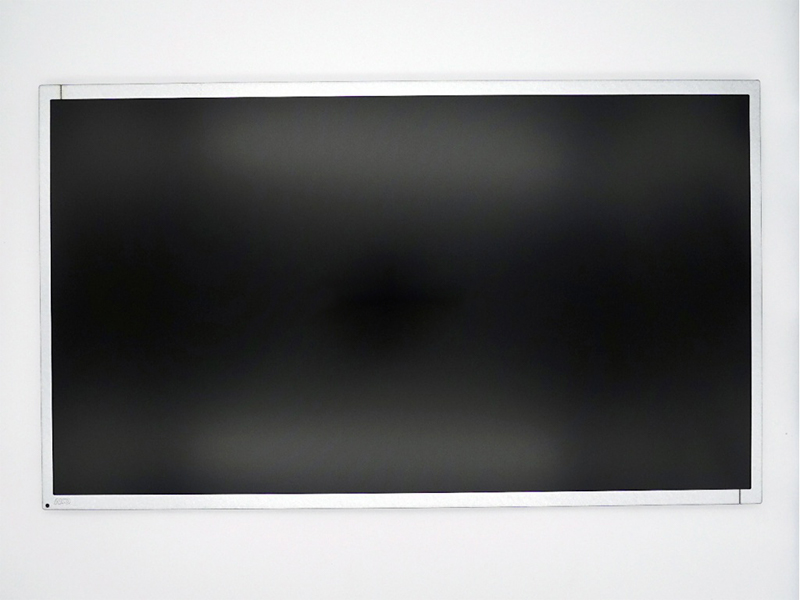
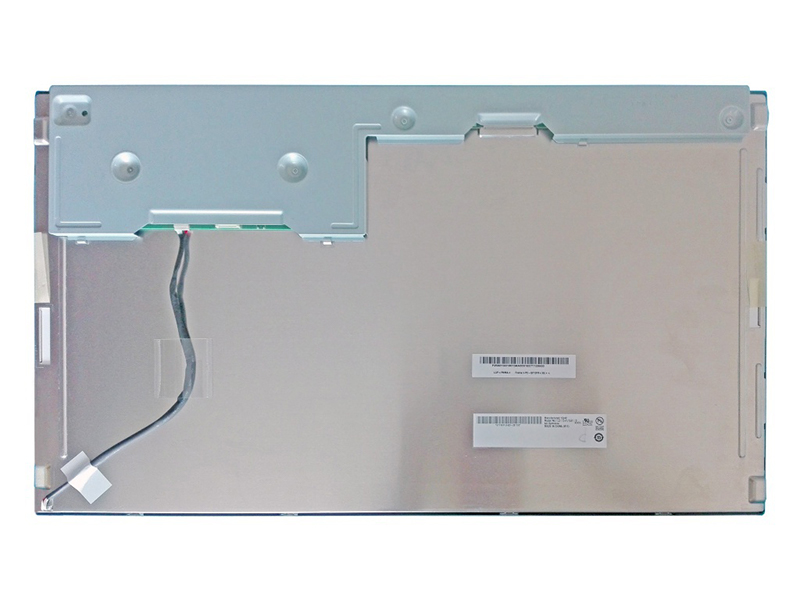
At the heart of the G215HVN01.000 lies its Vertical Alignment (VA) liquid crystal technology. This is a critical differentiation from the more common TN (Twisted Nematic) or IPS (In-Plane Switching) panels found in consumer goods. AUO has specifically engineered this VA panel to excel in static contrast ratio, a metric that is paramount for reading dials, charts, and monochromatic text over long hours.
The primary advantage of VA technology in this context is its native high contrast ratio, often exceeding 3000:1. This allows for exceptionally deep blacks and bright whites without the "glowing" effect seen on IPS panels in dark environments. For a night-shift operator in a control room or a surgeon reviewing x-rays, this depth of black reduces eye strain and enhances image depth. However, VA does come with a trade-off in color shift at extreme angles. Unlike IPS, which is prized for wide-angle color consistency, the G215HVN01.000 is optimized for a direct, head-on viewing experience. The 178-degree viewing angle specification is relevant for brightness retention, not perfect color fidelity. For HMI applications—where the primary task is reading data from a fixed position—the superior contrast of VA far outweighs the need for multi-person color-accurate viewing. This makes it the superior technology for high-stakes, static environment displays.
The optical prowess of this AUO panel is further defined by its backlight unit. The G215HVN01.000 typically features a WLED (White Light Emitting Diode) edge-lit system, designed to deliver a specific luminance level optimized for indoor industrial environments. While consumer monitors often boast 250 cd/m², this panel is frequently rated for 350 to 400 cd/m² (nits). This higher brightness is not for show; it is a functional necessity to overcome ambient light from factory floor lighting or overhead surgical lamps.
The architecture of the backlight is crucial for long-term reliability. AUO utilizes a robust LED driver circuit that minimizes flicker and ensures a stable current. This stability directly impacts the "MTBF" (Mean Time Between Failures) rating of the panel. For the G215HVN01.000, the backlight is designed for a lifespan of 30,000 to 50,000 hours. This translates to roughly 3.5 to 5.7 years of continuous 24/7 operation before the brightness degrades to 50% of its original output. For system integrators, this predictable degradation curve is invaluable. It allows planning for preventative maintenance—scheduling a panel swap before a failure disrupts production. The uniform distribution of light across the 21.5-inch surface is also tightly controlled, with a typical uniformity specification of 80% or higher, ensuring that no "hot spots" or dark corners interfere with critical data readouts.
To function seamlessly within an industrial architecture, the G215HVN01.000 utilizes a specific electrical interface: a single or dual-channel LVDS (Low-Voltage Differential Signaling) connector. This standard, while older than newer interfaces like eDP, remains the de facto standard for industrial embedded systems. The panel typically uses a 30-pin or similar connection, designed to carry both the pixel data and control signals over a stable, low-noise differential pair.
The choice of LVDS is a testament to the panel's design for longevity and stability. LVDS is inherently resistant to electromagnetic interference (EMI), a common hazard in factories with large motors and welding equipment. The G215HVN01.000 is configured to operate at specific timing parameters, including a pixel clock rate and vertical/horizontal sync pulses. Adherence to these exact specifications is critical when sourcing a replacement; an incorrect LVDS signal mapping can result in a scrambled image or a blank screen. Furthermore, the panel does not include a full scalar board; it is a bare module requiring an external controller or graphics source to generate the 1920×1080 format. This makes it a "panel-only" component, offering maximum flexibility for system designers but demanding precise electrical compatibility for end-users.
The term "Original" in the product name is far from a marketing gimmick; it is a specification of quality and manufacturing traceability. In the industrial LCD market, the difference between an Original AUO panel and a "compatible" or "re-laminated" unit is profound. AUO manufactures these panels in strictly controlled cleanrooms (Class 1000 or better), ensuring zero dust particles or contamination between the polarizers, the liquid crystal layer, and the TFT (Thin Film Transistor) glass.
Procuring an original G215HVN01.000 ensures that you are receiving a panel with the exact electrical specification sheets, the correct B/L (Backlight) voltage, and the precise mechanical dimensions, including a specific bezel mounting design. Compatible panels often use lower-grade LED chips, thinner glass, or liquid crystal fluid that degrades faster. For mission-critical applications, the cost savings of a non-original panel are quickly negated by the downtime caused by a premature failure. Furthermore, original AUO panels maintain a tighter gamma curve, which is essential for the accurate reproduction of grayscale gradients. Since many industrial interfaces rely on grayscale to differentiate between status conditions (e.g., normal vs. warning), any deviation from the factory gamma curve can lead to dangerous misreadings. Therefore, the "Original" status is a warranty of both physical quality and optical precision.
Is the G215HVN01.000 compatible with a standard desktop monitor cable?
No. This is a bare panel that uses an LVDS connector. It requires a controller board or a laptop motherboard to convert HDMI/VGA to LVDS signals.
What is the exact power consumption of this panel?
Typical power consumption is around 11 to 14 watts, depending on the brightness level, making it energy-efficient for continuous operation.
Can this panel be used in direct sunlight?
Not effectively. It is designed for indoor use. A "sunlight-readable" version would require a much higher brightness (1000 nits+) and an optical bonding treatment.
What is the operating temperature range?
It typically operates from 0°C to 50°C, with a storage range of -20°C to 60°C. It requires active cooling if used near the upper limit.
Does it support touch functionality?
No. This is a standard LCD cell. To add touch, you must purchase an additional touch screen overlay (e.g., resistive or capacitive) and attach it to the panel.
How can I verify if a panel is truly "Original AUO"?
Check the label for the AUO logo, model number, and production date stamp. Original panels have a distinct factory-applied polarizer and a pristine glass finish.
What is the response time of this VA panel?
Typically around 16 to 25ms (Tr/Tf). It is not designed for fast-paced gaming but is perfectly adequate for static HMI images and video.
Does it use a standard mounting pattern?
It usually has mounting holes (screw holes) on the side of the frame, conforming to standard industrial panel mounting dimensions.
What is the failure mode for this panel?
The most common failure is backlight LED degradation (dimming) or a single line of dead pixels. Total failure due to driver IC failure is rare in original units.
Where can I find the datasheet?
The official AUO specification sheet can be sourced from authorized distributors or the AUO website under "Industrial Display" archives. It contains the exact connector pin-out.
Conclusion: A Strategic Investment in Operational Continuity
The AUO G215HVN01.000 is more than a screen; it is a strategic component for ensuring operational continuity in high-stakes environments. Its carefully chosen 21.5-inch form factor, combined with the high contrast and stability of VA technology, makes it an ideal interface for information readability. We have seen how its robust LVDS interface, high-luminance backlight, and strict manufacturing standards differentiate it from generic consumer panels. For professionals managing maintenance on a production line or designing a medical device, the choice to specify this original panel is a choice for predictability. The cost is justified not by its pixel count, but by its MTBF rating, its reliable grayscale performance, and its seamless compatibility with existing industrial infrastructure. In a world where downtime is measured in thousands of dollars per minute, the G215HVN01.000 stands as a bulwark against unexpected failures, proving that in industrial hardware, "original" and "reliable" are virtually synonymous.