- Industrie-LCD-Display
-
Industrial Products
- DC Servo Drive
- AC Servo Drive
- other
- Heidelberg
- FANUC
- IFM
- Meter
- CCD
- Membrane Keypad
- Film
- YOKOGAWA
- Card
- ABB
- MITSUBISHI
- FANUC
- KEYENCE
- BECKHOFF
- Honeywell
- HOLLYSYS
- FUJI servo drives
- HP
- solenoid valve
- thermostat
- Siemens adapter
- color oscilloscope
- Fujitsu connector
- CHELIC
- SMC
- CISCO
- INTEL
- Key board
- FAIRCHILD
- Der Aufsichtsrat
- Board
- Bearing
- other
- Control Panel
- Contactor
- Circuit
- Omron
- Relais.
- Der controller
- Optoelektronische schalter
- Optoelektronische sensoren
- Original
- Fan
- Motortreiber
- Endschalter
- Verstärker
- power supply
- LENZE
- Cable
- Encoder
- Sensor
- Transformator
- Fiber Optic Sensor
- Schutzrelais
- Temperaturregler
- Näherungsschalter
- Switch Sensor
- Siemens
- PCB
- HMI Touch-Glas
-
HMI-Vollautomat Ganze Einheit
- OMRON HMI Touch Panel
- Siemens HMI Touch Panel
- Mitsubishi HMI Touch Panel
- Allen-Bradley Automatisierung HMI Touch
- DELTA HMI Touch Panel
- EVIEW DELTA HMI Touch Panel
- KINCO DELTA HMI Touch Panel
- HITECH HMI Touch Panel
- WEINTECK HMI Touch Panel
- TECVIEW HMI Touch Panel
- WEINVIEW HMI Touch Panel
- PRO-FACE HMI Touch Panel
- SIMATIC HMI Touch Panel
- AMPIRE HMI Touch Panel
- HEIDELBERG HMI Touch Panel
- PANASONIC HMI Touch Panel
- PATLITE HMI Touch Panel
- KYOCERA HMI Touch Panel
- KEYENCE HMI Touch Panel
- WEINVIEW HMI Touch Panel
- HITECH HMI Touch Panel
- FUJI HMI Touch Panel
- HAKKO HMI Touch Panel
- SCHNEIDER HMI Touch Panel
- SAMKOON touch panel
- andere
- Module
- LCD Wechselrichter
- Membran Tastenfeld Schalter
- Winni Touch Screens
- Frequenzumrichter
- Servo Motor
- PLC


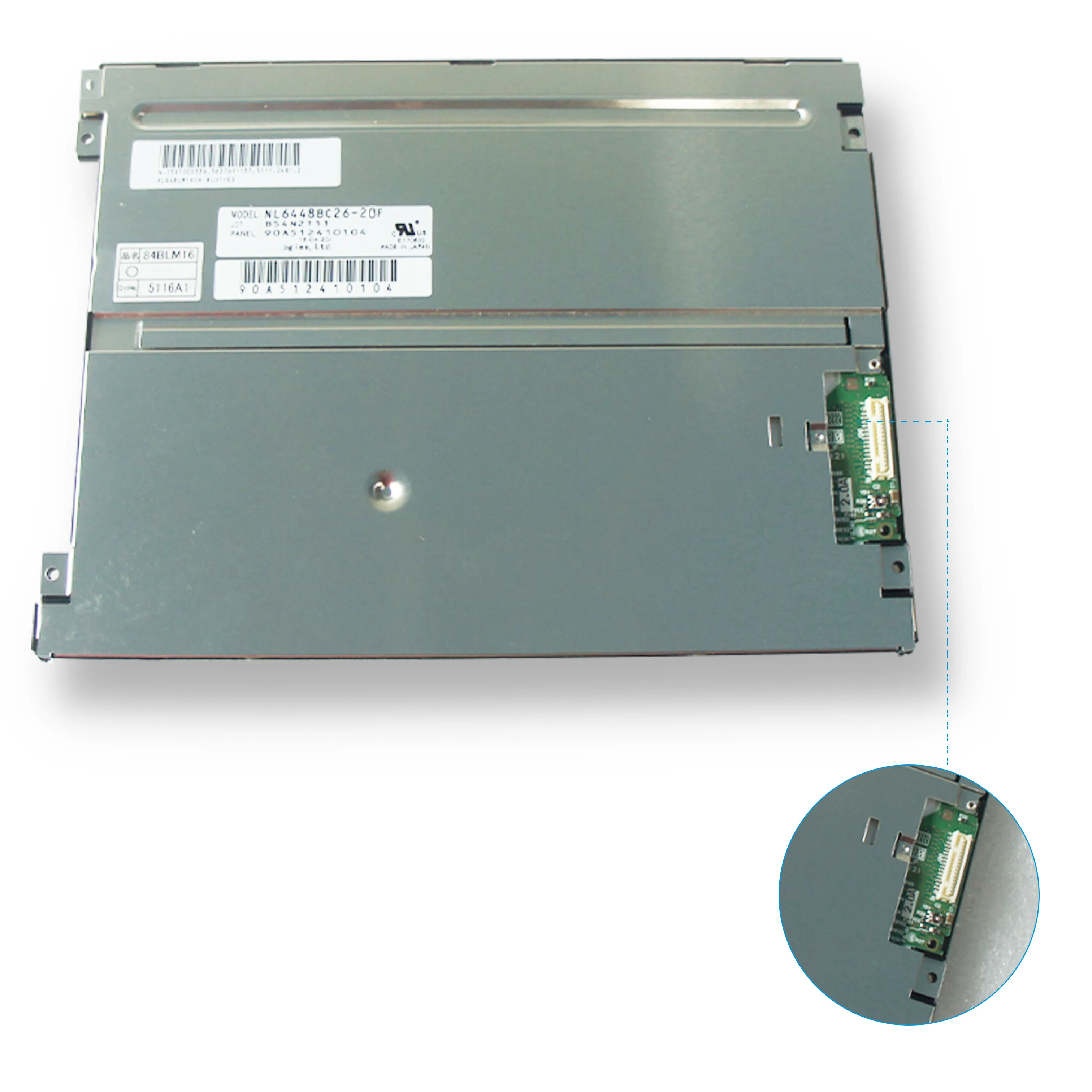

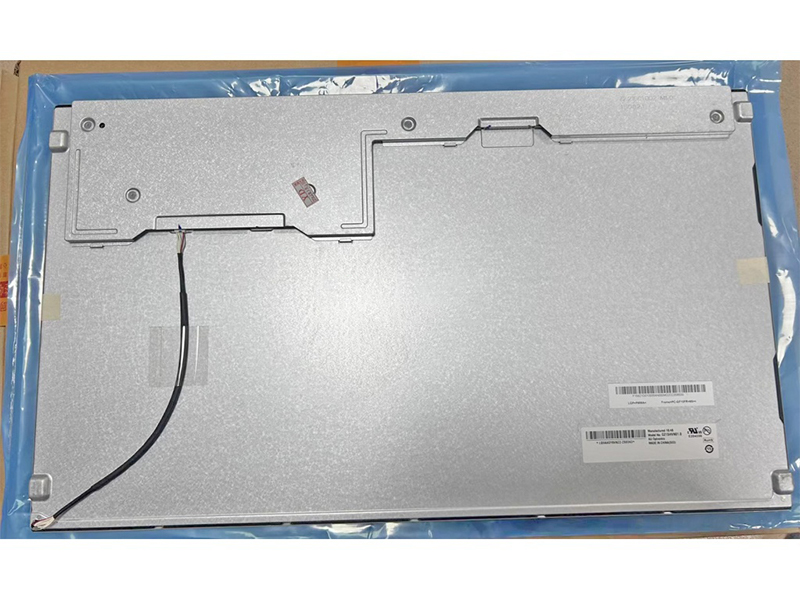
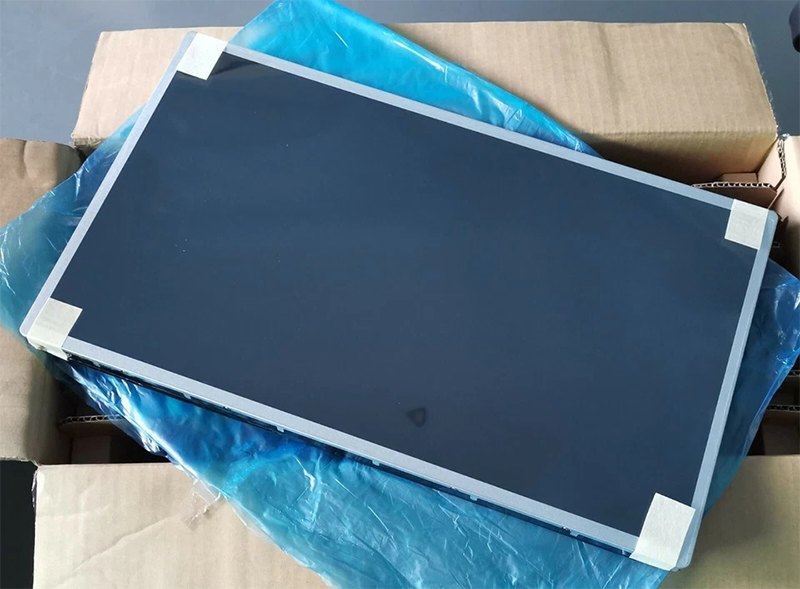
G215HVN01.001 Original AUO 21.5-inch 1920*1080 LCD screen
In the realm of industrial displays, medical imaging, and high-reliability computing, the choice of a liquid crystal display (LCD) is rarely a matter of casual selection. It is a decision that impacts operational efficiency, diagnostic accuracy, and user interface stability. The AUO G215HVN01.001 stands as a testament to this principle—a 21.5-inch LCD panel that has carved a niche for itself far beyond the consumer desktop market. This article delves into the specific DNA of this original AUO (AU Optronics) panel, dissecting its technical architecture, operational philosophy, and market positioning. We will move past generic specifications to explore why the 1920x1080 resolution, combined with AUO's proprietary manufacturing standards, creates a distinct value proposition for industrial automation, gaming kiosks, and hospital monitoring systems. Our goal is to provide a comprehensive guide for engineers, procurement specialists, and system integrators who demand depth beyond a datasheet, focusing on the panel's longevity, optical consistency, and real-world performance under demanding conditions.
The G215HVN01.001 is not merely a derivative of consumer-grade technology; it is an engineered response to the rigorous demands of 24/7 operational environments. At its core, this panel utilizes a Twisted Nematic (TN) liquid crystal technology, but with a critical refinement. Unlike standard TN panels often criticized for narrow viewing angles, AUO has implemented a compensation film and optimized driving voltage to widen the effective cone of vision. The architecture prioritizes low power consumption—typically around 24.9 Watts—without sacrificing luminance, which peaks at 250 cd/m². This balance is achieved through a white LED backlight system designed for extended lifespan, often exceeding 50,000 operational hours. The panel's proprietary timing controller (TCON) is calibrated to handle continuous signal input without screen tearing or flicker, a necessity for medical visualization. Furthermore, the interface relies on a standard LVDS (Low-Voltage Differential Signaling) connection, ensuring broad compatibility with embedded industrial motherboards. The mechanical design is equally thoughtful, featuring a slim profile (10.5 mm) and a mounting pattern that aligns with VESA standards, facilitating seamless integration into pre-existing enclosures. This deliberate architectural philosophy makes it a reliable workhorse rather than a flashy consumer component.
The 1920x1080 resolution, commonly known as Full HD, is often taken for granted in the age of 4K and 8K. However, for a 21.5-inch diagonal, this pixel density—approximately 102 PPI (Pixels Per Inch)—strikes an ideal balance for close-range operation. In medical environments, such as patient monitoring systems, the sharp pixel grid allows for crisp rendering of fine text, vital sign waveforms, and subtle diagnostic color shifts. A higher resolution would necessitate more complex scaling logic and might reduce the legibility of small user interface elements; a lower one would compromise data density. The G215HVN01.001 optimizes this standard to ensure that each pixel is uniformly lit, with a contrast ratio of 1000:1 that provides adequate differentiation between dark and light regions. This is critical for point-of-sale systems where glare and ambient light can degrade readability. The panel's anti-glare surface treatment—typically 3H hardness—further enhances usability by diffracting surface reflections. This specific resolution also means that software developers can design UIs with predictable pixel mapping, reducing deployment friction across a fleet of machines. Thus, Full HD is not a base-level feature here; it is a calculated choice for functional clarity.
One of the most overlooked aspects of the G215HVN01.001 is its thermal design. Industrial panels often operate in enclosed cabinets with limited airflow, where heat buildup can degrade LCD response times and accelerate backlight decay. AUO engineered this specific model with a low-temperature polycrystalline silicon (LTPS) gate driver that generates less heat compared to standard amorphous silicon drivers. Furthermore, the operating temperature range is specified from 0°C to 50°C, but the real-world stability is enhanced by a thermal dissipation backplate that conducts heat away from the T-con board and LED array. The panel also employs a voltage compensation algorithm that ensures consistent brightness levels as the panel ages, mitigating the yellowing effect common in cheaper LED backlights. For integrators, this translates into a lower total cost of ownership. The panel is designed to maintain its specified brightness and color temperature for at least 30,000 hours before degradation becomes perceptible. This endurance engineering is the primary differentiator from an off-the-shelf monitor panel, which might fail prematurely due to thermal cycling in a kiosk environment. The G215HVN01.001 is built to outlast the hardware it is paired with.
In applications such as non-destructive testing or medical radiology review, the ability to display subtle grayscale transitions can be a matter of accuracy. The G215HVN01.001 excels in this domain due to its precise gamma curve calibration, typically set at 2.2. This ensures that the brightness response of the panel is linear, allowing dark areas to retain detail without clipping. The panel supports 16.7 million colors through 8-bit false color simulation (often marketed as 6-bit + Hi-FRC), but its true strength lies in the low inter-pixel crosstalk. This minimizes ghosting effects when displaying fast-moving digital oscilloscope waveforms or scrolling data logs. The response time, rated at 5 ms (gray-to-gray), is sufficiently fast to reduce motion blur for interactive touch-screen interfaces without introducing the artifacts seen in over-driven gaming panels. The viewing angle specification—80/80/80/80 (CR>10)—is a practical metric for multi-user situations, such as control room dashboards where operators view the screen from varying angles. AUO has also implemented a uniform screen filter that reduces the "mura" effect (uneven brightness patches) to less than 10%, ensuring that a single pixel defect does not distract from the overall visual field.
Understanding where the G215HVN01.001 fits in the broader ecosystem is crucial for procurement decisions. This panel is predominantly sourced for replacement and build-out in the gaming and amusement industry, specifically for slot machines and video lottery terminals, due to its robust build and predictable color reproduction. It is also a staple in the medical peripheral market—used in patient infotainment terminals and diagnostic cart displays. System integrators must pay careful attention to the original designation—OEM replacements must match the exact suffix (001) to ensure compatibility with specific controller boards and backlight voltage curves. The panel uses a standard 30-pin LVDS connector, but the pin-out mapping varies slightly from other AUO 21.5-inch models. Therefore, blindly substituting a G215HVN01.0 with a G215HVN01.1 may result in inverted image output or backlight failure. Culturally, this panel represents AUO's philosophy of "intelligent manufacturing," where every batch is subjected to rigorous aging tests. For the end-user, this means a lower defect rate (often less than 100 PPM) compared to generic panels. Choosing this specific AUO original is an investment in operational reliability, not just a component purchase.
Is the G215HVN01.001 suitable for outdoor use?
No. It is designed for indoor use only, with a brightness of 250 cd/m². Outdoor use would require a high-brightness upgrade (e.g., 1000+ cd/m²) and a different optical bonding process.
What is the exact response time of this panel?
The typical response time is 5 ms (gray-to-gray), which is adequate for static data display and moderate video playback, but not for competitive gaming.
Can I connect this panel directly to a standard PC graphics card?
No. The interface is LVDS. You will need an LVDS driver board (controller board) that converts HDMI, DVI, or VGA to LVDS signals.
What is the expected lifespan of the backlight?
The LED backlight is rated for 50,000 hours to half-brightness, under continuous operation at 25°C ambient temperature.
Is this panel RoHS compliant?
Yes. The original AUO G215HVN01.001 is fully RoHS (Restriction of Hazardous Substances) compliant.
Does it support touch screen functionality?
No, it is a raw LCD panel glass. Touch functionality can be added by laminating a touch sensor to the front surface.
What are the physical mounting dimensions?
The active area is 476.64 mm x 268.11 mm. The outer dimensions are approximately 495.6 mm x 292.2 mm, with a thickness of 10.5 mm.
Is the contrast ratio really 1000:1?
Yes, that is the typical specification. However, this is measured in a dark room; ambient light will reduce the perceived contrast.
Can I use this panel in a medical diagnostic radiology application?
Only for general visualization. For primary diagnostic reading, a medical-grade monitor with DICOM calibration (typically 3MP or higher) is required.
Where can I verify the authenticity of an "original" AUO panel?
Verify the part number sticker on the back of the panel. The word "AUO" should be embossed on the driver board, and the serial number can be cross-referenced on AUO's official distributor portal.
Conclusion: The Value of a Proven Foundation
The AUO G215HVN01.001 is far more than a simple LCD panel; it is a refined instrument of visual reliability. Throughout this exploration, we have seen how its thermal engineering, precise grayscale calibration, and industrial-grade endurance position it as a cornerstone for systems where failure is not an option. While it may lack the glamour of high-end consumer displays, its real value lies in its predictability and operational consistency. For the system integrator, choosing this specific AUO original means de-risking a project. It ensures that the visual interface will remain stable, legible, and accurate across thousands of hours of continuous use. As technology accelerates toward higher resolutions and more exotic display materials, the humble 21.5-inch Full HD panel remains the practical choice for a vast range of critical applications. In the final analysis, the G215HVN01.001 is not just a component; it is a statement of confidence in proven engineering. For those building systems that must simply work, every single time, this panel remains a definitive, reliable foundation.