- Industrie-LCD-Display
-
Industrial Products
- DC Servo Drive
- AC Servo Drive
- other
- Heidelberg
- FANUC
- IFM
- Meter
- CCD
- Membrane Keypad
- Film
- YOKOGAWA
- Card
- ABB
- MITSUBISHI
- FANUC
- KEYENCE
- BECKHOFF
- Honeywell
- HOLLYSYS
- FUJI servo drives
- HP
- solenoid valve
- thermostat
- Siemens adapter
- color oscilloscope
- Fujitsu connector
- CHELIC
- SMC
- CISCO
- INTEL
- Key board
- FAIRCHILD
- Der Aufsichtsrat
- Board
- Bearing
- other
- Control Panel
- Contactor
- Circuit
- Omron
- Relais.
- Der controller
- Optoelektronische schalter
- Optoelektronische sensoren
- Original
- Fan
- Motortreiber
- Endschalter
- Verstärker
- power supply
- LENZE
- Cable
- Encoder
- Sensor
- Transformator
- Fiber Optic Sensor
- Schutzrelais
- Temperaturregler
- Näherungsschalter
- Switch Sensor
- Siemens
- PCB
- HMI Touch-Glas
-
HMI-Vollautomat Ganze Einheit
- OMRON HMI Touch Panel
- Siemens HMI Touch Panel
- Mitsubishi HMI Touch Panel
- Allen-Bradley Automatisierung HMI Touch
- DELTA HMI Touch Panel
- EVIEW DELTA HMI Touch Panel
- KINCO DELTA HMI Touch Panel
- HITECH HMI Touch Panel
- WEINTECK HMI Touch Panel
- TECVIEW HMI Touch Panel
- WEINVIEW HMI Touch Panel
- PRO-FACE HMI Touch Panel
- SIMATIC HMI Touch Panel
- AMPIRE HMI Touch Panel
- HEIDELBERG HMI Touch Panel
- PANASONIC HMI Touch Panel
- PATLITE HMI Touch Panel
- KYOCERA HMI Touch Panel
- KEYENCE HMI Touch Panel
- WEINVIEW HMI Touch Panel
- HITECH HMI Touch Panel
- FUJI HMI Touch Panel
- HAKKO HMI Touch Panel
- SCHNEIDER HMI Touch Panel
- SAMKOON touch panel
- andere
- Module
- LCD Wechselrichter
- Membran Tastenfeld Schalter
- Winni Touch Screens
- Frequenzumrichter
- Servo Motor
- PLC



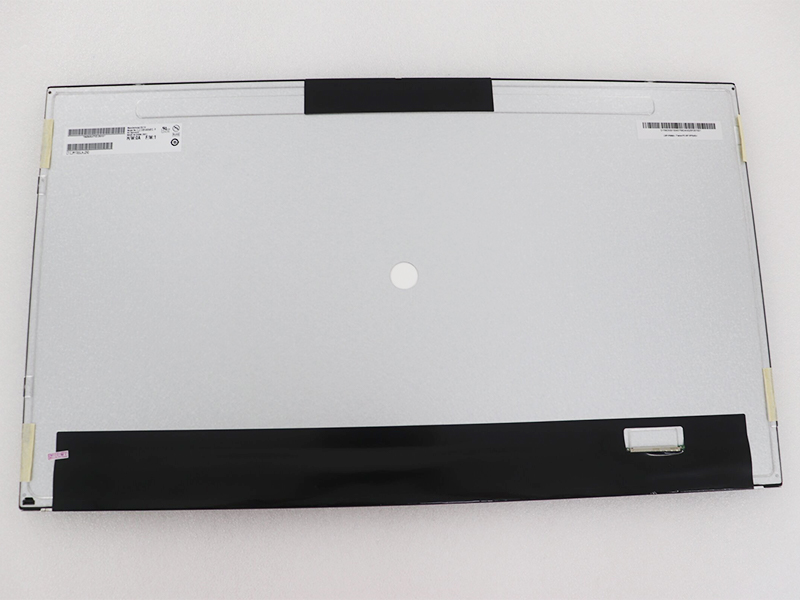
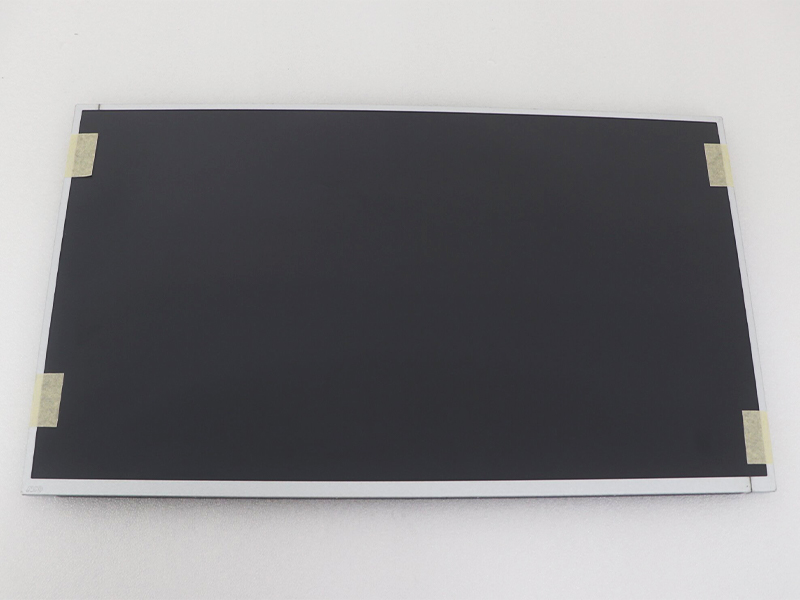
G238HAN01.3 AUO 23.8" TFT-LCD screen 1920*1080 Display
In the demanding landscape of industrial and commercial display technology, not all LCD screens are created equal. The G238HAN01.3, a 23.8-inch TFT-LCD panel manufactured by AUO (AU Optronics), represents a specific engineering response to the need for high-definition, durable, and visually reliable displays. This article delves deep into the technical fabric of this particular model, moving beyond general specifications to explore its architecture, performance characteristics, and practical applications. While the 1920x1080 (Full HD) resolution is now a common standard, the implementation of this resolution in an industrial-grade panel involves significant engineering choices regarding backlight design, viewing angles, and signal integrity. We will dissect the G238HAN01.3 to understand why it is a preferred choice for medical equipment, ATM kiosks, and industrial automation terminals. This analysis will provide engineers, procurement specialists, and tech enthusiasts with a comprehensive understanding of its role in modern embedded systems.
The core of the G238HAN01.3 lies in its a-Si TFT-LCD (Amorphous Silicon Thin-Film Transistor) technology. This is not a cutting-edge OLED or MicroLED panel; rather, it is a mature, highly reliable architecture that prioritizes stability and consistent yield over radical visual novelty. The panel employs a normally black, IPS-level (In-Plane Switching) liquid crystal mode, which is critical for its wide viewing angle specification of 89 degrees in all four directions. This ensures that color and contrast remain stable even when viewed from extreme angles, an essential feature for public-facing kiosks where users interact with the screen from various positions.
The optical performance is further defined by its luminance, typically rated at 250 cd/m² (nits). This brightness level is well-suited for indoor industrial environments, offering a clear readout without the high power consumption and heat generated by ultra-bright outdoor panels. The contrast ratio of 1000:1 is standard for this class of display, providing sufficient differentiation between light and dark areas for data visualization and text clarity. The pixel pitch, derived from the 1920x1080 resolution across a 23.8-inch diagonal, results in a sharp pixel density that makes individual pixels indistinguishable at typical operational distances, reducing eye strain during prolonged use.
The backlight is a critical subsystem determining a display’s lifespan and power efficiency. The G238HAN01.3 utilizes a WLED (White Light-Emitting Diode) edge-lit backlight. Edge-lit design allows for a slimmer overall module thickness, which is advantageous for integrating the display into space-constrained enclosures. The "White" LED designation means the backlight emits a broad spectrum of white light, which is then filtered by the LCD's color filters (RGB) to produce the final image.
Engineers value this panel for its specified backlight lifetime, often exceeding 50,000 hours of operation to half-brightness. This metric is crucial for 24/7 operational environments like digital signage in a factory or a medical monitoring station. The panel also supports a replaceable backlight design in some configurations, although typical industrial integration favors a fixed module. The electrical interface for the backlight is managed through a dedicated connector on the LVDS (Low-Voltage Differential Signaling) interface, allowing the system's power supply to regulate current and avoid flicker at low brightness settings, a common issue in cheaper displays using pulse-width modulation (PWM) at low frequencies.
This AUO panel communicates via a 2-channel LVDS interface, a standard for high-speed data transmission that reduces electromagnetic interference (EMI) compared to older parallel interfaces. The G238HAN01.3 supports 8-bit color depth, enabling the reproduction of 16.7 million colors. The LVDS interface is designed to receive two separate data streams (odd and even pixels), which reduces the pixel clock frequency and allows for use with standard connector types like DF14 or JAE FI-series, which are robust for industrial applications.
Integrated into the panel is a specialized Timing Controller (TCON) that manages the logic for image rendering. The TCON handles functions like polarity inversion and gate driver timing to prevent image sticking (ghosting). For the G238HAN01.3, the TCON is configured to accept standard VESA timings for 1920x1080 @60Hz with a reduced blanking feature, minimizing the required bandwidth. The panel's power consumption is tightly controlled at the TCON level; typical operation draws approximately 12-15 watts for the whole module, making it efficient for systems running on compact power supplies or battery backups in medical carts.
The mechanical construction of the G238HAN01.3 is a study in rugged pragmatism. The panel uses a metal bezel frame rather than a plastic one, providing superior structural rigidity and heat dissipation. The active area measures 527.04 mm x 296.46 mm, fitting standard 23.8-inch industry mounting brackets. Its overall depth, including the driver PCB and backlight, is typically under 10 mm, allowing for slim system design without sacrificing structural integrity.
Environmental specifications are a key differentiator of this AUO product. It is designed to operate reliably in a temperature range of 0°C to +50°C and can be stored in temperatures as low as -20°C. The storage conditions are particularly relevant for global logistics. More importantly, the panel’s materials meet RoHS and REACH compliance standards, ensuring it is free from hazardous substances like lead and mercury. For applications requiring touch interaction, the panel's design allows for easy lamination of a resistive or capacitive touchscreen without significant optical distortion. This mechanical flexibility makes it suitable for custom enclosure designs in the medical and gaming sectors.
The specific profile of the G238HAN01.3—high reliability, wide viewing angles, and standard resolution—dictates its use in specific market segments. A primary application is medical patient monitoring systems. The IPS technology ensures that nurses and doctors reading vitals from a patient bed or a sliding arm mount see consistent colors and sharp text, which is critical for accurate interpretation of waveforms and numeric data. The panel's inherent stability over time also reduces the need for frequent recalibration.
Another dominant use case is in self-service kiosks and ATMs. The 23.8-inch size is ideal for displaying interactive menus, maps, or financial transactions. The industrial-grade backlight is robust enough to handle the 24/7 operation cycles typical of these machines. The 1920x1080 resolution provides sufficient clarity for high-quality graphical user interfaces (GUIs). Furthermore, the panel's anti-glare surface treatment (often standard for this model) minimizes reflections from ambient lighting in a bright lobby, unlike a glossy consumer monitor which would be unreadable in such conditions. This blending of optical quality and operational durability makes it a standard choice for system integrators.
For an embedded system, the interplay between power consumption and heat generation is paramount. The G238HAN01.3 follows an efficient design. Its LVDS interface operates at a voltage of 3.3V for the logic section, while the backlight requires a higher voltage, typically 12V. The total power dissipation is managed through the metal frame, which acts as a heat sink to draw heat away from the driver ICs and LED arrays. Without active cooling (fans), the panel relies on this passive thermal management to maintain a consistent operating temperature.
The panel implements a power sequencing specification that must be followed by the system designer. The logic voltage must be stable before the backlight is enabled to prevent chip damage. Additionally, the PWM dimming feature allows for extensive control over the backlight current without introducing noise into the VDD power rail. This is crucial for medical devices that must pass rigorous electromagnetic compatibility (EMC) testing. The display's idle power consumption can be reduced to a very low level without hard switching, preserving the life of the backlight LEDs and supporting the "always-on" nature of industrial equipment.
Frequently Asked Questions (FAQs)
What is the native resolution of the G238HAN01.3?
Its native resolution is 1920 x 1080 (Full HD) with a 16:9 aspect ratio.
Is this panel suitable for outdoor use?
No, it is designed for indoor use with a typical brightness of 250 cd/m², which is insufficient for direct sunlight readability.
Does it come with a touchscreen?
No, it is a standard Open Cell LCD panel. However, it is mechanically designed to be easily laminated with a third-party touchscreen layer.
What is the typical power consumption?
Typical operation consumes approximately 12-15 watts depending on the backlight brightness setting.
Is the interface LVDS or eDP?It uses a standard 2-channel LVDS interface with 8-bit color support.
Can it be used in a portrait orientation?
Yes, the IPS panel technology supports portrait mode without color shift, but the physical bezel must be properly mounted.
What is the expected lifespan of the backlight?
The WLED backlight is rated for over 50,000 hours of operation to half brightness.
Does it require an external controller board?
Yes, it is an LCD panel, not a monitor. You need a separate controller board that outputs LVDS signals.
Is it compatible with Windows or Linux?
Yes, if used with the correct controller board and driver, it is compatible with any system that outputs a standard 1920x1080 signal.
Where is this panel manufactured?
These panels are manufactured by AU Optronics (AUO) in their Taiwanese and Chinese facilities.
Conclusion: The Silent Workhorse of Modern Interfaces
The G238HAN01.3 from AUO is a testament to the philosophy that mature technology, when executed with precision, remains the backbone of industrial and medical innovation. It does not chase the highest contrast ratio or the thinnest profile found in consumer electronics. Instead, it delivers a reliable, stable, and high-quality visual interface designed for continuous duty in demanding environments. Throughout this article, we have explored how its IPS-level optics, efficient WLED backlight, robust LVDS interface, and passive thermal management combine to create a display solution that is far more than the sum of its 1920x1080 pixels. For engineers and system designers, understanding these technical nuances is essential for making informed procurement decisions. This panel is a silent workhorse, ensuring clarity in a medical chart, reliability at an ATM, and precision on a factory floor. It represents the standard of quality that makes the digital interface truly functional in the real world.