- Industrie-LCD-Display
-
Industrial Products
- DC Servo Drive
- AC Servo Drive
- other
- Heidelberg
- FANUC
- IFM
- Meter
- CCD
- Membrane Keypad
- Film
- YOKOGAWA
- Card
- ABB
- MITSUBISHI
- FANUC
- KEYENCE
- BECKHOFF
- Honeywell
- HOLLYSYS
- FUJI servo drives
- HP
- solenoid valve
- thermostat
- Siemens adapter
- color oscilloscope
- Fujitsu connector
- CHELIC
- SMC
- CISCO
- INTEL
- Key board
- FAIRCHILD
- Der Aufsichtsrat
- Board
- Bearing
- other
- Control Panel
- Contactor
- Circuit
- Omron
- Relais.
- Der controller
- Optoelektronische schalter
- Optoelektronische sensoren
- Original
- Fan
- Motortreiber
- Endschalter
- Verstärker
- power supply
- LENZE
- Cable
- Encoder
- Sensor
- Transformator
- Fiber Optic Sensor
- Schutzrelais
- Temperaturregler
- Näherungsschalter
- Switch Sensor
- Siemens
- PCB
- HMI Touch-Glas
-
HMI-Vollautomat Ganze Einheit
- OMRON HMI Touch Panel
- Siemens HMI Touch Panel
- Mitsubishi HMI Touch Panel
- Allen-Bradley Automatisierung HMI Touch
- DELTA HMI Touch Panel
- EVIEW DELTA HMI Touch Panel
- KINCO DELTA HMI Touch Panel
- HITECH HMI Touch Panel
- WEINTECK HMI Touch Panel
- TECVIEW HMI Touch Panel
- WEINVIEW HMI Touch Panel
- PRO-FACE HMI Touch Panel
- SIMATIC HMI Touch Panel
- AMPIRE HMI Touch Panel
- HEIDELBERG HMI Touch Panel
- PANASONIC HMI Touch Panel
- PATLITE HMI Touch Panel
- KYOCERA HMI Touch Panel
- KEYENCE HMI Touch Panel
- WEINVIEW HMI Touch Panel
- HITECH HMI Touch Panel
- FUJI HMI Touch Panel
- HAKKO HMI Touch Panel
- SCHNEIDER HMI Touch Panel
- SAMKOON touch panel
- andere
- Module
- LCD Wechselrichter
- Membran Tastenfeld Schalter
- Winni Touch Screens
- Frequenzumrichter
- Servo Motor
- PLC



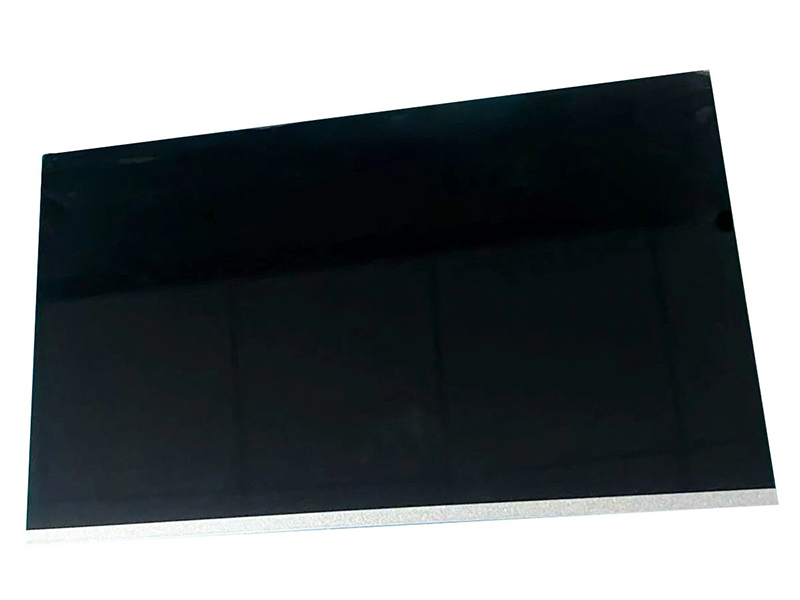
G238HAN02.0 New AUO 23.8-inch 1920*1080 LCD panel
The industrial display sector is undergoing a quiet revolution, where reliability under harsh conditions matters more than consumer-grade resolution wars. At the heart of this shift lies the G238HAN02.0, a 23.8-inch LCD panel from AUO (AU Optronics). Unlike standard monitors designed for bright office environments, this panel is engineered for longevity, wide temperature tolerance, and uninterrupted operation. This article delves deep into the technical DNA of the G238HAN02.0, exploring its Full HD resolution (1920x1080), optical characteristics, and mechanical design. We will dissect why this specific model is gaining traction in kiosks, medical carts, and industrial HMI (Human-Machine Interface) systems. For procurement managers and system integrators, understanding the nuances of this panel—from its IPS-like viewing angles to its power efficiency—can mean the difference between a system that lasts five years and one that fails prematurely. This is not a review for gamers; it is a technical brief for professionals who demand 24/7 reliability from their display components.
AUO is distinguished in the industrial sector for its commitment to long product lifecycles—a critical factor often overlooked by consumer-oriented manufacturers. The G238HAN02.0 is part of AUO’s “HAN” series, which prioritizes backlight stability and supply continuity. While a consumer monitor might be discontinued within 18 months, this panel is typically guaranteed for a minimum of 3 to 5 years of active production support. This allows integrators to design products without the burden of constant validation re-runs.
The panel utilizes a standard LVDS (Low-Voltage Differential Signaling) interface, ensuring compatibility with a wide range of embedded single-board computers and industrial motherboards. It operates at a typical voltage of 5V, with a power consumption hovering near the 15W mark under standard conditions. This relatively low power draw is achieved through an efficient LED edge-lit system. The backlight itself is rated for a high MTBF (Mean Time Between Failures), often exceeding 50,000 hours in this class, which translates to over five years of continuous non-stop use. For environments where a screen must remain on 24/7—such as security monitoring stations or factory floor dashboards—this longevity provides a measurable reduction in total cost of ownership.
The specification of 1920x1080 at 23.8 inches yields a standard pixel density of approximately 92 PPI (Pixels Per Inch), which is ideal for readability at arm's length. However, the optical engineering goes deeper than just resolution. The G238HAN02.0 features a high contrast ratio typically starting at 3000:1, a figure that surpasses many mainstream VA panels. This deep black level performance is essential for medical imaging preview screens or visualization of complex data dashboards where shadow detail is critical.
Brightness is factory-rated at 250 cd/m² to 300 cd/m², but this figure is conservative. The panel supports external dimming via PWM (Pulse Width Modulation), allowing integrators to dial down brightness for dark rooms without flicker issues at low frequencies—a common problem in poorly designed industrial displays. The viewing angles, while not official IPS, utilize a VA (Vertical Alignment) mode that provides 178 degrees in both horizontal and vertical planes. Color gamut coverage typically reaches 72% NTSC, which is sufficient for most industrial GUI (Graphical User Interface) applications, ensuring icons and warning indicators remain visibly distinct even when viewed from an oblique angle. For a system integrator, this means fewer complaints about “washed out” colors from operators standing off-angle on the factory floor.
A display’s mechanical robustness is directly tied to its environmental adaptability. The G238HAN02.0 employs a robust metal frame, unlike the plastic casings common in consumer monitors. This metal bezel serves a dual purpose: it provides structural rigidity for mounting into a chassis and acts as a heat sink for the backlight driver circuitry. The panel’s thickness is optimized to fit into standard 24-inch cutouts while maintaining a slim profile for modern kiosk designs.
Thermally, this panel operates across a wide temperature range, typically -0°C to +50°C for ambient operation, with storage capable of -20°C to +60°C. This is the defining characteristic that separates industrial panels from commercial off-the-shelf (COTS) monitors. In a warehouse environment that cycles between freezing cold and warm humidity, standard panels can suffer from condensation or slow response times. The G238HAN02.0’s LC (Liquid Crystal) fluid is formulated to maintain viscosity and switching speed across this range. Furthermore, the panel’s mounting interface includes standard VESA (Video Electronics Standards Association) patterns, typically 75x75 mm or 100x100 mm, ensuring compatibility with a vast ecosystem of industrial arms and enclosures. This mechanical standardization reduces design time for engineers creating new human-machine interfaces.
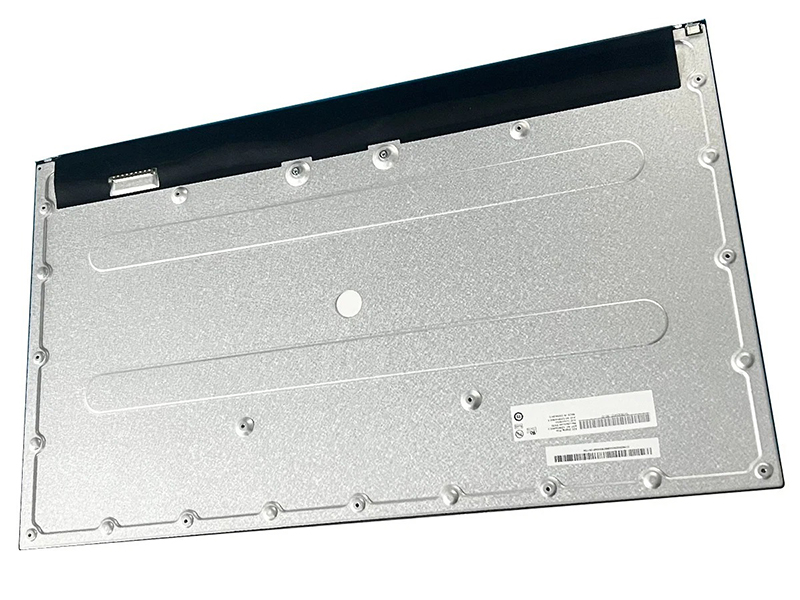
The G238HAN02.0 relies on a 30-pin LVDS connector, a communication standard that, while older than eDP (Embedded DisplayPort), remains dominant in the industrial world due to its long cable length capability and noise immunity. The panel supports 8-bit color resolution, providing 16.7 million colors without dithering. This is crucial for gradient-heavy UI elements or for rendering smooth transitions in video feeds from inspection cameras.
Signal integrity is seldom discussed but is a silent killer of display reliability. The LVDS interface on this AUO panel is designed with controlled impedance tracing in mind. This minimizes signal reflection and jitter, which can cause sparkles on the screen—a common failure mode when using long cables in a factory environment. The panel also supports spread spectrum clocking to reduce electromagnetic interference (EMI), which is a legal requirement for CE and FCC certification in many jurisdictions. For the integrator, selecting this panel means fewer headaches with EMI testing and a cleaner signal path, even when the display is located several meters from the computing core.
The combination of the G238HAN02.0’s attributes—long lifecycle, wide temperature support, high contrast, and robust mechanical build—makes it a de facto standard for kiosks. In a self-service kiosk, the screen is constantly subjected to environmental variations, be it the heat of a parking lot or the cold of a metro station. The LVDS interface allows for simple integration with standard x86 or ARM-based single-board computers. The 23.8-inch size is a sweet spot for ergonomics: large enough to present a comprehensive touch interface but not oversized to the point of being cumbersome in a small kiosk footprint.
Furthermore, the panel’s compatibility with capacitive and resistive touch screens is high. The optical bonding process, where the touch sensor is laminated to the panel glass, is well-documented, reducing the risk of Newton rings or dust ingress during assembly. In terms of life-cycle management, using a panel with high market saturation like the G238HAN02.0 ensures that replacement units and controller boards are readily available from distributors. This reduces the risk of an installed fleet of kiosks becoming bricked due to a simple screen failure—a risk that destroys reputations in the service industry. For the modern system architect, this panel represents a mature, risk-mitigated path to a production-ready display solution.
What is the primary difference between the G238HAN02.0 and a standard consumer monitor?
The main difference is the lifecycle length, wide-temperature tolerance (0°C to 50°C), and robust LVDS interface designed for 24/7 industrial use, unlike consumer monitors designed for intermittent office hours.
Is the G238HAN02.0 suitable for outdoor use?
It is not IP-rated for direct rain or dust exposure. However, its wide temperature range and high brightness make it suitable for use in shaded outdoor kiosks or under an enclosure.
Does this panel require a special controller board?
Yes. It requires an LVDS controller board with a 30-pin connector. It cannot be plugged directly into a standard HDMI or DisplayPort output without a conversion driver board.
What is the typical lifespan of the backlight?
The LED backlight is rated for an MTBF of over 50,000 hours to 70,000 hours, which equates to roughly 5 to 8 years of continuous use at full brightness.
Can this panel support touch screen integration?
Yes. It is commonly bonded with capacitive or resistive touch sensors. The panel's standard thickness and flat bezel design make touch lamination straightforward.
What is the exact power consumption?
Typical power consumption is around 13 to 17 Watts depending on the brightness setting and controller used.
Is the G238HAN02.0 lead-free and RoHS compliant?
Yes, AUO industrial panels are manufactured to RoHS (Restriction of Hazardous Substances) standards and are lead-free.
What is the pixel pitch?
The pixel pitch is approximately 0.2745 mm, which is standard for a 23.8-inch Full HD (1920x1080) resolution display.
Can I use this panel in a medical device?
Yes, it is suitable for non-life-critical medical monitoring equipment (Class I and IIa devices), where reliability and low power are required.
Does the panel have anti-glare surface treatment?
Yes, the standard version features an anti-glare (AG) surface with a hardness of 3H, reducing reflections in brightly lit environments.
Conclusion
The G238HAN02.0 is far more than a simple 23.8-inch screen; it is a testament to AUO's engineering philosophy centered on endurance and predictability. This panel bridges the gap between consumer-grade flashiness and military-grade cost, offering a balanced solution for the demanding world of kiosks, HMI panels, and medical carts. Its reliance on robust LVDS technology, wide thermal tolerance, and high-contrast VA optics ensures that it performs reliably where other displays would falter. For any project manager or hardware engineer tasked with specifying a display for a product that requires a 3-to-5-year field life, this model eliminates guesswork. It provides a proven foundation that keeps your visual interface operational, reducing warranty claims and support calls. In an industry where uptime is revenue, choosing the G238HAN02.0 is not just a technical decision; it is a business strategy for long-term operational stability.