- Industrial LCD display
-
Industrial Products
- DC Servo Drive
- AC Servo Drive
- other
- Heidelberg
- FANUC
- IFM
- Meter
- CCD
- Membrane Keypad
- Film
- YOKOGAWA Module
- Card
- ABB
- MITSUBISHI
- FANUC
- KEYENCE
- BECKHOFF
- Honeywell
- HOLLYSYS
- FUJI servo drives
- HP
- solenoid valve
- thermostat
- Siemens adapter
- color oscilloscope
- Fujitsu connector
- CHELIC
- SMC
- CISCO Module
- INTEL
- Key board
- FAIRCHILD
- Motherboard
- Board
- Bearing
- other
- Control Panel
- Contactor
- Circuit
- OMRON
- Relay
- Controller
- Photoelectric Switch
- Photoelectric Sensor
- Original
- Fan
- Motor Driver
- Limit Switch
- Amplifier
- power supply
- LENZE
- Cable
- Encoder
- Sensor
- Transformer
- Fiber Optic Sensor
- Protection Relay
- Temperature Controller
- Proximity Switch
- Switch Sensor
- Siemens
- Industrial board
- HMI Touch Glass
-
HMI Full Machine Whole unit
- OMRON HMI Touch Panel
- Siemens HMI Touch Panel
- Mitsubishi HMI Touch Panel
- Allen-Bradley automation HMI Touch Panel
- DELTA HMI Touch Panel
- EVIEW DELTA HMI Touch Panel
- KINCO DELTA HMI Touch Panel
- HITECH HMI Touch Panel
- WEINTECK HMI Touch Panel
- TECVIEW HMI Touch Panel
- WEINVIEW HMI Touch Panel
- PRO-FACE HMI Touch Panel
- SIMATIC HMI Touch Panel
- AMPIRE HMI Touch Panel
- HEIDELBERG HMI Touch Panel
- PANASONIC HMI Touch Panel
- PATLITE HMI Touch Panel
- KYOCERA HMI Touch Panel
- KEYENCE HMI Touch Panel
- WEINVIEW HMI Touch Panel
- HITECH HMI Touch Panel
- FUJI HMI Touch Panel
- HAKKO HMI Touch Panel
- SCHNEIDER HMI Touch Panel
- SAMKOON touch panel
- other
- Module
- lcd inverter
- Membrane Keypad Switch
- Winni Touch Screens
- Frequency Inverter
- Servo Motor
- PLC


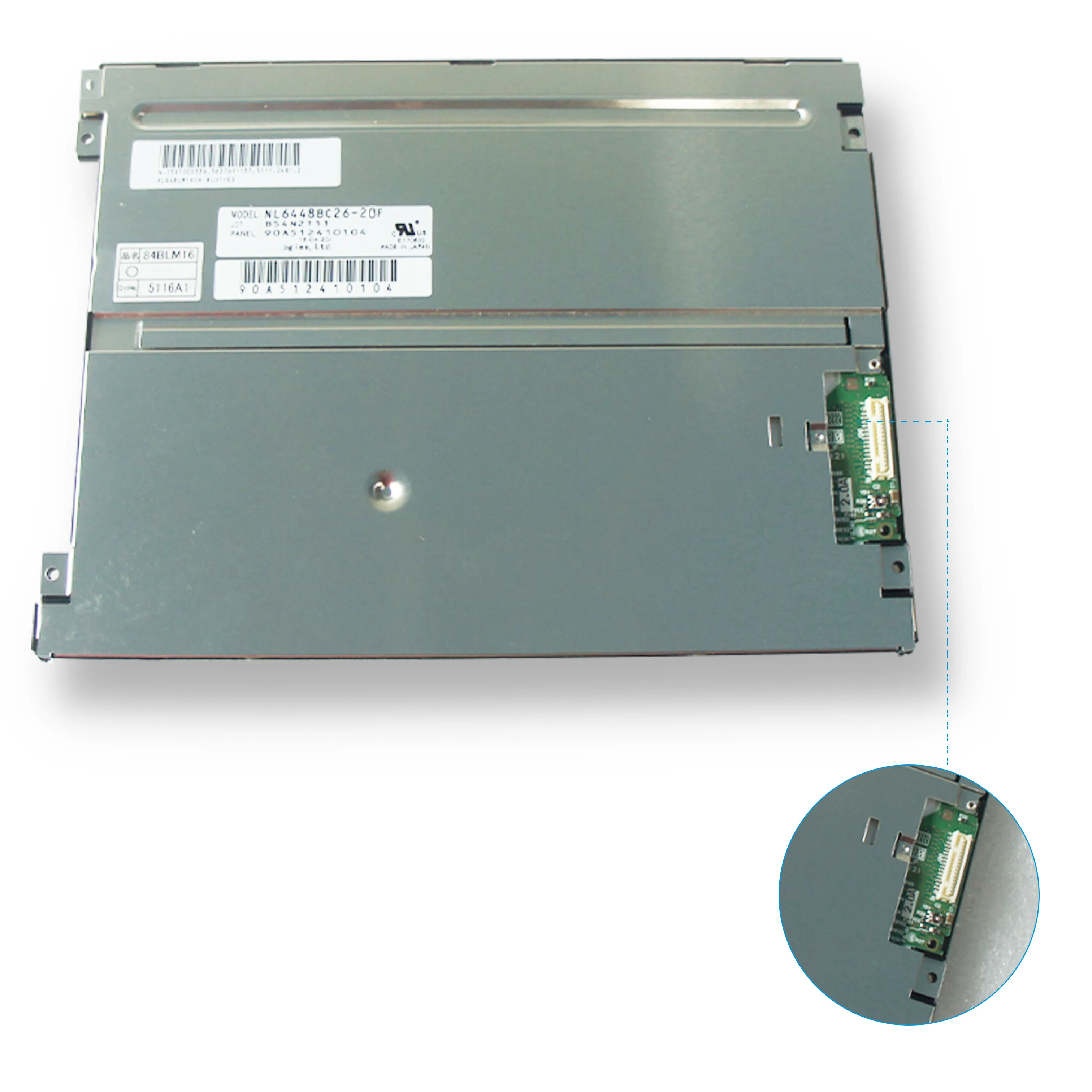

G270HTN01.0 Original AUO 27.0inch 1920*1080 LCD panel
In an era dominated by 4K and even 8K displays, the humble 1920x1080 resolution panel might seem like a relic of a bygone era. Yet, for a vast array of industrial, commercial, and specific professional applications, the AUO G270HTN01.0 remains a cornerstone of reliability and performance. This 27.0-inch LCD panel, manufactured by AU Optronics, is far more than just a standard monitor component; it is a carefully engineered solution designed for environments where 24/7 operation, consistent color fidelity, and mechanical robustness are non-negotiable. This article delves deep into the technical architecture, application ecosystems, and strategic value of this specific model. We will move beyond surface-level specifications to explore why a Full HD panel of this caliber continues to command respect and demand in a market saturated with higher-resolution alternatives. From the nuances of its TN (Twisted Nematic) technology to its comparative advantages in digital signage and medical imaging, we will dissect what makes the G270HTN01.0 a benchmark for industrial-grade visual output. This is not a review of a consumer gadget, but an analysis of a critical component in the backbone of professional display infrastructure.
At its heart, the G270HTN01.0 utilizes a Twisted Nematic (TN) panel technology. While often dismissed in the consumer world for its narrower viewing angles compared to IPS or VA panels, the TN implementation in this AUO panel is a masterclass in targeted engineering. The primary advantage is response time. With a typical response time of 3.8 ms (Gray to Gray), this panel excels in displaying fast-moving content without motion blur, a critical factor in certain medical scopes and video surveillance applications. This speed is achieved through a specific liquid crystal alignment that allows for rapid molecular reorientation.
Furthermore, the panel's brightness specification, typically at 300 cd/m², is not merely a number. It is a calibrated luminance designed to cut through ambient light in brightly lit control rooms or retail environments. The 3000:1 contrast ratio, while not OLED-level, provides deep blacks for a TN panel, enhancing readability for text-heavy applications. The 8-bit color depth, capable of displaying 16.7 million colors, ensures that color gradients are smooth and banding is minimized. This is not the 6-bit + FRC trickery found in budget displays; it is a true 8-bit interface panel, which is crucial for applications where color accuracy, even on a TN display, cannot be compromised. The backlight system, typically WLED, is designed for longevity, often rated for 50,000 hours of continuous operation, signifying its industrial-grade DNA.
The true differentiator of the G270HTN01.0 is not its resolution, but its operational resilience. This panel is engineered for 24/7 continuous operation. This is not a marketing claim but a design philosophy reflected in its thermal management, component selection, and manufacturing tolerance. In a consumer monitor, running a panel at maximum brightness for 10,000 consecutive hours can lead to significant backlight degradation and color shifting. The G270HTN01.0, in contrast, is built with a more robust backlight driver and a heat dissipation system that maintains peak performance over years of constant use. This makes it the preferred choice for mission-critical environments like network operation centers (NOCs), airport flight information displays, and industrial process monitoring.
Another key aspect of its reliability is its wide operating temperature range, usually spanning from 0°C to 50°C. This allows it to be deployed in semi-outdoor enclosures or unconditioned factory floors where temperature fluctuations are common. The mechanical design also includes VESA mount compatibility for secure installation, and its anti-glare surface treatment reduces eye strain for operators who may be viewing the panel for long shifts. The inclusion of an LVDS (Low-Voltage Differential Signaling) interface is also a deliberate choice for durability; LVDS is a robust, interference-resistant protocol that is preferred in industrial environments over consumer-centric interfaces like eDP (Embedded DisplayPort). This panel is designed to survive the vibration of a factory, the heat of a kitchen display system, and the constant uptime of a server room.
Understanding the application ecosystem is essential to appreciating the panel's strategic value. Its primary deployment is in the Digital Signage market. Not for interactive kiosks, but for pure information display. Its high brightness and reliability make it ideal for menu boards in quick-service restaurants (QSRs) and retail advertising. The 16:9 aspect ratio is perfect for standard video content and 1920x1080 signage layouts. In the medical sector, it is used in diagnostic workstations for viewing PACS images (X-rays, CT scans), where the high contrast and consistent grayscale performance are more critical than wide viewing angles (as only a single radiologist is typically viewing).
In the Gaming and Amusement Industry, it finds a home in casino slot machines and arcade cabinets. The fast response time ensures that animations are smooth, and the industrial-grade backlight can withstand the prolonged operational hours of a casino floor. Furthermore, it is a mainstay in Industrial PCs (IPCs) and Human-Machine Interfaces (HMIs) used for controlling factory automation. The LVDS interface simplifies integration with industrial motherboards and single-board computers. Another key application is in Video Surveillance Security Walls, where multiple G270HTN01.0 panels are tiled to create a mosaic of camera feeds. The thin bezel on many variants allows for minimal visual interruption between screens, although it is not a full "narrow bezel" for video walls, its consistency makes it a workhorse for this purpose. Each use case leverages the panel's specific strengths: reliability, speed, or brightness, rather than raw pixel density.
Comparative Analysis: G270HTN01.0 vs. IPS and VA Panels
To truly appreciate the G270HTN01.0, one must understand its position relative to IPS and VA technologies. An IPS (In-Plane Switching) panel offers superior viewing angles (178° horizontal and vertical), making it ideal for multi-viewer scenarios like conference rooms. However, IPS panels generally have slower response times and lower contrast ratios. The G270HTN01.0, with its TN technology, sacrifices viewing angles for speed and contrast. This is not a flaw; it is a trade-off that makes it superior for single-viewer, high-speed, or high-contrast applications. A VA (Vertical Alignment) panel offers the best contrast ratio (often 3000:1 or higher) but suffers from slower pixel transition times, especially in dark-to-light shifts, leading to visible "smearing."
Therefore, the G270HTN01.0 occupies a specific performance sweet spot. It offers the high contrast of a VA panel (3000:1) while matching the fast response time of an IPS panel. This is an unusual combination for a TN panel and is a direct result of AUO's proprietary engineering. Where an IPS panel might bleed light at the edges in dark medical images, the G270HTN01.0 maintains deep, uniform blacks. Where a VA panel would produce a muddy trail behind a fast-moving cursor in a surgical robot interface, the G270HTN01.0 keeps motion crisp. It is a specialist tool, not a generalist one. For a user whose primary requirement is consistent, fast, and reliable image integrity from a frontal viewing position, this AUO panel is often a more intelligent and cost-effective choice than a premium IPS or VA model.
Integrating the G270HTN01.0 into a system requires a deep understanding of its interface and electrical requirements. The panel uses a standard 30-pin, dual-channel LVDS interface. This means it requires two separate LVDS channels (data links) to achieve its full 1920x1080 resolution at a recommended 60Hz refresh rate. Each channel carries half of the pixel data, which is critical for ensuring consistent signal integrity over longer cable runs, a common scenario in industrial chassis. The panel is typically powered by a single 12V DC input for the logic board and a separate source for the backlight (often 12V or 24V, depending on the backlight driver board specifications).
For system integrators, important parameters include the signal timing (pixel clock typically around 148.5 MHz) and the EDID (Extended Display Identification Data) structure. The EDID tells the graphics source the panel's native resolution, timing, and color characteristics. A common integration challenge is ensuring the connected graphics controller is set to the correct LVDS voltage levels (typically 3.3V or 2.5V). The panel's power consumption is typically around 15-20W for the logic part and up to 20W for the backlight at maximum brightness, totaling about 35-40W under full load. Understanding these power requirements is crucial for calculating thermal dissipation within the final product enclosure. The physical dimensions of the active area are exactly 597.888 x 336.312 mm, and the panel's depth (including the backlight unit) is typically around 14-15mm, making it relatively shallow for integration into slim industrial designs.
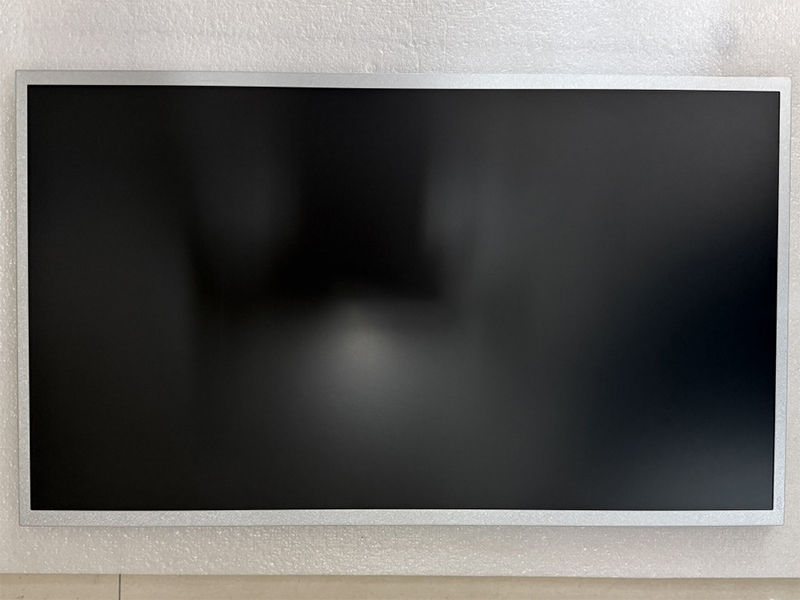
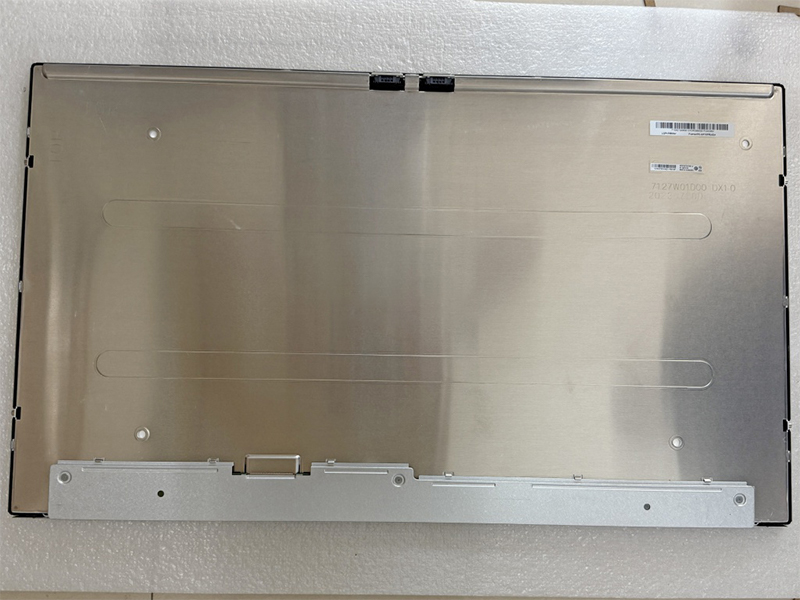
As the display industry pivots towards high-resolution interfaces and OLED panels, the question of the G270HTN01.0's longevity is pertinent. Its future is not as a cutting-edge consumer product, but as a sustaining product in the aftermarket and for legacy system support. There is a massive installed base of industrial and medical equipment that relies on this exact panel specification. Re-engineering a piece of equipment to accept a new panel technology (e.g., switching from LVDS to eDP) is incredibly expensive and time-consuming. This creates a persistent demand for the G270HTN01.0 as a replacement and repair part.
Furthermore, the panel's design is highly imitable and standardized, meaning multiple manufacturers produce compatible versions, which keeps supply chains robust. Its role in digital signage is also secure. For the foreseeable future, many signage networks prioritize content delivery and reliability over resolution. A 1080p panel running flawless 24/7 is more valuable than a 4K panel that fails after two years. Finally, the panel's cost-effectiveness remains a powerful advantage. For applications where 1920x1080 resolution is sufficient (which is still the vast majority of industrial and informational displays), the G270HTN01.0 offers a proven, low-risk, and affordable solution compared to newer, more expensive technologies. It will not be replaced in a year; it will be iterated upon and will coexist alongside higher-resolution panels for at least another decade.
FAQs: Detailed Insights on the G270HTN01.0
Is the AUO G270HTN01.0 suitable for gaming?
While it has a fast response time (3.8ms GTG), it is an industrial panel. It lacks adaptive sync (FreeSync/G-Sync), high refresh rates (it's locked at 60Hz), and has narrow viewing angles. It is not recommended for modern gaming but is excellent for arcade cabinets.
What is the typical lifespan of the backlight?
The WLED backlight is typically rated for 50,000 hours to half-brightness. This translates to roughly 5.7 years of continuous 24/7 operation before noticeable dimming.
Can I use this panel with a standard consumer graphics card?
No, not directly. Consumer cards use HDMI, DisplayPort, or DVI. You will need an active adapter (e.g., HDMI to LVDS) or a dedicated industrial controller board that accepts a standard video input and drives the LVDS interface.
What is the difference between this panel and a regular 27-inch monitor?
A regular monitor is a complete product with power supply, casing, and OSD controls. The G270HTN01.0 is a bare LCD panel. It requires an external controller board, power supply, and enclosure to function as a display.
Is the G270HTN01.0 truly 8-bit, or is it 6-bit + FRC?
It is a true 8-bit panel. It can display 16.7 million colors without any temporal dithering (FRC), ensuring stable and accurate color for medical and industrial use.
What is the bezel width on this panel?
The bezel (active area to panel edge) is typically around 10-12mm on the sides and top, and 15-18mm at the bottom. It is not an ultra-narrow bezel for modern video walls.
Can I replace a broken G270HTN01.0 with a different model?
It is possible but risky. You must match the exact physical dimensions, resolution, interface (30-pin dual-channel LVDS), electrical voltage, and backlight specifications. A direct replacement with the same model is always safest.
What is the viewing angle specification?
The typical specification is 170° horizontal and 160° vertical (CR≥10). This means significant brightness and color shift occur when viewing off-angle, which is inherent to TN technology.
Is this panel suitable for outdoor use?
Not directly. The standard brightness (300 cd/m²) is not sufficient for direct sunlight. You would need an outdoor-specific, high-brightness (e.g., 1000+ cd/m²) panel.
Does this panel come with a touch screen?
No, it is a bare display panel. To add touch functionality, you must assemble it with an external touch sensor layer (e.g., capacitive or resistive overlay) and a touch controller.
Conclusion: The Unseen Workhorse of Professional Display
The AUO G270HTN01.0 is far more than a sum of its specifications. It is a testament to the value of purposeful engineering over a generic pursuit of numbers. In a world captivated by the glitter of 4K, this 27-inch, 1080p TN panel continues to quietly power the world's critical infrastructure. Its strength lies not in its pixel density, but in its unwavering reliability, rapid response, and industrial-grade construction. For system integrators, medical device manufacturers, and digital signage operators, it represents a known quantity—a component that can be trusted to perform under constant load in demanding environments. If you are designing a system that demands a clear, fast, and durable display for a single operator or a dedicated informational task, the G270HTN01.0 is not a compromise; it is a strategic choice. It reminds us that in technology, true excellence often lies not in being the newest, but in being the most dependable.