- Industrie-LCD-Display
-
Industrial Products
- DC Servo Drive
- AC Servo Drive
- other
- Heidelberg
- FANUC
- IFM
- Meter
- CCD
- Membrane Keypad
- Film
- YOKOGAWA
- Card
- ABB
- MITSUBISHI
- FANUC
- KEYENCE
- BECKHOFF
- Honeywell
- HOLLYSYS
- FUJI servo drives
- HP
- solenoid valve
- thermostat
- Siemens adapter
- color oscilloscope
- Fujitsu connector
- CHELIC
- SMC
- CISCO
- INTEL
- Key board
- FAIRCHILD
- Der Aufsichtsrat
- Board
- Bearing
- other
- Control Panel
- Contactor
- Circuit
- Omron
- Relais.
- Der controller
- Optoelektronische schalter
- Optoelektronische sensoren
- Original
- Fan
- Motortreiber
- Endschalter
- Verstärker
- power supply
- LENZE
- Cable
- Encoder
- Sensor
- Transformator
- Fiber Optic Sensor
- Schutzrelais
- Temperaturregler
- Näherungsschalter
- Switch Sensor
- Siemens
- PCB
- HMI Touch-Glas
-
HMI-Vollautomat Ganze Einheit
- OMRON HMI Touch Panel
- Siemens HMI Touch Panel
- Mitsubishi HMI Touch Panel
- Allen-Bradley Automatisierung HMI Touch
- DELTA HMI Touch Panel
- EVIEW DELTA HMI Touch Panel
- KINCO DELTA HMI Touch Panel
- HITECH HMI Touch Panel
- WEINTECK HMI Touch Panel
- TECVIEW HMI Touch Panel
- WEINVIEW HMI Touch Panel
- PRO-FACE HMI Touch Panel
- SIMATIC HMI Touch Panel
- AMPIRE HMI Touch Panel
- HEIDELBERG HMI Touch Panel
- PANASONIC HMI Touch Panel
- PATLITE HMI Touch Panel
- KYOCERA HMI Touch Panel
- KEYENCE HMI Touch Panel
- WEINVIEW HMI Touch Panel
- HITECH HMI Touch Panel
- FUJI HMI Touch Panel
- HAKKO HMI Touch Panel
- SCHNEIDER HMI Touch Panel
- SAMKOON touch panel
- andere
- Module
- LCD Wechselrichter
- Membran Tastenfeld Schalter
- Winni Touch Screens
- Frequenzumrichter
- Servo Motor
- PLC


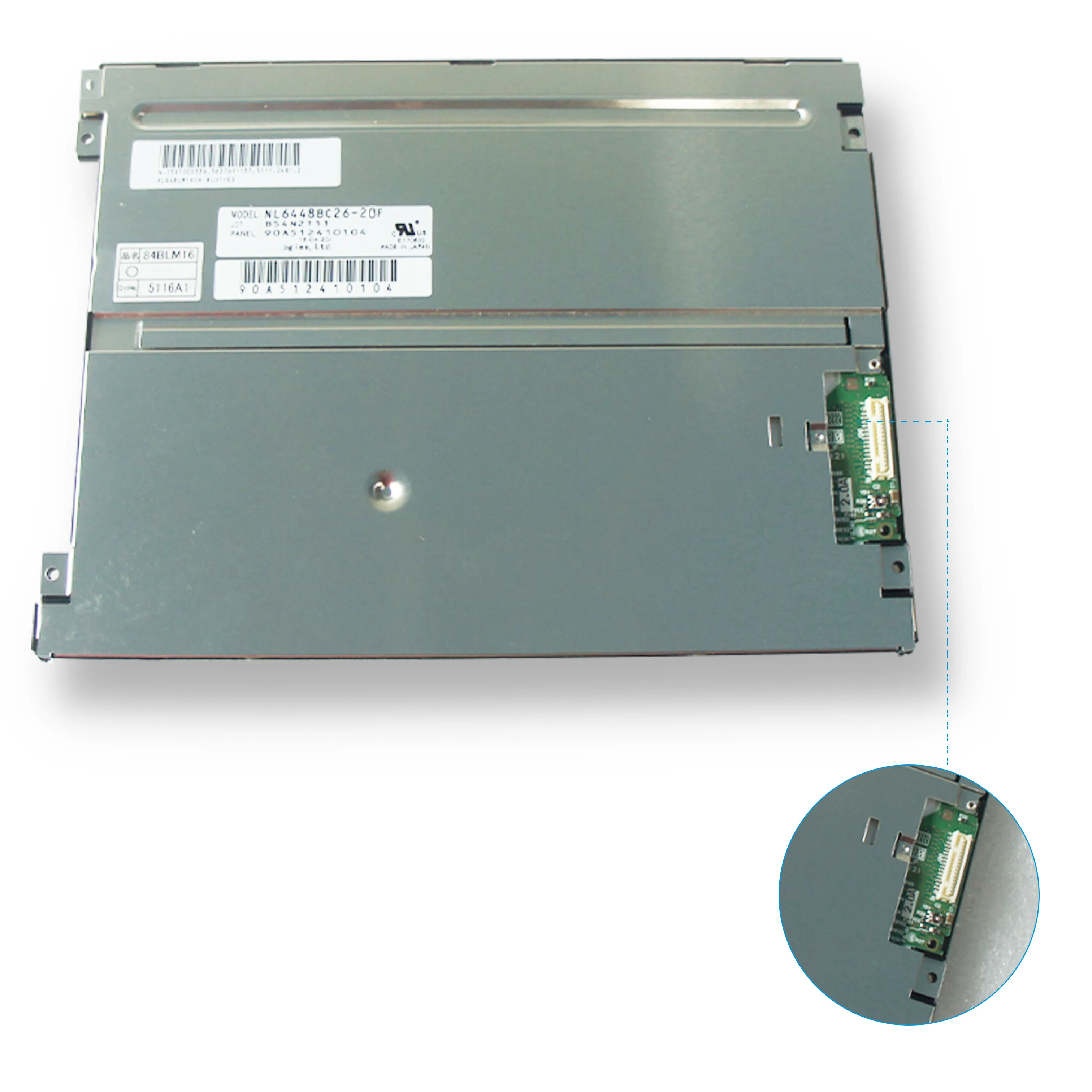

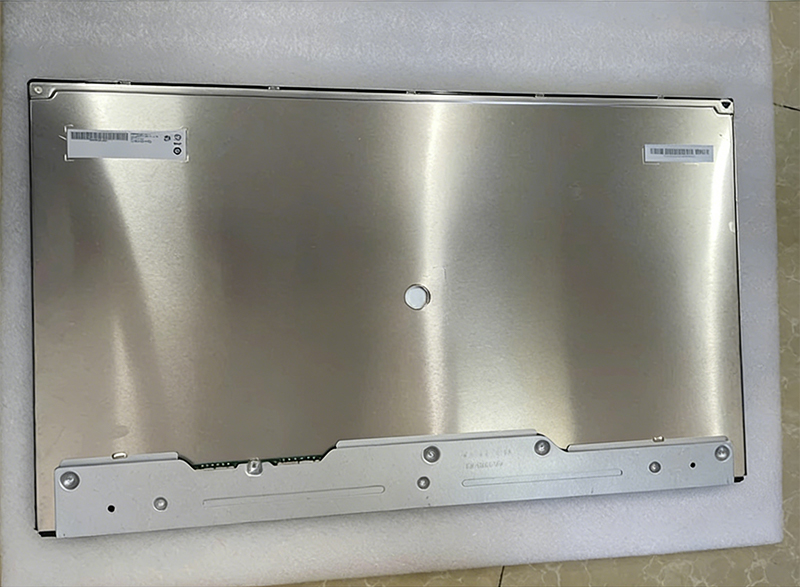
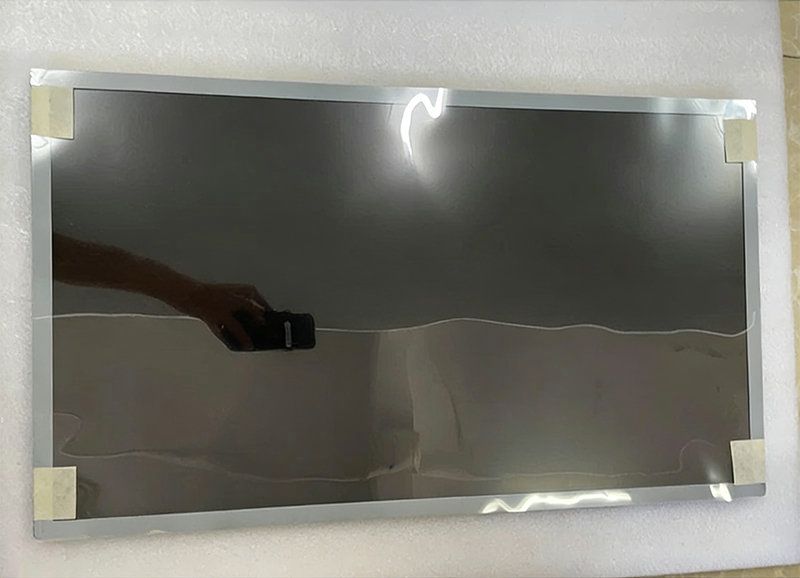
G270QAN01.1 New AUO 27.0inch 2560*1440 LCD screen
The modern display market is a landscape of compromise, where consumer-grade panels often sacrifice durability for vibrancy, and industrial screens may prioritize longevity over color accuracy. The G270QAN01.1, a 27.0-inch LCD module manufactured by AU Optronics (AUO), represents a deliberate departure from this norm. This specific model is engineered for applications where failure is not an option—medical diagnostic monitors, air traffic control systems, and high-end financial trading desks. At its core lies a 2560x1440 (QHD) resolution, which strikes a critical balance between detail density and GPU load, avoiding the scaling issues common with 4K in professional software.
This article does not merely list specifications. We will dissect the G270QAN01.1 from an engineering and practical deployment perspective: analyzing its optical architecture, the implications of its interface (eDP vs. LVDS), thermal management behavior, and why this particular AUO panel commands a premium in the aftermarket. We will explore how its 1000:1 contrast ratio and wide viewing angle (85/85/85/85) are not just numbers, but indicators of a rigorously calibrated manufacturing tolerance. By the end, you will understand why this panel is considered a workhorse for critical vision, rather than just another screen.
While the 2560x1440 resolution is a headline figure, the true value of the G270QAN01.1 lies in its optical consistency. AUO employs a specific Vertical Alignment (VA) technology variant in this model, which differs from the cheaper TN (Twisted Nematic) or IPS (In-Plane Switching) panels found in consumer monitors. VA technology provides inherently superior native contrast ratios—typically exceeding 3000:1 in dark scenes, though the spec sheet lists a conservative 1000:1 due to full-panel luminance tests.
The critical advantage here is black depth uniformity. In medical imaging (e.g., PACS systems), a slight glow in the corners of a dark image can hide a subtle lesion. The G270QAN01.1’s VA matrix minimizes light leakage, ensuring that dark grays remain distinguishable near the pixel boundaries. Furthermore, the panel uses a wide color gamut backlight, covering 72% NTSC (typical) which translates to roughly 90-95% sRGB coverage. This is not a wide gamut panel for photography, but a high-fidelity panel for precise grayscale definition. The 6-bit + FRC (Frame Rate Control) dithering engine is optimized to reduce temporal noise, which is crucial for static image retention in surveillance feeds.
The G270QAN01.1 utilizes an Embedded DisplayPort (eDP) interface, a detail that significantly impacts its performance and replacement suitability. Unlike older LVDS (Low-Voltage Differential Signaling) interfaces, which rely on parallel data lanes and suffer from signal degradation over longer distances, eDP uses a serial, packetized data structure. This allows for higher bandwidth (critical for 2560x1440 @ 60Hz) and lower electromagnetic interference (EMI).
For integration engineers, this means the panel requires a specific eDP timing controller on the host board. It is not a drop-in replacement for an LVDS monitor. The eDP interface also supports Panel Self-Refresh (PSR) and Adaptive-Sync features, though in this industrial variant, these are typically locked to a fixed 60Hz refresh rate to guarantee deterministic frame timing. The 30-pin eDP connector (typically a IPEX type) is robust, rated for hundreds of mating cycles, which is essential for maintenance in kiosk or slot-machine applications where the display unit is frequently accessed. Signal integrity is further enhanced by the panel's built-in timing controller (TCON) chip, which pre-conditions the data to reduce shimmer and jitter in noisy electromagnetic environments like server rooms or factory floors.
A 27-inch panel dissipating a typical 18-22 watts of power is not thermally trivial, especially in sealed enclosures. The G270QAN01.1 is designed with an aluminum chassis backplate acting as a passive heat sink. This is a deliberate choice over cheaper steel or plastic backs. The metal backplate spreads the heat from the LED driver ICs and TCON evenly across the panel, preventing hot spots that can cause image retention or pixel burn-in over time.
The module’s physical dimensions (typically 627.0 mm x 368.2 mm x 11.8 mm) are precisely matched to a standard 100mm x 100mm VESA mounting pattern, but with threaded brass inserts in the plastic bezel for repeated screw torque without stripping. The bezel itself is a non-glare, anti-reflective coating applied directly to the front polarizer, rather than a separate layer. This reduces the optical stack thickness, minimizing parallax errors in touch-screen overlays. For applications operating in humid environments (like marine nav stations), AUO applies a conformal coating to the exposed PCB edges to resist corrosion. The operating temperature range is rated at 0°C to 50°C, but it can withstand storage at -20°C, making it suitable for industrial equipment shipped in unheated cargo.
The specific design trade-offs of the G270QAN01.1 target a clear niche: high-uptime, high-stakes visualization. Its most prominent deployment is in medical PACS (Picture Archiving and Communication Systems) monitors. Radiologists require consistent luminance over 10+ hour shifts, and this panel’s low-drift LED backlight (often backlight-controlled via PWM at a high frequency to avoid flicker) meets DICOM Part 14 calibration standards when paired with a proprietary frame buffer.
Beyond medicine, this panel is a favorite for air traffic control (ATC) workstations. The 16:9 aspect ratio at WQHD resolution provides a critical balance—enough horizontal space for radar strips and flight data, without the vertical scroll fatigue of a 16:10 ratio. The VA technology ensures that operator’s peripheral vision does not pick up color shift when glancing at a secondary screen. In the financial sector, trading floors use this panel in multi-monitor arrays. The narrow bezel (approx. 8-10mm on three sides) allows for near-seamless tiling, while the consistent grayscale performance ensures that red/green candlestick charts remain distinguishable under harsh overhead LED lighting. It is also found in high-end slot machines and gaming terminals, where the robust bezel and anti-glare surface withstand repeated cleaning and accidental impacts from players.
Purchasing a G270QAN01.1 requires caution. This is an Industrial Grade BOM (Bill of Materials) part, meaning AUO produces it in batches for specific OEM contracts (e.g., NEC, Eizo, Barco). Genuine units are often marked with a lot code and a unique firmware version (e.g., Rev. A1, B1). The gray market is flooded with "compatible" panels that use inferior polarizers or lower-binned LED strips.
A critical point of failure for replacements is the keying of the eDP cable. The G270QAN01.1 uses a specific 30-pin eDP connector, but the pin-out sequence (pin 1 location) can vary between revisions. Always verify the exact connector position on the panel's datasheet. Installing a reversed cable can destroy the TCON. Another common pitfall is the backlight driver voltage. While the standard is 12V, some OEMs specify a 10V or 18V driver in their end system. The panel itself is rated for 12V input to the LED strip, but the constant current driver must match. When sourcing a replacement, prioritize vendors who provide the exact AUO datasheet with the mechanical drawing, not just a generic web listing. Expect a premium of 20-40% over a consumer 27" QHD panel, justified by lower pixel defect rates (typically IPC-A-600 Class 2 or 3) and tighter luminance tolerances.
Is the G270QAN01.1 compatible with standard gaming monitors?
No. It requires a specific eDP controller board, not a standard DP/HDMI converter board found in consumer displays.
What is the exact power consumption?
Typically 18-22 watts for the backlight and 3-5 watts for the logic board, totaling roughly 25 watts maximum.
Can I use this panel in a touchscreen kiosk?
Yes, but ensure the overlay is bonded to the anti-glare surface. The bezel is designed for flush mounting.
What is the average lifespan of the backlight?
Rated at 50,000 hours to half-brightness (L50) under standard 25°C ambient temperature.
Is the 6-bit + FRC color depth acceptable for medical grayscale reading?
Yes, for 10-bit grayscale it uses FRC spatially, but for diagnostic reading a dedicated 10-bit panel (like the G270QAN01.0) is preferred.
Does it support 240Hz refresh rate?
No. It is a 60Hz panel designed for static or slow-scrolling content, not fast motion.
What is the exact bezel width?
Approximately 8.5mm on the left/right, 9.0mm on the top, and 12.0mm on the bottom (including the lower tab).
Can I repair a burned-out LED strip?
Yes, but only by replacing the entire backlight unit. It is a specialized repair requiring clean room conditions to avoid dust.
Is it an IPS or VA panel? Why does it matter?
It is a VA panel. This gives better contrast but slightly slower response time than IPS. For static imagery, contrast is king.
Where can I find the official AUO datasheet?
Only through AUO distributors or the specific OEM (e.g., NEC) who uses it. It is not publicly accessible on AUO’s consumer site due to NDAs.
Conclusion: The Unseen Reliability of a Purpose-Built Display
The G270QAN01.1 is not a product for the mass market, and it was never designed to be. It is a testament to the philosophy that a display is not merely a window to data, but an integral component of a mission-critical system. Its 2560x1440 resolution is not a marketing gimmick but a calculated ergonomic and technical standard for medical and industrial workflows. We have established that its VA panel delivers superior black depth for high-contrast imaging, its eDP interface ensures signal purity in noisy electric environments, and its mechanical design prioritizes longevity and heat dissipation over thinness.
When you specify or replace a G270QAN01.1, you are buying into a guarantee of optical consistency and mechanical reliability that consumer panels cannot offer. For system integrators and maintenance engineers, understanding these nuances is the difference between a stable deployment and a recurring field failure. This panel represents the state of the art for where color accuracy is less important than grayscale integrity, and where every pixel must be a trusted data point. Choose it with the same rigor you apply to your entire signal chain.