- Industrial LCD display
-
Industrial Products
- DC Servo Drive
- AC Servo Drive
- other
- Heidelberg
- FANUC
- IFM
- Meter
- CCD
- Membrane Keypad
- Film
- YOKOGAWA Module
- Card
- ABB
- MITSUBISHI
- FANUC
- KEYENCE
- BECKHOFF
- Honeywell
- HOLLYSYS
- FUJI servo drives
- HP
- solenoid valve
- thermostat
- Siemens adapter
- color oscilloscope
- Fujitsu connector
- CHELIC
- SMC
- CISCO Module
- INTEL
- Key board
- FAIRCHILD
- Motherboard
- Board
- Bearing
- other
- Control Panel
- Contactor
- Circuit
- OMRON
- Relay
- Controller
- Photoelectric Switch
- Photoelectric Sensor
- Original
- Fan
- Motor Driver
- Limit Switch
- Amplifier
- power supply
- LENZE
- Cable
- Encoder
- Sensor
- Transformer
- Fiber Optic Sensor
- Protection Relay
- Temperature Controller
- Proximity Switch
- Switch Sensor
- Siemens
- Industrial board
- HMI Touch Glass
-
HMI Full Machine Whole unit
- OMRON HMI Touch Panel
- Siemens HMI Touch Panel
- Mitsubishi HMI Touch Panel
- Allen-Bradley automation HMI Touch Panel
- DELTA HMI Touch Panel
- EVIEW DELTA HMI Touch Panel
- KINCO DELTA HMI Touch Panel
- HITECH HMI Touch Panel
- WEINTECK HMI Touch Panel
- TECVIEW HMI Touch Panel
- WEINVIEW HMI Touch Panel
- PRO-FACE HMI Touch Panel
- SIMATIC HMI Touch Panel
- AMPIRE HMI Touch Panel
- HEIDELBERG HMI Touch Panel
- PANASONIC HMI Touch Panel
- PATLITE HMI Touch Panel
- KYOCERA HMI Touch Panel
- KEYENCE HMI Touch Panel
- WEINVIEW HMI Touch Panel
- HITECH HMI Touch Panel
- FUJI HMI Touch Panel
- HAKKO HMI Touch Panel
- SCHNEIDER HMI Touch Panel
- SAMKOON touch panel
- other
- Module
- lcd inverter
- Membrane Keypad Switch
- Winni Touch Screens
- Frequency Inverter
- Servo Motor
- PLC


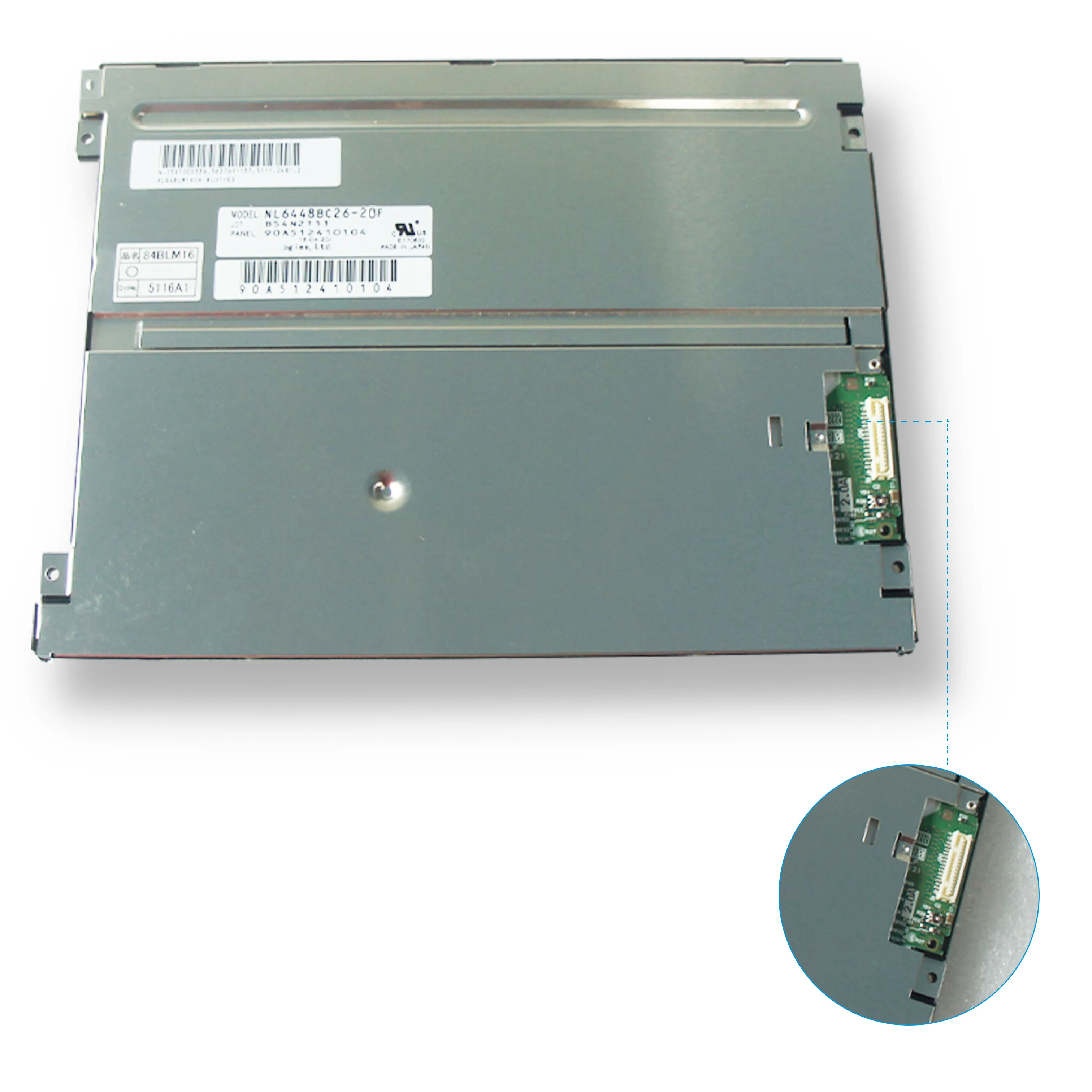

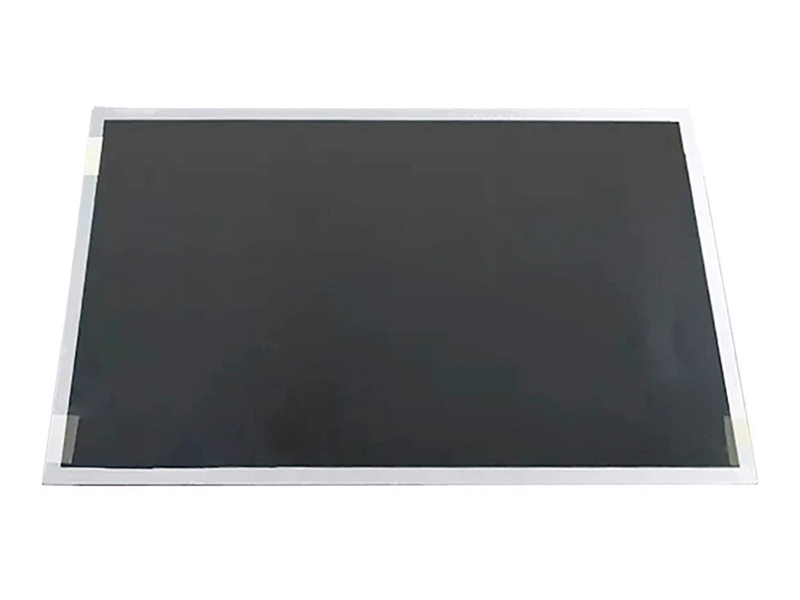
G270ZAN01.4 AUO 27.0inch 3840*2160 LCD screen
The industrial display market demands screens that can operate under continuous stress while maintaining impeccable visual fidelity. Among the high-performance panels designed for such rigorous applications, the G270ZAN01.4 from AU Optronics (AUO) stands as a significant benchmark. This 27.0-inch LCD screen, with its native 3840x2160 (4K UHD) resolution, is engineered for environments where clarity, longevity, and reliability are non-negotiable. Unlike consumer-grade monitors which prioritize aesthetics and cost, the G270ZAN01.4 is built for medical imaging, avionics, and industrial control rooms. In this deep-dive, we will explore the architectural nuances of this specific model, dissecting its optical performance, interface design, and application logic. We will look beyond the basic specifications to understand why this panel is a preferred choice for system integrators and OEMs requiring a long-lifecycle product that maintains consistency across temperature extremes and prolonged usage periods.
The foundation of the G270ZAN01.4 is its 27-inch diagonal combined with a 3840 x 2160 pixel matrix. This configuration results in a pixel density of approximately 163 PPI (Pixels Per Inch). For a 27-inch panel, this density is critical because it eliminates visible pixel structure at standard viewing distances, a requirement for diagnostic imaging and detailed schematic review. The panel utilizes Vertical Alignment (VA) technology, which offers inherently superior static contrast ratios compared to IPS panels in this specific industrial model. The specified contrast ratio of 1000:1 for this AUO model ensures deep black levels, which is vital for color-grading applications where shadow detail must be preserved. Furthermore, with a brightness ceiling of 350 cd/m², the display provides sufficient luminance to overcome ambient lighting in control rooms, while remaining low enough to prevent eye strain in long shift work. The anti-glare surface treatment is another critical factor; rather than a glossy consumer finish, the G270ZAN01.4 employs a hard coating that diffuses ambient light, maintaining readability without introducing distracting specular reflections.
A defining characteristic of the G270ZAN01.4 is its reliance on the eDP (Embedded DisplayPort) interface, specifically a 30-pin connector. This is not a standard monitor with HDMI or DisplayPort input. eDP is a serial interface designed for internal connections within embedded systems, medical carts, and avionics suites. The use of eDP 1.4 allows for High Bit Rate 3 (HBR3) speeds, enabling the 3840x2160 resolution at 60Hz over a single, thin, and reliable cable. For the system integrator, this means the display is intended to be driven directly by a graphics processor on a motherboard or embedded controller, bypassing the latency and board space required for external video controllers. The electrical design of the interface also supports Panel Self-Refresh (PSR), which allows the display to store the current frame in its internal memory. When the image is static, the GPU can enter a low-power state, reducing overall system power consumption—a benefit particularly valued in battery-operated medical equipment or portable industrial test units.
Unlike consumer monitors that are often limited to 0°C to 50°C operating ranges, the G270ZAN01.4 is specified for a wide operating temperature range of 0°C to 70°C. This is not merely a marketing point; it dictates the panel's physical construction. The liquid crystal material is formulated to maintain viscosity and switching speed at low temperatures, preventing ghosting or slow response in cold environments such as warehouse docks or outdoor kiosks. At the high end, the backlight unit (comprising an array of LEDs) must dissipate heat efficiently without degrading the optical film stack. AUO achieves this through a robust aluminum chassis that acts as a heatsink, and the use of thermally conductive adhesives for the optical films. This thermal resilience is a primary reason why the G270ZAN01.4 is selected for aviation cockpit displays, where temperature variations are extreme and reliability is life-critical. The panel also employs Low Temperature Polycrystalline Silicon (LTPS) technology in its TFT substrate, which offers higher electron mobility, allowing for a smaller bezel and more efficient power delivery across the large 27-inch area.
For industrial and medical applications, color accuracy is often secondary to grayscale reproduction, but the G270ZAN01.4 balances both. It achieves a 72% NTSC color gamut, which is effectively equivalent to sRGB coverage. While this does not match the wide gamut of high-end photo-editing monitors (e.g., DCI-P3), it is a deliberate trade-off for stability. Wide gamut panels often suffer from color shifting at different brightness levels. The 72% NTSC standard, combined with an 8-bit (16.7 million colors) driver IC, ensures that grayscale tones remain neutral without a visible green or magenta shift. This is essential for medical grayscale displays (DICOM Part 14 calibration) where a linear grayscale is required to detect subtle density changes in X-rays or MRIs. The panel's viewing angles of 89 degrees in all four directions (CR≥10) ensure that operators viewing the screen from off-center positions still perceive consistent luminance and color uniformity, a feature often overlooked in single-user monitors but critical in multi-user command and control environments.
Adopting the G270ZAN01.4 requires more than just wiring power and signal. The panel operates on a 12V DC backlight power supply and a separate logic voltage of 3.3V, which are not interchangeable. A common integration failure is the inability to source a compatible timing controller (TCON) or inverter board. Because the panel uses eDP, the host system must have an eDP output or a level shifter. Furthermore, the mounting holes are positioned specifically for VESA 100x100 standards, but the panel thickness (approximately 18mm) and the weight of the metal chassis require robust bracketing for vibration-prone environments. Integrators must also consider the EDID (Extended Display Identification Data) programming. Unlike consumer monitors that ship with pre-programmed EDID, the G270ZAN01.4 often requires the system designer to load the correct timing parameters for 3840x2160@60Hz. Failure to do so results in a blank screen or a fallback to 1080p. Additionally, the panel is lead-free and RoHS compliant, but it requires careful handling of the polarizer film during assembly, as scratches severely impact the 4K resolution's sharpness.
The true value of the AUO G270ZAN01.4 lies in its product lifecycle. Industrial panels are typically guaranteed for a minimum of 3 to 5 years of production availbility, often extending beyond 7 years. This is a stark contrast to consumer monitors that change models annually. For a defense contractor or medical device manufacturer, this long-term stability means that once a display is qualified and certified (e.g., through FCC, UL, or CE testing), the same panel can be procured for the product's entire production run without requalification. The backlight of this model is rated for 50,000 hours of life (to half-brightness), which translates to roughly 5.7 years of continuous 24/7 operation. This long backlight life reduces the total cost of ownership in kiosk or ticketing applications. The G270ZAN01.4 is also designed for easy replacement; it is a standard module without integrated touch or complex bezels, allowing system integrators to customize the front frame. This modularity means that if the panel fails, a direct replacement can be swapped in without modifying the system's chassis design.

1. Is the G270ZAN01.4 suitable for gaming?
No. With a typical response time of 25ms (Tr+Tf), it is designed for static imaging and slow-moving industrial interfaces, not for fast-paced gaming.
2. What is the exact physical dimensions of this panel?
The active area is 596.16 x 335.34 mm, with an overall dimension of approximately 630 x 368.2 x 18 mm (excluding mounting brackets).
3. Can I use a standard HDMI cable with this screen?
No. The panel uses a 30-pin eDP interface. You need an eDP controller board or a driver board that converts HDMI to eDP signal.
4. Does this panel support HDR?
No. It has a 72% NTSC gamut and 350 cd/m² brightness, which does not meet HDR10 or Dolby Vision standards. It is an SDR panel.
5. What is the power consumption?
Typical power consumption is around 25W for the backlight and logic combined, but this can spike to 35W during peak brightness.
6. Is the panel compatible with single-link or dual-link LVDS?
No. It exclusively uses eDP. It is not compatible with LVDS interfaces without a protocol converter board.
7. What is the storage temperature range?
Storage temperature is -20°C to +60°C. Avoid storing below -20°C as the liquid crystal may freeze.
8. Does the G270ZAN01.4 have an integrated touch layer?
No. This is a display-only module. You must add a separate touch screen if required.
9. What is the surface hardness of the polarizer?
It features an anti-glare coating with a 3H hardness rating, which is resistant to minor scratches but not indestructible.
10. Is there a touchscreen version of this model?
AUO does not produce a native touch version of this specific part number. You must source a third-party touch overlay.
Conclusion
The G270ZAN01.4 is a specialized tool, not a commodity consumer good. Its value is realized in industrial and medical contexts where the cost of failure far exceeds the cost of the component. By offering a robust VA panel with a wide operating temperature range, a stable 72% NTSC color profile, and a reliable eDP interface, AUO has provided the market with a low-risk, high-stability solution. For engineers designing mission-critical systems, this panel reduces time-to-market by offering consistent electrical and optical characteristics that require minimal calibration. While it lacks the high frame rates and gamut of entertainment displays, its true strength lies in its predictability and longevity. Whether deployed in a surgical theater, a factory floor, or an air traffic control tower, the G270ZAN01.4 proves that the best display is not always the flashiest, but the one you can trust to perform without fail over thousands of hours of continuous use. It is a quintessential example of industrial-grade engineering prioritizing reliability over spectacle.