- Industrial LCD display
-
Industrial Products
- DC Servo Drive
- AC Servo Drive
- other
- Heidelberg
- FANUC
- IFM
- Meter
- CCD
- Membrane Keypad
- Film
- YOKOGAWA Module
- Card
- ABB
- MITSUBISHI
- FANUC
- KEYENCE
- BECKHOFF
- Honeywell
- HOLLYSYS
- FUJI servo drives
- HP
- solenoid valve
- thermostat
- Siemens adapter
- color oscilloscope
- Fujitsu connector
- CHELIC
- SMC
- CISCO Module
- INTEL
- Key board
- FAIRCHILD
- Motherboard
- Board
- Bearing
- other
- Control Panel
- Contactor
- Circuit
- OMRON
- Relay
- Controller
- Photoelectric Switch
- Photoelectric Sensor
- Original
- Fan
- Motor Driver
- Limit Switch
- Amplifier
- power supply
- LENZE
- Cable
- Encoder
- Sensor
- Transformer
- Fiber Optic Sensor
- Protection Relay
- Temperature Controller
- Proximity Switch
- Switch Sensor
- Siemens
- Industrial board
- HMI Touch Glass
-
HMI Full Machine Whole unit
- OMRON HMI Touch Panel
- Siemens HMI Touch Panel
- Mitsubishi HMI Touch Panel
- Allen-Bradley automation HMI Touch Panel
- DELTA HMI Touch Panel
- EVIEW DELTA HMI Touch Panel
- KINCO DELTA HMI Touch Panel
- HITECH HMI Touch Panel
- WEINTECK HMI Touch Panel
- TECVIEW HMI Touch Panel
- WEINVIEW HMI Touch Panel
- PRO-FACE HMI Touch Panel
- SIMATIC HMI Touch Panel
- AMPIRE HMI Touch Panel
- HEIDELBERG HMI Touch Panel
- PANASONIC HMI Touch Panel
- PATLITE HMI Touch Panel
- KYOCERA HMI Touch Panel
- KEYENCE HMI Touch Panel
- WEINVIEW HMI Touch Panel
- HITECH HMI Touch Panel
- FUJI HMI Touch Panel
- HAKKO HMI Touch Panel
- SCHNEIDER HMI Touch Panel
- SAMKOON touch panel
- other
- Module
- lcd inverter
- Membrane Keypad Switch
- Winni Touch Screens
- Frequency Inverter
- Servo Motor
- PLC


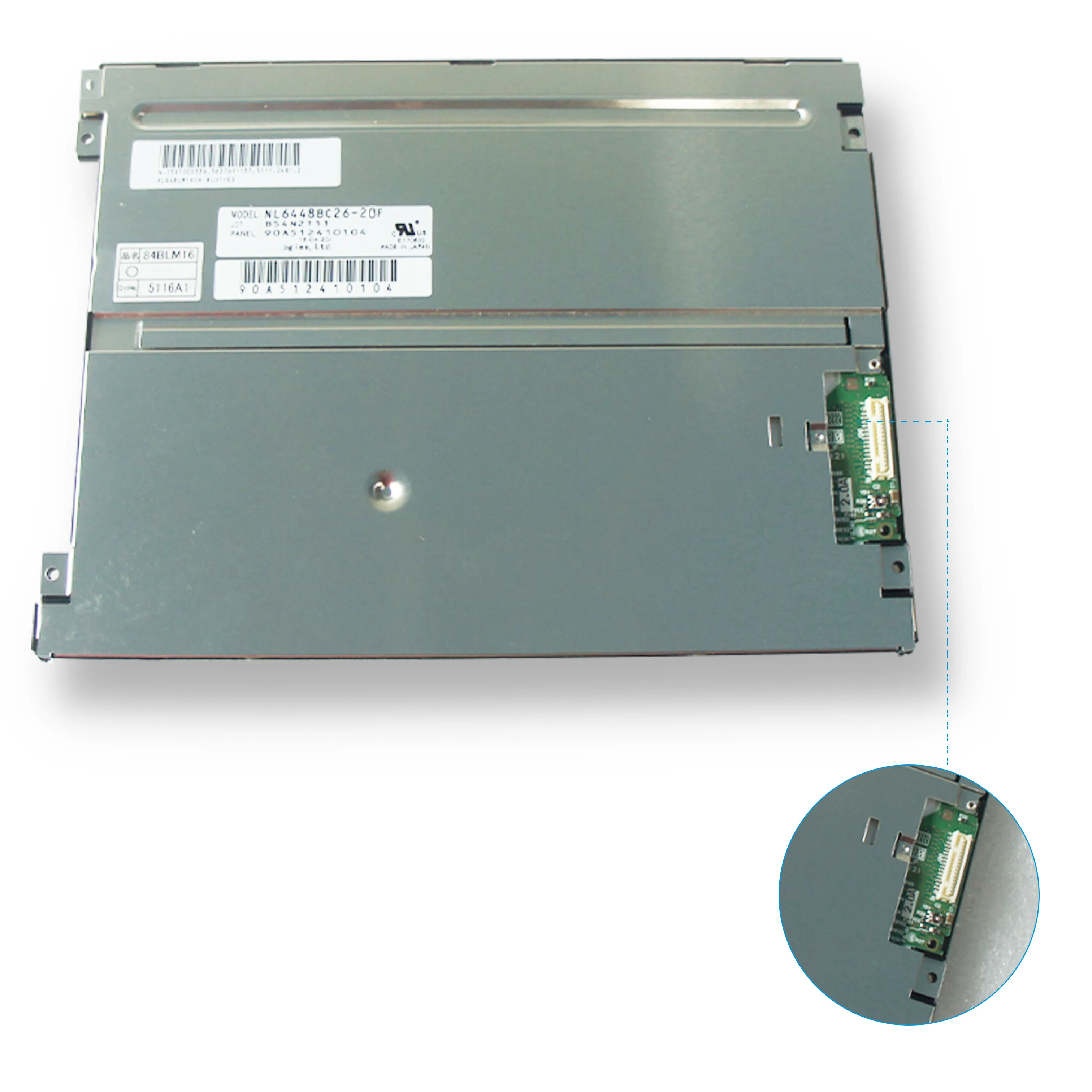

G270ZAN01.7 AUO 27.0" 3840*2160 LCD panel
In the ever-evolving landscape of display technology, where the demands for precision, color accuracy, and sheer pixel density are at an all-time high, the G270ZAN01.7 from AU Optronics (AUO) stands as a formidable contender. This 27-inch panel, boasting a native 4K UHD resolution of 3840 x 2160, is not merely another screen; it is a carefully engineered component designed for the most discerning professionals. While consumers often chase high refresh rates for gaming, the true measure of a premium panel lies in its ability to render accurate colors, maintain consistent brightness, and produce deep blacks. The G270ZAN01.7 is positioned precisely at this intersection of fidelity and performance. This article delves deep into the technical architecture, practical applications, and market significance of this specific AUO model, moving beyond surface-level specifications to explore the engineering decisions that define its character. We will dissect why this panel is a cornerstone for medical imaging, desktop publishing, and high-end graphic design workstations, and how its unique features set it apart in a crowded field of 4K monitors.
The most immediate specification of the G270ZAN01.7 is its Quad High Definition (QHD) / 4K UHD resolution of 3840 x 2160 pixels. On a 27-inch diagonal screen, this equates to a pixel density of approximately 163 pixels per inch (PPI). To understand the significance of this figure, one must consider the concept of "retina" threshold. At a typical viewing distance of 60-70 cm, the human eye is largely incapable of distinguishing individual pixels at this density, resulting in a seamless, continuous image. This eliminates the screen-door effect and text aliasing that plague lower-resolution panels. For professionals, this is not a luxury; it is a necessity. In graphic design, fine lines in vector artwork render with razor-sharp edges. In financial trading, dense charts and spreadsheets become legible without constant zooming. The 27-inch form factor is critical here; it provides sufficient screen real estate to view two full A4 pages side-by-side at 100% scale, a workflow boon for document-heavy tasks. The G270ZAN01.7’s pixel architecture ensures that every digital asset is presented with a level of detail that mimics a physical print, making it a reference monitor for pre-press work.
While many panels boast of wide color gamuts, the G270ZAN01.7 distinguishes itself through the precision of its color engineering. Specifically, this panel is designed to cover the standard sRGB color space at a level approaching 100%, with a strong reproduction of the Adobe RGB and DCI-P3 spectrums, often reaching 99% or higher for each. However, coverage percentage is only half the story. The true metric of quality is Delta E (ΔE) accuracy. The G270ZAN01.7 is typically binned and calibrated to achieve a Delta E of less than 2, often trending toward less than 1. This means the color output is virtually indistinguishable from the source data. The panel utilizes Vertical Alignment (VA) technology, which provides a significant advantage over TN panels in color shift and a distinct advantage over many IPS panels in native contrast ratio. The VA's high native contrast—often exceeding 3000:1—allows for deeper blacks and a more volumetric representation of color. This combination of a wide gamut, low ΔE, and high contrast makes the G270ZAN01.7 ideal for color-critical tasks like video color grading and high-end photography post-production, where posterization and banding must be avoided at all costs.
A panel's resolution and color are rendered useless without proper luminance uniformity and contrast control. The G270ZAN01.7 typically employs a direct-lit or edge-lit LED backlight system, but the key differentiator is its brightness consistency across the entire 27-inch surface. Many cheaper panels suffer from "flashlighting" or "bleeding" at the edges, where light leaks from the bezels, washing out dark scenes. The engineering of the G270ZAN01.7 specifically addresses this, ensuring a high degree of uniformity (often rated with a strict tolerance, such as 80% or higher across the panel). The aforementioned VA technology gives this panel a static contrast ratio that can handle deep shadows without resorting to local dimming artifacts. For medical imaging applications—where a radiologist must distinguish between subtle gradients of grayscale in an X-ray or MRI—this panel's ability to maintain consistent brightness and deep blacks is non-negotiable. The absence of IPS glow, a common complaint with IPS panels, further enhances this panel's suitability for dimly lit environments like editing suites and control rooms, where any light pollution from the screen can introduce error or fatigue.
Beyond raw image quality, the G270ZAN01.7’s value is determined by its interface compatibility and driving requirements. As an LCD module, it typically communicates via an eDP (Embedded DisplayPort) interface or LVDS, depending on the specific revision. For integrators and monitor manufacturers, this is a critical specification. The panel requires a robust timing controller (TCON) board that can handle the massive bandwidth of 3840 x 2160 at a standard 60Hz refresh rate. This implies support for DisplayPort 1.2 or HDMI 2.0 input standards when incorporated into a finished monitor. For the end user, this means that a modern GPU is required to drive the panel at its native resolution without downscaling. The panel's power consumption is also a key consideration; a 27-inch 4K panel typically draws 20-30 watts during operation. The G270ZAN01.7 is designed for efficiency, generating less heat than older 4K modules. This thermal management is crucial for all-day professional use, preventing performance throttling and maintaining consistent backlight brightness over long shifts. The physical dimensions and mounting holes (typically VESA 100x100mm) make it a standardized drop-in solution for many high-end chassis.

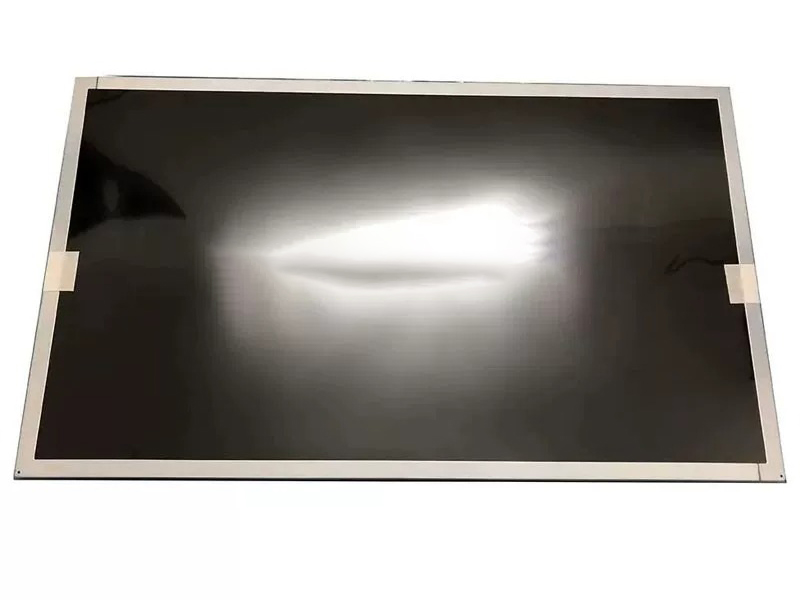
In the competitive ecosystem of 27-inch 4K panels, the G270ZAN01.7 occupies a specific niche. It competes directly with offerings from LG Display (like the LM270WR4) and Sharp (like the LQ270T1JW04). While LG's IPS panels often offer wider viewing angles (178 degrees), they lack the native contrast of the G270ZAN01.7's VA technology. Sharp also produces VA panels, but the G270ZAN01.7 is often chosen for its superior color calibration out of the box and its consistent supply chain. It is not primarily a gaming panel, as its 60Hz refresh rate is standard rather than high. However, its low input lag and fast response times (for a VA panel) make it entirely suitable for casual gaming. Its true market is in professional workstations (Dell Precision, HP Z-series, Lenovo ThinkStation), medical monitors (Eizo, Barco, NEC), and high-end public information displays. The G270ZAN01.7 is chosen over cheaper alternatives when the cost of color inaccuracy or uniform failure is high. It represents a calculated investment in reliability and predictable performance, particularly for workflows that demand adherence to color standards like sRGB and DCI-P3 without software compensation.
Evaluating the G270ZAN01.7 requires a look beyond the initial purchase price. The concept of Total Cost of Ownership (TCO) is paramount. A professional panel like this is rated for a longer lifespan, typically 50,000 hours or more of continuous operation. This is achieved through high-quality capacitors, LED drivers, and backlight LEDs. The ability to maintain color accuracy over time is another hidden cost. Cheaper panels may drift in color after just six months, requiring expensive recalibration hardware. The G270ZAN01.7, by virtue of its robust engineering, tends to hold its calibration much longer. Furthermore, its built-in gamma correction and power management systems reduce the risk of burn-in, a common issue in less sophisticated panels used for static display. For a corporate IT department managing hundreds of workstations, or a hospital deploying dozens of diagnostic monitors, the reduced downtime and recalibration costs make the G270ZAN01.7 a more economical choice over a three-to-five-year lifecycle. It is an investment in professional-grade consistency, not a consumer commodity.
Is the G270ZAN01.7 suitable for gaming?
It is not optimized for high-speed gaming (60Hz), but its VA contrast and 4K resolution provide an immersive experience for slower-paced titles and strategy games. It supports standard 60Hz input.
What is the typical contrast ratio of this panel?
It features a high native static contrast ratio, typically exceeding 3000:1, due to its Vertical Alignment (VA) technology.
Does this panel support HDR content?
While it can accept an HDR signal (via HDMI 2.0 or DP), it does not have the peak brightness (usually 350-400 cd/m²) for full HDR compliance. It works best in SDR (Standard Dynamic Range).
What interface does the module use?
It primarily uses an eDP (Embedded DisplayPort) interface for direct connection to a timing controller board in monitors.
Is it a glossy or matte panel?
Most commercial variants of the G270ZAN01.7 feature an anti-glare (matte) coating to reduce reflections in bright office or clinical environments.
What is the viewing angle?
Being a VA panel, it offers wide viewing angles (typically 178° horizontal/vertical), though slight gamma shift can occur at extreme angles compared to IPS.
Can I use this panel for medical diagnostics?
Yes, its high resolution, uniformity, and grayscale performance make it a popular choice for diagnostic imaging workstations (PACS).
Does it require external calibration?
It is factory-calibrated to a high standard, but like all professional panels, periodic calibration (e.g., every 3-6 months) is recommended to maintain Delta E accuracy.
What is the pixel pitch?
The pixel pitch is approximately 0.155 mm, which contributes to its extremely sharp image quality.
Is it a touchscreen panel?
No, the G270ZAN01.7 is a standard LCD module without touch capabilities. Touch functionality would require an overlaying touch sensor.
Conclusion: A Masterclass in Practical Precision
The G270ZAN01.7 from AUO is more than a sum of its impressive specifications. It is a testament to the idea that professional display technology is about subtractive engineering—removing artifacts, flare, and inconsistency to present a pure, untainted digital image. Its 4K resolution on a 27-inch screen delivers a pixel density that makes the physical screen disappear, allowing the work to take center stage. The deep contrast of its VA technology offers a visceral depth that flat IPS panels struggle to match, while its color accuracy ensures that what is seen is what is printed or broadcast. This panel is not a revolutionary break with the past, but an evolutionary refinement of proven principles. For the hardcore gamer, it may lack the speed of a 240Hz TN monitor. For the casual user, it might be overkill. But for the professional—the surgeon reviewing a scan, the cinematographer grading a film, or the architect examining a blueprint—the G270ZAN01.7 offers a quiet, reliable, and enduring window into their work. It is a tool that fades into the background, which is the highest compliment a display can receive.