- Industrie-LCD-Display
-
Industrial Products
- DC Servo Drive
- AC Servo Drive
- other
- Heidelberg
- FANUC
- IFM
- Meter
- CCD
- Membrane Keypad
- Film
- YOKOGAWA
- Card
- ABB
- MITSUBISHI
- FANUC
- KEYENCE
- BECKHOFF
- Honeywell
- HOLLYSYS
- FUJI servo drives
- HP
- solenoid valve
- thermostat
- Siemens adapter
- color oscilloscope
- Fujitsu connector
- CHELIC
- SMC
- CISCO
- INTEL
- Key board
- FAIRCHILD
- Der Aufsichtsrat
- Board
- Bearing
- other
- Control Panel
- Contactor
- Circuit
- Omron
- Relais.
- Der controller
- Optoelektronische schalter
- Optoelektronische sensoren
- Original
- Fan
- Motortreiber
- Endschalter
- Verstärker
- power supply
- LENZE
- Cable
- Encoder
- Sensor
- Transformator
- Fiber Optic Sensor
- Schutzrelais
- Temperaturregler
- Näherungsschalter
- Switch Sensor
- Siemens
- PCB
- HMI Touch-Glas
-
HMI-Vollautomat Ganze Einheit
- OMRON HMI Touch Panel
- Siemens HMI Touch Panel
- Mitsubishi HMI Touch Panel
- Allen-Bradley Automatisierung HMI Touch
- DELTA HMI Touch Panel
- EVIEW DELTA HMI Touch Panel
- KINCO DELTA HMI Touch Panel
- HITECH HMI Touch Panel
- WEINTECK HMI Touch Panel
- TECVIEW HMI Touch Panel
- WEINVIEW HMI Touch Panel
- PRO-FACE HMI Touch Panel
- SIMATIC HMI Touch Panel
- AMPIRE HMI Touch Panel
- HEIDELBERG HMI Touch Panel
- PANASONIC HMI Touch Panel
- PATLITE HMI Touch Panel
- KYOCERA HMI Touch Panel
- KEYENCE HMI Touch Panel
- WEINVIEW HMI Touch Panel
- HITECH HMI Touch Panel
- FUJI HMI Touch Panel
- HAKKO HMI Touch Panel
- SCHNEIDER HMI Touch Panel
- SAMKOON touch panel
- andere
- Module
- LCD Wechselrichter
- Membran Tastenfeld Schalter
- Winni Touch Screens
- Frequenzumrichter
- Servo Motor
- PLC



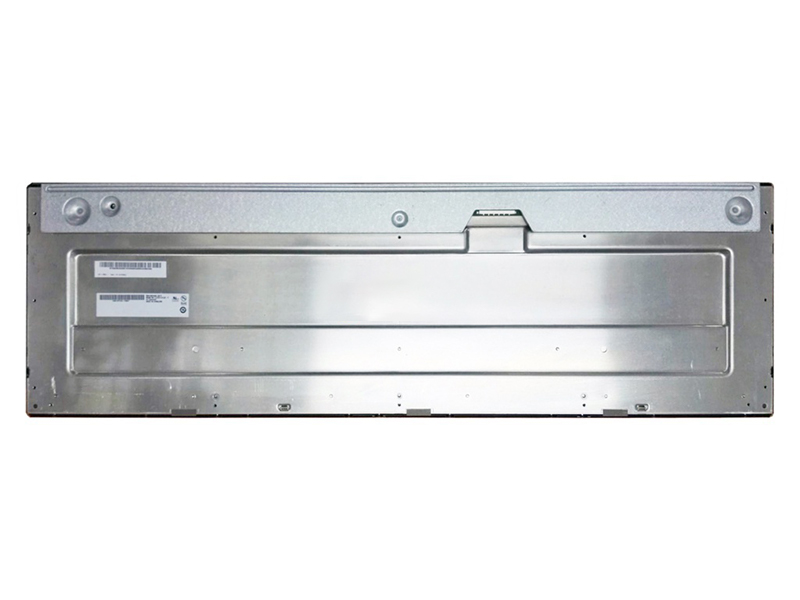
G286HAN01.0 AUO 28.6-inch 1920*540 LCD panel
In the specialized world of industrial and commercial displays, the G286HAN01.0 manufactured by AU Optronics (AUO) occupies a unique and often overlooked niche. This is not a standard television or monitor panel; it is a 28.6-inch ultra-wide bar-type LCD with a distinctive 1920x540 resolution. At first glance, the resolution seems modest by modern standards, but this configuration is a deliberate engineering choice for specific high-impact applications. This article provides a comprehensive analysis of this panel, moving beyond basic specifications to explore its design philosophy, technical capabilities, and ideal deployment scenarios. We will dissect why a 16:4.5 aspect ratio panel exists, how it solves real-world problems in digital signage and industrial control, and what makes the G286HAN01.0 a reliable, long-lasting solution for demanding environments. Whether you are a system integrator, a product manager, or a display enthusiast, understanding this panel offers valuable insight into the future of non-standard display formats.
The most striking feature of the G286HAN01.0 is its unconventional 16:4.5 aspect ratio. This is not a random choice but a calculated response to the limitations of standard displays in certain environments. Traditional 16:9 monitors excel at showing a single, full-frame image, but they are inefficient when the content is linear or horizontally extended. The G286HAN01.0’s bar form factor, often referred to as a "strip" or "stretched bar" display, is engineered to mimic human peripheral vision. This makes it inherently superior for scenarios where the user needs to scan a wide, continuous stream of information rather than focusing on a single central point. From a panel perspective, this is achieved by taking a standard Gen 5 or Gen 6 glass substrate and cutting it into a long, narrow strip. The 1920x540 resolution means that while the horizontal pixel count is Full HD, the vertical count is cut in half, resulting in a screen that is precisely four times wider than it is tall. This geometry allows for seamless tiling in a horizontal line, or for acting as a single, highly immersive information panel.

Beneath the surface, the G286HAN01.0 utilizes Vertical Alignment (VA) LCD technology. In the context of a bar display, VA technology is chosen for two critical reasons: contrast and off-axis viewing. Unlike TN panels, VA cells allow liquid crystals to align vertically when no voltage is applied, blocking light effectively. This yields a native contrast ratio often exceeding 3000:1, which is essential for a bar sign that must display bright text and graphics against a deep black background. Furthermore, the panel is engineered for high brightness, typically rated at 700 cd/m² (nits). This is a non-negotiable feature for a panel intended for retail windows, public transportation info boards, or factory floors where ambient lighting is harsh and uncontrolled. The high brightness, combined with a specific anti-glare surface treatment, ensures that the content remains legible even under direct sunlight. The LVDS (Low-Voltage Differential Signaling) interface, while older than eDP, is a deliberate choice for industrial applications, offering robustness and compatibility with a wide range of industrial single-board computers and controllers.
The most visible deployment of the G286HAN01.0 is in public information systems, particularly in transportation. Think of a large, narrow display above a subway door showing the next three stops, or a long strip in an airport terminal showing gate changes and flight times. This form factor is a game-changer for these environments. Instead of scrolling text vertically on a standard screen—which is distracting and hard to read quickly—the content can be presented statically across the entire horizontal space. The long landscape orientation is natural for listing train lines, departure times, and platform numbers. In retail, this panel is used above aisles or on shelf edges, acting as a dynamic price tag or promotional banner that runs the length of the shelf. The 1920x540 resolution is perfectly adequate for this purpose; it provides crisp, readable text and graphics without the premium cost and processing power required for 4K resolution, which would be wasted on such a narrow aspect ratio.
Beyond the public eye, the G286HAN01.0 serves a vital role in industrial human-machine interfaces (HMIs) and control room dashboards. In a factory setting, a Standard Operating Procedure (SOP) display or a production line status monitor often benefits from a long, linear format. This panel can display a real-time Gantt chart showing the flow of materials or a continuous telemetry feed from a single production line. The key here is glanceability. An operator moving along a long assembly line can quickly absorb the status of multiple stations without moving their head. In a security control room, a row of these panels can create a continuous surveillance wall, effectively showing a panoramic view of a vast facility. The VA panel’s wide viewing angles—typically 178 degrees horizontally and vertically—ensure that the image remains accurate and color-consistent for operators not sitting directly in front of the screen, which is critical in a multi-operator environment where shared viewing is common.
One of the most misunderstood aspects of the G286HAN01.0 is its product lifecycle. Unlike consumer panels, which are replaced every 12 to 18 months, this AUO panel is designed for a long production cycle, often remaining in active production for 3 to 5 years or more. This is a critical factor for system integrators and OEMs. If you design an informational display for a subway system, you cannot redesign the housing every year. The G286HAN01.0 offers the stability of a guaranteed supply for a defined period, with clear end-of-life notices. Additionally, the operating temperature range of an industrial panel (often 0 to 50 degrees Celsius) is wider than that of a consumer display. This ensures functionality in an unventilated kiosk, an outdoor under-seat bus display, or near a hot manufacturing machine. The panel's backlight, usually an LED array, is rated for a 50,000-hour half-life (MTBF), ensuring years of continuous 24/7 operation before significant brightness degradation occurs.
Integrating the G286HAN01.0 is not as simple as plugging in a standard monitor. The unique 1920x540 resolution is a non-standard timings issue. The computer or media player driving the display must have a graphics card capable of outputting a 1920x540 signal, or the system must use an EDID emulator to force the system to recognize the panel. Without proper EDID management, the system may default to 1920x1080, scaling the image incorrectly. Furthermore, the LVDS interface requires a special cable and a controller board, as modern computers typically output HDMI, DisplayPort, or eDP. This is not a display you buy at a consumer electronics store; it is a component you source through an industrial distributor or from AUO's direct industrial panel division. The physical mounting is also specific—the panel has mounting holes along its long edges for secure bracket attachment, not the standard VESA 100x100 found on larger monitors. A successful integration requires a systems-level approach, considering the display controller, power supply, and mounting infrastructure as a cohesive whole.
FAQS
Is the G286HAN01.0 a touch screen?
No, it is a bare LCD panel. It does not have a built-in touch sensor. An external touch overlay (e.g., capacitive or resistive) can be added by the integrator if required.
What is the typical power consumption?
It typically consumes around 30-40 watts for the backlight and logic, though this varies with the brightness setting and the specific controller board used.
Can this panel be used outdoors?
It has high brightness (700 cd/m²) and an anti-glare surface, making it suitable for outdoor use in shaded areas. For direct sunlight, a higher brightness panel (1000+ nits) or a sunlight-readable optical bonding solution is recommended.
What is the difference between this panel and a 1080p monitor?
A 1080p monitor has a 16:9 aspect ratio (1920x1080). The G286HAN01.0 is 16:4.5 (1920x540), meaning it has half the vertical resolution, making it exactly half the height of a standard 28.6-inch monitor.
What is the interface on this panel?
The standard interface is LVDS (2-channel, 8-bit). It requires a specific T-CON (timing controller) board to convert HDMI or DisplayPort input.
Is this panel available with a built-in splitter for a video wall?
No. It is a single-panel component. For a video wall of multiple displays, an external video processor is required.
How many pieces can be tiled together?
There is no limit. The bezel width is typically thin (around 8-10mm on the long sides), allowing for a nearly seamless tiled array.
What is the operating temperature range?
Typically 0°C to 50°C for standard industrial use. Storage temperature is wider, often -20°C to 60°C.
Where can I buy this panel? It is not sold in retail stores. It must be purchased through authorized industrial display distributors like DigiKey, Mouser, or Winstar Display.
Is it a wide-viewing angle panel?
Yes. Using VA technology, it offers 178° viewing angles in both horizontal and vertical directions, ensuring good color and contrast from off-center positions.
Conclusion
The G286HAN01.0 AUO 28.6-inch LCD panel represents a strategic solution for a very specific set of display problems. It is not a commodity screen designed for mass consumption; it is an engineered tool for enhancing information clarity in environments where space is linear and attention is divided. Its 16:4.5 aspect ratio, supported by a high-brightness VA panel, provides a distinct advantage over standard monitors for applications ranging from subway information boards to factory-floor production dashboards. The key takeaway for any integrator or decision-maker is to recognize that this panel is a component within a larger system. Success depends not only on the panel’s specifications but also on the proper management of its non-standard resolution, LVDS interface, and mounting needs. When deployed correctly, the G286HAN01.0 transforms a limitation—a reduced vertical resolution—into a powerful feature, enabling a new class of immersive, linear, and highly efficient information displays that simply cannot be replicated by a standard 16:9 monitor.