- Industrial LCD display
-
Industrial Products
- DC Servo Drive
- AC Servo Drive
- other
- Heidelberg
- FANUC
- IFM
- Meter
- CCD
- Membrane Keypad
- Film
- YOKOGAWA Module
- Card
- ABB
- MITSUBISHI
- FANUC
- KEYENCE
- BECKHOFF
- Honeywell
- HOLLYSYS
- FUJI servo drives
- HP
- solenoid valve
- thermostat
- Siemens adapter
- color oscilloscope
- Fujitsu connector
- CHELIC
- SMC
- CISCO Module
- INTEL
- Key board
- FAIRCHILD
- Motherboard
- Board
- Bearing
- other
- Control Panel
- Contactor
- Circuit
- OMRON
- Relay
- Controller
- Photoelectric Switch
- Photoelectric Sensor
- Original
- Fan
- Motor Driver
- Limit Switch
- Amplifier
- power supply
- LENZE
- Cable
- Encoder
- Sensor
- Transformer
- Fiber Optic Sensor
- Protection Relay
- Temperature Controller
- Proximity Switch
- Switch Sensor
- Siemens
- Industrial board
- HMI Touch Glass
-
HMI Full Machine Whole unit
- OMRON HMI Touch Panel
- Siemens HMI Touch Panel
- Mitsubishi HMI Touch Panel
- Allen-Bradley automation HMI Touch Panel
- DELTA HMI Touch Panel
- EVIEW DELTA HMI Touch Panel
- KINCO DELTA HMI Touch Panel
- HITECH HMI Touch Panel
- WEINTECK HMI Touch Panel
- TECVIEW HMI Touch Panel
- WEINVIEW HMI Touch Panel
- PRO-FACE HMI Touch Panel
- SIMATIC HMI Touch Panel
- AMPIRE HMI Touch Panel
- HEIDELBERG HMI Touch Panel
- PANASONIC HMI Touch Panel
- PATLITE HMI Touch Panel
- KYOCERA HMI Touch Panel
- KEYENCE HMI Touch Panel
- WEINVIEW HMI Touch Panel
- HITECH HMI Touch Panel
- FUJI HMI Touch Panel
- HAKKO HMI Touch Panel
- SCHNEIDER HMI Touch Panel
- SAMKOON touch panel
- other
- Module
- lcd inverter
- Membrane Keypad Switch
- Winni Touch Screens
- Frequency Inverter
- Servo Motor
- PLC



G320ZAN01.0 AUO 32.0-inch 3840*2160 LCD scree Good price
In the rapidly evolving landscape of high-resolution display technology, the G320ZAN01.0 by AU Optronics (AUO) stands as a distinct contender for professionals and enthusiasts who demand pixel-perfect clarity. This 32.0-inch panel, boasting a native 4K UHD resolution of 3840x2160, is not merely a commodity screen; it is a precision instrument designed for environments where color accuracy and detail are non-negotiable. While many monitors flood the market with aggressive pricing, the G320ZAN01.0 offers a compelling intersection of high-end specifications and accessible cost, often described by engineers as the “sweet spot” for medical imaging, graphic design, and high-end video editing. This article will dissect the architecture of this panel, exploring its technical merits, industrial applications, and market positioning. We will navigate beyond surface-level specifications to understand why this model achieves such a favorable price-to-performance ratio, examining its backlight system, interface compatibility, and long-term viability. For the discerning buyer who refuses to compromise on quality but remains budget-conscious, the G320ZAN01.0 represents a logical and strategic choice that this analysis will fully justify.
The foundation of any great display is its physical resolution and pixel density. The AUO G320ZAN01.0 operates within the Ultra-High Definition (UHD) standard, delivering 3840 horizontal pixels and 2160 vertical pixels. On a 32-inch diagonal, this translates to a pixel density of approximately 138 PPI (Pixels Per Inch). This figure is critical; it sits at a threshold where the human eye, at typical viewing distances of 60-80 cm, cannot distinguish individual pixels. This creates a seamless, print-like visual experience.
Unlike smaller 27-inch 4K panels, which can feel too dense for text scaling, or larger 43-inch panels, which sacrifice sharpness, the 32-inch form factor offers a balanced retina-like experience for desktop use. The panel structure typically employs an IPS (In-Plane Switching) technology variant, ensuring wide 178°/178° viewing angles. This means that color and contrast remain stable even when multiple users view the screen simultaneously, a critical factor for collaborative design reviews or medical consultations. The accurate alignment of the liquid crystal layer allows for precise voltage control, resulting in superior grayscale rendering. This architectural choice ensures that the display is not just dense, but also versatile, capable of transitioning from detailed CAD schematics to vivid cinematic content without losing fidelity. The sheer volume of data required to drive this display also dictates the complexity of its internal driver ICs, which are designed for low-latency signal processing.
While resolution provides clarity, color science provides truth. The G320ZAN01.0 is engineered to achieve a typical color gamut of 72% NTSC, which closely correlates to 100% sRGB coverage. This is the gold standard for most web-based content and general professional use. The panel utilizes a WLED (White Light Emitting Diode) edge-lit backlight system. While some may dismiss edge-lit systems in favor of direct-lit or OLED counterparts, the engineering here is optimized for efficiency and uniformity.
The backlight is carefully calibrated to maintain a consistent luminance across the 32-inch surface, typically rated at 300 cd/m². This brightness level is ideal for indoor office or studio environments, providing sufficient headroom for HDR (High Dynamic Range) simulation without causing eye strain. The bezel design aids in thermal management, preventing the WLEDs from overheating and shifting color temperature over prolonged use. Furthermore, the panel supports an 8-bit + Hi-FRC (Frame Rate Control) color depth, effectively delivering 1.07 billion colors. This dithering technique is highly sophisticated on this AUO model, minimizing visible artifacts and providing smooth color transitions that are essential for editing gradients in Photoshop or viewing medical DICOM images. For professionals seeking a more demanding color space like Adobe RGB, this screen serves as a reliable base calibration reference, and its consistent performance makes color profiling simpler and more accurate than with cheaper alternatives.

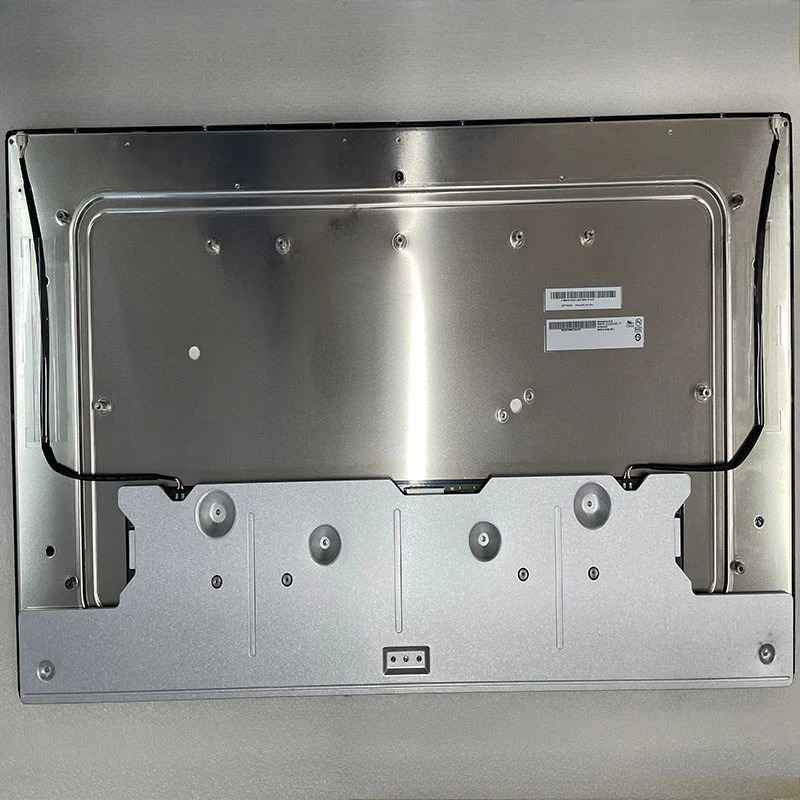
A display is only as good as its connection to the data source. The AUO G320ZAN01.0 is typically implemented with a standard interface that utilizes eDP (Embedded DisplayPort) or standard V-by-One (VBO) connectors, depending on the specific OEM implementation. For end-users integrating this as a bare panel or within a specific build, understanding the pin-out and signal requirements is crucial. The panel operates at a standard 60Hz refresh rate, which is perfectly adequate for 4K resolution work, as the bandwidth required for higher refresh rates would significantly increase the cost of the TCON (Timing Controller) board.
It supports 8K UHD input compatibility through advanced scaling capabilities in some configurations, though its native display is 4K. The interface supports a standard 4-lane eDP signal, which is widely adopted in industrial computing and high-end monitor chassis. This standardization is a key reason for its “good price.” By adhering to common interface protocols, AUO allows integrators to use off-the-shelf controller boards and power supplies, driving down the total cost of deployment. Whether connecting to a workstation via DisplayPort 1.2 or HDMI 2.0 (through a driver board), the panel ensures that the 8.3 million pixels are refreshed efficiently, with minimal screen tearing or input lag, provided the source hardware is capable. This plug-and-play compatibility with existing infrastructure makes it an economically viable upgrade for aging computer systems.
The total cost of ownership (TCO) of a display is often overlooked. The G320ZAN01.0 is engineered with a focus on low power consumption, typically rated between 20 and 30 watts for the backlight and logic board combined. This is exceptionally low for a 32-inch 4K panel. The efficiency stems from the optimized WLED driver ICs and the energy-saving design of the liquid crystal layer (which operates at a lower voltage swing).
Furthermore, the panel is designed to operate within a professional temperature range of 0°C to 50°C, ensuring stability in both climate-controlled offices and less regulated environments. The thermal solution is passive; the metal back chassis acts as a heat sink, wicking away the modest heat generated by the LEDs. This passive cooling has a dual benefit: it reduces noise (no fans required) and enhances long-term reliability by avoiding moving parts. The lower electrical load also translates to less stress on the power supply unit, reducing the risk of capacitor aging. For a company deploying 50 or 100 of these monitors, the cumulative savings on electricity bills over three to five years is substantial. This operational efficiency, combined with the competitive upfront purchase price, makes the G320ZAN01.0 a financially astute choice for IT managers who must balance performance with the bottom line.
The phrase “good price” in the context of the G320ZAN01.0 is not about being the cheapest on the market; it is about delivering industrial-grade performance at a consumer-friendly price point. Many low-cost 32-inch 4K monitors use proprietary panels with inconsistent quality control, or they rely on older MVA (Multi-domain Vertical Alignment) technology that suffers from poor viewing angles. AUO, as a top-tier Taiwanese manufacturer, provides panels to major brands like Dell, Asus, and HP. The G320ZAN01.0 represents a mature product in AUO’s lineup, meaning the manufacturing process is well-refined, resulting in high yield rates and lower defect counts.
Because it is a standard model rather than a custom, highly specialized panel, the economies of scale apply favorably. It is widely available through distribution channels like Digi-Key, Mouser, and specialized LCD wholesalers. This liquidity in the market keeps prices competitive. When compared to similar panels from competitors like LG Display or Sharp, the AUO often comes in at a 15-20% lower cost for the same or better specifications in terms of luminance and color uniformity. For the DIY enthusiast building a custom monitor, or the integrator constructing a multi-display command center, this panel represents the highest return on investment. It delivers the crucial specifications—true 4K resolution, IPS viewing angles, and robust build quality—without the premium branding markup.
A professional LCD panel must withstand more than just a standard workday. The G320ZAN01.0 is built with industrial-grade components that are rated for a longer operational lifespan than typical consumer televisions. It is designed for a Mean Time Between Failures (MTBF) often exceeding 50,000 hours (the equivalent of over 5 years of continuous use). This durability is a direct result of its construction: a robust PCB layout, high-quality electrolytic capacitors on the power regulation circuits, and a rigid metal frame that prevents torsion and warping.
This panel is frequently utilized in digital signage, medical imaging, and financial trading floors—environments where the display must run 24/7. The backlight’s gradual degradation curve is linear, meaning dimming is predictable and can be compensated for with external calibration. Furthermore, the ownership cost is mitigated by the panel’s resistance to image retention (burn-in), a common problem with older VA panels. AUO’s specific liquid crystal formulation minimizes this risk, making it safe for static display of spreadsheets or trading charts. For a business, this reliability translates directly into less downtime and lower replacement costs, reinforcing the thesis that an initially “good price” can lead to excellent long-term value.
Is the G320ZAN01.0 a direct-lit or edge-lit backlight?
It is an edge-lit WLED system, optimized for uniformity and low bezel size.
Does this panel support true 10-bit color depth?
It uses 8-bit + Hi-FRC to simulate 1.07 billion colors, which is visually equivalent to 10-bit for most professional applications.
Can I use this panel for gaming at 120Hz?
No, it is a standard 60Hz professional panel. It is not designed for high refresh rate gaming.
What is the typical viewing angle specification?
It features 178°/178° viewing angles, typical of IPS technology.
Is a custom controller board required for use?
Yes, as a bare panel, it requires a V-by-One or eDP controller board with an HDMI/DP input.
What is the power consumption under normal use?
Typically between 20 and 30 Watts, making it very energy efficient for its size.
Is this panel suitable for medical imaging (DICOM)?
Yes, its high contrast ratio and grayscale stability make it a common choice for medical PACS workstations.
What is the physical thickness of this panel?
It is a slim profile, generally around 12-15mm without the external control board housing.
Does it have built-in speakers?
No, bare panels do not include speakers. An external audio solution is required.
Where is the best place to source this panel?
From authorized distributors like Digi-Key, Mouser Electronics, or specialized LCD surplus suppliers.
Conclusion: The Strategic Choice for Precision and Value
The AUO G320ZAN01.0 is not merely a display; it is a strategic investment in visual clarity and operational efficiency. As we have explored, its strength lies not in flashy gimmicks but in the meticulous engineering of its constituent parts: the efficient WLED backlight, the wide-gamut IPS technology, and the robust, low-power interface. It successfully bridges the gap between expensive, premium-branded monitors and unreliable, budget alternatives. For the professional whose work depends on accurate visual data—from a radiologist analyzing an MRI to a graphic designer fine-tuning a brand identity—this panel provides a dependable, high-fidelity foundation. Its favorable price point is a direct result of market maturity and efficient design, not a compromise in quality. By choosing the G320ZAN01.0, you are securing a workhorse that balances upfront cost with long-term reliability. It is a testament to the fact that in the world of high-resolution displays, the best value often lies in the precision of the standard, executed flawlessly by a trusted manufacturer.