- Industrie-LCD-Display
-
Industrial Products
- DC Servo Drive
- AC Servo Drive
- other
- Heidelberg
- FANUC
- IFM
- Meter
- CCD
- Membrane Keypad
- Film
- YOKOGAWA
- Card
- ABB
- MITSUBISHI
- FANUC
- KEYENCE
- BECKHOFF
- Honeywell
- HOLLYSYS
- FUJI servo drives
- HP
- solenoid valve
- thermostat
- Siemens adapter
- color oscilloscope
- Fujitsu connector
- CHELIC
- SMC
- CISCO
- INTEL
- Key board
- FAIRCHILD
- Der Aufsichtsrat
- Board
- Bearing
- other
- Control Panel
- Contactor
- Circuit
- Omron
- Relais.
- Der controller
- Optoelektronische schalter
- Optoelektronische sensoren
- Original
- Fan
- Motortreiber
- Endschalter
- Verstärker
- power supply
- LENZE
- Cable
- Encoder
- Sensor
- Transformator
- Fiber Optic Sensor
- Schutzrelais
- Temperaturregler
- Näherungsschalter
- Switch Sensor
- Siemens
- PCB
- HMI Touch-Glas
-
HMI-Vollautomat Ganze Einheit
- OMRON HMI Touch Panel
- Siemens HMI Touch Panel
- Mitsubishi HMI Touch Panel
- Allen-Bradley Automatisierung HMI Touch
- DELTA HMI Touch Panel
- EVIEW DELTA HMI Touch Panel
- KINCO DELTA HMI Touch Panel
- HITECH HMI Touch Panel
- WEINTECK HMI Touch Panel
- TECVIEW HMI Touch Panel
- WEINVIEW HMI Touch Panel
- PRO-FACE HMI Touch Panel
- SIMATIC HMI Touch Panel
- AMPIRE HMI Touch Panel
- HEIDELBERG HMI Touch Panel
- PANASONIC HMI Touch Panel
- PATLITE HMI Touch Panel
- KYOCERA HMI Touch Panel
- KEYENCE HMI Touch Panel
- WEINVIEW HMI Touch Panel
- HITECH HMI Touch Panel
- FUJI HMI Touch Panel
- HAKKO HMI Touch Panel
- SCHNEIDER HMI Touch Panel
- SAMKOON touch panel
- andere
- Module
- LCD Wechselrichter
- Membran Tastenfeld Schalter
- Winni Touch Screens
- Frequenzumrichter
- Servo Motor
- PLC


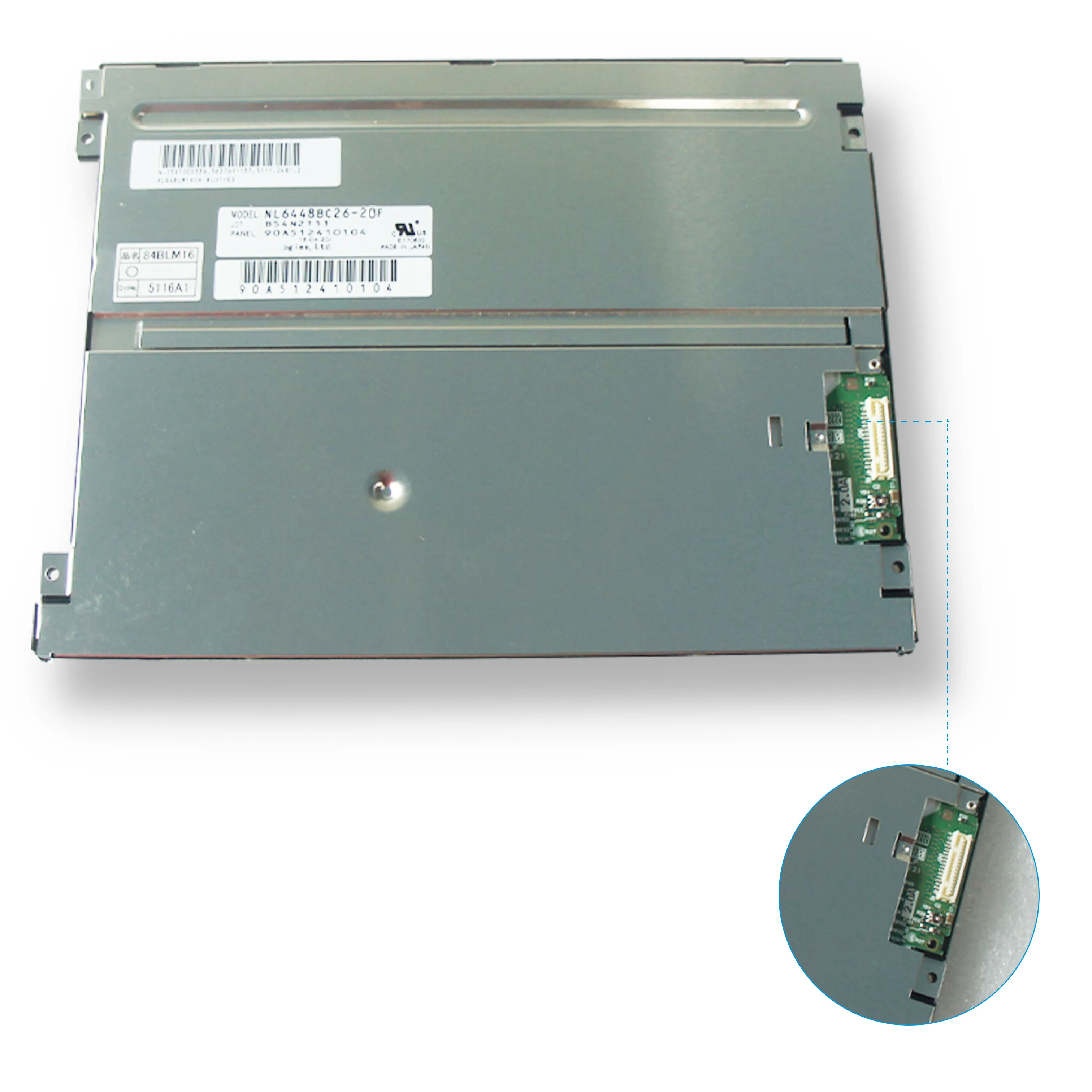

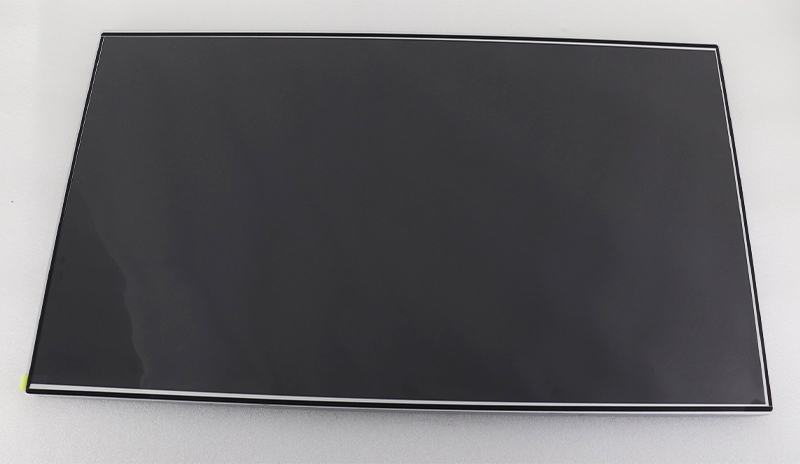
G320ZAN01.2 AUO 32" TFT-LCD screen 3840*2160 Display
In the rapidly evolving landscape of visual technology, the demand for ultra-high-definition displays has never been more pronounced. Among the contenders at the forefront of this revolution is the G320ZAN01.2, a 32-inch TFT-LCD panel manufactured by AU Optronics (AUO). This particular model, with its native 3840x2160 (4K UHD) resolution, is engineered for applications that demand precision, clarity, and reliability beyond consumer-grade monitors. While many are familiar with standard desktop screens, this AUO module targets a professional niche—serving as the critical visual interface for medical diagnostic stations, high-end industrial control terminals, and aviation cockpit instrumentation. This article delves into the technical architecture, performance parameters, and strategic application domains of the G320ZAN01.2. We will explore why this specific panel is more than just a high-resolution screen; it is a hallmark of engineering precision, balancing luminance uniformity, color accuracy, and thermal management in a form factor that is optimized for mission-critical tasks.
To appreciate the G320ZAN01.2, one must first understand the foundation upon which it is built: the Thin-Film Transistor Liquid Crystal Display (TFT-LCD) architecture. Unlike older passive matrix technologies, this panel utilizes an active matrix where each of the 8.3 million pixels (3840 x 2160) is controlled by a dedicated transistor. This architecture is non-negotiable for achieving the high refresh rates and contrast stability required in professional settings.
The G320ZAN01.2 specifically employs an IPS (In-Plane Switching) technology variant. This is a critical distinction. IPS panels are renowned for their superior viewing angles—typically maintaining color shift of less than 3 dB up to 178 degrees—and their ability to produce consistent gamma curves across the entire screen. For a 32-inch diagonal, this uniformity is paramount. The panel’s backlight unit (BLU) utilizes a direct-lit LED array, which provides a higher peak luminance (often specified around 1000 cd/m²) and better local dimming capability compared to edge-lit modules. This engineering choice reduces light bleeding at the edges, ensuring that the 4K resolution is matched by visual depth.
Diving into the spec sheet, the 3840x2160 resolution on a 32-inch diagonal yields a pixel density of approximately 138 PPI (Pixels Per Inch). While this might seem lower than a smartphone display, in the context of a desktop or embedded monitor, it represents a sweet spot. At a standard viewing distance of 60-70 cm, the human eye cannot easily distinguish individual pixels, creating a "retina" level experience that eliminates pixelation.
Why is this specific density important? For medical imaging, such as PACS (Picture Archiving and Communication Systems), 138 PPI allows radiologists to view high-resolution 5-megapixel medical images without zooming, revealing micro-calcifications or subtle tissue variations. In industrial control, this pixel count enables operators to manage vast SCADA system dashboards with numerous data points and 4K video feeds simultaneously, without the need for scaling artifacts. The G320ZAN01.2 does not just offer more pixels; it offers usable pixels, where the native resolution is purpose-driven, not merely a marketing specification.
Luminance and color accuracy are the two pillars that elevate the G320ZAN01.2 from a standard monitor to a professional tool. This panel typically achieves a brightness range of 700 to 1000 cd/m² (nits), which is significantly higher than the standard 250-350 nits found on consumer displays. This high luminance is essential for readability in high-ambient-light environments like hospital operating rooms or factory floors.
Furthermore, the panel utilizes a UV2A (Ultra-Vertical Alignment) or advanced IPS LC alignment to achieve a high native contrast ratio typically advertised at 1000:1 to 1300:1. However, the true value lies in its chromatic stability. The G320ZAN01.2 is often binned to meet the DICOM Part 14 grayscale standard for medical displays, ensuring that the transition from black to white remains linear. This non-linearity in standard screens can cause diagnostic errors. Additionally, the color gamut covers approximately 72% NTSC or higher, ensuring that color-critical tasks—such as rendering real-time thermal imaging data or editing broadcast video—are rendered with fidelity that prevents misinterpretation.
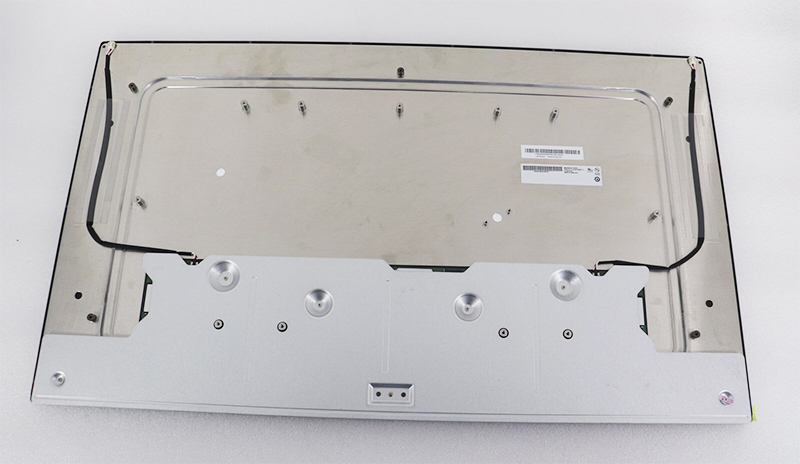
A 32-inch panel consuming significant power (often 100W to 150W for the backlight) generates substantial heat. The G320ZAN01.2 is designed with thermal dissipation in mind. Unlike consumer monitors that rely on plastic housings, this AUO module features a robust metal frame and chassis that acts as a heat sink. This is crucial for longevity; operating temperatures inside an industrial cabinet can easily reach 60°C.
The mechanical outline is standardized for OEM integration. The panel utilizes a standard VESA mounting pattern (typically 200x200 or 400x400) and specific connector locations for the LVDS or eDP (Embedded DisplayPort) signal interface. The low-profile design (usually less than 25mm thick at the driver board area) allows it to fit into slim enclosures for direct-view kiosks or back-mounted in medical carts. Key physical attributes include a matte anti-glare surface treatment (Haze 25%) which diffuses direct reflections, a critical feature for reducing operator eye fatigue over 12-hour shifts, and a high-brightness optical bonding option to reduce internal glare between the glass and the TFT cell.
Delivering 8.3 million pixels at a smooth refresh rate requires a robust data pipeline. The G320ZAN01.2 typically utilizes an eDP (Embedded DisplayPort) 1.4 interface, supporting up to 8 lanes of high-speed data transmission. This is a significant step up from older LVDS systems, which require multiple cables to achieve 4K at 60Hz. eDP reduces electromagnetic interference (EMI) and simplifies cable management within tight enclosures.
Furthermore, the interface supports Dynamic Refresh Rate (DRR) and Panel Self-Refresh (PSR). For static medical images or industrial dashboards, PSR allows the GPU to enter a low-power state while the panel refreshes from its own frame buffer, significantly reducing total system power dissipation. The panel also includes sophisticated timing controllers (TCONs) that implement Overdrive technology, reducing gray-to-gray response times to approximately 8-12 ms, which minimizes motion blur when scrolling through lengthy patient records or panning across high-resolution maps.
Understanding the specifications is one thing; seeing them validated in real-world scenarios is another. The primary application domain for the G320ZAN01.2 is Medical Imaging. In this field, it is used for primary diagnosis displays and clinical review stations. The high luminance and DICOM compliance allow it to compete with dedicated 5MP displays.
A secondary, growing market is Aviation and Maritime Simulation. Flight simulators require screens that can replicate cockpit glare, high contrast, and wide viewing angles. The G320ZAN01.2's robust build and thermal tolerance make it viable for single-screen or multi-screen array cockpits. Finally, in Industrial Automation, this panel powers Quality Control (QC) stations where operators inspect circuits or textiles for defects at 4x zoom without physical scaling artifacts. The panel's long-life backlight (often with an MTBF rating of 50,000 hours) ensures that the display outlasts the deployment cycle of the equipment itself. Its operational temperature range (often 0°C to 50°C) is suitable for controlled industrial environments, but not extremes without active cooling.
Q: What is the native resolution of the G320ZAN01.2?
A: It is 3840 x 2160 pixels (4K UHD).
Q: Is this panel suitable for gaming?
A: No. It is designed for professional static imaging. Its response time (8-12ms G2G) and lack of high refresh rates (60Hz max) make it unsuitable for fast-paced gaming.
Q: What interface does it use?
A: It typically uses eDP (Embedded DisplayPort) 1.4, though some legacy batches may use LVDS with a separate controller board.
Q: Is it DICOM calibrated out of the box?
A: It is often binned for DICOM compliance but may require recalibration with a photo-spectrometer for strict medical certification.
Q: What is the typical power consumption?
A: It ranges from 100W to 150W depending on the backlight brightness setting.
Q: Can it operate in direct sunlight?
A: With ~1000 nits backlight and optical bonding, it is readable in high ambient light but not direct sunlight without a transmissive backlight system.
Q: What is the weight of the panel?
A: Approximately 3.5kg to 5kg (includes metal bezel and driver boards).
Q: Does it support touch functionality?
A: No, the base module is non-touch. A touch sensor layer must be added by the integrator.
Q: What is the viewing angle?
A: Typically 178 degrees horizontal and vertical (IPS technology).
Q: Is it RoHS compliant?
A: Yes, AUO panels are manufactured to meet RoHS (Restriction of Hazardous Substances) standards.
Conclusion
The G320ZAN01.2 AUO 32" TFT-LCD is not merely a high-resolution display; it is a finely tuned optical instrument designed for environments where visual data must be interpreted with absolute accuracy. From its high-brightness, thermally stable backlight to its 4K UHD pixel density and DICOM-calibrated grayscale, every component is selected for reliability and precision. While the consumer market chases curves and contrast ratios for entertainment, this panel serves the operational reality of hospitals, factories, and cockpits. The engineering trade-off is clear: it prioritizes clarity, uniformity, and longevity over aesthetic flashiness. For integrators and decision-makers, understanding this specification sheet means understanding that the G320ZAN01.2 is a tool, not a toy. It stands as a testament to AUO’s capability to bridge the gap between industrial endurance and the relentless pursuit of visual fidelity in the professional domain.