- Industrial LCD display
-
Industrial Products
- DC Servo Drive
- AC Servo Drive
- other
- Heidelberg
- FANUC
- IFM
- Meter
- CCD
- Membrane Keypad
- Film
- YOKOGAWA Module
- Card
- ABB
- MITSUBISHI
- FANUC
- KEYENCE
- BECKHOFF
- Honeywell
- HOLLYSYS
- FUJI servo drives
- HP
- solenoid valve
- thermostat
- Siemens adapter
- color oscilloscope
- Fujitsu connector
- CHELIC
- SMC
- CISCO Module
- INTEL
- Key board
- FAIRCHILD
- Motherboard
- Board
- Bearing
- other
- Control Panel
- Contactor
- Circuit
- OMRON
- Relay
- Controller
- Photoelectric Switch
- Photoelectric Sensor
- Original
- Fan
- Motor Driver
- Limit Switch
- Amplifier
- power supply
- LENZE
- Cable
- Encoder
- Sensor
- Transformer
- Fiber Optic Sensor
- Protection Relay
- Temperature Controller
- Proximity Switch
- Switch Sensor
- Siemens
- Industrial board
- HMI Touch Glass
-
HMI Full Machine Whole unit
- OMRON HMI Touch Panel
- Siemens HMI Touch Panel
- Mitsubishi HMI Touch Panel
- Allen-Bradley automation HMI Touch Panel
- DELTA HMI Touch Panel
- EVIEW DELTA HMI Touch Panel
- KINCO DELTA HMI Touch Panel
- HITECH HMI Touch Panel
- WEINTECK HMI Touch Panel
- TECVIEW HMI Touch Panel
- WEINVIEW HMI Touch Panel
- PRO-FACE HMI Touch Panel
- SIMATIC HMI Touch Panel
- AMPIRE HMI Touch Panel
- HEIDELBERG HMI Touch Panel
- PANASONIC HMI Touch Panel
- PATLITE HMI Touch Panel
- KYOCERA HMI Touch Panel
- KEYENCE HMI Touch Panel
- WEINVIEW HMI Touch Panel
- HITECH HMI Touch Panel
- FUJI HMI Touch Panel
- HAKKO HMI Touch Panel
- SCHNEIDER HMI Touch Panel
- SAMKOON touch panel
- other
- Module
- lcd inverter
- Membrane Keypad Switch
- Winni Touch Screens
- Frequency Inverter
- Servo Motor
- PLC



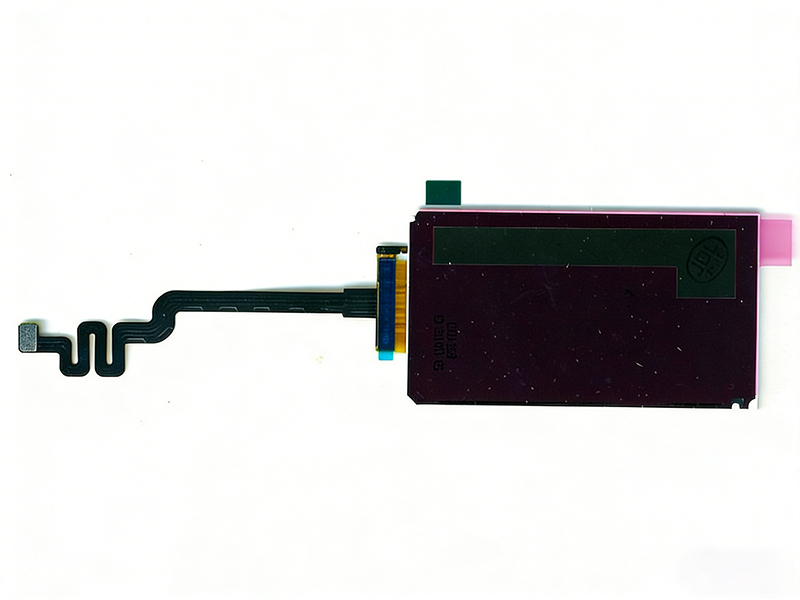
H245QBN02.0 AUO 2.5inch 240*432 LCD screen
The industrial display market is a landscape of precision, where component specifications dictate the success of critical human-machine interfaces. Among these specialized components, the H245QBN02.0 from AU Optronics (AUO) stands out as a specific, high-reliability solution. This article provides a comprehensive, deep-dive analysis of this 2.5-inch, 240x432 resolution LCD screen. We will move beyond basic datasheet repetition to explore the engineering logic behind its unique vertical stripe aspect ratio, its strategic placement within the broader ecosystem of industrial and handheld devices, and its crucial technical parameters such as interface type, brightness, and power consumption.
Understanding this specific model is essential for design engineers, procurement specialists, and product managers working in fields like medical instrumentation, portable test equipment, and smart home controls. By dissecting the H245QBN02.0’s architecture, we aim to provide actionable insights that facilitate informed decision-making for your next embedded display project.
At first glance, the 240x432 resolution and 2.5-inch diagonal size of the H245QBN02.0 may seem unusual compared to the more common 320x240 (QVGA) panels. However, this specific configuration is a deliberate engineering choice for portrait-oriented applications. The aspect ratio of roughly 9:16 is not a compromise but a design feature tailored for data display where vertical scrolling or stacked information is paramount.
Consider the requirements of a modern handheld thermal camera or a patient monitoring device. These interfaces often need to display a vertical list of parameters—temperature, heart rate, battery status—alongside a live feed. A standard landscape panel would waste peripheral space, requiring more complex UI navigation. The H245QBN02.0’s tall, narrow form factor mirrors the natural reading pattern of human vision when processing lists or timelines, allowing for a more intuitive user experience. This design reduces the need for hardware buttons and simplifies the software layer by aligning the physical display with the logical data flow. It is a prime example of how form factor drives functionality in specialized display design.

While resolution and size define the canvas, optical performance dictates usability. The H245QBN02.0 utilizes AUO’s proprietary vertical alignment (VA) or an advanced IPS-like technology, delivering superior contrast ratios—often exceeding 1000:1 in total darkness. This high static contrast is critical for displaying crisp text and distinct color boundaries in user interfaces, especially character-heavy medical or industrial menus. The typical brightness specification hovers around 250 to 400 cd/m², a range that balances outdoor readability under direct sunlight (using a transflective layer if included in the specific variant) with battery conservation for portable devices.
Equally important is the viewing angle. For a 2.5-inch screen often mounted at waist level or on a moving instrument, wide viewing angles are non-negotiable. The H245QBN02.0 is engineered to provide consistent color and minimal gamma shift across 80/80/80/80 degrees (left/right/up/down). This is achieved through precise cell-gap control and advanced liquid crystal material doping. The result is an image that remains legible and color-accurate when viewed from off-center positions, preventing user frustration in collaborative or mobile environments where the screen is rarely viewed straight-on.
The H245QBN02.0 is typically driven by an MCU 8-bit or 16-bit parallel interface, a common standard for small to mid-sized TFT-LCDs. This interface is a masterclass in balancing speed with pin count. Parallel communication allows for rapid pixel data transfer, essential for updating the 240x432 pixel area at a smooth frame rate without visible tearing. This is particularly vital if the screen is used to display real-time waveform data from an oscilloscope or vital signs monitor.
Choosing the correct interface logic voltage is critical. The H245QBN02.0 generally operates at 3.3V I/O voltage, making it compatible with modern ARM Cortex-M4 and M7 microcontrollers, as well as FPGAs. Designers must ensure their driving circuit can source enough current to charge and discharge the bus capacitance quickly. A misalignment in timing or voltage levels (e.g., using 5V logic without level shifters) can lead to ghosting, incorrect pixel addressing, or permanent damage to the display’s driver IC. Understanding the write cycle timing and signal slew rates is essential for a stable, flicker-free image.
Integrating the H245QBN02.0 into a final product is a mechanical exercise in precision. The module typically features a panel thickness of around 2.4mm to 3.0mm, not including the FPC (Flexible Printed Circuit) connector. The FPC is the lifeline of the display, and its pin pitch (often 0.3mm to 0.5mm) and location are fixed. Designers must create a bezel or mounting frame that provides a compressive seal to hold the display against a clear window, preventing dust ingress and ensuring touch panel alignment if used in a capacitive touch system.
Durability is another key factor. Industrial environments expose displays to vibration, temperature extremes, and chemicals. The H245QBN02.0 is often specified for a wide operating temperature range of -20°C to +70°C or even -30°C to +85°C. The glass substrate is chemically strengthened to withstand moderate impacts. For harsh environments, an optical bonding process—where the cover glass is laminated to the display panel using a transparent adhesive—can significantly improve sunlight readability and prevent condensation. Failing to account for thermal expansion mismatches between the display and the housing can cause stress fractures over multiple thermal cycles.
In portable applications, every milliwatt counts. The H245QBN02.0 is designed with low-power principles. The TFT array itself, when actively switching, consumes roughly 50 to 100 mA from the 3.3V rail. The dominant power draw, however, is the white LED backlight. This backlight is typically comprised of 4 to 6 LEDs in parallel or series, consuming approximately 150 mA to 250 mA at full brightness. This is a significant enough load that it can drain a small Li-ion battery in hours if left on.
Smart power management is therefore not optional. Designers should implement PWM (Pulse Width Modulation) dimming to reduce backlight intensity, potentially cutting consumption by 80% when the device is idle or in low-light conditions. The H245QBN02.0’s backlight circuit is also designed for uniformity. A well-designed current driver ensures that all LEDs have equal current, preventing localized dim or bright spots, which are catastrophic for critical data applications. Furthermore, the forward voltage of the LEDs (typically 3.2V to 3.6V) requires a boost converter in battery-powered designs to maintain consistent brightness as the battery voltage drops.
Supply Chain and Sourcing Considerations
The H245QBN02.0 is not a mass-market consumer component; it occupies a niche in the industrial supply chain. This has profound implications for procurement. Obsolescence is a real risk. AUO may shift production lines to newer, higher-volume models, making the H245QBN02.0 hard to source or subject to long lead times—often 8 to 20 weeks. Engineers must verify end-of-life (EOL) status through official channels before committing to a product design.
Furthermore, purchasing this panel directly from distributors requires careful validation of grading and quality (e.g., A-grade vs. B-grade). Counterfeit or relabeled panels are a significant concern in the open market. Buyers should request a Certificate of Conformance (CoC) and test samples for critical parameters like dead pixels (commonly allowed up to 3-5 per panel) and backlight color temperature. Establishing a relationship with an authorized AUO channel partner is the safest path, ensuring genuine parts, technical support, and access to the latest datasheets and application notes. The supply chain is as much a part of the design as the silicon inside.
What is the exact resolution of the H245QBN02.0?
The display offers a resolution of 240 pixels horizontally by 432 pixels vertically, giving it a portrait-oriented aspect ratio.
Is this a touch screen panel?
No, the H245QBN02.0 is a standard TFT-LCD module. It does not include an integrated touch sensor. A separate touch panel overlay must be used.
What type of connector does it use?It typically uses a FPC (Flexible Printed Circuit) connector with a specific pin pitch (usually 0.3mm to 0.5mm). The exact pin count and pitch are detailed in the official datasheet.
Can I use this display with an Arduino?
Yes, it is possible, but you will need a level shifter (if using 5V logic) and sufficient GPIO pins for the 8-bit/16-bit parallel interface. An external frame buffer is often recommended for smooth refresh.
What is the typical power consumption?
Without backlight, the TFT driver consumes about 50-100 mA at 3.3V. With the LED backlight at full brightness, total consumption can reach 250-350 mA.
What is the operating temperature range?
The standard industrial range is -20°C to +70°C, with some variants supporting extended ranges like -30°C to +85°C. Always check the specific part number suffix.
How can I control the backlight brightness?
Use a PWM signal applied to the backlight LED driver circuit. This allows for fine-grained dimming without altering the color temperature.
Is the H245QBN02.0 compatible with 5V logic?
No. The display uses 3.3V I/O logic. Directly connecting 5V signals can damage the driver IC. A level shifter is mandatory.
What is the typical response time?
For a TFT-LCD, response time (Tr+Tf) is typically 20-40 ms. This is adequate for static data and UI rendering but not for high-speed video.
Where can I find the official datasheet?
The official datasheet is available from AUO’s official distributor portal or their customer support. It contains critical mechanical and electrical specifications.
Conclusion: A Strategic Component for Specialized Interfaces
The H245QBN02.0 AUO 2.5-inch 240x432 LCD screen is far more than a simple pixel array. It is a thoughtfully engineered component that solves a specific problem: displaying vertical information in a compact, legible, and robust manner. Its strength lies in its asymmetric resolution, which aligns perfectly with the human cognitive preference for vertically scrolling lists and stacked data, making it ideal for medical monitors, smart home panels, and handheld measurement tools.
Successfully implementing this display requires a holistic engineering approach. One must master not only its optical parameters—contrast, brightness, and viewing angles—but also its interface timing, mechanical constraints, and power management demands. The decision to use the H245QBN02.0 should be driven by a clear understanding of the end-user's environment and the data architecture of the product. When selected and integrated with care, this panel delivers a focused, high-quality visual experience that can significantly enhance the perceived value and usability of any professional-grade device. Its greatest value is as a tool for intelligently communicating information in the most natural format possible.