- Industrial LCD display
-
Industrial Products
- DC Servo Drive
- AC Servo Drive
- other
- Heidelberg
- FANUC
- IFM
- Meter
- CCD
- Membrane Keypad
- Film
- YOKOGAWA Module
- Card
- ABB
- MITSUBISHI
- FANUC
- KEYENCE
- BECKHOFF
- Honeywell
- HOLLYSYS
- FUJI servo drives
- HP
- solenoid valve
- thermostat
- Siemens adapter
- color oscilloscope
- Fujitsu connector
- CHELIC
- SMC
- CISCO Module
- INTEL
- Key board
- FAIRCHILD
- Motherboard
- Board
- Bearing
- other
- Control Panel
- Contactor
- Circuit
- OMRON
- Relay
- Controller
- Photoelectric Switch
- Photoelectric Sensor
- Original
- Fan
- Motor Driver
- Limit Switch
- Amplifier
- power supply
- LENZE
- Cable
- Encoder
- Sensor
- Transformer
- Fiber Optic Sensor
- Protection Relay
- Temperature Controller
- Proximity Switch
- Switch Sensor
- Siemens
- Industrial board
- HMI Touch Glass
-
HMI Full Machine Whole unit
- OMRON HMI Touch Panel
- Siemens HMI Touch Panel
- Mitsubishi HMI Touch Panel
- Allen-Bradley automation HMI Touch Panel
- DELTA HMI Touch Panel
- EVIEW DELTA HMI Touch Panel
- KINCO DELTA HMI Touch Panel
- HITECH HMI Touch Panel
- WEINTECK HMI Touch Panel
- TECVIEW HMI Touch Panel
- WEINVIEW HMI Touch Panel
- PRO-FACE HMI Touch Panel
- SIMATIC HMI Touch Panel
- AMPIRE HMI Touch Panel
- HEIDELBERG HMI Touch Panel
- PANASONIC HMI Touch Panel
- PATLITE HMI Touch Panel
- KYOCERA HMI Touch Panel
- KEYENCE HMI Touch Panel
- WEINVIEW HMI Touch Panel
- HITECH HMI Touch Panel
- FUJI HMI Touch Panel
- HAKKO HMI Touch Panel
- SCHNEIDER HMI Touch Panel
- SAMKOON touch panel
- other
- Module
- lcd inverter
- Membrane Keypad Switch
- Winni Touch Screens
- Frequency Inverter
- Servo Motor
- PLC


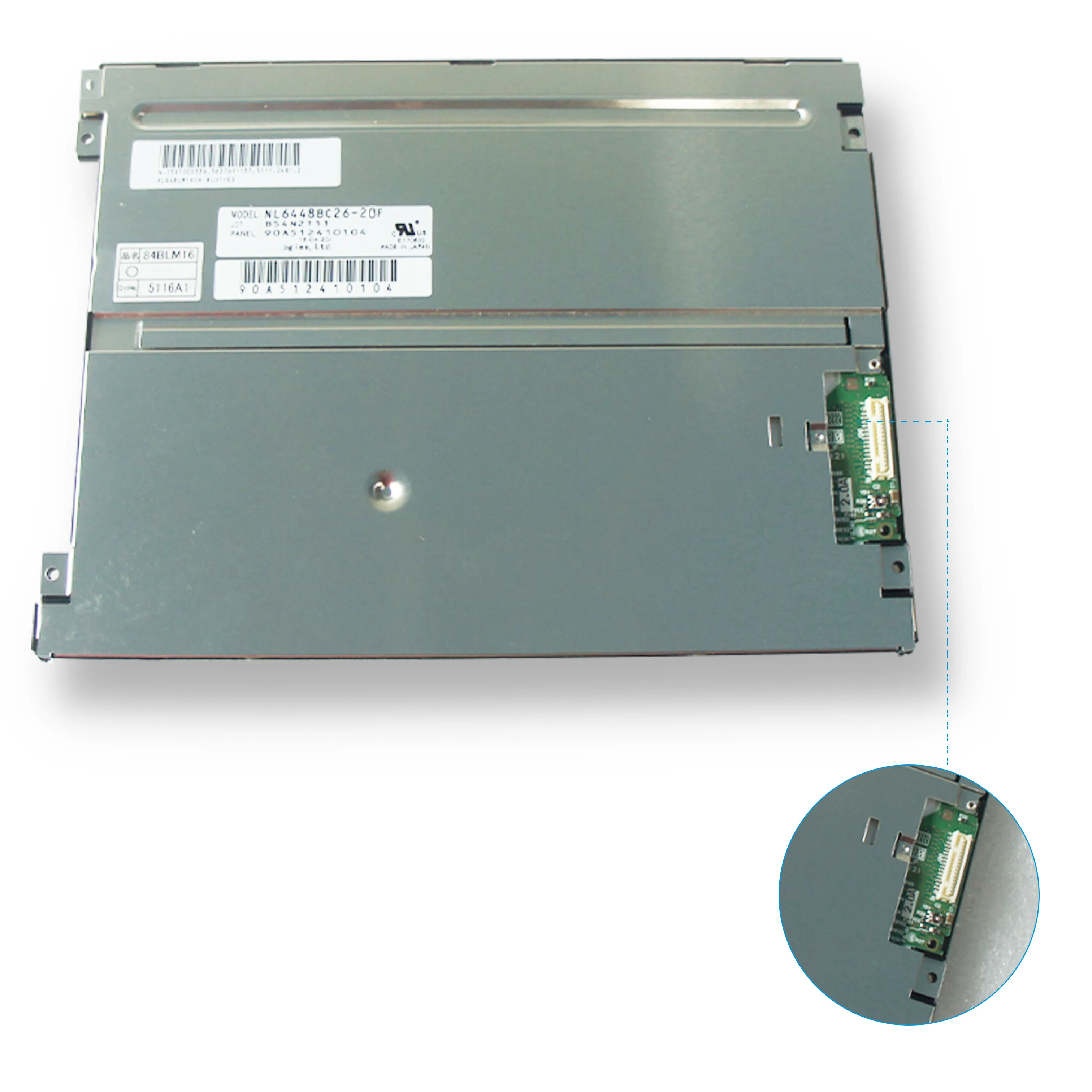

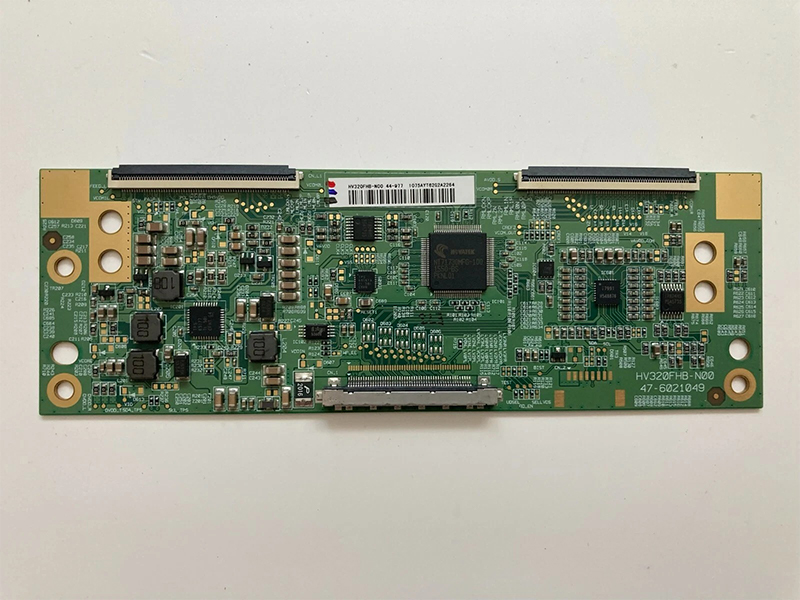
HV320FHB-N00 BOE 32.0 inch 1920*1080 LCD glass
The display industry, a cornerstone of modern consumer electronics, is in a constant state of flux, driven by the dual demands of cost efficiency and visual performance. Within this competitive landscape, specific components become critical benchmarks for design and manufacturing. One such component is the HV320FHB-N00, a 32.0-inch LCD glass produced by BOE Technology Group, one of the world's leading display manufacturers. This article provides a deep technical and market-oriented analysis of this specific model.
While often overlooked as a simple part number, the HV320FHB-N00 represents a strategic product. It is not merely a screen; it is a glass, an unassembled LCD panel that serves as the raw heart of a monitor or television. At its core, it offers a standard Full HD resolution of 1920x1080 on a 32-inch diagonal. This article will dissect its specifications, explore its supply chain positioning, analyze its visual characteristics, compare it to evolving standards, and assess its viability in various commercial applications. By moving beyond surface-level specifications, we aim to provide actionable intelligence for integrators, designers, and procurement professionals evaluating this specific BOE panel.
To understand the HV320FHB-N00, one must first grasp the distinction between an "LCD glass" and a finished "LCD module" or monitor. The term "glass" in this context refers to the bare cell or open cell – the fundamental sandwich of TFT glass, color filter, and liquid crystal material. The HV320FHB-N00 is delivered without a backlight unit, bezel, driver board, or timing controller (TCON) board. This is a raw, engineered substrate.
This designation immediately defines its target market. It is not a consumer-ready product. Instead, it is supplied to downstream manufacturers who possess the engineering capability to integrate their own backlight systems and drive electronics. This allows for a high degree of customization. A manufacturer could pair this glass with a high-luminance, high-uniformity backlight for a commercial digital signage display, or with a cost-optimized, low-power backlight for a budget television set. The implications for the supply chain are significant; sourcing the HV320FHB-N00 implies a commitment to in-house assembly and testing, which reduces dependency on the final module maker but increases capital expenditure for the integrator. The value proposition lies in the balance between component cost and customization flexibility.

In an era dominated by 4K and 8K standards, the persistence of Full HD (1920x1080) in the 32-inch segment is a deliberate market choice. This resolution yields a pixel density of approximately 69 PPI (Pixels Per Inch). While this is lower than that of a 24-inch Full HD monitor (92 PPI) or a smartphone, it represents a mature and highly cost-effective sweet spot for a 32-inch diagonal.
The HV320FHB-N00's pixel architecture is almost certainly a standard RGB stripe layout. This is critical because it ensures compatibility with legacy software and graphics drivers without the sub-pixel rendering complexities of newer WRGB or Pentile layouts. From a manufacturing perspective, achieving uniformity and yield with a 1920x1080 resolution on a 32-inch substrate is significantly easier and cheaper than producing a 4K panel of the same size. The aperture ratio – the amount of light that can pass through the TFT layer – is also higher than a similarly sized 4K panel, meaning the required backlight luminance can be lower for the same perceived brightness. This makes the HV320FHB-N00 an ideal candidate for applications where pixel-perfect sharpness is secondary to cost, contrast, and power efficiency, such as in industrial monitors, point-of-sale displays, and entry-level televisions.
A deep technical assessment of any LCD glass must address its optical capabilities. The HV320FHB-N00, as a raw cell, has no inherent luminance. The contrast ratio, however, is a function of the liquid crystal material and cell gap. This panel likely employs a VA (Vertical Alignment) or TN (Twisted Nematic) technology, given the age and price point. VA is more probable for a 32-inch panel targeted at television applications, as it offers superior native contrast ratios (often 3000:1 to 5000:1) compared to TN's typical 1000:1.
The viewing angle is a defining characteristic. If based on VA technology, the HV320FHB-N00 will exhibit excellent static contrast when viewed head-on, but will suffer from color shift and gamma off-axis at extreme angles – a common trait of VA panels. This is perfectly acceptable for single-user scenarios like desktop monitors or hotel televisions. However, it severely limits its use in public signage where viewers approach from wide angles. The response time, another critical factor, is typically slower for VA than for TN or IPS (In-Plane Switching). For office work and video playback, this is negligible. For fast-paced gaming, it represents a significant disadvantage, leading to potential ghosting. Therefore, the optical strengths of this glass (high contrast, low cost) directly dictate its viable use cases.
Because the HV320FHB-N00 is a bare glass, its final performance is entirely dependent on the quality of the backlight and driver board selected by the integrator. The interface is critical. This panel typically uses a standard LVDS (Low-Voltage Differential Signaling) interface, likely a 2-channel, 8-bit configuration. This is a legacy standard, but it is robust and low-cost. It limits the maximum refresh rate and color depth, but for 1920x1080 @ 60Hz with 16.7 million colors, it is perfectly adequate.
The backlight choice is supremely important. The glass itself has no means of producing light. Integrators must source an edge-lit or direct-lit LED backlight unit. For a 32-inch panel, edge-lit is the dominant choice for its thin profile and lower cost, but it can suffer from light bleeding at the edges. A direct-lit backlight offers superior uniformity and allows for local dimming (though not to the granularity of Mini-LED), but adds thickness and cost. The electrical contact between the glass and the printed circuit board (PCB) is made via Chip-On-Film (COF) bonding. This is a high-precision, fragile assembly process. Integrators must have cleanroom facilities and automated bonding equipment to handle this glass without electrostatic discharge (ESD) damage or particle contamination, which can create permanent dead pixels or lines.
The HV320FHB-N00 occupies a specific niche in the display ecosystem. Its primary market is not the high-end consumer but rather the industrial and budget commercial sector. Key applications include:
Entry-Level Televisions: For emerging markets or budget hotel chains, this glass paired with a simple backlight meets minimum viewing requirements.
Digital Signage (Non-Critical): Information displays in lobbies or transportation hubs where ambient light is controlled and viewers are distant.
Medical Monitors (Low-End): For patient monitoring or administrative work stations that don't require surgical-grade color accuracy.
Casino and Gaming Machines: A cost-effective solution for non-progressive slot machines or video lottery terminals.
Security and Surveillance: For multi-monitor command centers displaying standard-definition camera feeds where high resolution is unnecessary.
The economic advantage is clear. By sourcing this glass, a manufacturer can build a functional 32-inch display for a significantly lower bill of materials (BOM) than buying a finished module. The disadvantage is the need for engineering resources and the risk of yield loss during integration. This trade-off makes the HV320FHB-N00 a strategic choice for volume buyers who can absorb the technical overhead.
As of 2024, the HV320FHB-N00 represents a mature product near the end of its life cycle. BOE has likely moved most of its production capacity toward higher-value panels like 4K, IPS, or AMOLED. The continued availability of this glass is due to legacy demand from industrial customers who have certified it into their products and cannot easily requalify a new panel. This creates a unique market dynamic: stable prices with occasional scarcity due to reduced production runs.
The future relevance of this glass is threatened by the price erosion of finished 32-inch 4K modules. However, the HV320FHB-N00 survives because of a simple truth: many applications do not need 4K resolution. For a cash register display or a simple digital clock, Full HD is overkill. The ruggedness and long-term availability of the glass are its strongest assets. Integrators value the fact that a production line can run for years without a design change. While consumer trends push toward higher resolution, the industrial market prizes stability and low cost. This glass is a testament to the fact that not all screens need to be high-end. Its value lies in its ability to perform a specific job adequately, efficiently, and affordably, a principle that will remain relevant in the display industry for the foreseeable future.
What does the part number "HV320FHB-N00" mean?
It is BOE's internal code. "HV" likely denotes a specific product series, "320" is the diagonal size (32.0 inches), "FHB" may relate to resolution and interface type (F for Full HD, HB for high brightness/long backlight life), and "N00" indicates the specific revision (gen 1).
Is the HV320FHB-N00 a complete monitor?
No, it is only the LCD glass (bare cell). It requires a backlight unit, a TCON driver board, a power supply, and a physical housing to become a working display.
Can this glass be used for gaming?
It is not recommended for gaming. Its response time (likely 8ms or higher) is too slow for fast action, leading to ghosting. It also lacks high refresh rate support (limited to 60Hz max).
What is the native contrast ratio of this glass?
As a raw cell, it depends on the liquid crystal mode (likely VA). Expect a native contrast of 3000:1 to 5000:1 when paired with a proper backlight, which is excellent.
What interface does this glass use to connect to a driver board?
It uses a standard LVDS (Low-Voltage Differential Signaling) interface, typically a 2-channel, 8-bit connection.
Is it difficult to integrate this glass into a product?
Yes. It requires cleanroom conditions, specialized Chip-On-Film (COF) bonding equipment, and precise mechanical alignment to prevent damage and pressure marks.
Whats the viewing angle?
If it is a VA panel (most likely), the viewing angle is good for a single user (178/178 on paper), but suffers from color shift and contrast degradation when viewed from extreme off-axis angles, worse than IPS technology.
Why not just buy a finished 32-inch monitor?
For large-scale integrators, buying the glass is cheaper and allows them to customize the backlight brightness, enclosure design, and electronic interfaces to match their specific product requirements.
Is the HV320FHB-N00 still in production?
It is likely in end-of-life (EOL) or low-volume production. It is still widely available in the secondary market and from distributors with remaining inventory.
Can this glass be repaired if there are dead pixels?
No. Dead or stuck pixels in the glass are permanent defects. The entire LCD glass must be replaced, which is often not cost-effective compared to replacing the whole finished display.
Conclusion
The HV320FHB-N00 is more than just a component; it is a case study in strategic product design and market segmentation. By offering a high-quality, cost-optimized raw glass for the 32-inch Full HD segment, BOE has empowered downstream manufacturers to build tailored solutions for specific industrial and commercial needs. Its technical profile – a standard VA panel with a 1920x1080 resolution and an LVDS interface – is inherently unremarkable in a consumer context, yet this very ordinariness is its greatest commercial strength. It provides a reliable, mature, and predictable platform for integration.
For engineers and procurement professionals, understanding this glass means recognizing the trade-off between component cost and integration complexity. It is a reminder that the value in a display often lies not in its peak specifications, but in its fitness for purpose. As the industry races toward higher resolutions and faster refresh rates, components like the HV320FHB-N00 will continue to serve as the backbone of the vast, often invisible, world of functional screens that power our daily infrastructure. The real intelligence is in knowing where to apply the right technology for the right price.