- Industrie-LCD-Display
-
Industrial Products
- DC Servo Drive
- AC Servo Drive
- other
- Heidelberg
- FANUC
- IFM
- Meter
- CCD
- Membrane Keypad
- Film
- YOKOGAWA
- Card
- ABB
- MITSUBISHI
- FANUC
- KEYENCE
- BECKHOFF
- Honeywell
- HOLLYSYS
- FUJI servo drives
- HP
- solenoid valve
- thermostat
- Siemens adapter
- color oscilloscope
- Fujitsu connector
- CHELIC
- SMC
- CISCO
- INTEL
- Key board
- FAIRCHILD
- Der Aufsichtsrat
- Board
- Bearing
- other
- Control Panel
- Contactor
- Circuit
- Omron
- Relais.
- Der controller
- Optoelektronische schalter
- Optoelektronische sensoren
- Original
- Fan
- Motortreiber
- Endschalter
- Verstärker
- power supply
- LENZE
- Cable
- Encoder
- Sensor
- Transformator
- Fiber Optic Sensor
- Schutzrelais
- Temperaturregler
- Näherungsschalter
- Switch Sensor
- Siemens
- PCB
- HMI Touch-Glas
-
HMI-Vollautomat Ganze Einheit
- OMRON HMI Touch Panel
- Siemens HMI Touch Panel
- Mitsubishi HMI Touch Panel
- Allen-Bradley Automatisierung HMI Touch
- DELTA HMI Touch Panel
- EVIEW DELTA HMI Touch Panel
- KINCO DELTA HMI Touch Panel
- HITECH HMI Touch Panel
- WEINTECK HMI Touch Panel
- TECVIEW HMI Touch Panel
- WEINVIEW HMI Touch Panel
- PRO-FACE HMI Touch Panel
- SIMATIC HMI Touch Panel
- AMPIRE HMI Touch Panel
- HEIDELBERG HMI Touch Panel
- PANASONIC HMI Touch Panel
- PATLITE HMI Touch Panel
- KYOCERA HMI Touch Panel
- KEYENCE HMI Touch Panel
- WEINVIEW HMI Touch Panel
- HITECH HMI Touch Panel
- FUJI HMI Touch Panel
- HAKKO HMI Touch Panel
- SCHNEIDER HMI Touch Panel
- SAMKOON touch panel
- andere
- Module
- LCD Wechselrichter
- Membran Tastenfeld Schalter
- Winni Touch Screens
- Frequenzumrichter
- Servo Motor
- PLC


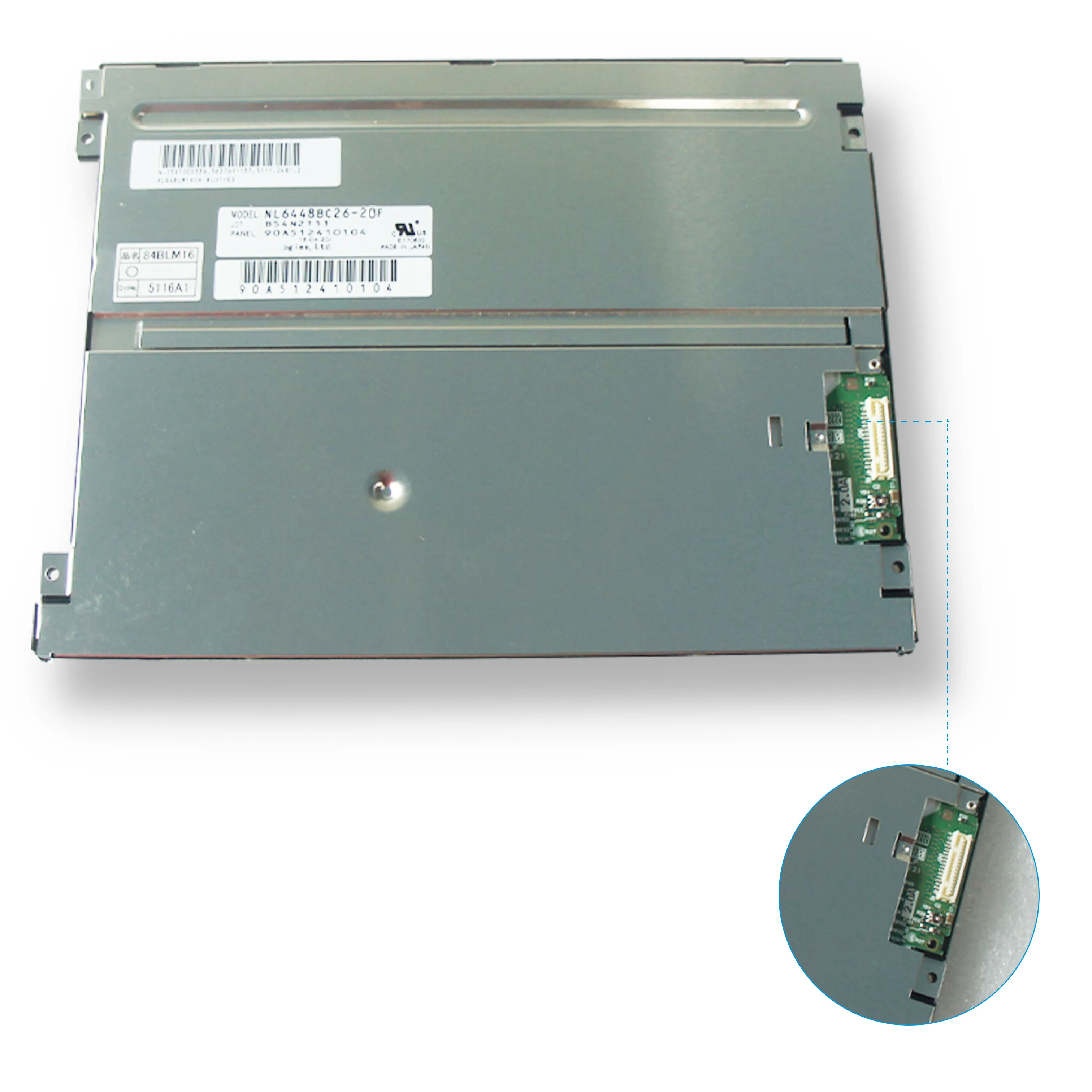

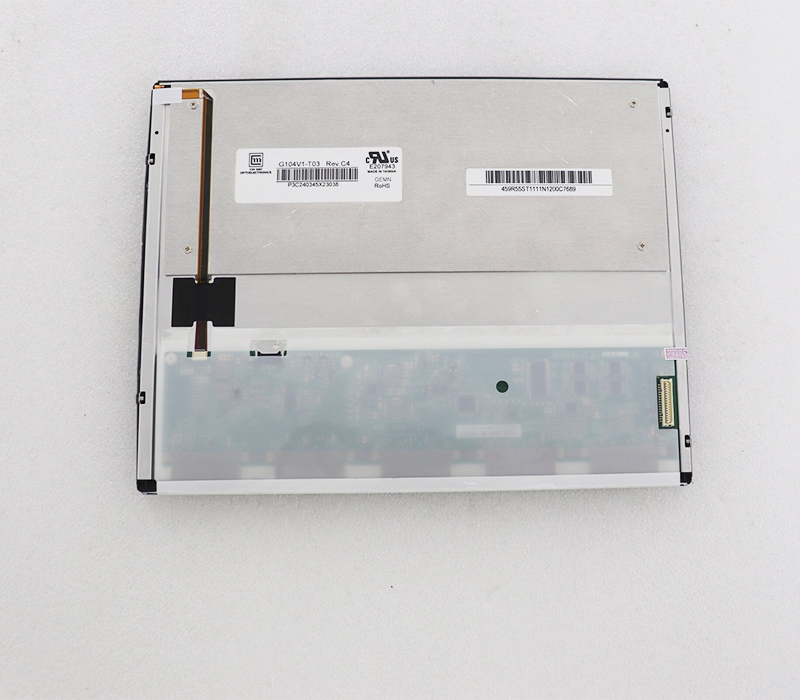
Innolux lcd display 10.4inch 640*480 G104V1-T03
In the intricate world of industrial and embedded systems, the display panel is far more than a simple window for information; it is the critical touchpoint of human-machine interaction. Among the myriad of options available to engineers and product designers, specific models stand out for their proven reliability and tailored specifications. This article delves deep into one such component: the Innolux G104V1-T03, a 10.4-inch LCD display module with a resolution of 640 x 480 pixels.
We will move beyond basic datasheet parameters to explore what makes this display a persistent choice in demanding applications. From its fundamental technological underpinnings and precise mechanical characteristics to its nuanced electrical interface and stringent environmental qualifications, each aspect will be examined. Furthermore, we will contextualize its role within competitive markets and provide practical guidance for successful integration. This comprehensive analysis aims to equip developers and procurement specialists with the insights needed to evaluate whether the Innolux G104V1-T03 is the optimal visual interface for their next-generation equipment, medical device, or industrial control panel.
Unpacking the Core Technology: A Deep Dive into the 10.4-Inch TFT LCD
The Innolux G104V1-T03 is built upon a Twisted Nematic (TN) or advanced TFT LCD technology, a mature and cost-effective solution known for its fast response times and high reliability. The defining characteristic of this module is its 10.4-inch diagonal active area, presenting a 4:3 aspect ratio—a format that remains highly relevant for legacy systems, industrial HMIs, and medical monitors where information density and compatibility are paramount.
The native resolution of 640 x 480 pixels, commonly referred to as VGA, is a key feature. While it may seem modest compared to contemporary high-definition screens, this resolution offers distinct advantages in embedded systems: lower processing overhead, reduced bandwidth requirements, and excellent compatibility with a vast array of single-board computers and legacy controllers. Each pixel is precisely controlled to deliver clear, sharp characters and stable graphics, which is essential for operational clarity in environments where operator error can have significant consequences. The technology ensures consistent performance over a wide temperature range, forming a dependable foundation for the module's application.
Mechanical and Optical Specifications: Design for Integration and Clarity
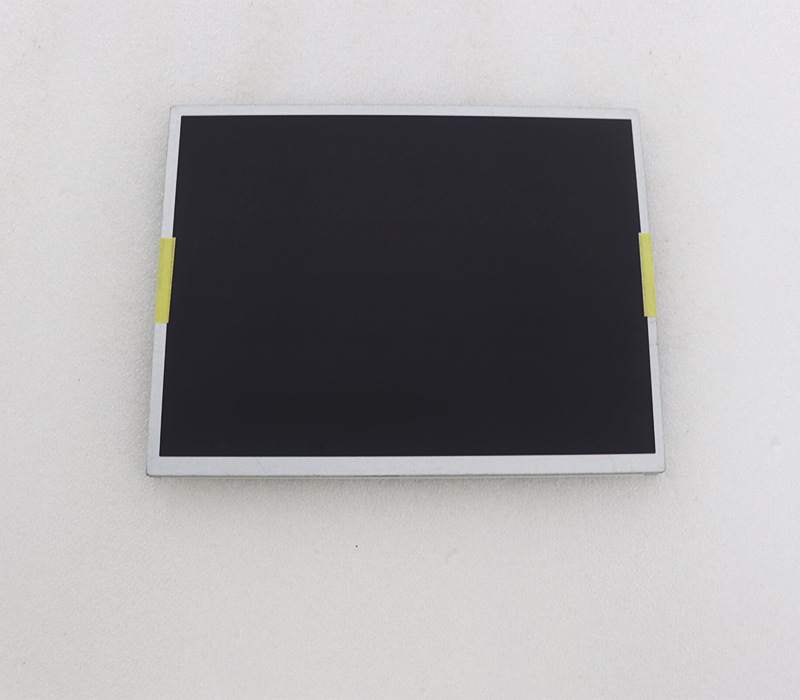
Successful integration begins with physical and visual compatibility. The G104V1-T03 module features a compact outline dimension and a standard active display area, allowing it to be a drop-in replacement for many existing 10.4-inch designs. Its mechanical design, including the placement of mounting holes and connector orientation, is engineered for straightforward assembly into enclosures and bezels.
Optically, this display is characterized by a balanced performance profile. It delivers a standard brightness level suitable for indoor and controlled lighting environments. The contrast ratio ensures that text and graphics pop with clarity, reducing eye strain during prolonged monitoring. The module typically offers a wide viewing angle in the vertical direction, with more limited horizontal viewing angles characteristic of its core technology—a factor that must be considered during installation. The surface treatment, often including anti-glare or hard coating, mitigates reflections and protects the screen from scratches, enhancing readability and durability in workshop or clinical settings.
Electrical Interface and Signal Requirements: Ensuring Stable Communication
The G104V1-T03 operates on a single power supply, typically +3.3V or +5.0V, simplifying power architecture design. Its internal timing controller (TCON) and driver circuitry are optimized for the VGA signal standard, accepting analog RGB inputs. This analog interface provides robust compatibility but requires careful attention to signal integrity during board layout and cable design to prevent noise and image degradation.
Designers must adhere strictly to the module's input voltage levels and signal timing parameters as defined in the datasheet. The inclusion of a built-in backlight inverter circuit (for CCFL backlight versions) or LED driver (for LED-backlit variants) is a critical detail. Understanding the backlight's electrical requirements—such as voltage, current, and dimming method (e.g., PWM)—is essential for both performance and longevity. Proper power sequencing and the use of recommended decoupling capacitors are not mere suggestions but necessities to ensure a stable, flicker-free display throughout the product's lifecycle.
Ruggedness and Reliability: Built for Demanding Environments
This is where the G104V1-T03 transitions from a standard component to an industrial-grade solution. It is designed and tested to perform reliably under conditions that would cripple consumer-grade displays. Key qualifications include an extended operating temperature range, often from -30°C to +80°C, ensuring functionality in freezing cold warehouses or under the heat of industrial machinery.
The module undergoes rigorous testing for vibration and shock resistance, making it suitable for mobile or heavy-machinery applications. Its high reliability is also evidenced by a long lifespan, particularly for its backlight, often rated for 50,000 hours or more. This durability translates directly into lower total cost of ownership and reduced maintenance downtime for end-users. For applications in medical, transportation, or outdoor kiosks, this inherent ruggedness provides the confidence that the display will be a dependable component for years, not just a fragile interface.
Market Context and Competitive Analysis: Positioning the G104V1-T03
In the landscape of 10.4-inch VGA displays, the Innolux G104V1-T03 occupies a strategic position. It serves as a reliable, well-established workhorse, often compared to similar modules from manufacturers like AUO or Panasonic. Its primary advantages lie in its proven track record, widespread availability, and the significant secondary market for compatible or refurbished units, which is crucial for long-term product support and repair.
When evaluating alternatives, engineers must weigh factors beyond initial cost. The G104V1-T03's value proposition is strongest in projects requiring long-term stability, legacy system upgrades, or where tooling for a specific mechanical design already exists. For newer designs demanding wider viewing angles (IPS technology) or higher brightness, more modern panels may be preferable. However, for a vast array of industrial control, test equipment, and specialized devices, this module remains a benchmark for cost-effective, no-surprises performance.
Integration Best Practices and Application Scenarios
Implementing the G104V1-T03 successfully requires attention to detail. First, always source the latest datasheet and application notes from Innolux or authorized distributors. Physically, ensure the mounting scheme does not stress the LCD glass, and use appropriate gasketing for environmental sealing if required. Electrically, provide a clean, stable power source and follow ESD protection protocols during handling.
This display finds its ideal home in numerous demanding fields. In industrial automation, it serves as the face of PLCs and control panels. In the medical sector, its reliability is trusted for patient monitoring and diagnostic equipment. Point-of-sale systems, transportation information displays, and specialized instrumentation also leverage its robust 4:3 format. By understanding these scenarios and following integration best practices, developers can fully harness the module's capabilities to create products that are both functional and enduring.
Frequently Asked Questions (FAQs)
Q10: Where can I find technical support or the official datasheet?A10: Contact Innolux directly or authorized distributors for the most current technical documentation and support.
Conclusion
The Innolux G104V1-T03 10.4-inch LCD display exemplifies how a component with seemingly standard specifications—VGA resolution and a 4:3 format—can achieve enduring relevance through robust engineering and targeted design. Its value is not rooted in cutting-edge pixel density, but in its proven reliability, wide environmental tolerance, and seamless integration into systems where failure is not an option.
For engineers and product managers, selecting this module represents a strategic decision favoring stability, longevity, and total cost of ownership over mere novelty. By thoroughly understanding its technological profile, electrical needs, and application fit, developers can leverage the G104V1-T03 to build interfaces that are not only functional but fundamentally trustworthy, ensuring clear and consistent human-machine communication in the most demanding environments.