- Industrie-LCD-Display
-
Industrial Products
- DC Servo Drive
- AC Servo Drive
- other
- Heidelberg
- FANUC
- IFM
- Meter
- CCD
- Membrane Keypad
- Film
- YOKOGAWA
- Card
- ABB
- MITSUBISHI
- FANUC
- KEYENCE
- BECKHOFF
- Honeywell
- HOLLYSYS
- FUJI servo drives
- HP
- solenoid valve
- thermostat
- Siemens adapter
- color oscilloscope
- Fujitsu connector
- CHELIC
- SMC
- CISCO
- INTEL
- Key board
- FAIRCHILD
- Der Aufsichtsrat
- Board
- Bearing
- other
- Control Panel
- Contactor
- Circuit
- Omron
- Relais.
- Der controller
- Optoelektronische schalter
- Optoelektronische sensoren
- Original
- Fan
- Motortreiber
- Endschalter
- Verstärker
- power supply
- LENZE
- Cable
- Encoder
- Sensor
- Transformator
- Fiber Optic Sensor
- Schutzrelais
- Temperaturregler
- Näherungsschalter
- Switch Sensor
- Siemens
- PCB
- HMI Touch-Glas
-
HMI-Vollautomat Ganze Einheit
- OMRON HMI Touch Panel
- Siemens HMI Touch Panel
- Mitsubishi HMI Touch Panel
- Allen-Bradley Automatisierung HMI Touch
- DELTA HMI Touch Panel
- EVIEW DELTA HMI Touch Panel
- KINCO DELTA HMI Touch Panel
- HITECH HMI Touch Panel
- WEINTECK HMI Touch Panel
- TECVIEW HMI Touch Panel
- WEINVIEW HMI Touch Panel
- PRO-FACE HMI Touch Panel
- SIMATIC HMI Touch Panel
- AMPIRE HMI Touch Panel
- HEIDELBERG HMI Touch Panel
- PANASONIC HMI Touch Panel
- PATLITE HMI Touch Panel
- KYOCERA HMI Touch Panel
- KEYENCE HMI Touch Panel
- WEINVIEW HMI Touch Panel
- HITECH HMI Touch Panel
- FUJI HMI Touch Panel
- HAKKO HMI Touch Panel
- SCHNEIDER HMI Touch Panel
- SAMKOON touch panel
- andere
- Module
- LCD Wechselrichter
- Membran Tastenfeld Schalter
- Winni Touch Screens
- Frequenzumrichter
- Servo Motor
- PLC



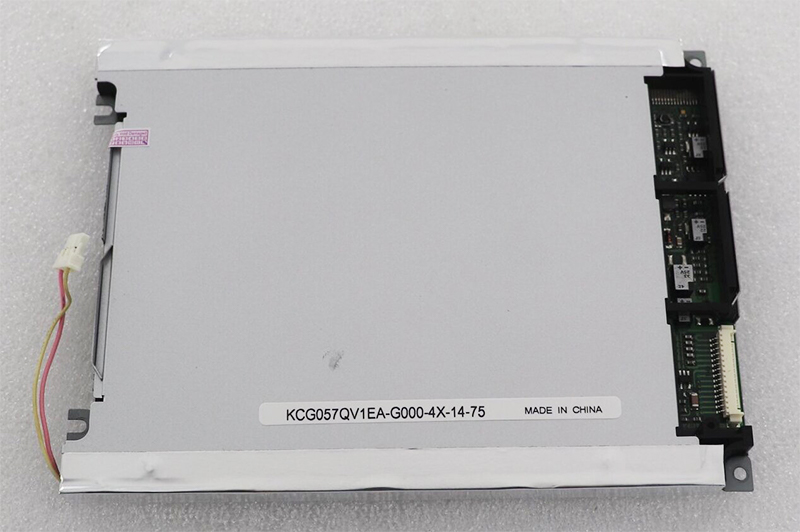
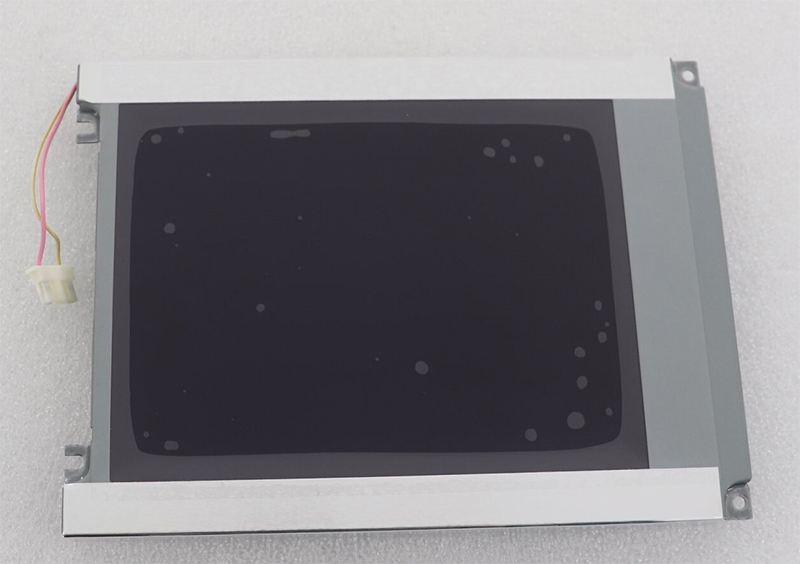
KCG057QV1EA-G000 5.7"320*240 FSTN-LCD for Kyocera
In the world of industrial and embedded display solutions, the KCG057QV1EA-G000 stands as a distinctive component within Kyocera's portfolio. This 5.7-inch display, leveraging FSTN-LCD (Film Compensated Super Twisted Nematic) technology with a resolution of 320x240 pixels (QVGA), occupies a crucial niche where reliability, optical performance, and environmental resilience are non-negotiable. While modern displays often chase high refresh rates and vivid color gamuts, this module prioritizes stability, low power consumption, and exceptional readability under direct sunlight—attributes highly valued in medical, industrial control, and outdoor instrumentation markets.
This article delves deep into the architecture, operational nuances, and application-specific advantages of the KCG057QV1EA-G000. We will explore how its FSTN technology differs from standard STN and TFT panels, analyze its mechanical design for harsh environments, and provide actionable insights for engineers integrating it into new or legacy systems. Whether you are replacing an aging display or designing a rugged terminal, understanding the core strengths of this Kyocera module is essential for informed decision-making.
The Core Technology: Why FSTN-LCD Matters
To appreciate the KCG057QV1EA-G000, one must first understand the FSTN-LCD architecture. Unlike standard STN (Super Twisted Nematic) displays, which often suffer from a yellow or blue background tint and narrow viewing angles, FSTN incorporates a compensation film that neutralizes these optical artifacts. The result is a true black-on-white or white-on-black high-contrast image, depending on the mode (positive or negative).
For this Kyocera module, the FSTN layer provides a Wide Viewing Angle of up to 120 degrees horizontally and 100 degrees vertically—substantially better than conventional STN panels. This improvement is critical for dashboard interfaces or diagnostic equipment that must be readable from off-angles. Furthermore, the technology boasts a response time of approximately 200-300 milliseconds in standard temperature ranges, which is sufficient for static data display and menu navigation, though not for video playback. The key trade-off here is power efficiency: FSTN panels consume significantly less current than TFTs, often drawing under 10 mA for the LCD driver, making them ideal for battery-backed portable instruments.
One of the defining characteristics of the KCG057QV1EA-G000 is its sunlight readability. The FSTN technology inherently provides better reflectivity than transmissive TFTs, but Kyocera enhances this with an optimized polarizer stack. When paired with a front light or an external backlight, the display achieves a luminance of 500 cd/m² or higher in typical configurations.
In direct sunlight, standard TFTs often wash out due to glare and limited brightness. The KCG057QV1EA-G000, however, maintains high contrast ratios (often exceeding 25:1 in ambient light) by leveraging the STN's intrinsic optical rotation. Engineers deploying this module for outdoor kiosks or marine navigation systems will find that characters remain sharp and legible without requiring excessive backlight power, thus reducing heat generation. The anti-glare surface treatment further diffuses reflections, which is a practical advantage for displays mounted in variable lighting environments, such as factory floors or vehicle dashboards.
The KCG057QV1EA-G000 communicates via a parallel 8-bit or 4-bit interface, standard for industrial-grade displays of this era. This interface, while less glamorous than modern LVDS or MIPI, offers resilience and simplicity. The module includes a built-in controller (typically the S1D13521 series or equivalent from Epson or Sitronix) which supports RGB data input and manages the STN voltage multiplexing.
Integration requires careful attention to timing parameters such as frame refresh rate (typically 60-75 Hz), data latch timing, and bias voltages. Kyocera provides a detailed command set for controlling display orientation, sleep mode, and power sequencing. For embedded designers, the 20-pin FPC connector (0.5 mm pitch) is the primary physical interface. A critical aspect is the negative voltage generator: the module requires a VEE rail (often -22V to -24V) to bias the LCD glass. Many legacy designs use an integrated DC-DC converter, but when sourcing, ensure your mainboard provides these voltages cleanly to avoid ghosting or flicker. The robustness of this parallel interface makes it ideal for long-term field upgrades where protocol stability is valued over high-speed data transfer.
Kyocera’s industrial display modules are known for their rugged construction, and the KCG057QV1EA-G000 is no exception. The unit features a metal frame that provides mechanical stiffness, while the glass panel is bonded with optical-grade adhesive to minimize dust ingress. The operating temperature range spans -20°C to +70°C, with storage up to +80°C, enabling deployment in cold storage warehouse terminals or hot factory automation lines.
Another aspect is the vibration and shock resistance. The module can withstand up to 4.9 m/s² of vibration (10-55 Hz) and 490 m/s² of shock, as per Kyocera’s testing standards. This is particularly important for mobile equipment like forklift-mounted terminals or agricultural machinery. The FSTN technology itself is less sensitive to temperature-induced response time degradation compared to TN or TFT cells. However, at extreme low temperatures (-20°C), response time may increase to 500-800 ms. Designers should compensate by using a heater layer—many third-party vendors offer heated version of this display for Arctic-grade applications.
Low power consumption remains a driving factor for using the KCG057QV1EA-G000. The typical logic supply current is just 0.5 mA at 3.3V, while the LCD drive current is around 5-10 mA. The backlight, which is often an LED array consuming 150-200 mA at 12V, is the dominant power draw. Engineers can implement adaptive brightness controls using PWM (Pulse Width Modulation) to dynamically adjust the backlight based on ambient light sensors, extending battery life in portable units.
Longevity is further ensured by the LED backlight rated at 50,000 hours to half brightness. Kyocera also designs the module with a polyimide alignment layer that resists photodeterioration, reducing image retention (ghosting). The built-in power sequencing reset prevents latch-up during brownout conditions, which is crucial for industrial environments where supply lines may be noisy. For systems requiring continuous operation, the module supports a sleep mode that consumes less than 50 µW, preserving lithium backup batteries in medical infusion pumps or data loggers.
The KCG057QV1EA-G000 is not a general-purpose display; it is optimized for niche industrial and medical domains. In medical diagnostic devices (e.g., portable ECG monitors or anesthesia machines), the FSTN technology provides high readability under surgical lights without glare, while the low lag is acceptable for numeric and waveform displays. The wide temperature range makes it suitable for autoclave-sterilizable compartments in certain configurations.
In industrial HMI (Human-Machine Interface) for factory automation, the display's contrast ratio ensures legibility from a distance of 2-3 meters on a factory floor. The parallel interface simplifies firmware development for microcontrollers like STM32 or Renesas RX series, reducing BOM complexity. Additionally, the legacy compatibility with the pinout of older Sharp or Hitachi displays allows drop-in replacements for systems that are obsolete yet still running in mission-critical lines. This makes the module an excellent candidate for aftermarket service and refurbishment of professional equipment.
Frequently Asked Questions (FAQS)
Q: What is the resolution of the KCG057QV1EA-G000?
A: It features a 320x240 pixel (QVGA) resolution in a 5.7-inch diagonal format.
Q: Is it an STN or TFT display?
A: It is an FSTN-LCD, which is an enhanced version of STN technology with a compensation film for better viewing angles and contrast.
Q: What is the typical power consumption?
A: The LCD logic draws about 0.5-5 mA at 3.3V, while the LED backlight consumes 150-200 mA at 12V. Total typical consumption is under 2.5W.
Q: What interface does it use?
A: It uses a parallel 8-bit/4-bit data interface (RGB and timing signals) with a 20-pin FPC connector.
Q: Is it sunlight readable?
A: Yes, FSTN technology provides excellent contrast in ambient light. With a high-brightness backlight (>500 cd/m²), it is reliably readable outdoors.
Q: What is the operating temperature range?
A: -20°C to +70°C (storage up to +80°C). Extended heaters may be needed for below -20°C.
Q: Can I replace an old Sharp LM32019T with this?
A: Possibly, but check the pinout and voltage requirements. The KCG057QV1EA-G000 is a common replacement for legacy 5.7" QVGA panels but verify timing specs.
Q: What is the lifespan of the backlight?
A: The LED backlight is rated for 50,000 hours to half-brightness under standard conditions.
Q: Does it support touch panels?
A: The module itself does not include a touch layer, but a resistive or capacitive touch panel can be laminated in front by the integrator.
Q: Is it still in production?
A: Kyocera continues to produce this series for industrial markets, though lead times may vary. Check with authorized distributors for current availability.
Conclusion: A Time-Tested Display for Demanding Systems
The KCG057QV1EA-G000 represents a specialized tool in the display ecosystem—one that sacrifices glamour for grit. Through this analysis, we have seen how its FSTN technology delivers superior contrast and outdoor readability that many modern TFTs struggle to match without aggressive brightness. Its robust mechanical design, wide temperature tolerance, and low power draw make it a preferred choice for engineers who prioritize system longevity and reliability over aesthetic flashiness.
When selecting a display for a medical, industrial, or outdoor application, the decision should not be based solely on pixel density or color depth. The KCG057QV1EA-G000 reminds us that functionality in harsh conditions, ease of integration, and long-term supply stability are equally critical. For those maintaining legacy equipment or building new robust terminals, this Kyocera module offers a proven path to success. Consider it the workhorse of the display world—unassuming, yet indispensable for the tasks that matter most.