- Industrie-LCD-Display
-
Industrial Products
- DC Servo Drive
- AC Servo Drive
- other
- Heidelberg
- FANUC
- IFM
- Meter
- CCD
- Membrane Keypad
- Film
- YOKOGAWA
- Card
- ABB
- MITSUBISHI
- FANUC
- KEYENCE
- BECKHOFF
- Honeywell
- HOLLYSYS
- FUJI servo drives
- HP
- solenoid valve
- thermostat
- Siemens adapter
- color oscilloscope
- Fujitsu connector
- CHELIC
- SMC
- CISCO
- INTEL
- Key board
- FAIRCHILD
- Der Aufsichtsrat
- Board
- Bearing
- other
- Control Panel
- Contactor
- Circuit
- Omron
- Relais.
- Der controller
- Optoelektronische schalter
- Optoelektronische sensoren
- Original
- Fan
- Motortreiber
- Endschalter
- Verstärker
- power supply
- LENZE
- Cable
- Encoder
- Sensor
- Transformator
- Fiber Optic Sensor
- Schutzrelais
- Temperaturregler
- Näherungsschalter
- Switch Sensor
- Siemens
- PCB
- HMI Touch-Glas
-
HMI-Vollautomat Ganze Einheit
- OMRON HMI Touch Panel
- Siemens HMI Touch Panel
- Mitsubishi HMI Touch Panel
- Allen-Bradley Automatisierung HMI Touch
- DELTA HMI Touch Panel
- EVIEW DELTA HMI Touch Panel
- KINCO DELTA HMI Touch Panel
- HITECH HMI Touch Panel
- WEINTECK HMI Touch Panel
- TECVIEW HMI Touch Panel
- WEINVIEW HMI Touch Panel
- PRO-FACE HMI Touch Panel
- SIMATIC HMI Touch Panel
- AMPIRE HMI Touch Panel
- HEIDELBERG HMI Touch Panel
- PANASONIC HMI Touch Panel
- PATLITE HMI Touch Panel
- KYOCERA HMI Touch Panel
- KEYENCE HMI Touch Panel
- WEINVIEW HMI Touch Panel
- HITECH HMI Touch Panel
- FUJI HMI Touch Panel
- HAKKO HMI Touch Panel
- SCHNEIDER HMI Touch Panel
- SAMKOON touch panel
- andere
- Module
- LCD Wechselrichter
- Membran Tastenfeld Schalter
- Winni Touch Screens
- Frequenzumrichter
- Servo Motor
- PLC


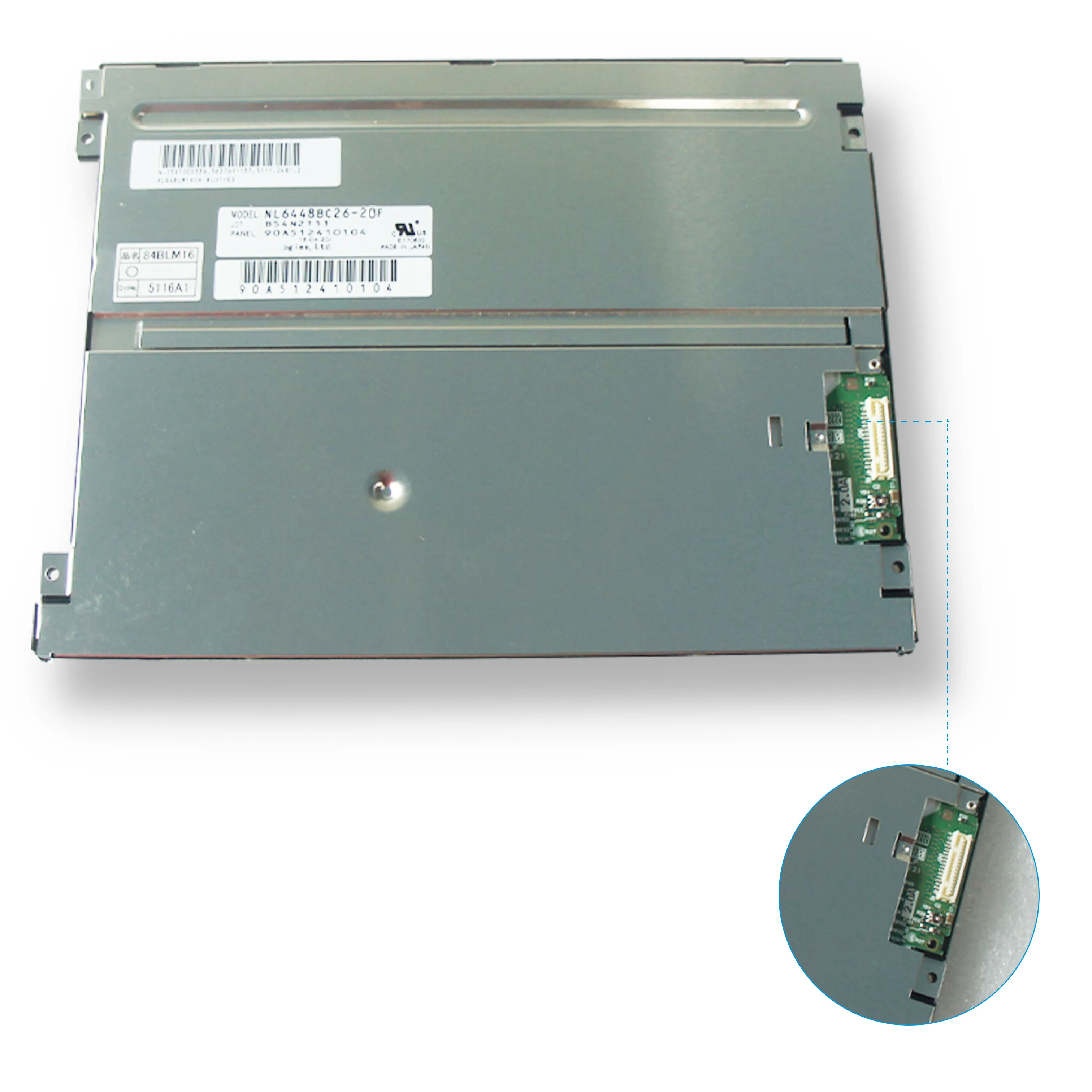

KCS057QV1AJ-G23 Kyocera 5.7 inch 320*240 lcd panel
In the ever-evolving landscape of display technology, where high-resolution AMOLED and 4K panels dominate consumer headlines, a different class of components quietly powers the world's most critical machinery. The KCS057QV1AJ-G23 from Kyocera is a prime example of this industrial backbone. This 5.7-inch LCD panel, with its seemingly modest 320x240 resolution (QVGA), is not designed for pocket-sized entertainment but for demanding control panels, medical devices, and atmospheric monitoring stations. This article delves deep into the specifications, architectural design, and strategic value of this specific model. We will move beyond a simple data sheet recitation to explore why an industrial system designer might choose this particular display over a standard commercial off-the-shelf part. We will examine its unique optical features, its electrical interface complexities, and the competitive landscape it occupies. For engineers and procurement specialists, understanding the nuance of a component like the KCS057QV1AJ-G23 is essential for ensuring system longevity, operational safety, and return on investment in mission-critical applications.
At first glance, the 320x240 resolution of the KCS057QV1AJ-G23 may appear antiquated. However, in the context of industrial human-machine interfaces (HMIs), this resolution strikes a critical balance between function and cost. The panel utilizes amorphous silicon TFT (Thin-Film Transistor) active matrix technology. This is not a simple passive matrix display; active matrix ensures that each of the 76,800 pixels is individually controlled by a transistor, which is crucial for maintaining image stability during rapid screen updates in a factory environment. The display's contrast ratio, typically specified at 500:1, and its brightness level, often around 400 cd/m² (nits), are tailored for indoor or shaded semi-outdoor use. This luminance is significantly higher than consumer monitors, allowing operators to read data against ambient light from overhead factory fluorescents or task lighting. The specific type of LCD mode used by Kyocera (often TN or STN variants for this industrial class) prioritizes response time over wide viewing angles, a calculated trade-off where the operator is usually seated directly in front of the screen. The CCFL (Cold Cathode Fluorescent Lamp) backlight in this model is a deliberate choice, offering a wider operating temperature range and longer lifespan in continuous operation compared to standard edge-lit LED panels available at the time of its design specification.
The electrical interface of the KCS057QV1AJ-G23 is a defining characteristic that dictates its usage in complex systems. This panel utilizes a parallel RGB (Red, Green, Blue) interface, typically implemented via a 40-pin or 50-pin flat flex cable (FFC). Unlike modern serial interfaces (such as LVDS or MIPI DSI) which bundle data high-speed packets, a parallel interface transmits color data for each pixel simultaneously across 6 or 8 bits per channel. The primary advantage for industrial integrators is deterministic timing and low latency. In a control system for a robotic arm or a patient monitoring system, the ability to guarantee when a pixel will update is critical. The signal voltage levels are standard TTL (3.3V or 5V), meaning the panel can be driven directly by a microcontroller or FPGA without specialized level-shifting or high-speed logic. However, this simplicity comes with a trade-off: the interface requires a large number of physical I/O pins on the control board, which can complicate PCB (Printed Circuit Board) layout. Furthermore, the connector is a custom Kyocera part, and the FFC is often hard to source separately, making the panel a closed system component. Understanding these pinout and timing requirements is the first step in successful integration, as a simple mismatch in the backlight voltage or data clock polarity can render the unit inoperative.
The true value of the KCS057QV1AJ-G23 emerges under hostile operational conditions. This is not a display that will tolerate coffee spills or a drop from a desk; it is engineered for survival in environments defined by vibration, thermal shock, and humidity. Kyocera specifies a wide operating temperature range, often from -20°C to +70°C (-4°F to 158°F). This is achieved through the use of high-temp COG (Chip-On-Glass) bonding and specialized liquid crystal mixtures that remain stable outside the normal 0°C to 50°C range of consumer displays. The mechanical structure is robust, featuring a metal frame or bracket designed to allow for through-hole or chassis-mount installation. Vibration resistance is tested against industrial standards, ensuring that the image does not flicker or the glass does not crack when mounted on a production line conveyor or in a heavy vehicle. Additionally, the panel's design resists condensation, a silent killer of electronics. The backlight is also hardened, with high-reliability CCFL tubes designed to maintain consistent brightness over 50,000 hours of continuous operation. For an engineer designing a diagnostic scanner for a hospital or a valve controller for an oil refinery, this ruggedness is non-negotiable—a failure in the display is a failure in the entire system.
While the KCS057QV1AJ-G23 is typically ordered as a bare LCD panel, its mechanical layout is explicitly designed for integration with a resistive or capacitive touchscreen overlay. The bezel and mounting holes are standard for adding a 5.7-inch touch sensor, and the panel's internal structure does not interfere with the touch controller's electrical fields. From a human factors perspective, the 5.7-inch diagonal at QVGA resolution results in a practical touch target size. Individual icons or buttons on a 320x240 grid are approximately 5 x 5 mm or larger, which is ideal for a gloved operator finger. The high contrast ratio helps readability through the touch overlay, which often reduces effective contrast by 10-15%. The display's surface is typically matte or anti-glare, reducing reflections from overhead lighting—a crucial ergonomic consideration in a production setting. The LED backlight (if upgraded) can also be dimmed via a PWM signal, allowing the operator to adjust brightness for nighttime shifts without washing out the image. For designers, the key takeaway is that the KCS057QV1AJ-G23 is a platform: the LCD is the core visual element, but the system's usability hinges on the quality of the touch sensor, the algorithm of the touch controller, and the physical mounting of the stack.
Procuring the KCS057QV1AJ-G23 presents unique supply chain challenges that differentiate it from commodity displays. As a legacy industrial component, it is prone to obsolescence and unpredictable lead times. Kyocera is a major manufacturer, but they often reserve production runs for large OEM (Original Equipment Manufacturer) contracts. The model number itself is specific; slight variations (e.g., a different backlight connector or a RoHS-compliant version) can exist, making cross-referencing critical. Distributors like Avnet, Mouser, or specialized LCD brokers are the primary sources, and a buyer should always verify the "date code" to ensure the unit was recently manufactured, as old stock can have degraded backlights. Furthermore, the panel is often sold as a "drop-in" replacement for existing medical or industrial gear. This means a failed unit in the field creates an immediate demand for a part that may not be sitting on a distributor's shelf. Proactive "lifetime buy" strategies or stocking agreements with a re-manufacturer are common. The cost per unit is significantly higher than a consumer tablet screen of similar size, reflecting the costs of long-term reliability testing, limited production volume, and the specialized glass and driver ICs used. For a designer, specifying this panel means committing to a long-term relationship with a specific supplier and maintaining a risk mitigation plan.
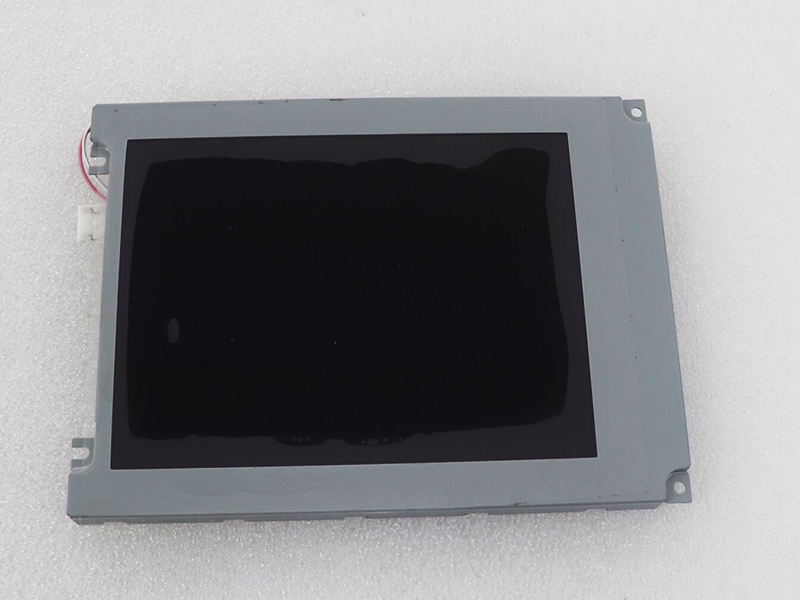
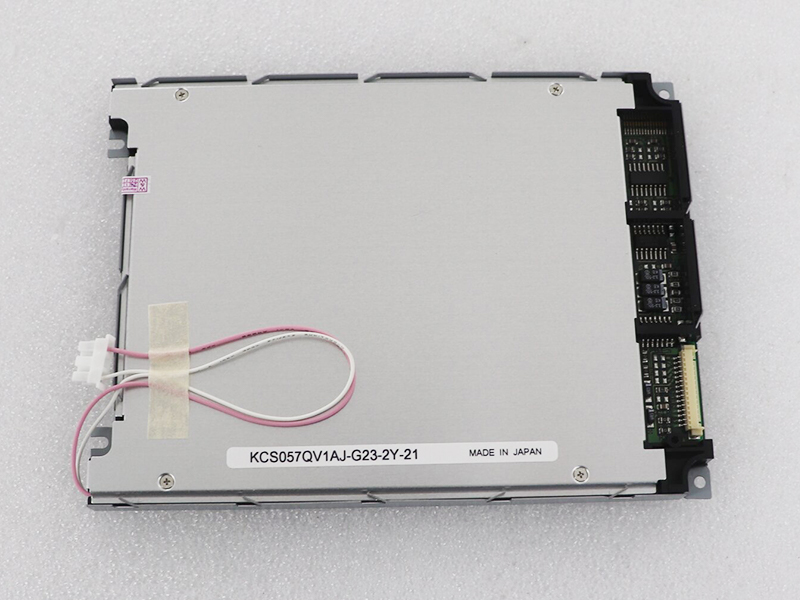
To fully understand the KCS057QV1AJ-G23, one must compare it to its primary rivals. The most direct competitor is the Hitachi (now Japan Display Inc. - JDI) TX17D05VM0AAA, a 5.7-inch QVGA industrial panel. The Hitachi part also features a parallel interface and similar optical specifications, but it tends to have slightly better color saturation due to a different color filter array. However, the Kyocera part is often considered superior in terms of mechanical rigidity and temperature range. Another competitor is the Sharp LQ057Q3DC02, which uses a different backlight technology (LED in newer revisions) and a smaller mechanical footprint. However, the Sharp part may have a narrower viewing angle and less robust mounting structure. From a cost perspective, the Kyocera KCS057QV1AJ-G23 is frequently priced at a premium over the Hitachi and Sharp counterparts due to its reputation for reliability in medical applications. For the designer, the choice often comes down to the specific mounting holes on the chassis, the backlight driver availability, and the supplier relationship. A rule of thumb in industrial design is that if you have a legacy system using the KCS057QV1AJ-G23, it is almost always easier to source that same part than to re-engineer the entire system to accept a competitor's panel, which would require a new FFC cable, new mounting bracket, and new software driver.
Frequently Asked Questions (FAQs)
Q: What is the exact resolution of the KCS057QV1AJ-G23?
A: The native resolution is 320 x 240 pixels (QVGA) arranged in an RGB stripe pattern.
Q: Is the backlight CCFL or LED?
A: The standard model uses a CCFL (Cold Cathode Fluorescent Lamp) backlight. A variant may exist, but the -G23 suffix typically designates the CCFL version.
Q: What is the operating temperature range?
A: Typically -20°C to +70°C for operation and -30°C to +80°C for storage.
Q: What type of interface does it use?
A: It uses a parallel RGB TTL interface, requiring 6 or 8 bits per color channel (R, G, B) plus control signals (HSYNC, VSYNC, DE, CLK).
Q: Can I use this display with an Arduino or Raspberry Pi?
A: Yes, but it requires a driver board with a parallel interface (e.g., RA8875 or FT800 controller). Direct connection to most SBCs is problematic due to voltage levels (3.3V/5V logic) and the number of required pins.
Q: Is it suitable for outdoor use?
A: No. The 400 cd/m² brightness is insufficient for direct sunlight. A transflective version would be needed for true outdoor use.
Q: What is the viewing angle?
A: Typically narrow, around 70 degrees left/right and 50 degrees up/down, as it is a TN-mode panel optimized for straight-on viewing.
Q: How do I drive the CCFL backlight?
A: It requires a separate CCFL inverter that takes a low DC voltage (usually 12V or 5V) and outputs a high-frequency AC signal (typically 800-1200V RMS) to the tube.
Q: Where can I buy this LCD panel?
A: From Kyocera's authorized distributors (Avnet, Mouser, Digikey) or specialized industrial LCD brokerages. Be sure to check for part number variations and date codes.
Q: What is the typical lifespan of the backlight?
A: The CCFL is rated for 50,000 hours to half-brightness, but actual lifespan depends on the inverter design and operating temperature.
Conclusion: The Quiet Workhorse of Industrial Automation
The KCS057QV1AJ-G23 is far more than a simple 5.7-inch display; it is a testament to the philosophy of "right-sized" engineering for harsh environments. While it lacks the glamour of high-resolution, curved panels found in modern consumer electronics, it excels in the metrics that matter most for critical applications: reliability, longevity, and predictable performance. Its robust mechanical design, wide temperature tolerance, and deterministic parallel interface make it an ideal choice for legacy replacement and new systems requiring a proven track record. For the design engineer, specifying this part is a decision built on data—knowing that the display will survive a vibration test, operate in a freezer, and still be readable after a decade of service. For the procurement manager, it represents a strategic investment in a long-term supply chain partnership. Ultimately, the KCS057QV1AJ-G23 is not a star performer; it is the reliable stagehand that ensures the show goes on, day after day, in factories, hospitals, and laboratories around the world. It is a quiet workhorse, and for those who work with it, that is the highest compliment.