- Industrial LCD display
-
Industrial Products
- DC Servo Drive
- AC Servo Drive
- other
- Heidelberg
- FANUC
- IFM
- Meter
- CCD
- Membrane Keypad
- Film
- YOKOGAWA Module
- Card
- ABB
- MITSUBISHI
- FANUC
- KEYENCE
- BECKHOFF
- Honeywell
- HOLLYSYS
- FUJI servo drives
- HP
- solenoid valve
- thermostat
- Siemens adapter
- color oscilloscope
- Fujitsu connector
- CHELIC
- SMC
- CISCO Module
- INTEL
- Key board
- FAIRCHILD
- Motherboard
- Board
- Bearing
- other
- Control Panel
- Contactor
- Circuit
- OMRON
- Relay
- Controller
- Photoelectric Switch
- Photoelectric Sensor
- Original
- Fan
- Motor Driver
- Limit Switch
- Amplifier
- power supply
- LENZE
- Cable
- Encoder
- Sensor
- Transformer
- Fiber Optic Sensor
- Protection Relay
- Temperature Controller
- Proximity Switch
- Switch Sensor
- Siemens
- Industrial board
- HMI Touch Glass
-
HMI Full Machine Whole unit
- OMRON HMI Touch Panel
- Siemens HMI Touch Panel
- Mitsubishi HMI Touch Panel
- Allen-Bradley automation HMI Touch Panel
- DELTA HMI Touch Panel
- EVIEW DELTA HMI Touch Panel
- KINCO DELTA HMI Touch Panel
- HITECH HMI Touch Panel
- WEINTECK HMI Touch Panel
- TECVIEW HMI Touch Panel
- WEINVIEW HMI Touch Panel
- PRO-FACE HMI Touch Panel
- SIMATIC HMI Touch Panel
- AMPIRE HMI Touch Panel
- HEIDELBERG HMI Touch Panel
- PANASONIC HMI Touch Panel
- PATLITE HMI Touch Panel
- KYOCERA HMI Touch Panel
- KEYENCE HMI Touch Panel
- WEINVIEW HMI Touch Panel
- HITECH HMI Touch Panel
- FUJI HMI Touch Panel
- HAKKO HMI Touch Panel
- SCHNEIDER HMI Touch Panel
- SAMKOON touch panel
- other
- Module
- lcd inverter
- Membrane Keypad Switch
- Winni Touch Screens
- Frequency Inverter
- Servo Motor
- PLC


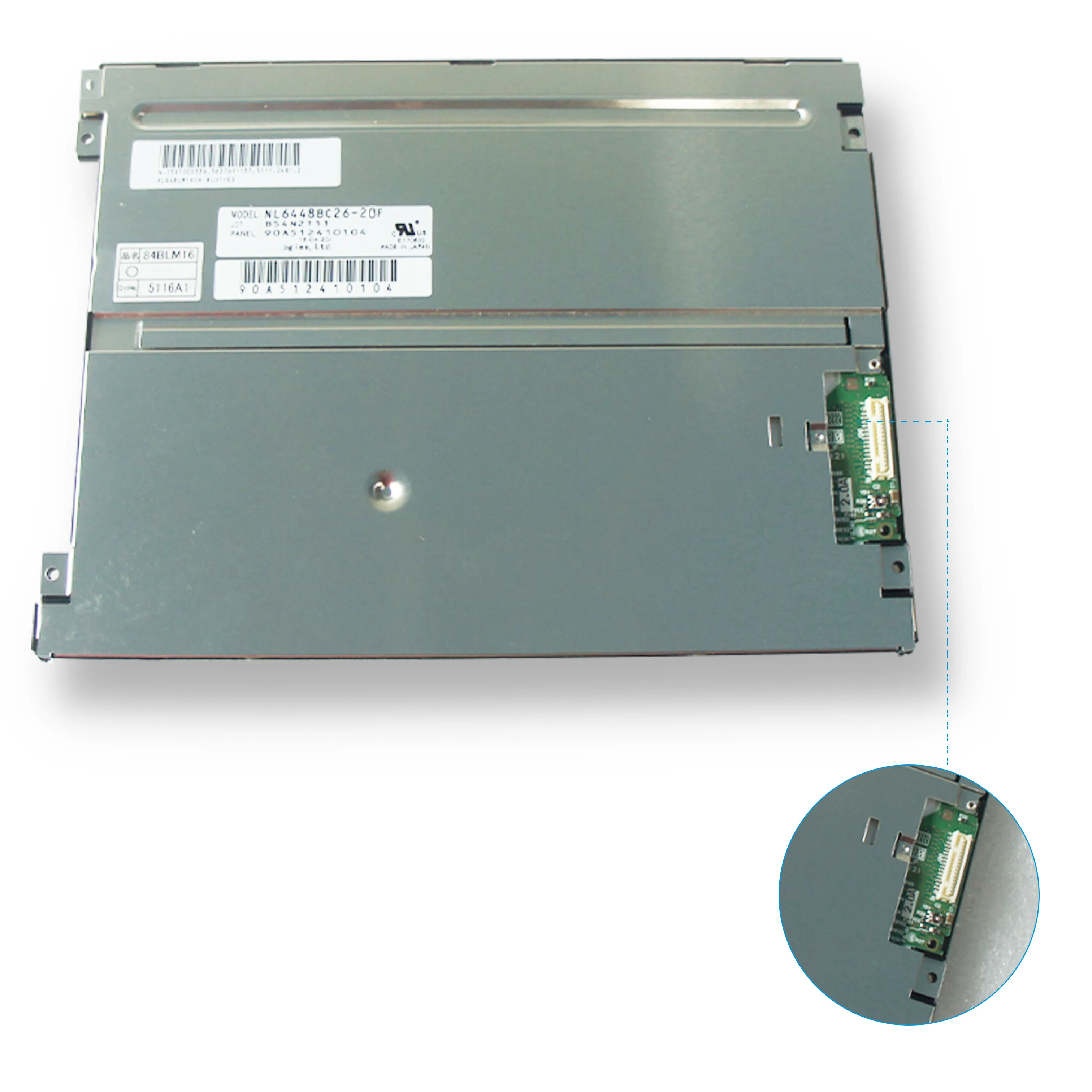

KCS104VG2HB-A20 Kyocera 10.4" TFT-LCD screen 640*480 Display
In the increasingly specialized landscape of industrial displays, the KCS104VG2HB-A20 from Kyocera stands as a benchmark for reliability and performance. This 10.4-inch TFT-LCD screen, with its native resolution of 640x480 pixels (VGA), represents a critical component for sectors where precision, durability, and longevity outweigh the consumer demand for high pixel density. This article delves deep into the technical architecture, practical applications, and market relevance of this particular model. While modern consumer electronics chase 4K and beyond, the industrial world relies on proven, robust technologies like the KCS104VG2HB-A20 to run machinery, medical devices, and navigation systems. We will explore why this "legacy" resolution persists in mission-critical environments, how its optical and mechanical specifications translate to real-world performance, and what makes Kyocera's engineering approach a standard for quality. The goal is to provide a comprehensive analysis for engineers, procurement specialists, and integrators who need to understand not just what this screen is, but why it remains a vital choice in a rapidly evolving display market.
The decision to use a 640x480 (VGA) resolution in 2024 might seem anachronistic to the uninitiated. However, for the KCS104VG2HB-A20, this resolution is a feature, not a limitation. In industrial, medical, and avionics environments, the primary requirement is system determinism. Older, highly reliable software stacks—often running on Real-Time Operating Systems (RTOS)—were built around the VGA standard. Upgrading to a higher resolution panel would necessitate a complete revalidation of the software, rewriting Graphical User Interfaces (GUIs), and potentially replacing the entire computing backbone. This process is not only expensive but also risks introducing bugs into systems that have operated safely for years.
Furthermore, the 4:3 aspect ratio of this panel is inherently superior for certain data presentation tasks compared to the ubiquitous 16:9 format. For reading schematics, monitoring medical vital signs, or displaying command-and-control dashboards, the square-like format allows for more simultaneous information to be visible without excessive scrolling. The VGA resolution provides an optimal balance between text legibility and graphical clarity at a standard viewing distance (typically 50-80 cm for a 10.4" panel). It avoids the UI scaling headaches that often plague high-DPI screens running legacy software. In essence, the KCS104VG2HB-A20 excels because it perfectly matches the operational parameters of the infrastructure it is designed to serve, offering a predictable, stress-free integration path.
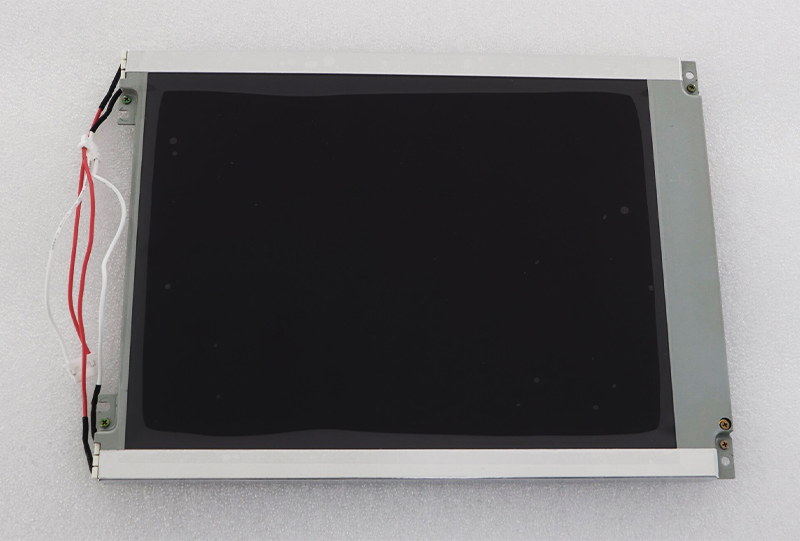
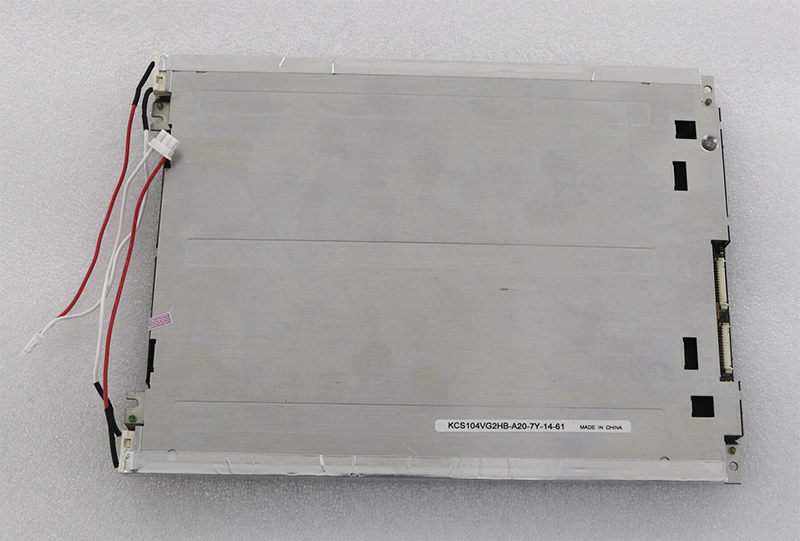
The optical performance of the KCS104VG2HB-A20 is defined by its specific TN (Twisted Nematic) LCD technology, which Kyocera has optimized for industrial thresholds. With a typical luminance of 450 cd/m², this display is engineered to be readable in high ambient light conditions, such as a factory floor near windows or under bright overhead lamps. This high brightness level ensures that screen content remains starkly visible, reducing operator eye strain during long shifts. The contrast ratio, typically hovering around 700:1, is not the highest in the industry, but it is deliberately tuned for readability rather than cinematic depth. This ratio ensures that black text on a white background is sharply defined—critical for reading numerical data or cautionary text.
Where the KCS104VG2HB-A20 truly differentiates itself is in its viewing angle characteristics. As a TN panel, its optimal viewing cone is narrower than IPS technology, with common specifications at 70° horizontal and 60° vertical. While this is a limitation for a consumer tablet, it is a security feature in many industrial contexts. For instance, in a point-of-sale terminal or an operator console located in a public area, the restricted viewing angle prevents unauthorized personnel from easily reading the screen from the side. Furthermore, Kyocera's backlight driver circuitry is designed for flicker-free operation at a wide range of brightness levels, a crucial factor when integrating the display into environments with sensitive optical sensors or where CCTV cameras are monitoring the operator's station for fatigue detection.
Beyond what the eye can see, the KCS104VG2HB-A20 is built for survival. Kyocera's engineering philosophy for this series focuses on mechanical resilience to withstand vibration, thermal shock, and humidity. The display module typically incorporates a robust metal frame (often a steel or heavy-duty aluminum chassis) that provides excellent EMI (Electromagnetic Interference) shielding and structural rigidity. This is vital for integration into machinery that experiences constant low-frequency vibration from motors or compressors; the rigid frame prevents pixel oscillation and connection loosening.
The operating temperature range is another testament to its industrial pedigree. Unlike consumer displays that fail below 0°C, the KCS104VG2HB-A20 is rated for operation from approximately -20°C to +70°C. This is achieved through the use of specialized liquid crystal fluid that does not freeze or become sluggish in cold starts, along with a robust backlight system that can generate sufficient heat to maintain optimal performance. The storage temperature range is even wider, often extending below -30°C. Furthermore, the polarizer films and surface treatments are selected to resist the corrosive effects of humidity and chemical vapors common in textile mills, chemical processing plants, and outdoor kiosks. This level of ruggedness translates directly to a lower Total Cost of Ownership (TCO), as the display simply does not need to be replaced as often as a standard commercial-grade panel.
At the core of the KCS104VG2HB-A20's data path is the LVDS (Low-Voltage Differential Signaling) interface. This is the gold standard for embedded displays, offering a perfect balance between signal integrity, cable length capability (typically up to 5-10 meters), and electromagnetic noise immunity. The display utilizes a standard 20-pin or 30-pin LVDS connector, making it highly compatible with a vast array of single-board computers (SBCs) from companies like Advantech, Kontron, and Axiomtek. For the integrator, this means a simpler design cycle—no need for exotic interface converters or active adapter boards. The VGA resolution of 640x480 typically operates on a single-channel LVDS link, simplifying the cabling and reducing the pin count on the host connector.
Power management is also carefully engineered. The module requires a stable supply voltage (typically 3.3V or 5V for logic and a higher voltage for backlight LED) and features integrated DC-DC converters that are highly efficient, generating minimal heat. This is critical for fanless embedded systems where passive cooling is mandatory. The display often includes a dedicated PWM (Pulse Width Modulation) dimming input for the backlight, allowing the host system to dynamically adjust brightness based on ambient light sensors or user preferences without introducing audible coil whine or visible flicker. This level of design sophistication ensures that the display integrates seamlessly into power-sensitive designs, such as battery-backed medical carts or portable field diagnostic equipment.
The versatility of the KCS104VG2HB-A20 is evident in its deployment across diverse verticals. In the medical sector, this display is commonly found in patient monitoring systems, anesthesia machines, and defibrillators. The VGA resolution is sufficient to display clear, high-contrast waveforms (ECG, SpO2) and numerical data, while the 4:3 aspect ratio allows clinicians to view multiple vital signs simultaneously on a single screen. The long-term availability guarantee from Kyocera—often lasting 5 to 7 years or more—is critical for medical device manufacturers who must validate their equipment for decades.
In automation and robotics, the display serves as the primary Human-Machine Interface (HMI). Factory workers use these screens to monitor Programmable Logic Controllers (PLCs), adjust conveyor speeds, and read fault diagnostics. The touch panel variants (often Resistive or Projected Capacitive) are designed to be used with gloves, a necessity in manufacturing environments. Furthermore, the KCS104VG2HB-A20 is a staple in transportation, specifically in railway and heavy truck applications, where it is used for driver information systems and rear-seat entertainment. The wide voltage tolerance and immunity to electrical transients make it ideal for the notoriously "dirty" power found in 12V/24V vehicle electrical systems. Its ability to handle extreme temperatures and vibration ensures reliable operation in a truck crossing the desert or a train traversing a snowy mountain pass.
One of the most valuable, yet often overlooked, aspects of the KCS104VG2HB-A20 is Kyocera's approach to product lifecycle management. In the consumer electronics world, a display panel might be discontinued within 18 months. For an industrial system that takes 2-3 years to design and certify, such volatility is catastrophic. Kyocera explicitly markets this series for long-life applications, often guaranteeing production for a minimum of 5 years, with many panels staying in active production for over a decade. This commitment is backed by proactive material planning and end-of-life notifications that give customers 12-24 months to design in a replacement.
Furthermore, Kyocera typically maintains a strict revision control policy. A replacement unit of the same part number will have identical mechanical, optical, and electrical specifications. This ensures that a system designed in 2018 can be repaired with a display purchased in 2028 without any engineering re-qualification. The company also offers a Customization Service, allowing OEMs to request specific modifications such as a custom bezel, an integrated touch panel from a preferred vendor, or specific optical bonding (for anti-glare or anti-reflective properties). This level of support transforms the KCS104VG2HB-A20 from a simple component into a strategic platform, enabling engineers to build products with a guaranteed service life that matches their customer's operational needs.
Q: What is the primary interface for the KCS104VG2HB-A20?
A: It uses a standard LVDS (Low-Voltage Differential Signaling) interface, typically requiring a 20-pin or 30-pin connector.
Q: Is this display suitable for outdoor use?
A: Yes, with a brightness of 450 cd/m², it is readable in bright ambient light, but for direct sunlight, a high-brightness (1000+ cd/m²) variant or optical bonding may be recommended.
Q: What is the operating temperature range?
A: The standard range is approximately -20°C to +70°C, making it suitable for demanding industrial environments.
Q: Can I use this with a Raspberry Pi?
A: Yes, but you will need an LVDS-to-HDMI or LVDS-to-DSI converter board, as the Pi does not natively output LVDS signals.
Q: What is the typical contrast ratio?
A: The typical contrast ratio is 700:1, which is excellent for reading text and numeric data.
Q: Does it support touch screen?
A: The bare glass panel does not. However, Kyocera offers integrated versions or you can add a standard 4-wire Resistive or PCAP touch sensor on top.
Q: Is the backlight replaceable?
A: The backlight is LED-based and integrated into the module. While not user-serviceable, the LEDs have a long lifespan (typically 50,000+ hours).
Q: What is the aspect ratio?
A: It is the classic 4:3 aspect ratio, ideal for data monitoring and old software compatibility.
Q: Is this display RoHS compliant?
A: Yes, the KCS104VG2HB-A20 is fully RoHS (Restriction of Hazardous Substances) compliant.
Q: Why choose this over a cheaper consumer display?
A: For longevity, ruggedness, and guaranteed availability. Consumer displays often fail in vibration, extreme temperatures, or are discontinued quickly.
Conclusion
The Kyocera KCS104VG2HB-A20 is far more than a simple display; it is a testament to engineering that prioritizes reliability over trendiness. In a world obsessed with pixel counts, this 640x480 panel reminds us that the right tool for the job is defined by context, not specification sheets. Its true value lies in its predictable performance, mechanical endurance, and long-term availability—qualities that directly reduce cost of ownership and deployment risk for OEMs and system integrators. For any application where a machine must communicate critical data without fail for a decade or more, this screen remains a powerful and intelligent choice. It represents a stable foundation upon which complex, life-critical systems can be confidently built. Whether it is controlling a robotic arm, monitoring a patient's heartbeat, or navigating a ship, the KCS104VG2HB-A20 delivers the visual clarity and physical resilience that the industrial world demands.