- Industrie-LCD-Display
-
Industrial Products
- DC Servo Drive
- AC Servo Drive
- other
- Heidelberg
- FANUC
- IFM
- Meter
- CCD
- Membrane Keypad
- Film
- YOKOGAWA
- Card
- ABB
- MITSUBISHI
- FANUC
- KEYENCE
- BECKHOFF
- Honeywell
- HOLLYSYS
- FUJI servo drives
- HP
- solenoid valve
- thermostat
- Siemens adapter
- color oscilloscope
- Fujitsu connector
- CHELIC
- SMC
- CISCO
- INTEL
- Key board
- FAIRCHILD
- Der Aufsichtsrat
- Board
- Bearing
- other
- Control Panel
- Contactor
- Circuit
- Omron
- Relais.
- Der controller
- Optoelektronische schalter
- Optoelektronische sensoren
- Original
- Fan
- Motortreiber
- Endschalter
- Verstärker
- power supply
- LENZE
- Cable
- Encoder
- Sensor
- Transformator
- Fiber Optic Sensor
- Schutzrelais
- Temperaturregler
- Näherungsschalter
- Switch Sensor
- Siemens
- PCB
- HMI Touch-Glas
-
HMI-Vollautomat Ganze Einheit
- OMRON HMI Touch Panel
- Siemens HMI Touch Panel
- Mitsubishi HMI Touch Panel
- Allen-Bradley Automatisierung HMI Touch
- DELTA HMI Touch Panel
- EVIEW DELTA HMI Touch Panel
- KINCO DELTA HMI Touch Panel
- HITECH HMI Touch Panel
- WEINTECK HMI Touch Panel
- TECVIEW HMI Touch Panel
- WEINVIEW HMI Touch Panel
- PRO-FACE HMI Touch Panel
- SIMATIC HMI Touch Panel
- AMPIRE HMI Touch Panel
- HEIDELBERG HMI Touch Panel
- PANASONIC HMI Touch Panel
- PATLITE HMI Touch Panel
- KYOCERA HMI Touch Panel
- KEYENCE HMI Touch Panel
- WEINVIEW HMI Touch Panel
- HITECH HMI Touch Panel
- FUJI HMI Touch Panel
- HAKKO HMI Touch Panel
- SCHNEIDER HMI Touch Panel
- SAMKOON touch panel
- andere
- Module
- LCD Wechselrichter
- Membran Tastenfeld Schalter
- Winni Touch Screens
- Frequenzumrichter
- Servo Motor
- PLC


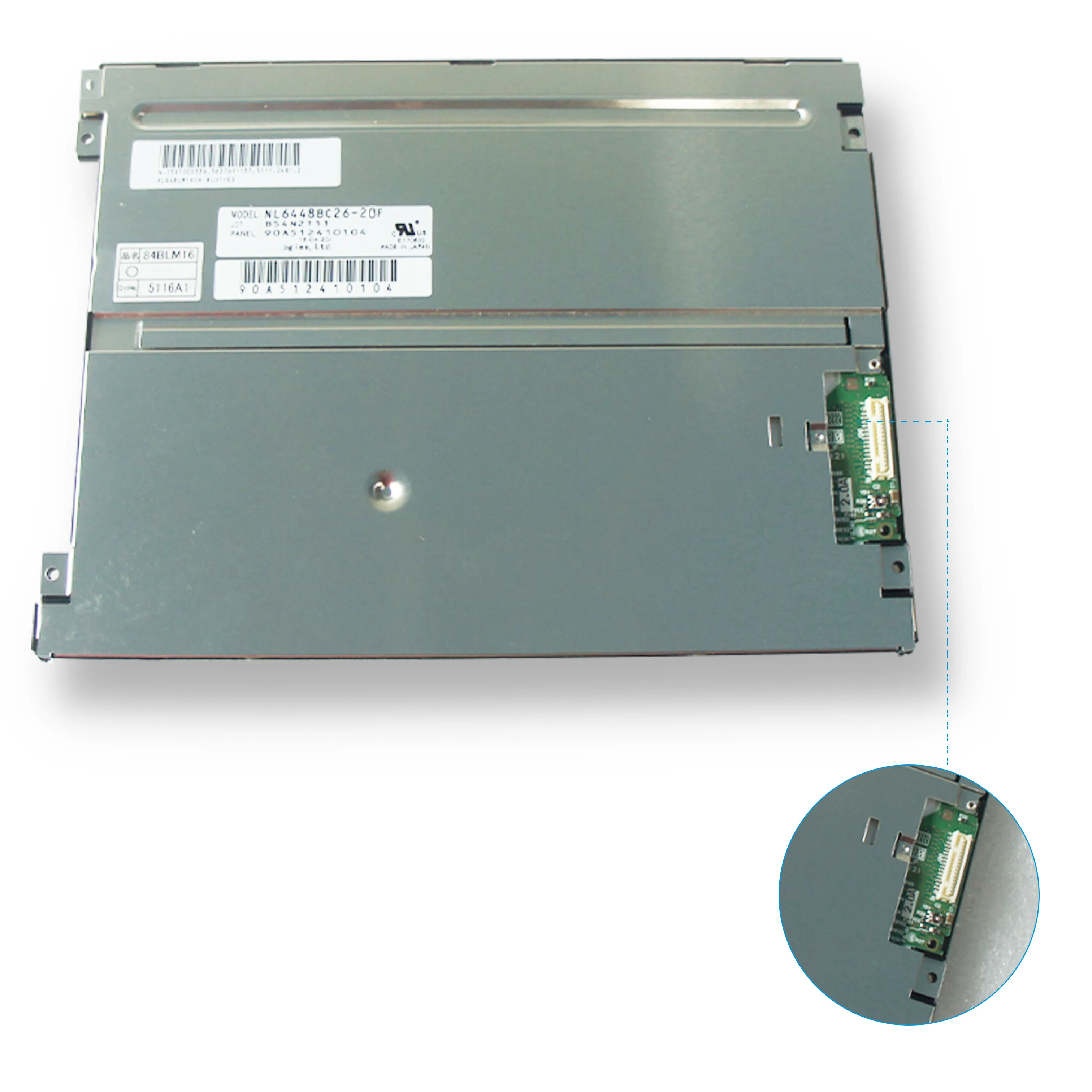

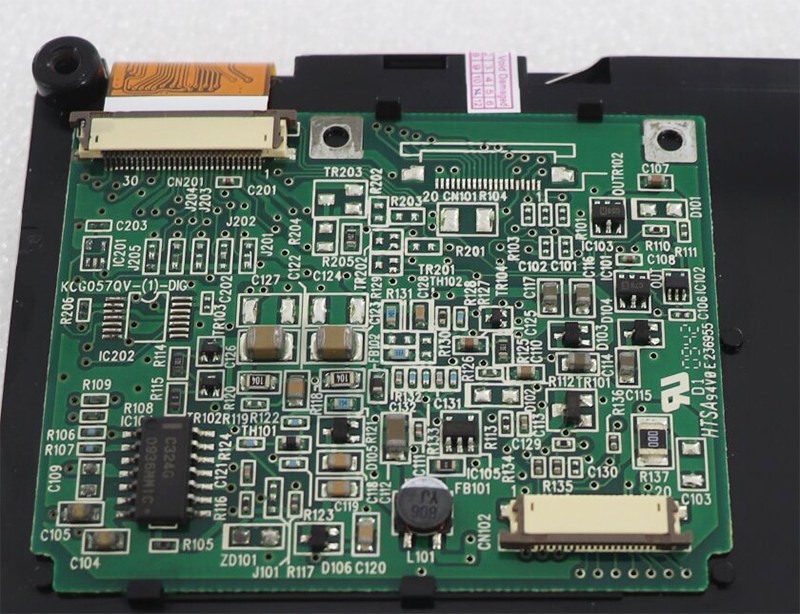
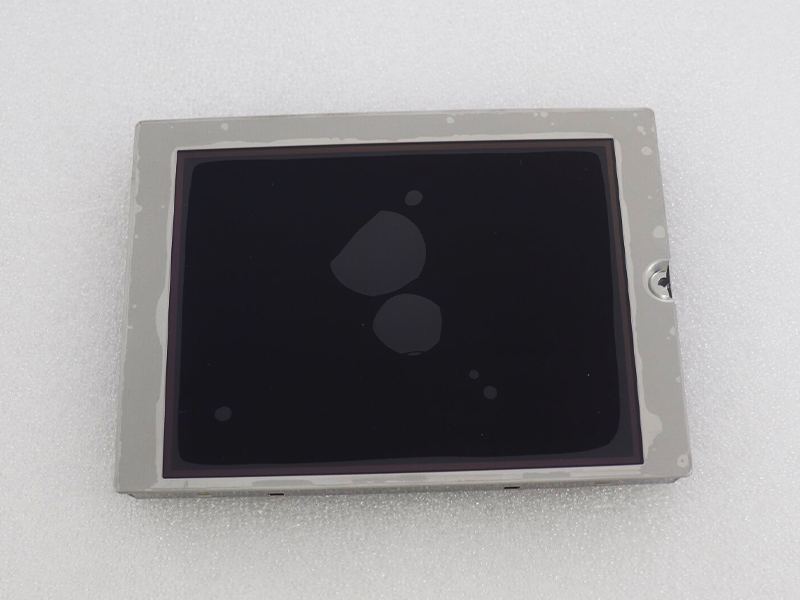
KG057QV1CA-G00 5.7"320*240 FSTN-LCD for Kyocera
In the realm of industrial display technology, the Kyocera KG057QV1CA-G00 stands as a testament to reliability and functional precision. This 5.7-inch display, operating at a native resolution of 320x240 pixels, utilizes Film Compensated Super Twisted Nematic (FSTN) technology. While the market is saturated with high-brightness TFT panels, the FSTN-LCD occupies a specific niche, particularly in environments demanding extreme durability, high contrast under direct sunlight, and low power consumption. This article dissects the engineering behind the KG057QV1CA-G00, exploring its unique optical properties, interface requirements, and long-term viability in mission-critical systems. We will move beyond basic specifications to examine why Kyocera's implementation of passive matrix technology remains relevant for industrial control panels, medical devices, and outdoor equipment, offering readers a comprehensive understanding of its technical strengths and operational constraints.
The core differentiator of the KG057QV1CA-G00 lies in its FSTN architecture. Unlike standard STN displays that suffer from chromatic dispersion (yellow/blue tinting), the FSTN layer applies an optical compensation film. This film realigns the phase difference of light passing through the liquid crystal layer, effectively canceling out the unwanted color shifts. The result is a monochrome black-on-white or white-on-black appearance, which dramatically improves text legibility. With a typical contrast ratio of 10:1 (passive matrix standard), this panel excels in static image applications. However, engineers must note that the viewing angle cone is asymmetrical. The optimal viewing direction is typically at 6 o'clock, meaning the display is meant to be viewed from below. Off-angle performance degrades rapidly, a physical limitation of the STN technology. For design purposes, this dictates that the display must be mounted at a slight tilt in most enclosures to maximize user readability.
The KG057QV1CA-G00 relies on a classic 18-bit parallel RGB interface (6 bits per color channel), even though it is a monochrome display. This is a critical implementation detail. The controller accepts data over an 18-line bus, but the FSTN panel itself maps these inputs to a single grayscale value. The internal timing generator requires precise synchronization signals: VSYNC, HSYNC, DOTCLK, and DE (Data Enable). The typical dot clock frequency is approximately 6.4 MHz, and the refresh rate is 75 Hz. This non-standard refresh rate (compared to 60 Hz TFTs) can cause compatibility issues with generic embedded controllers. A common pitfall is assuming the display accepts standard VGA timings. Designers must configure their FPGA or microcontroller to match the specific blanking periods listed in the Kyocera datasheet. Furthermore, the display consumes approximately 200 mA at 5V for the logic section, requiring a stable, low-ripple power supply to prevent flickering on the passive matrix rows.
One of the primary reasons the KG057QV1CA-G00 is selected over consumer-grade displays is its wide operating temperature range. The FSTN fluid used in this panel maintains molecular alignment much better than standard TN fluids under thermal stress. At -20°C, the liquid crystal viscosity increases, causing response times to slow to over 500 ms. This manifests as smearing when the image changes, but static images remain viewable. At +70°C, the fluid thins, and the risk of "ghosting" (residual image retention) increases. The panel incorporates a heater pad option (connected to specific pins) to mitigate low-temperature issues, drawing additional current to warm the glass. This makes the display viable for outdoor equipment such as handheld welding controllers or agricultural machinery interfaces. The storage temperature extends to -30°C to +80°C, but the display must not be operated beyond the rated range to avoid permanent damage to the polarizer and liquid crystal alignment layers.
The standard KG057QV1CA-G00 model ships with a Cold Cathode Fluorescent Lamp (CCFL) backlight. This CCFL tube has a typical half-life of 50,000 hours under normal operating current. However, CCFL drivers require high-voltage AC (approximately 500V to 1000V RMS at 50 kHz), which adds complexity to the power supply design and introduces electromagnetic interference (EMI) concerns. A significant advantage is the spectral purity of the CCFL; it produces a consistent white point that makes the FSTN's grayscale mapping appear natural. However, some supply chains have moved to LED-backlit compatible variants. When retrofitting, engineers must ensure the brightness level aligns with the original specification (typically 350 cd/m²). Using an aftermarket LED strip often changes the luminance uniformity, creating "hotspots" on the edges. The display's polarizer is also sensitive to UV degradation; if the backlight spectrum shifts toward blue, the polarizer can bleach over time, reducing contrast permanently.
Integrating the KG057QV1CA-G00 into a modern embedded system requires careful attention to voltage level shifting. The display logic operates at 5V, while many contemporary MCUs (e.g., STM32, i.MX) run at 3.3V. Direct connection of 3.3V outputs to the 5V inputs will not reliably trigger the high threshold, leading to data corruption. A level shifter IC (e.g., 74LVC4245) is essential for the data and clock lines. Additionally, the display lacks an internal frame buffer. It relies on the host controller to continuously refresh the rows at 75 Hz. If the host CPU is interrupted by a high-priority task, the display will flicker. To solve this, many designs incorporate an external video controller chip like the Solomon SSD1963 or a CPLD that generates the timings autonomously. The connector is a 33-pin (2.0mm pitch) header, which is robust but occupies significant PCB real estate. A common error is mismapping the pinout, specifically the polarity of the DISP pin which toggles the power supply to the LCD driver.
Despite the dominance of TFT-LCD and OLED screens, the Kyocera KG057QV1CA-G00 persists in specific industrial ecosystems for one reason: redundancy and repairability. Many medical respirators, industrial PLCs, and avionics test equipment were designed in the mid-2010s with this exact panel. End-of-life (EOL) notices from Kyocera are often followed by a rush of last-time-buy orders from maintenance, repair, and overhaul (MRO) firms. The display's monochrome nature makes it intrinsically flicker-free in static mode, which is critical for applications where eye strain is a concern (e.g., patient monitoring stations). Furthermore, its legacy form factor (5.7" with a 4:3 aspect ratio) fits existing bezels perfectly without redesign costs. In 2025, the primary demand comes from the agricultural and oil & gas sectors where equipment is exposed to harsh chemicals and mechanical vibration. The glass-on-glass construction of the FSTN panel withstands vibration better than flexible TFT substrates. However, users must be aware that replacement units may now be recycled stock, and the CCFL brightness may be below original spec.
Q: Can I use this FSTN display in direct sunlight?
A: Yes, FSTN technology offers excellent sunlight readability due to its reflective properties. With the backlight off, it acts like a reflective panel. With the backlight on at 350 cd/m², it provides high contrast even in bright sunlight.
Q: What is the difference between FSTN and STN?
A: FSTN (Film Compensated STN) adds an optical compensation film to eliminate the yellow/blue tinting of standard STN, producing a true black-and-white image. FSTN also offers slightly better contrast and viewing angle.
Q: What connector does the KG057QV1CA-G00 use?
A: It uses a 33-pin, 2.0mm pitch parallel header connector. The exact part number is typically a HIROSE DF13-33DP-1.25V or equivalent.
Q: Is the backlight replaceable?
A: Yes, the CCFL tube is replaceable, but it requires disassembling the metal frame. Replacement tubes are available from specialized suppliers. LED retrofits are possible but may require driver modification.
Q: What is the typical power consumption?
A: The logic section consumes approximately 200 mA at 5V. The CCFL backlight driver consumes an additional 350 mA at 5V (1800 mW total). Consumption varies with brightness settings.
Q: Can I drive this display with a Raspberry Pi?
A: Yes, but not directly. You need a level shifter (5V to 3.3V) and a timing generator (e.g., using a CPLD or dedicated LCD controller) as the Pi's GPU outputs standard HDMI which is incompatible with the parallel interface.
Q: What is the response time of this display?
A: Typical rise time is 75 ms, fall time is 150 ms at 25°C. At low temperatures (-20°C), this increases to over 500 ms. This makes it unsuitable for video playback.
Q: Does it require a heater?
A: The panel has pins for an optional heater pad, but it is not included by default. For operation below -10°C, an external heater pad is recommended to reduce response time smearing.
Q: Is the display RoHS compliant?
A: Yes, Kyocera has confirmed RoHS compliance for the KG057QV1CA-G00 series. However, the CCFL tube contains a small amount of mercury.
Q: Why is the display listed as 320x240 but it is 5.7"?
A: The QVGA resolution (320x240) on a 5.7" diagonal creates a pixel density of approximately 70 PPI. This larger pixel size makes text highly readable at a distance, which is ideal for industrial HMI applications.
Conclusion: The Enduring Legacy of a Purpose-Built Display
The Kyocera KG057QV1CA-G00 is not a display for the mass market; it is a precision instrument for the industrial engineer. Its FSTN technology offers a unique blend of high contrast, wide temperature tolerance, and exceptional static image stability that modern TFT panels often fail to replicate without active backlight boosting. While the parallel interface and aging CCFL backlight present integration challenges, these are well-documented and solvable with standard engineering practices. For professionals maintaining legacy equipment or designing ruggedized systems, this panel provides a cost-effective path to reliable operation. The key takeaway is that display selection should never be purely about pixel count; it must consider the total lifecycle under operational stress. The KG057QV1CA-G00 demonstrates that mature technology, when properly specified, can outlast more modern counterparts in the specific environments where reliability is non-negotiable.