- Industrie-LCD-Display
-
Industrial Products
- DC Servo Drive
- AC Servo Drive
- other
- Heidelberg
- FANUC
- IFM
- Meter
- CCD
- Membrane Keypad
- Film
- YOKOGAWA
- Card
- ABB
- MITSUBISHI
- FANUC
- KEYENCE
- BECKHOFF
- Honeywell
- HOLLYSYS
- FUJI servo drives
- HP
- solenoid valve
- thermostat
- Siemens adapter
- color oscilloscope
- Fujitsu connector
- CHELIC
- SMC
- CISCO
- INTEL
- Key board
- FAIRCHILD
- Der Aufsichtsrat
- Board
- Bearing
- other
- Control Panel
- Contactor
- Circuit
- Omron
- Relais.
- Der controller
- Optoelektronische schalter
- Optoelektronische sensoren
- Original
- Fan
- Motortreiber
- Endschalter
- Verstärker
- power supply
- LENZE
- Cable
- Encoder
- Sensor
- Transformator
- Fiber Optic Sensor
- Schutzrelais
- Temperaturregler
- Näherungsschalter
- Switch Sensor
- Siemens
- PCB
- HMI Touch-Glas
-
HMI-Vollautomat Ganze Einheit
- OMRON HMI Touch Panel
- Siemens HMI Touch Panel
- Mitsubishi HMI Touch Panel
- Allen-Bradley Automatisierung HMI Touch
- DELTA HMI Touch Panel
- EVIEW DELTA HMI Touch Panel
- KINCO DELTA HMI Touch Panel
- HITECH HMI Touch Panel
- WEINTECK HMI Touch Panel
- TECVIEW HMI Touch Panel
- WEINVIEW HMI Touch Panel
- PRO-FACE HMI Touch Panel
- SIMATIC HMI Touch Panel
- AMPIRE HMI Touch Panel
- HEIDELBERG HMI Touch Panel
- PANASONIC HMI Touch Panel
- PATLITE HMI Touch Panel
- KYOCERA HMI Touch Panel
- KEYENCE HMI Touch Panel
- WEINVIEW HMI Touch Panel
- HITECH HMI Touch Panel
- FUJI HMI Touch Panel
- HAKKO HMI Touch Panel
- SCHNEIDER HMI Touch Panel
- SAMKOON touch panel
- andere
- Module
- LCD Wechselrichter
- Membran Tastenfeld Schalter
- Winni Touch Screens
- Frequenzumrichter
- Servo Motor
- PLC


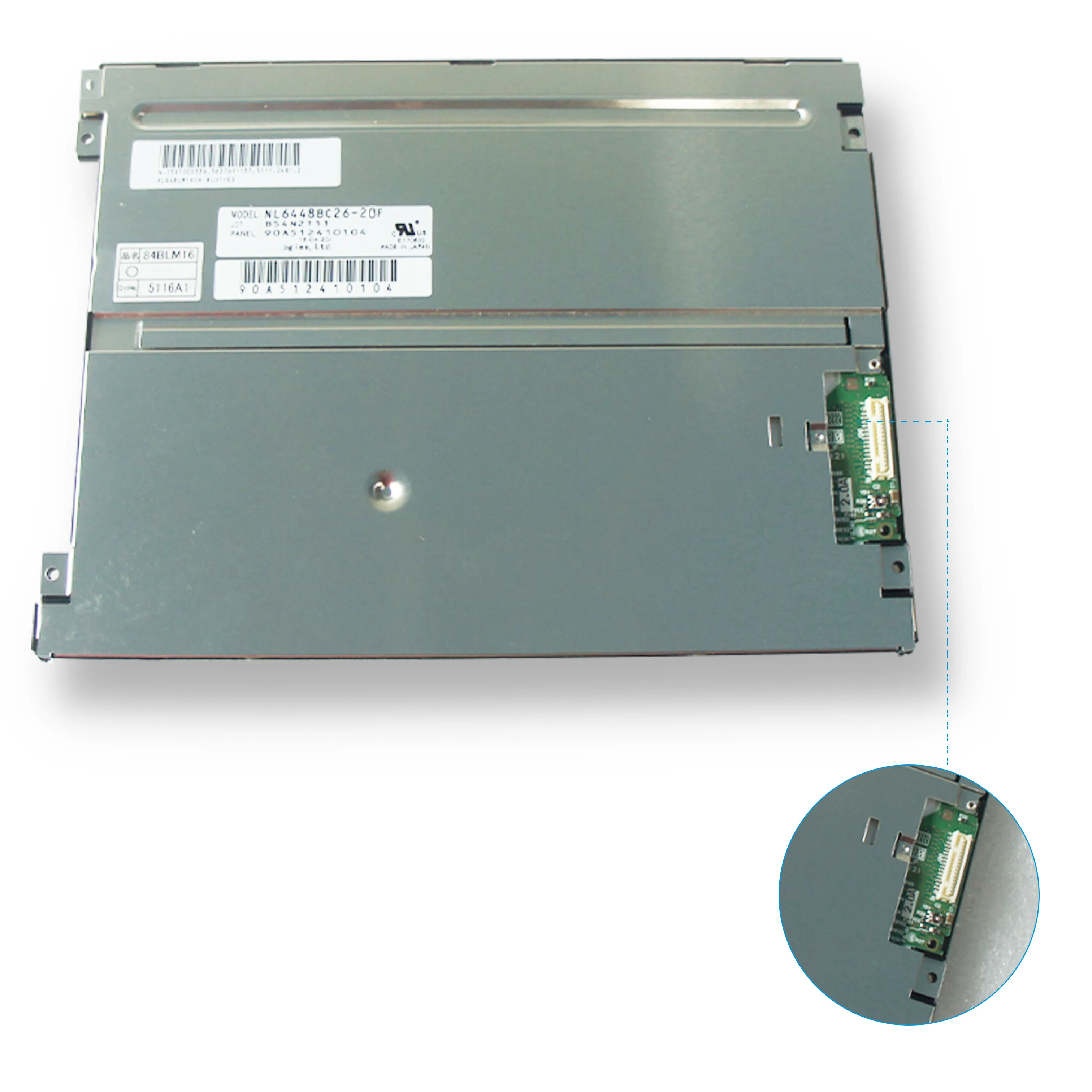

KG057QV1CA-G000 5.7 Inch KYOCERA FSTN-LCD Screen 320x240 QVGA Resolution
In the demanding world of industrial human-machine interfaces, display technology must transcend consumer-grade expectations for vibrant color and high refresh rates. Reliability, readability under harsh ambient light, and ultra-low power consumption often take precedence. Nestled within this specialized niche is the Kyoto Ceramic (KYOCERA) KG057QV1CA-G000, a 5.7-inch FSTN-LCD panel that has become a reference standard for applications requiring robust monochrome performance. Unlike its ubiquitous TFT counterparts, this display leverages Film-compensated Super Twisted Nematic (FSTN) technology to deliver exceptional contrast and a wide viewing angle in reflective or transflective modes.
This article offers a deep dive into the specific engineering characteristics of the KG057QV1CA-G000. We will dissect its technological architecture, evaluate its performance metrics relative to modern alternatives, and map its practical advantages in industrial, medical, and outdoor applications. By moving beyond superficial datasheet parameters, we aim to provide system integrators and hardware engineers with a comprehensive understanding of why this specific model remains a viable and often superior choice for mission-critical visual output. The discussion will bridge the gap between historical display innovation and contemporary deployment strategy.
The core differentiator of the KG057QV1CA-G000 lies in its Film-compensated Super Twisted Nematic (FSTN) architecture. To understand its value, one must first recognize the limitations of earlier LCD generations. Traditional Twisted Nematic (TN) displays, while fast, suffer from poor contrast and severe color shifts when viewed off-axis. Standard Super Twisted Nematic (STN) improved viewing angles but introduced a problematic yellow-blue color cast, which is visually fatiguing and reduces perceived sharpness.
FSTN technology elegantly solves this by laminating an optical retardation film onto the STN cell. This film acts as a compensator, neutralizing the unwanted birefringence coloration inherent in the STN twisted liquid crystal structure. The result is a display that achieves a true black-on-white or white-on-black appearance, mimicking the high contrast of paper. For the KG057QV1CA-G000, this translates to a contrast ratio that is dramatically superior to non-compensated panels, often exceeding 10:1 in monochrome mode. This is critical in a 320x240 QVGA resolution (where every pixel counts for readability), ensuring that text, barcodes, and fine graphical elements remain crisp. The FSTN layer also broadens the viewing cone, making the display usable in scenarios where the operator is not perfectly centered.
The Quarter Video Graphics Array (QVGA) resolution of 320x240 pixels on a 5.7-inch diagonal is a deliberate design choice that prioritizes clarity and system efficiency over pixel density. At a dot pitch of roughly 0.36mm, this configuration yields a comfortable pixel size for human eyes at typical reading distances (30-50 cm). Unlike higher-resolution panels where anti-aliasing is required to smooth edges, QVGA resolution allows for direct pixel mapping, reducing the computational burden on the host microcontroller – a critical advantage in embedded systems.
For industrial applications, this specific pixel arrangement enables the perfect rendering of standard 80x25 character grids (using an 8x8 font) without scaling artifacts. The 4:3 aspect ratio is also historically aligned with industrial protocols and legacy software interfaces, making the KG057QV1CA-G000 a drop-in replacement for older systems. Furthermore, because each subpixel does not require the complex driving schemes of color TFTs, the panel can be driven with fewer interconnection lines. This reduces the probability of connector failure in high-vibration environments and simplifies PCB layout. The resolution, therefore, is not a limitation but a strategic match for the operational domain of rugged terminals and diagnostic equipment.
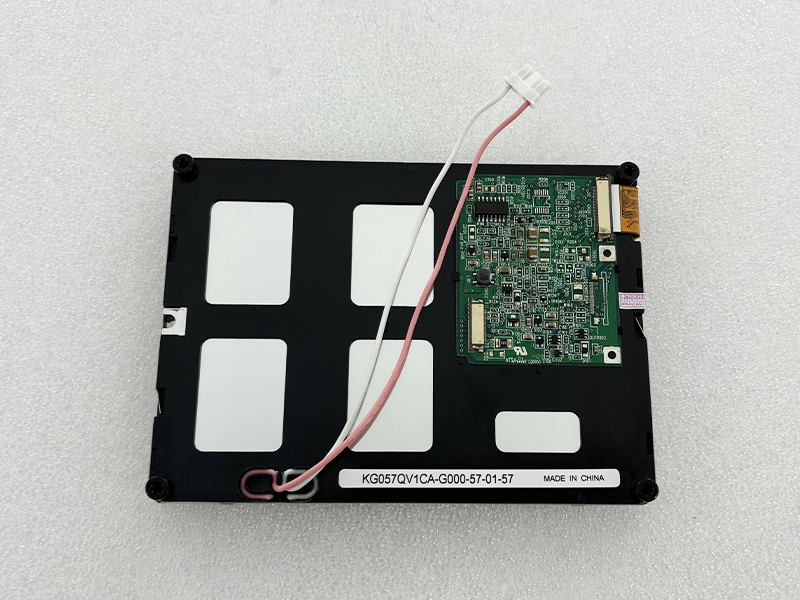
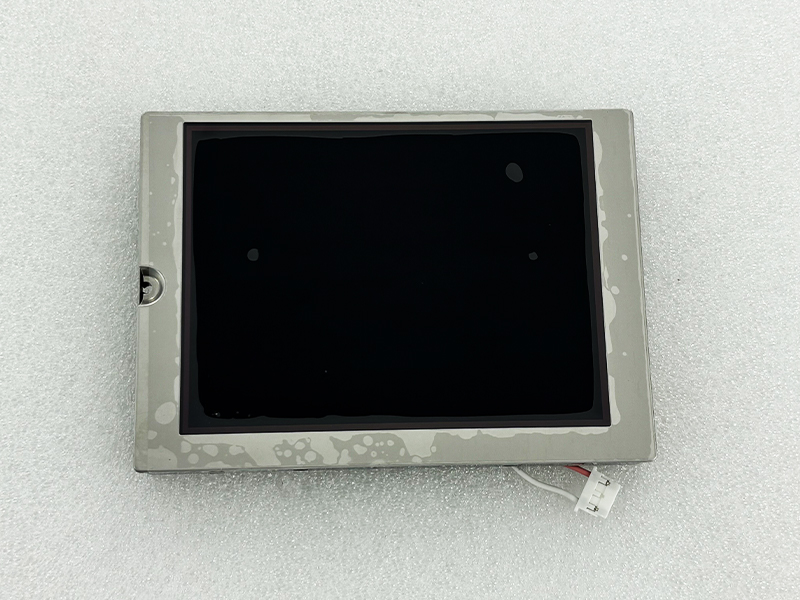
Optical performance is where the KG057QV1CA-G000 truly demonstrates its engineering pedigree. The panel typically offers a 6 o'clock viewing direction (optimal viewing from below), which is standard for reflective displays placed below eye level. However, the FSTN compensation ensures usable contrast across a wide horizontal angle of ±45 degrees and a vertical angle of ±30 degrees. While not as wide as in-plane switching (IPS) TFTs, this fall-off is graceful and does not invert colors – a crucial safety factor in alarm panels or process control dashboards.
The panel’s greatest optical strength is its ambient light readability. The KG057QV1CA-G000 is often specified in a transflective variant, meaning it combines a reflective layer (mirror) with a backlight. In bright sunlight, the backlight can be dimmed or turned off completely, and the display relies on ambient light reflecting off the rear mirror. Unlike emissive displays (OLED, standard TFT) that wash out in direct sunlight, this FSTN panel becomes more vivid as ambient light increases. This characteristic is irreplaceable in outdoor forklift terminals, marine navigation systems, and gas pump displays. The typical contrast ratio of 10:1 in reflective mode ensures that even fine 8-point fonts remain legible under 10,000 lux of sunlight.
In the context of portable or battery-powered industrial tools, power consumption is a primary design constraint. The KG057QV1CA-G000 operates with exceptional efficiency due to its fundamental LCD physics. The liquid crystal state is maintained by a minimal electric field; power is only consumed when switching pixels. When the image is static (the default for most status displays), the current draw of the LCD glass itself is in the microamp range. The primary energy consumer is the LED backlight, which typically requires only 100-200 mA at 3.3V for moderate brightness. In reflective mode (no backlight), the panel can theoretically operate for thousands of hours on a standard battery pack.
Thermally, this display excels over TFTs. STN technology has a wider operating temperature range, often specified from -20°C to +70°C (and even wider for storage). At low temperatures, the liquid crystal viscosity increases, causing slower response times; however, the KG057QV1CA-G000 is designed to maintain contrast and not freeze, which is a failure point for many consumer-grade TFTs. The absence of a polarizer-dependent color filter stack also means the panel is less prone to thermal delamination in cyclic temperature environments. This makes it a reliable choice for cold storage logistics, outdoor construction equipment, and engine monitoring systems where thermal swings are extreme.
From an integration perspective, the KG057QV1CA-G000 utilizes a parallel interface (often 8-bit or 16-bit), which is a legacy but robust standard. This contrasts with modern TFTs that rely on high-speed serial interfaces like LVDS or MIPI DSI. The parallel interface has distinct advantages in industrial contexts: it is simple to debug with a logic analyzer, does not require expensive high-speed differential pair routing on the PCB, and is directly compatible with the parallel ports of many common microcontrollers and low-cost FPGAs.
The panel’s timing controller (T-CON) is integrated into the display itself, accepting standard digital RGB signals. This reduces the external component count. Engineers familiar with standard HD44780 character LCDs will find the migration to this graphic display relatively straightforward, though it requires a dedicated frame buffer. The connector is a standard ZIF (Zero Insertion Force) flex cable, which is mechanically stable when properly locked. For system designers, this compatibility means that a 32-bit microcontroller with an external SRAM or SDRAM controller can easily drive the QVGA resolution at a smooth 60 Hz refresh, even without a dedicated GPU. This lowers both the Bill of Materials (BOM) cost and the software complexity.
In a market dominated by colorful TFTs and high-contrast OLEDs, why would an engineer choose a monochrome FSTN display in 2024? The answer is specialization. Compared to a standard 5.7-inch 320x240 TFT, the KG057QV1CA-G000 offers superior sunlight readability, significantly lower power consumption in static image mode, and a longer operational lifespan (estimated over 50,000 hours of LED backlight life). TFTs require a constant, high-brightness backlight to be readable outdoors, which quickly drains batteries and generates heat.
When compared to OLEDs, the FSTN panel wins on longevity in fixed-graphics applications. OLEDs suffer from burn-in when displaying static industrial icons or alarm messages for extended periods. The KG057QV1CA-G000 is immune to burn-in. Furthermore, OLEDs are sensitive to moisture and can degrade under high UV exposure, making them unsuitable for many outdoor industrial settings. The FSTN’s cost is also substantially lower: a monochrome 5.7-inch panel typically costs one-third to one-half of a comparable OLED. The trade-off is color gamut and response time (for video playback), but for 95% of industrial applications (status displays, data logging, menu navigation), monochrome FSTN is not a compromise—it is the optimal engineering solution.
Frequently Asked Questions (FAQS)
What does the part number KG057QV1CA-G000 specifically indicate?
It denotes a KYOCERA (KG) 5.7 inch (057) QVGA (QV) series 1 (1) with a specific FSTN optical specification (CA) and a standard bezel/backlight variant (G000).
Is this display compatible with a Raspberry Pi or Arduino?
Yes, with appropriate level shifters (5V to 3.3V) and a parallel interface (GPIO). It requires an external frame buffer (e.g., SRAM) for high refresh rates.
What is the typical backlight lifespan of the KG057QV1CA-G000?
The white LED backlight is rated for 50,000 hours to half-brightness under standard current drive conditions.
Can the display operate without a backlight?
Yes, if it is the transflective version. It will be fully readable in ambient light down to moderate indoor lighting, but becomes difficult to read in darkness.
What is the optimal viewing angle for this panel?
The datasheet specifies a 6 o'clock direction (best viewed from below), but the FSTN film provides useful contrast from a wide horizontal perspective (±45 degrees).
Is the KG057QV1CA-G000 suitable for direct sunlight applications?
Yes, it is one of its best use cases. The reflective layer becomes more effective in bright sunlight, outperforming TFT displays.
What is the operating temperature range?
Typically -20°C to +70°C. Response time will slow at lower temperatures, but the display will not be damaged.
Does this display support color images?
No, it is a monochrome display. It supports black (or blueish) and white (or yellowish) based on the specific polarizer configuration (often White-Negative or Blue-Positive).
What interface does the LCD use?
It uses a parallel digital RGB interface (typically 8-bit or 16-bit), with embedded timing control (T-CON).
Where can I purchase the KG057QV1CA-G000 if it is old stock?
It is often available through industrial LCD distributors like Digi-Key, Mouser, or specialized surplus brokers who supply for aftermarket repairs.
Conclusion: The Enduring Logic of a Mature Technology
The KG057QV1CA-G000 5.7 Inch KYOCERA FSTN-LCD is far more than a relic of a bygone era. It stands as a masterclass in design-for-purpose engineering. In a landscape obsessed with pixel density and color vibrancy, this panel reminds us that functional fidelity—the ability to convey critical information reliably, under any lighting condition, without failure—is the highest metric of quality in industrial systems. Its 320x240 QVGA resolution is not a limitation but a perfect fit for the human visual system in a work context. Its FSTN technology provides a contrast performance that no TFT can match under high ambient light, and its power footprint is negligible by modern standards.
For the engineer designing a portable diagnostic tool, a marine radar input display, or a rugged factory automation terminal, the KG057QV1CA-G000 offers a path of lower cost, higher reliability, and proven longevity. While newer technologies like OLED may offer aesthetic improvements, they cannot yet match the FSTN’s environmental resilience and burn-in resistance. Therefore, this display is not a compromise; it is a strategic choice for applications where the cost of failure—visual, mechanical, or electrical—is simply too high. It embodies the principle that the best technology is not always the newest, but the one that works unabashedly for decades in the hardest conditions.