- Industrie-LCD-Display
-
Industrial Products
- DC Servo Drive
- AC Servo Drive
- other
- Heidelberg
- FANUC
- IFM
- Meter
- CCD
- Membrane Keypad
- Film
- YOKOGAWA
- Card
- ABB
- MITSUBISHI
- FANUC
- KEYENCE
- BECKHOFF
- Honeywell
- HOLLYSYS
- FUJI servo drives
- HP
- solenoid valve
- thermostat
- Siemens adapter
- color oscilloscope
- Fujitsu connector
- CHELIC
- SMC
- CISCO
- INTEL
- Key board
- FAIRCHILD
- Der Aufsichtsrat
- Board
- Bearing
- other
- Control Panel
- Contactor
- Circuit
- Omron
- Relais.
- Der controller
- Optoelektronische schalter
- Optoelektronische sensoren
- Original
- Fan
- Motortreiber
- Endschalter
- Verstärker
- power supply
- LENZE
- Cable
- Encoder
- Sensor
- Transformator
- Fiber Optic Sensor
- Schutzrelais
- Temperaturregler
- Näherungsschalter
- Switch Sensor
- Siemens
- PCB
- HMI Touch-Glas
-
HMI-Vollautomat Ganze Einheit
- OMRON HMI Touch Panel
- Siemens HMI Touch Panel
- Mitsubishi HMI Touch Panel
- Allen-Bradley Automatisierung HMI Touch
- DELTA HMI Touch Panel
- EVIEW DELTA HMI Touch Panel
- KINCO DELTA HMI Touch Panel
- HITECH HMI Touch Panel
- WEINTECK HMI Touch Panel
- TECVIEW HMI Touch Panel
- WEINVIEW HMI Touch Panel
- PRO-FACE HMI Touch Panel
- SIMATIC HMI Touch Panel
- AMPIRE HMI Touch Panel
- HEIDELBERG HMI Touch Panel
- PANASONIC HMI Touch Panel
- PATLITE HMI Touch Panel
- KYOCERA HMI Touch Panel
- KEYENCE HMI Touch Panel
- WEINVIEW HMI Touch Panel
- HITECH HMI Touch Panel
- FUJI HMI Touch Panel
- HAKKO HMI Touch Panel
- SCHNEIDER HMI Touch Panel
- SAMKOON touch panel
- andere
- Module
- LCD Wechselrichter
- Membran Tastenfeld Schalter
- Winni Touch Screens
- Frequenzumrichter
- Servo Motor
- PLC


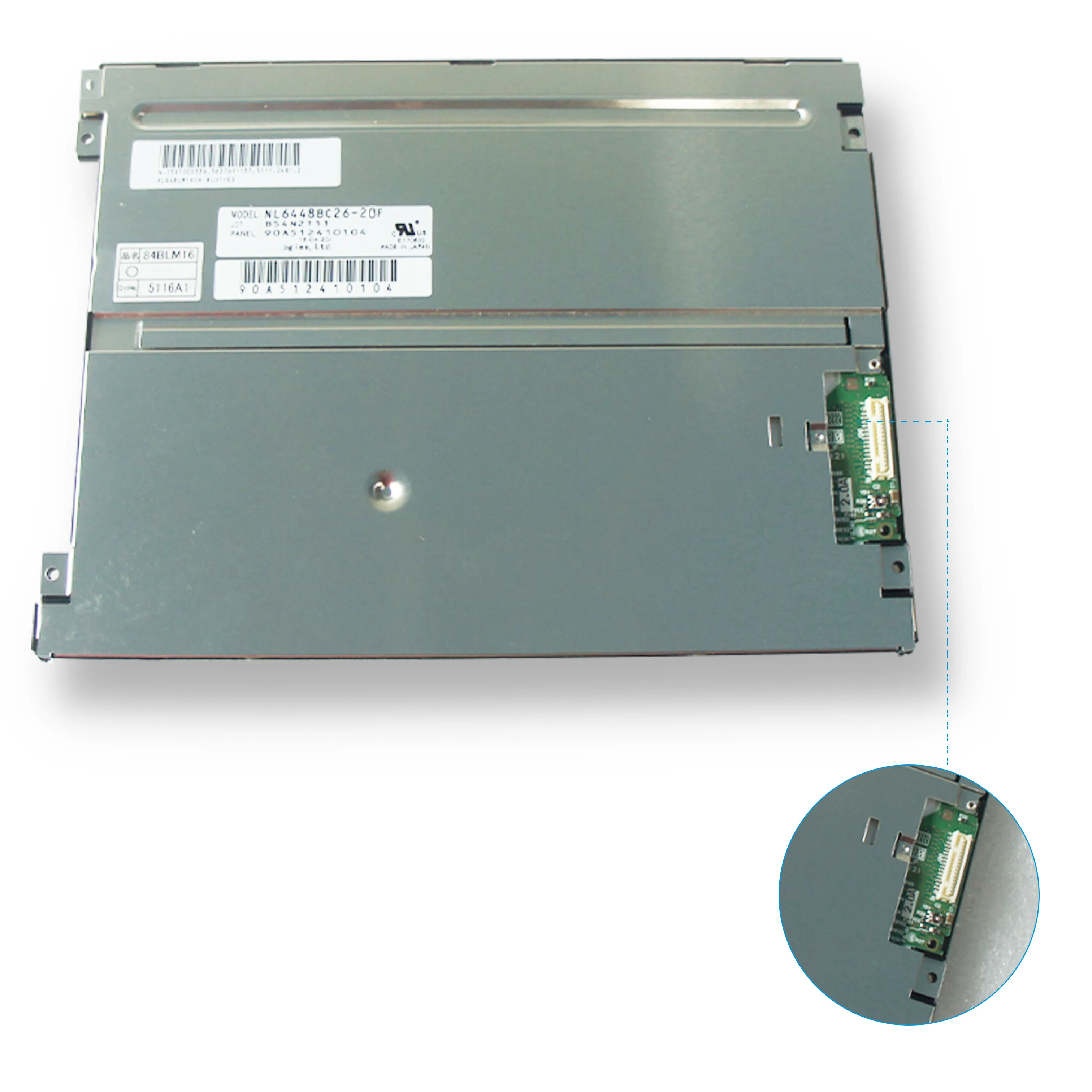

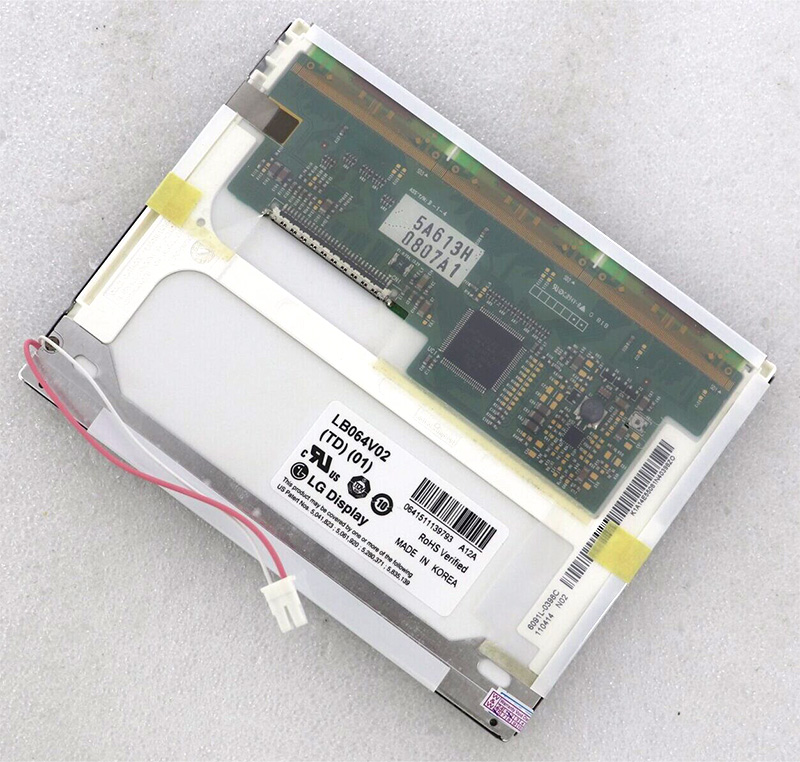
LB064V02-TD01 LG 6.4" TFT-LCD screen 640*480 Display
In the rapidly evolving landscape of display technology, where ultra-high-definition and flexible screens dominate headlines, specific industrial-grade components often remain the unsung heroes of critical systems. The LB064V02-TD01, a 6.4-inch TFT-LCD module from LG.Philips LCD, stands as a testament to this phenomenon. This article explores the enduring relevance of this specific display, moving beyond basic specifications to analyze its design philosophy, technical nuances, and market positioning. While its 640x480 VGA resolution and 6.4-inch diagonal might seem dated in a consumer world of 4K smartphones, this panel serves a vastly different ecosystem. We will dissect why such displays are not obsolete but rather are purpose-built for robustness, longevity, and specific manufacturing requirements. From its interface architecture to its role in medical and industrial automation, this article aims to provide a comprehensive resource for engineers, procurement specialists, and technology historians seeking to understand the value embedded in specialized TFT-LCD modules. The focus is on providing actionable insights into its operational context, not just a sterile data sheet recitation.
The decision to utilize a 640x480 (VGA) resolution is not a mark of technological stagnation, but a calculated choice for application-specific reliability. In the industrial and medical sectors, for which the LB064V02-TD01 is typically deployed, standardization is paramount. The VGA resolution offers a perfect balance of clarity and processing simplicity. Unlike higher resolution panels that demand significant graphics processing power and generate more heat, the VGA format allows for direct interfacing with legacy embedded systems, PLCs (Programmable Logic Controllers), and single-board computers that lack advanced GPU capabilities. This reduces system complexity and power consumption, critical factors in devices that operate 24/7 for years. Furthermore, the 4:3 aspect ratio is inherently superior for displaying diagnostic charts, control panels, and certain medical imaging data (like ultrasound or patient monitoring waveforms) compared to the elongated 16:9 aspect ratio. The LB064V02-TD01 maximizes the usable viewing area for these vertical and square data sets, minimizing scrolling and information loss. Its optical performance, including a viewing angle of 60/60/40/60 (L/R/U/D) and a typical contrast ratio of 350:1, while modest by today's standards, is meticulously optimized for readability under stable, controlled ambient lighting found in clean rooms or clinical environments, not for outdoor use in direct sunlight.
A critical component of the LB064V02-TD01's design is its reliance on LVDS (Low-Voltage Differential Signaling) for data transmission. This is a defining feature that separates it from simpler consumer displays which often use parallel RGB interfaces. The use of LVDS in a 6.4-inch panel may seem like overkill, but it is a deliberate engineering choice for noise immunity. In industrial settings, displays are often located near high-frequency motors, power supplies, and switching circuits. LVDS uses twisted-pair cabling to transmit data, making it inherently resistant to electromagnetic interference (EMI). This ensures that the image on the LB064V02-TD01 remains stable and jitter-free, preventing false readings on critical monitoring equipment. The interface supports a single-channel 6-bit LVDS, capable of displaying 262,144 colors. For the professional user, understanding that this panel operates on a typical logic power supply of 3.3V is crucial. This low-voltage operation contributes to the overall system safety and energy efficiency. Troubleshooting this display requires familiarity with LVDS signal timing – specifically the clock frequency and data mapping – rather than simple analog voltage checks. The connector pin assignments, typically a 20-pin fine-pitch connector, are designed for secure, vibration-resistant connections, a requirement for equipment that may be transported or subjected to mechanical shock.
The LB064V02-TD01 is equipped with a CCFL (Cold Cathode Fluorescent Lamp) backlight, a technology largely phased out in consumer electronics in favor of LEDs. While CCFL offers inferior energy efficiency and a wider color gamut compared to modern LEDs, its presence in this panel is a critical point for maintenance and lifecycle planning. The typical lifespan of the CCFL tube is rated at 50,000 hours – approximately 5.7 years of continuous operation. For a medical ventilator or a CNC machine controller, this is a tangible, predictable failure point. Unlike an LED backlight that dims gradually, a CCFL can fail suddenly or develop flicker, necessitating immediate replacement. A key insight for technicians is that the LB064V02-TD01 is often built with a replaceable backlight unit rather than a fully replaceable panel, provided the LCD glass itself is intact. The inverter, which provides the high-voltage AC necessary to drive the CCFL, is a separate component in the system. When the display appears dim or fails to illuminate, a common misdiagnosis is the panel itself, when in fact the issue lies with the inverter board or the aging CCFL tube. Proactive replacement of the full assembly (inverter and tube) before total failure is a recommended strategy for mission-critical environments to avoid system downtime.
Engineering a successful integration of the LB064V02-TD01 goes beyond electrical connectivity; it demands understanding its mechanical constraints and environmental specifications. The module measures approximately 173.0 x 126.0 x 11.8 mm (without bezel) and weighs only 330 grams. This relatively compact form factor is ideal for equipment where space is at a premium, such as portable diagnostic devices or embedded control panels. The panel operates within a temperature range of 0°C to 50°C and can be stored in conditions ranging from -20°C to 60°C. For designers, this necessitates careful thermal management, ensuring the display is not placed near heat sinks or power supplies that could push its operating temperature beyond these limits, which can cause image ghosting or permanent damage to the liquid crystal material. The recommended mounting method often involves a metal bezel or a custom bracket that provides even pressure around the perimeter to prevent pressure-induced mura (uneven backlight brightness). Because it is a standard TN (Twisted Nematic) panel, it is not suitable for applications requiring wide viewing angles from multiple operators. It is optimized for a single, head-on viewing perspective, which is exactly the requirement for a machine operator or a physician directly facing a screen.

To fully appreciate the LB064V02-TD01, one must position it within the broader ecosystem of small-to-medium industrial TFT panels. Competing panels from manufacturers like AU Optronics (e.g., G064VN01) or Tianma (e.g., TM064VDSG01) offer similar VGA resolutions and physical dimensions, but key differentiators lie in the supply chain legacy and compatibility. The LG.Philips LCD branding on this panel indicates its heritage as a first-generation standard in the early 2000s. Its longevity in the market is a testament to its design-for-replacement specification. Many industrial machines have a lifecycle of 10-20 years, and the LB064V02-TD01 was designed to be a drop-in replacement for earlier, more primitive monochrome displays. Its advantage today is not superior performance but proven compatibility. Thousands of systems already have firmware and cabling optimized for this specific model. For a buyer, choosing a newer, slightly more efficient panel often requires a complete system redesign, including new cabling, different inverters, and new software drivers. The cost savings of sticking with the LB064V02-TD01 for replacement and repair often far outweigh the marginal energy savings of a modern LED-backlit panel. It represents the pinnacle of a specific design era that prioritized stability and backward compatibility over raw innovation.
The greatest challenge facing users of the LB064V02-TD01 today is not technical performance, but supply chain fragility. As a discontinued model from LG, it is only available through the secondary market, surplus distribution, or brokers. This creates several risks for procurement professionals. First, the prevalence of counterfeit or relabeled panels is high. Panels from other manufacturers with similar dimensions may be repainted or have their labels altered to pass as LG units. Second, CCFL backlights degrade even when the panel is not in use. A "new old stock" LB064V02-TD01 that has been sitting on a warehouse shelf for 10 years will have a significantly reduced lifespan compared to a panel manufactured recently. A best practice is to request batch testing data, including backlight brightness measurements, before committing to large purchases. Third, the availability of supporting components – specifically the CCFL inverter and custom cabling – is also dwindling. Strategic buyers must often secure a buffer stock of not just the panel, but the entire module assembly (including polarizers, which can yellow with age) to ensure future maintainability. Relying on spot-buying from unknown e-commerce vendors leads to high rates of defective units and longer downtime. Establishing a relationship with a specialized, industrial display distributor with a testing and warranty program is essential for systems that rely on the LB064V02-TD01.
Frequently Asked Questions (FAQs)
What is the exact resolution of the LB064V02-TD01?
The active area resolution is 640 x 480 pixels, conforming to the VGA standard.
Is this a touch screen display?
No, this is a standard TFT-LCD panel without a touch sensor. It requires an external touch overlay for touch input.
What type of backlight does it use?
It utilizes a single CCFL (Cold Cathode Fluorescent Lamp) backlight, not an LED.
What is the expected lifespan of the backlight?
The typical rated lifetime is 50,000 hours, though this decreases with age and continuous use.
What is the supply voltage for the logic section?
The logic operates on a standard 3.3V DC supply.
Can I connect this display directly to an HDMI port?
No, it uses a 20-pin LVDS connector. You need a dedicated LVDS-to-HDMI or LVDS-to-VGA controller board.
Is the display suitable for outdoor use?
Generally, no. It has a typical TN viewing angle and standard brightness (~350 cd/m²), making it difficult to read in direct sunlight.
What is the viewing angle specification?
The specification is 60 degrees left/right, 40 degrees up, and 60 degrees down.
Is the LB064V02-TD01 still in production?
No, it is a discontinued, legacy part. It is available only through surplus and secondary markets.
What are common failure points for this model?
The most common failures are CCFL backlight burnout, inverter failure, and degradation of the polarizer film leading to a yellowed appearance.
Conclusion: The Legacy of Purpose-Built Resilience
The LB064V02-TD01 is far more than a simple screen; it is a carefully engineered component designed to serve within a closed loop of industrial and medical reliability. Its continued use today is a powerful lesson in the principles of standardization, maintainability, and application-specific design. While it lacks the aesthetic appeal of modern displays, its technical characteristics—the robust LVDS interface, the predictable CCFL failure cycle, and the proven mechanical dimensions—provide a stable platform for mission-critical systems that cannot afford the risks of platform migration. For the engineers and technicians who manage these systems, the panel represents a known quantity, a fixed point around which complex machinery is built. The key takeaway is that success with this part relies less on understanding its pixel density and more on mastering its supply chain risks, environmental constraints, and lifetime service procedures. In an age of disposable technology, the LB064V02-TD01 stands as a monument to the built-to-last philosophy. It reminds us that technology’s true value is not in being the newest, but in being the most dependable for its intended purpose.