- Industrie-LCD-Display
-
Industrial Products
- DC Servo Drive
- AC Servo Drive
- other
- Heidelberg
- FANUC
- IFM
- Meter
- CCD
- Membrane Keypad
- Film
- YOKOGAWA
- Card
- ABB
- MITSUBISHI
- FANUC
- KEYENCE
- BECKHOFF
- Honeywell
- HOLLYSYS
- FUJI servo drives
- HP
- solenoid valve
- thermostat
- Siemens adapter
- color oscilloscope
- Fujitsu connector
- CHELIC
- SMC
- CISCO
- INTEL
- Key board
- FAIRCHILD
- Der Aufsichtsrat
- Board
- Bearing
- other
- Control Panel
- Contactor
- Circuit
- Omron
- Relais.
- Der controller
- Optoelektronische schalter
- Optoelektronische sensoren
- Original
- Fan
- Motortreiber
- Endschalter
- Verstärker
- power supply
- LENZE
- Cable
- Encoder
- Sensor
- Transformator
- Fiber Optic Sensor
- Schutzrelais
- Temperaturregler
- Näherungsschalter
- Switch Sensor
- Siemens
- PCB
- HMI Touch-Glas
-
HMI-Vollautomat Ganze Einheit
- OMRON HMI Touch Panel
- Siemens HMI Touch Panel
- Mitsubishi HMI Touch Panel
- Allen-Bradley Automatisierung HMI Touch
- DELTA HMI Touch Panel
- EVIEW DELTA HMI Touch Panel
- KINCO DELTA HMI Touch Panel
- HITECH HMI Touch Panel
- WEINTECK HMI Touch Panel
- TECVIEW HMI Touch Panel
- WEINVIEW HMI Touch Panel
- PRO-FACE HMI Touch Panel
- SIMATIC HMI Touch Panel
- AMPIRE HMI Touch Panel
- HEIDELBERG HMI Touch Panel
- PANASONIC HMI Touch Panel
- PATLITE HMI Touch Panel
- KYOCERA HMI Touch Panel
- KEYENCE HMI Touch Panel
- WEINVIEW HMI Touch Panel
- HITECH HMI Touch Panel
- FUJI HMI Touch Panel
- HAKKO HMI Touch Panel
- SCHNEIDER HMI Touch Panel
- SAMKOON touch panel
- andere
- Module
- LCD Wechselrichter
- Membran Tastenfeld Schalter
- Winni Touch Screens
- Frequenzumrichter
- Servo Motor
- PLC



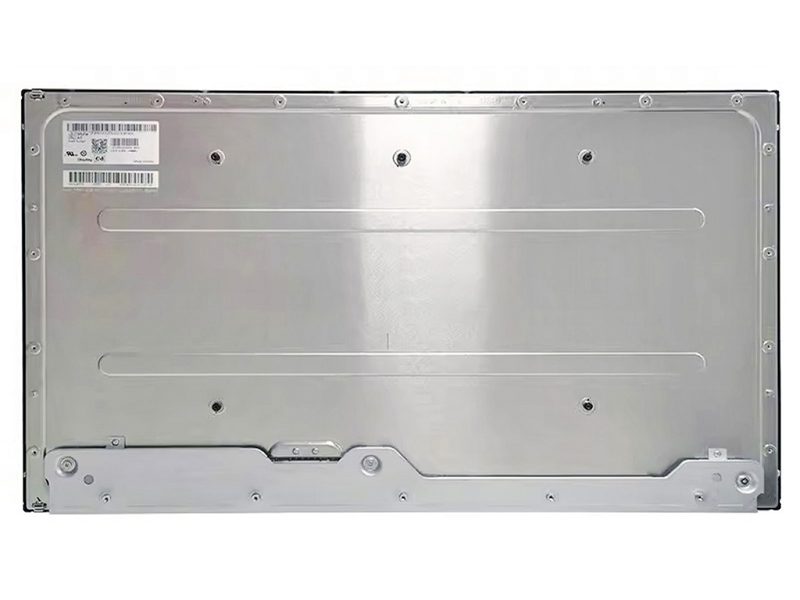
LB270WFM-SLA1 New LG Display 27.0 inch 1920*1080 LCD display
In the ever-evolving landscape of display technology, the 27-inch form factor has become the gold standard for professional workflows and immersive entertainment. Yet, not all panels are created equal. The LB270WFM-SLA1, a high-grade LCD module manufactured by LG Display, represents a specific tier of engineering where cost-efficiency meets visual fidelity. This article delves beyond the surface-level specifications of “27.0 inches” and “1920×1080 resolution.” We will explore the intrinsic architecture of this panel, its technological lineage within LG’s IPS family, and its nuanced performance characteristics. More importantly, we will analyze why this particular model is not just a generic screen, but a strategic component for integrators, repair professionals, and discerning users who require reliability and color consistency. From its power management to its timing controller logic, we will dissect how the LB270WFM-SLA1 serves as a bridge between legacy systems and modern visual demands, positioning itself as a workhorse in a market saturated with flashy, but often less durable, alternatives.
To understand the LB270WFM-SLA1, one must first appreciate the foundation upon which it is built: In-Plane Switching (IPS) technology. Unlike older TN (Twisted Nematic) panels which compromise viewing angles for response times, or VA (Vertical Alignment) panels which suffer from gamma shifts, LG Display’s IPS architecture aligns liquid crystals horizontally. For the LB270WFM-SLA1, this translates to a critical advantage: 178-degree viewing angles in both horizontal and vertical planes. This stability ensures that colors do not invert or wash out when viewed from non-axial positions. In a multi-monitor setup or a shared workspace, this consistency is invaluable. Furthermore, LG’s specific implementation of Horizontal Electric Field driving in this model allows for lower leakage current, contributing to better contrast ratios compared to early IPS panels. While the standard 1000:1 contrast ratio may seem modest against modern high-dynamic-range screens, it is a deliberate engineering choice. It prioritizes color uniformity and brightness stability across the entire panel surface over the "inky blacks" of VA panels, which often come with the trade-off of off-angle color distortion. This makes the LB270WFM-SLA1 a reliable canvas for applications where color perception must remain constant, regardless of the user's physical position relative to the screen.
In an era where 4K and 5K resolutions dominate marketing narratives, the choice of 1920×1080 pixels on a 27-inch diagonal is a deliberate exercise in practicality. The resulting pixel density of approximately 81 PPI (Pixels Per Inch) is often criticized by those accustomed to retina-class displays. However, for the specific use cases of the LB270WFM-SLA1, this density offers distinct operational advantages. Firstly, it eliminates the need for scaling in operating systems like Windows or Linux, providing a native 1:1 pixel mapping. This results in perfectly sharp text and UI elements without the processing overhead or blurriness that can plague fractional scaling on lower-end graphics hardware. Secondly, this resolution directly reduces the data bandwidth required over the eDP (embedded DisplayPort) interface. For industrial monitors, medical imaging viewers, or legacy POS systems, maintaining a stable 60Hz refresh rate with 8-bit color depth is far more critical than cramming in unnecessary pixels. The 1920×1080 resolution ensures that the timing controller (TCON) operates within a safe thermal envelope, prolonging the lifespan of the internal circuitry. This is a panel designed for “readability” and “system compatibility” rather than pixel-peeping, making it an ideal drop-in replacement for the vast installed base of commercial Full-HD applications.
Beyond the visible screen, the LB270WFM-SLA1 distinguishes itself through its electrical interface design. This panel typically utilizes a 30-pin eDP (Embedded DisplayPort) interface, specifically the eDP 1.2 standard. This connection lane configuration supports 2 lanes of high-speed data transmission, sufficient for 1080p at 60Hz with 8-bit color without requiring the complexity or power consumption of a 4-lane setup. The power management integrated circuit (PMIC) on the panel's driver board is optimized for a specific voltage rail—typically 3.3V or 12V depending on the specific variant—which regulates the VGH (gate high) and VGL (gate low) voltages necessary to drive the liquid crystals. This precise voltage control minimizes backlight bleeding and ghosting. Furthermore, the LB270WFM-SLA1 employs a WLED (White LED) backlight system that operates with a specific current limit. For technicians, understanding this current limit is crucial when replacing LEDs or repairing the backlight driver; using a generic LED strip with a different forward voltage can cause immediate failure. The panel also adheres to a specific mating pitch for the connector (typically 0.5mm or 0.4mm), which means sourcing a replacement requires attention to the exact P/N (Part Number) and connector model to avoid physical incompatibility with the original system's cable.
The true value of the LB270WFM-SLA1 is most apparent in its deployment scenarios. In the repair and refurbishment sector, this panel is a staple because of its compatibility with the LG 27MP35, 27EA33, and similar monitor chassis. For repair technicians, it represents a “puzzle match” where the mounting bracket holes, bezel thickness, and controller board pinout align with a wide range of cases. This reduces the complexity of LCD replacement. Beyond repairs, the panel serves as a reliable component for medical imaging workstations where regulatory compliance demands consistent luminance and low drift over time. The 8-bit color depth (6-bit + Hi-FRC in some implementations) is adequate for PACS (Picture Archiving and Communication System) viewing if the environment does not require 10-bit DICOM grayscale. In the industrial sector, this display is often found in kiosks and control room monitors where 24/7 operation is required. The LB270WFM-SLA1’s low power draw—typically under 25 watts—translates directly to lower thermal stress on the internal components, which is a primary factor in achieving an MTBF (Mean Time Between Failures) that exceeds consumer-grade panels. It is this robustness, rather than flashy specs, that makes it a favorite for system integrators who value long-term reliability over peak performance.
When sourcing the LB270WFM-SLA1, one must navigate the nuanced world of LCD grading. This specific model is often manufactured and binned at the factory level. An A+ grade panel typically guarantees zero dead pixels and zero bright spots within the ISO 9241-307 Class I or Class II standards. An A-grade panel might allow for up to 3 minor sub-pixel defects. For professional color work, the A+ grade is non-negotiable. However, due to the high demand for this model in the repair market, a significant number of “compatible” or “refurbished” units exist. A reputable supplier will test the panel on a standard controller board, running a full RGB sweep and grayscale gradient to check for banding or stuck pixels. Importantly, the LB270WFM-SLA1 uses an LVDS to eDP conversion in some aftermarket setups, so verifying the final interface is critical. The panel’s surface is typically treated with an anti-glare (AG) coating, which reduces reflections but can introduce a slight sparkle effect (diffusion) under direct light. When sourcing, inspect the physical rim for cracks or corner impact damage, which is a common failure point during shipping. A genuine LG Display module will have a clear laser-etched barcode on the back bearing the full part number, batch code, and the LG logo. Always request a photograph of the physical backlight test (white screen) and a dark room test (black screen) to assess uniformity before purchase.

Q: Is the LB270WFM-SLA1 compatible with a MacBook Pro?
A: Not natively. It requires a controller board with an eDP output. You need an external driver board compatible with the panel's specific timing and voltage requirements.
Q: What is the exact brightness of this panel?
A: Typical brightness is rated at 250 cd/m² (nits). However, variations can occur between different manufacturing batches and after prolonged use.
Q: Can I use this panel for gaming?
A: Yes, but it is limited to 60Hz. It has a typical response time of 14ms (GtG), which is adequate for casual gaming but not competitive esports.
Q: Does it support 10-bit color depth?
A: No, it is an 8-bit panel. Some implementations use 6-bit + Hi-FRC (Frame Rate Control) to simulate 8-bit, but it is not native 10-bit.
Q: What is the connector pitch on the LB270WFM-SLA1?
A: It typically uses a 0.5mm pitch 30-pin eDP connector, but always verify the exact revision of the panel (e.g., REV1.0 vs REV2.0) for the specific cable.
Q: Is this panel suitable for outdoor use?
A: No. The 250-nit brightness is insufficient for direct sunlight. For outdoor use, you would need a high-brightness (700-1000 nit) panel with an optical bonding treatment.
Q: Can I replace the backlight LEDs myself?
A: Technically yes, but it is very difficult. The LEDs are surface-mounted on a thin, flexible strip. Extreme care is needed to avoid damaging the light guide plate (LGP).
Q: How do I differentiate between an A+ and A grade this panel?
A: A+ grade usually guarantees zero defects (per ISO 13406-2 Class 1). A-grade may have up to 3 sub-pixel defects. Request a specific test report from the supplier.
Q: Does this panel have a built-in touch screen?
A: No, the base model is a standard LCD module. A touchscreen digitizer would need to be added as a separate layer for touch functionality.
Q: What is the operating temperature range?
A: Typically 0°C to 50°C storage and 0°C to 40°C operation. Using it outside these ranges can cause permanent damage to the liquid crystal material.
Conclusion: The Silent Workhorse of the LCD World
The LB270WFM-SLA1 may not boast the highest resolution or the widest color gamut, but its true strength lies in its engineering integrity. It encapsulates a philosophy of reliability, compatibility, and predictable performance. For system integrators, it removes the guesswork from monitor repair and builds. For end-users, it provides a stable, flicker-free viewing experience that does not degrade rapidly over time. This LG Display module represents the maturity of LCD technology—a point where the design is optimized for longevity rather than marketing specs. When you choose the LB270WFM-SLA1, you are investing in a component that prioritizes consistent electrical behavior, thermal stability, and mechanical fit. It is a reminder that in the digital age, the most effective tools are often those that operate flawlessly in the background, providing a clear window to our work without demanding attention for themselves. Whether you are repairing a legacy monitor or constructing a multi-display setup for a control room, this panel stands as a testament to the value of pragmatic, high-quality engineering.