- Industrie-LCD-Display
-
Industrial Products
- DC Servo Drive
- AC Servo Drive
- other
- Heidelberg
- FANUC
- IFM
- Meter
- CCD
- Membrane Keypad
- Film
- YOKOGAWA
- Card
- ABB
- MITSUBISHI
- FANUC
- KEYENCE
- BECKHOFF
- Honeywell
- HOLLYSYS
- FUJI servo drives
- HP
- solenoid valve
- thermostat
- Siemens adapter
- color oscilloscope
- Fujitsu connector
- CHELIC
- SMC
- CISCO
- INTEL
- Key board
- FAIRCHILD
- Der Aufsichtsrat
- Board
- Bearing
- other
- Control Panel
- Contactor
- Circuit
- Omron
- Relais.
- Der controller
- Optoelektronische schalter
- Optoelektronische sensoren
- Original
- Fan
- Motortreiber
- Endschalter
- Verstärker
- power supply
- LENZE
- Cable
- Encoder
- Sensor
- Transformator
- Fiber Optic Sensor
- Schutzrelais
- Temperaturregler
- Näherungsschalter
- Switch Sensor
- Siemens
- PCB
- HMI Touch-Glas
-
HMI-Vollautomat Ganze Einheit
- OMRON HMI Touch Panel
- Siemens HMI Touch Panel
- Mitsubishi HMI Touch Panel
- Allen-Bradley Automatisierung HMI Touch
- DELTA HMI Touch Panel
- EVIEW DELTA HMI Touch Panel
- KINCO DELTA HMI Touch Panel
- HITECH HMI Touch Panel
- WEINTECK HMI Touch Panel
- TECVIEW HMI Touch Panel
- WEINVIEW HMI Touch Panel
- PRO-FACE HMI Touch Panel
- SIMATIC HMI Touch Panel
- AMPIRE HMI Touch Panel
- HEIDELBERG HMI Touch Panel
- PANASONIC HMI Touch Panel
- PATLITE HMI Touch Panel
- KYOCERA HMI Touch Panel
- KEYENCE HMI Touch Panel
- WEINVIEW HMI Touch Panel
- HITECH HMI Touch Panel
- FUJI HMI Touch Panel
- HAKKO HMI Touch Panel
- SCHNEIDER HMI Touch Panel
- SAMKOON touch panel
- andere
- Module
- LCD Wechselrichter
- Membran Tastenfeld Schalter
- Winni Touch Screens
- Frequenzumrichter
- Servo Motor
- PLC


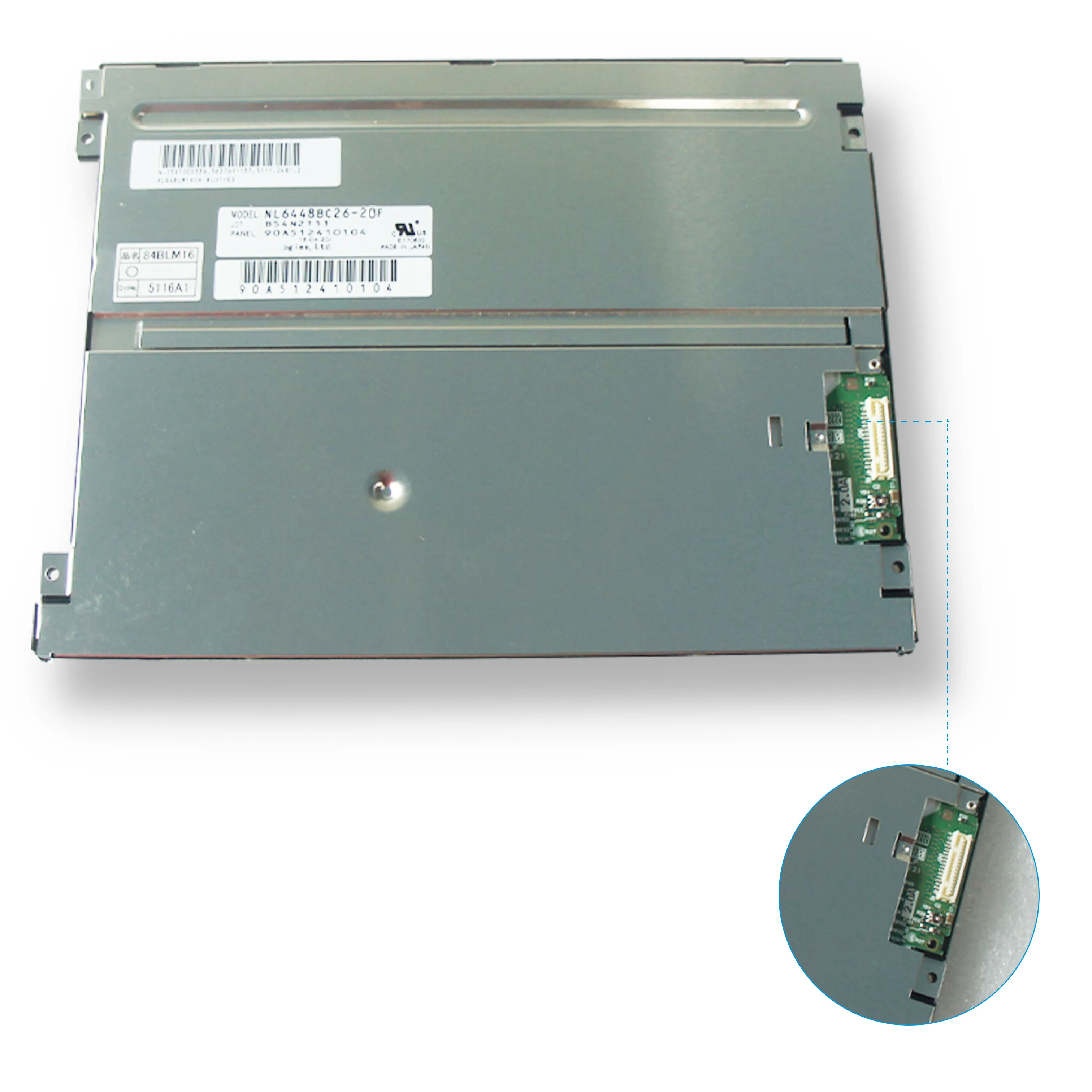


LCD Screen Display Panel For 12.1" 800*600 G121S1-L02
In the intricate world of electronic devices, from industrial control systems to specialized medical equipment, the display panel serves as the critical interface between machine and user. At the heart of many such robust applications lies a specific component: the G121S1-L02. This model number designates a 12.1-inch LCD display panel with a resolution of 800 x 600 pixels (SVGA). While these specifications may seem modest in an era of 4K consumer screens, they represent a meticulously engineered solution for demanding professional environments.
This article delves into a comprehensive analysis of the G121S1-L02 display panel. We will move beyond basic datasheet parameters to explore its underlying technology, the rationale behind its key specifications, and its ideal application scenarios. Understanding this panel is not just about knowing its size and resolution, but about appreciating the engineering trade-offs that make it a reliable, durable, and effective choice for mission-critical systems where consistent performance trumps flashy specs.
Deconstructing the G121S1-L02: Core Technology and Specifications
The G121S1-L02 is built on Twisted Nematic (TN) LCD technology. TN panels are renowned for their fast response times, a legacy advantage that remains relevant for displaying dynamic data or interfaces without noticeable motion blur. Its 12.1-inch diagonal measurement provides a substantial viewing area, while the 800 x 600 (SVGA) resolution offers a pixel density suitable for clear text, numerical data, and functional graphics without demanding excessive processing power from the host system.
Key electrical and optical specs define its performance envelope. It typically operates on a single 3.3V power supply, simplifying power design integration. The interface is usually LVDS (Low-Voltage Differential Signaling), a robust standard that ensures reliable data transmission with minimal electromagnetic interference. With a brightness often ranging around 300 nits and a standard contrast ratio, it is designed for adequate readability under controlled or indoor lighting conditions, prioritizing longevity and stability over extreme luminance.


The Engineering Rationale Behind SVGA at 12.1 Inches
In a market chasing ever-higher pixel densities, the persistence of the 800x600 resolution on a 12.1-inch screen is a deliberate engineering choice, not an outdated relic. The resulting pixel pitch is larger than that of a high-PPI smartphone screen, which directly translates to superior legibility. Text characters and interface elements are inherently larger and clearer, reducing eye strain during long operational shifts—a critical factor in industrial or medical settings.
Furthermore, this resolution imposes a significantly lower computational and bandwidth load on the system controller. This allows for the use of more cost-effective, lower-power processors and simplifies graphic rendering. The reduced data throughput also enhances overall system reliability and thermal performance. For applications where the display must show fixed-format HMI screens, diagnostic data, or schematic diagrams, SVGA provides a perfectly sufficient canvas, optimizing the balance between clarity and system resource efficiency.
Interface and Compatibility: The LVDS Connection Standard
The choice of interface is paramount for signal integrity and integration ease. The G121S1-L02 predominantly utilizes an LVDS interface. This technology transmits data as a differential signal (using a pair of wires for each data channel), making it highly resistant to common-mode noise from motors, power supplies, or other electronic noise prevalent in industrial environments.
Compatibility involves matching the panel's pin configuration, voltage levels, and timing characteristics with an LVDS controller chip, often found on the system's mainboard or a separate interface board. Designers must ensure the controller supports the panel's native resolution and refresh rate. This plug-and-play compatibility, backed by a standardized interface, streamlines the design-in process, reduces development time, and mitigates risks associated with signal degradation over the typical cable lengths used in embedded systems.
Durability and Reliability in Harsh Operating Environments
Unlike consumer displays, panels like the G121S1-L02 are designed for extended duty cycles and challenging conditions. Longevity is a key metric, with backlights often rated for 50,000 hours or more, ensuring years of continuous operation. The physical construction is geared towards resilience, often featuring a robust metal frame and sturdy connectors to withstand vibration and mechanical shock.
Environmental robustness is also critical. Many versions of this panel are specified to operate reliably across a wide temperature range (e.g., -20°C to 70°C for the operating ambient). This ensures functionality in unheated warehouses, near industrial machinery, or in enclosed spaces where heat can build up. This focus on durability over aesthetic slimness makes it a component that system integrators can depend on for the long-term operational life of their product.
Primary Application Scenarios and Industry Use Cases
The specific attributes of the G121S1-L02 make it a preferred choice in several professional verticals. In Industrial Automation, it serves as the human-machine interface (HMI) for PLCs, CNC machine controls, and factory floor monitoring stations, where clarity and reliability are non-negotiable. The Medical Device field utilizes it in diagnostic equipment, patient monitors, and portable medical carts, benefiting from its stable performance and legibility.
Additionally, it finds a home in Transportation and Fleet Management systems (e.g., vehicle diagnostics, navigation for specialized vehicles), Point-of-Sale (POS) terminals, and Kiosks. In each case, the common thread is the need for a display that prioritizes functional performance, 24/7 operational readiness, and seamless integration into a larger, purpose-built system over consumer-grade multimedia features.
Sourcing, Replacement, and Integration Considerations
For engineers and maintenance technicians, sourcing a genuine or compatible G121S1-L02 is crucial. It is typically procured through specialized electronic component distributors or directly from manufacturers, not consumer retail channels. When seeking a replacement, verifying the exact model number and revision is essential, as minor variations in pinout, brightness, or interface timing can cause compatibility issues.
Successful integration requires attention to the mechanical, electrical, and thermal design. This includes designing a bezel with proper mounting points, ensuring a clean and stable power supply to the panel's inverter or LED driver, and managing heat dissipation from the backlight and surrounding components. Proper handling of the LVDS cables and connectors is also vital to avoid signal integrity problems that manifest as display noise or flickering.
FAQs: LCD Panel G121S1-L02
10. Where is it commonly used?Primary uses include industrial HMIs, medical monitoring equipment, POS systems, transportation displays, and various embedded kiosks.
Conclusion
The G121S1-L02 12.1-inch SVGA LCD panel exemplifies the principle that in specialized engineering, the optimal component is not the one with the highest specifications, but the one that most reliably and efficiently fulfills its designated role. Its enduring relevance in critical sectors is a testament to a well-calibrated design philosophy that prioritizes legibility, robustness, and integration simplicity.
For system designers, procurement specialists, and technical maintenance personnel, understanding the nuances of this panel—from its LVDS interface requirements to its environmental tolerances—is key to ensuring successful project outcomes and long-term operational stability. In a world of rapidly changing consumer technology, the G121S1-L02 stands as a robust, dependable workhorse, proving that for countless industrial and commercial applications, focused functionality will always outperform mere specification sheet metrics.