- Industrial LCD display
-
Industrial Products
- DC Servo Drive
- AC Servo Drive
- other
- Heidelberg
- FANUC
- IFM
- Meter
- CCD
- Membrane Keypad
- Film
- YOKOGAWA Module
- Card
- ABB
- MITSUBISHI
- FANUC
- KEYENCE
- BECKHOFF
- Honeywell
- HOLLYSYS
- FUJI servo drives
- HP
- solenoid valve
- thermostat
- Siemens adapter
- color oscilloscope
- Fujitsu connector
- CHELIC
- SMC
- CISCO Module
- INTEL
- Key board
- FAIRCHILD
- Motherboard
- Board
- Bearing
- other
- Control Panel
- Contactor
- Circuit
- OMRON
- Relay
- Controller
- Photoelectric Switch
- Photoelectric Sensor
- Original
- Fan
- Motor Driver
- Limit Switch
- Amplifier
- power supply
- LENZE
- Cable
- Encoder
- Sensor
- Transformer
- Fiber Optic Sensor
- Protection Relay
- Temperature Controller
- Proximity Switch
- Switch Sensor
- Siemens
- Industrial board
- HMI Touch Glass
-
HMI Full Machine Whole unit
- OMRON HMI Touch Panel
- Siemens HMI Touch Panel
- Mitsubishi HMI Touch Panel
- Allen-Bradley automation HMI Touch Panel
- DELTA HMI Touch Panel
- EVIEW DELTA HMI Touch Panel
- KINCO DELTA HMI Touch Panel
- HITECH HMI Touch Panel
- WEINTECK HMI Touch Panel
- TECVIEW HMI Touch Panel
- WEINVIEW HMI Touch Panel
- PRO-FACE HMI Touch Panel
- SIMATIC HMI Touch Panel
- AMPIRE HMI Touch Panel
- HEIDELBERG HMI Touch Panel
- PANASONIC HMI Touch Panel
- PATLITE HMI Touch Panel
- KYOCERA HMI Touch Panel
- KEYENCE HMI Touch Panel
- WEINVIEW HMI Touch Panel
- HITECH HMI Touch Panel
- FUJI HMI Touch Panel
- HAKKO HMI Touch Panel
- SCHNEIDER HMI Touch Panel
- SAMKOON touch panel
- other
- Module
- lcd inverter
- Membrane Keypad Switch
- Winni Touch Screens
- Frequency Inverter
- Servo Motor
- PLC



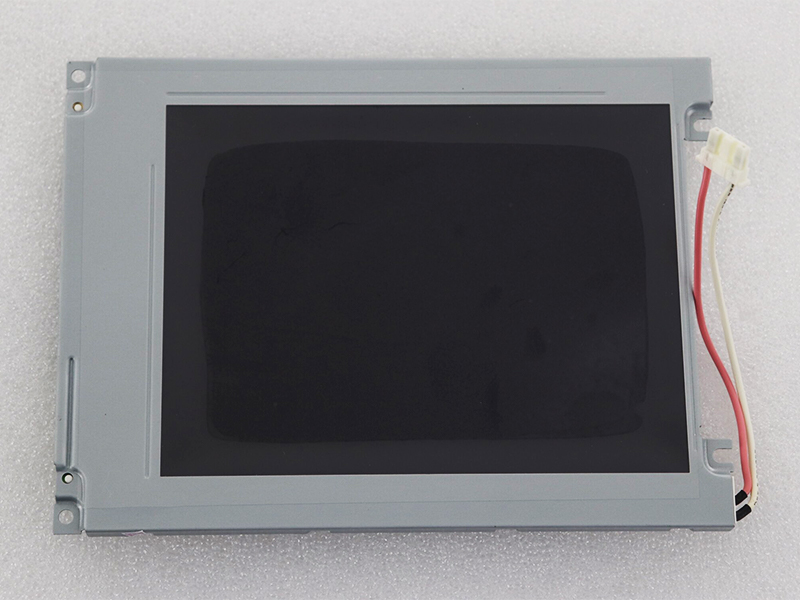
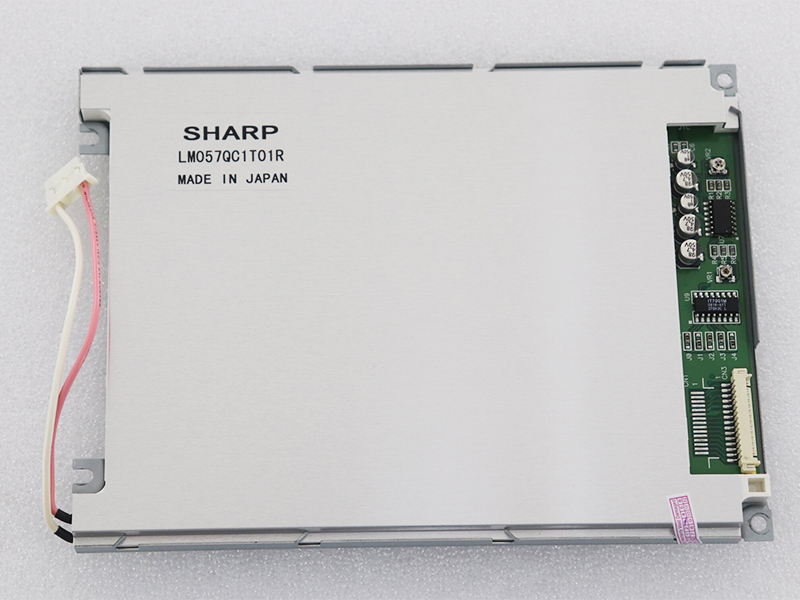
LM057QC1T01R 5.7"320*240 FSTN-LCD for SHARP
The SHARP LM057QC1T01R 5.7" FSTN-LCD: A Deep Dive into Industrial-Grade Display Technology
In the realm of industrial and medical display applications, reliability and readability under demanding conditions are non-negotiable. The SHARP LM057QC1T01R, a 5.7-inch FSTN (Film Compensated Super Twisted Nematic) LCD module with a 320x240 (QVGA) resolution, stands as a testament to enduring design philosophy. While not a modern high-resolution color display, this module remains a highly sought-after component in legacy equipment and new ruggedized designs. This article provides an expert-level analysis of the LM057QC1T01R, focusing on its technical architecture, performance characteristics, and strategic relevance in a world leaning toward TFT and OLED technology.
1. Deconstructing the FSTN Advantage: Beyond Basic LCD
To understand the value of the LM057QC1T01R, one must first appreciate the nuance of FSTN technology. Standard STN LCDs suffer from a characteristic yellow-green or blue background and slower response times. FSTN (Film Compensated STN) introduces a retardation film—a birefringent layer—to optically compensate for the residual coloration. The result is a true monochrome display with a crisp, neutral gray or white background.
Superior Contrast in Direct Sunlight: The film layer significantly reduces glare and enhances readability in high-ambient-light environments. This is a critical advantage over many transmissive TFTs which wash out under bright conditions.
Wide Viewing Cone (for a Passive Matrix): While not matching the 178° views of IPS TFTs, the FSTN technology provides a stable, predictable viewing angle, particularly in the 6 o'clock (bottom) direction, which is common in instrument panels.
Exceptional Passive Matrix Reliability: The display is inherently simpler than active-matrix TFTs. Fewer driver connections reduce potential failure points, making it ideal for systems needing 10+ year lifecycles.
2. Technical Specifications and Architectural Breakdown
Resolution and Dot Pitch: 320 x 240 (QVGA) with a dot pitch of approximately 0.36 mm. This yields a pixel density of roughly 70 PPI. While not high-definition, it is ideal for displaying text, symbols, and simple bar graphs with sharp, legible edges.
Display Mode: It is a Transmissive, Normally White (NW) FSTN. In the "off" state, the pixel is clear (white). When voltage is applied, the pixel becomes dark. This is energy efficient in bright environments, as all pixels are transparent until commanded otherwise.
Backlight System: The module incorporates a CCFL (Cold Cathode Fluorescent Lamp) backlight. This is a defining feature. Unlike LED backlights of today, CCFL provides a very broad and even light spectrum, with a color temperature around 6500K. It also has a specific lifespan (typically 20,000 to 30,000 hours half-brightness), which must be considered for maintenance planning.
Viewing Direction: The specification clearly defines a 6 o'clock optimal viewing direction. This means the display is designed to be read from a slight downward angle, which is standard for equipment mounted at or above eye level.
Temperature Range: A key industrial marker: the operating temperature is typically rated from 0°C to +50°C, with a storage range down to -20°C. This indicates it is not intended for extreme outdoor arctic or desert conditions, but it is stable for controlled indoor and sheltered environments.
3. Comparative Analysis: FSTN vs. Modern TFT and OLED
Optimized for Monochrome Data: For systems displaying only text, numeric values, or binary state indicators, a grey-scale FSTN produces sharper edges and more consistent contrast than a color TFT attempting to render grey. The lack of a color filter matrix means 100% of the backlight passes through in the "on" state, leading to superior luminance efficiency.
Sunlight Readability Superiority: A standard transmissive TFT relies on a polarizer and color filter, which reflect ambient light. The FSTN film in the LM057QC1T01R is specifically tuned to suppress reflections. In direct sunlight, a well-lit FSTN with a white background is often more readable than a high-brightness TFT.
Cost-Efficiency for Legacy Systems: Many industrial control systems (CNC machines, power grid monitors, medical ventilators) were designed around the electrical and mechanical interface of this specific module. Redesigning the entire system to accommodate a modern TFT involves significant engineering cost, making the drop-in replacement LM057QC1T01R the most economical and reliable choice.
Driver Simplicity: The display utilizes standard passive matrix drivers. Interfacing is simpler and less prone to electromagnetic interference (EMI) than high-speed LVDS or eDP interfaces used in modern high-resolution panels.
4. Implementation Considerations and Practical Advice
Backlight Inverter Compatibility: The CCFL backlight requires a high-voltage AC inverter (typically 300V to 600V at 50-70 kHz). Not all inverters are created equal. Using an incorrect inverter will lead to flicker, reduced lifespan, or immediate failure. Always verify the start-up voltage and operating current.
Connector Pinout: The display uses a specific 20-pin or 14-pin (verify by revision) parallel data interface. The pinout is not standard across all 5.7" panels. Careful cross-referencing of the SHARP datasheet is mandatory before designing a PCB.
Mechanical Mounting: The module is a sandwich of glass, metal frame, and the CCFL tube. It requires careful handling. The rear of the CCFL tube is particularly fragile. Do not apply pressure on the glass within the active area.
Contrast Adjustment: Unlike TFTs which have a fixed gamma curve, STN displays require an external potentiometer or voltage divider to set the VLCD (LCD drive voltage). This voltage is temperature-dependent; for critical applications, a temperature-compensated voltage reference is recommended.
5. Conclusion: The Strategic Value of a Proven Display
The SHARP LM057QC1T01R is far from obsolete. It represents a strategic choice for applications where reliability, sunlight readability, and monochrome clarity outrank color gamut or ultra-high resolution. For maintenance engineers, it is a predictable, well-documented component with decades of proven field performance. For designers of new rugged equipment, FSTN technology offers a low-power, high-reliability alternative to LED-based TFTs, particularly for outdoor or high-ambient-light control panels.
Final Expert Recommendation: When evaluating the LM057QC1T01R for a project, always secure the official SHARP design guide. Pay meticulous attention to the backlight inverter selection and the VLCD adjustment circuit. When these parameters are correctly managed, this display will provide a decade or more of flawless service, proving that sometimes the best technology is the one that has been built well, not the one that is newest.