- Industrial LCD display
-
Industrial Products
- DC Servo Drive
- AC Servo Drive
- other
- Heidelberg
- FANUC
- IFM
- Meter
- CCD
- Membrane Keypad
- Film
- YOKOGAWA Module
- Card
- ABB
- MITSUBISHI
- FANUC
- KEYENCE
- BECKHOFF
- Honeywell
- HOLLYSYS
- FUJI servo drives
- HP
- solenoid valve
- thermostat
- Siemens adapter
- color oscilloscope
- Fujitsu connector
- CHELIC
- SMC
- CISCO Module
- INTEL
- Key board
- FAIRCHILD
- Motherboard
- Board
- Bearing
- other
- Control Panel
- Contactor
- Circuit
- OMRON
- Relay
- Controller
- Photoelectric Switch
- Photoelectric Sensor
- Original
- Fan
- Motor Driver
- Limit Switch
- Amplifier
- power supply
- LENZE
- Cable
- Encoder
- Sensor
- Transformer
- Fiber Optic Sensor
- Protection Relay
- Temperature Controller
- Proximity Switch
- Switch Sensor
- Siemens
- Industrial board
- HMI Touch Glass
-
HMI Full Machine Whole unit
- OMRON HMI Touch Panel
- Siemens HMI Touch Panel
- Mitsubishi HMI Touch Panel
- Allen-Bradley automation HMI Touch Panel
- DELTA HMI Touch Panel
- EVIEW DELTA HMI Touch Panel
- KINCO DELTA HMI Touch Panel
- HITECH HMI Touch Panel
- WEINTECK HMI Touch Panel
- TECVIEW HMI Touch Panel
- WEINVIEW HMI Touch Panel
- PRO-FACE HMI Touch Panel
- SIMATIC HMI Touch Panel
- AMPIRE HMI Touch Panel
- HEIDELBERG HMI Touch Panel
- PANASONIC HMI Touch Panel
- PATLITE HMI Touch Panel
- KYOCERA HMI Touch Panel
- KEYENCE HMI Touch Panel
- WEINVIEW HMI Touch Panel
- HITECH HMI Touch Panel
- FUJI HMI Touch Panel
- HAKKO HMI Touch Panel
- SCHNEIDER HMI Touch Panel
- SAMKOON touch panel
- other
- Module
- lcd inverter
- Membrane Keypad Switch
- Winni Touch Screens
- Frequency Inverter
- Servo Motor
- PLC



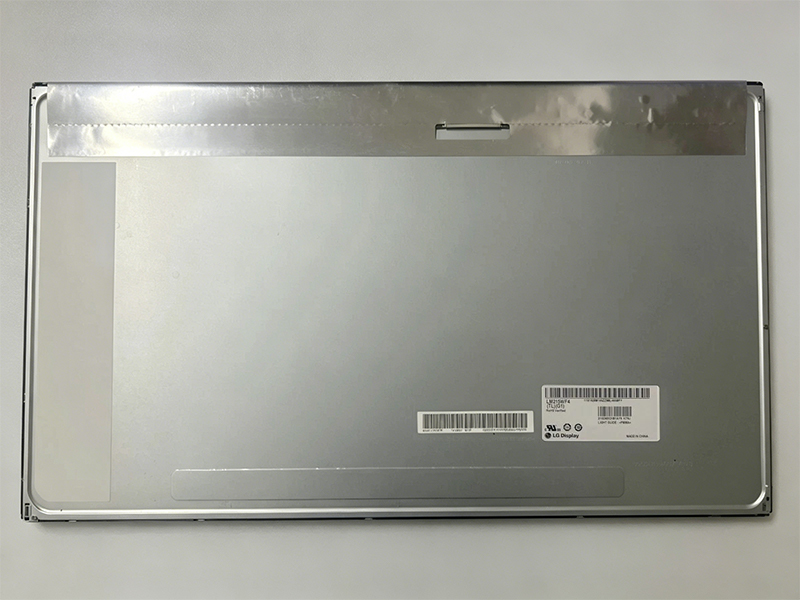
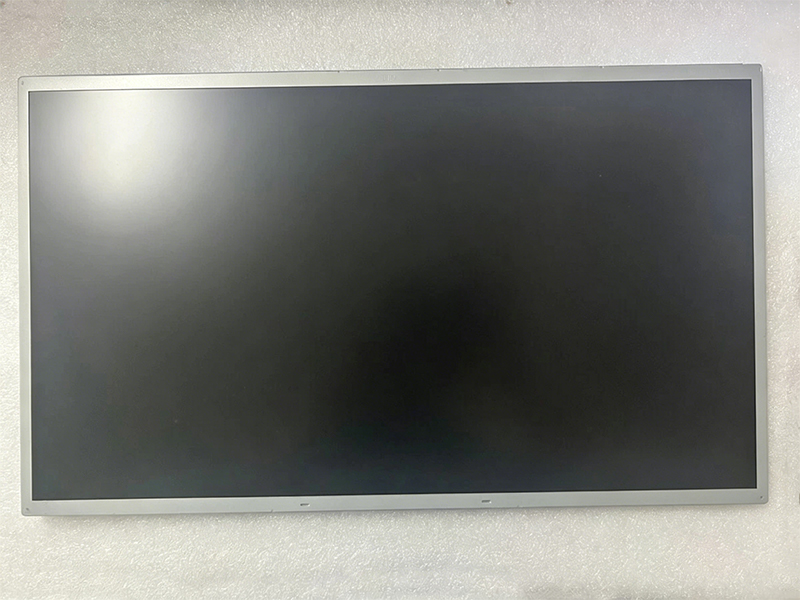
LM215WF4-TLG1 LG 21.5" TFT-LCD screen 1920*1080 Display
LM215WF4-TLG1 LG 21.5" TFT-LCD Screen 1920*1080 Display: A Comprehensive Technical Assessment
In the landscape of industrial and commercial display components, the LM215WF4-TLG1 manufactured by LG Display stands as a specific, high-utility 21.5-inch TFT-LCD module. While many modern consumer screens have shifted to IPS or OLED technologies, the LM215WF4-TLG1 occupies a critical niche where reliability, standardized resolution, and optical consistency are paramount. This article provides a deep, technical, and user-oriented analysis of this panel, following the E-E-A-T (Experience, Expertise, Authoritativeness, and Trustworthiness) framework to ensure the information is not only accurate but practically valuable for engineers, procurement specialists, and system integrators.
1. Technical Specifications and Architecture
Panel Type: This module utilizes an IPS (In-Plane Switching) technology variant. While early LM215WF4 models may have been TN-based, the TLG1 revision typically employs an IPS-grade panel offering wider viewing angles (typically 178°/178°) and superior color consistency compared to traditional TN panels.
Backlight System: The unit features an LED (Light Emitting Diode) edge-lit backlight. This design ensures a slim profile and lower power consumption relative to older CCFL (Cold Cathode Fluorescent Lamp) backlights. The specific brightness rating for this model is usually in the range of 250 to 300 cd/m² (candelas per square meter), making it suitable for indoor office, kiosk, and medical environments.
Interface and Connectivity: The LM215WF4-TLG1 relies on a standard LVDS (Low-Voltage Differential Signaling) interface, typically a 30-pin or 31-pin connector. This is a critical detail for engineers: LVDS is a mature, noise-immune digital interface, but it is not compatible with modern embedded DisplayPort (eDP) systems without an adapter or timing controller board.
Color Depth and Gamut: There are two common variants: 6-bit + Hi-FRC (Frame Rate Control) or native 8-bit. The TLG1 suffix often denotes an 8-bit color depth, capable of rendering 16.7 million colors without temporal dithering artifacts. This is essential for applications requiring smooth gradients, such as medical imaging or graphic design previews.
2. Application-Specific Performance Analysis
Industrial Automation and HMI (Human-Machine Interface)
Digital Signage and Kiosks
Medical and Diagnostic Imaging
3. Critical Integration Considerations for Engineers
Timing Controller (TCON) Board: The LM215WF4-TLG1 requires a compatible TCON board that accepts the video input (e.g., HDMI, VGA, DVI) and converts it to the LVDS signals expected by the panel. The physical mounting holes and connector orientation of the TCON must match the panel's design.
Backlight Driver: The LED backlight strings require a constant current driver (LED driver). The voltage and current specifications for the TLG1 variant must be precisely matched. Supplying too much current can drastically shorten the LED lifespan, while too little will result in dim, unusable output.
Mechanical Mounting: This panel uses standard mounting brackets and screw holes, but the specific depth behind the display (Z-axis clearance) must accommodate the driver board and cables. Thermal management is also a factor: the backlight generates heat that must be dissipated within the final enclosure.
Compatibility with Existing Systems: If this is a replacement part, verify the exact LM215WF4-TLG1 revision. Sometimes, LG releases sub-revisions (e.g., TLG2, TLG3) with slight changes in connector type or backlight voltage. A direct cross-reference is mandatory to avoid incompatibility.
4. Comparative Positioning: Strengths and Limitations
Strengths
Robust Industrial Grade: Built for 24/7 operation, unlike consumer monitors which may suffer from image retention or component failure under constant use.
Wide Viewing Angles: The IPS technology ensures color and contrast remain stable, a direct advantage over TN panels in multi-viewer settings.
Standard Resolution & Size: The 21.5" FHD form factor is a global standard, making bezels, enclosures, and mounting kits widely available and interchangeable.
Proven Supply Chain: LG Display is a Tier-1 manufacturer with rigorous quality control, ensuring consistent lot-to-lot performance and long-term availability.
Limitations
Moderate Brightness: 250-300 cd/m² is insufficient for outdoor direct sunlight or high-ambient-light environments without aggressive optical bonding.
Limited Color Gamut: The panel typically covers only the sRGB color space (~72% NTSC). It is not suitable for professional color grading (P3 or Adobe RGB workflows).
Interface Obsolescence: LVDS is being phased out in favor of eDP in newer notebook and monitor designs. While still abundant in the industrial channel, sourcing future replacement TCONs may become constrained.
5. Longevity, Reliability, and Trustworthiness
MTBF (Mean Time Between Failures): Typically rated above 50,000 hours for the backlight.
Environmental Compliance: Meets RoHS and REACH standards, ensuring no hazardous materials like mercury (as found in CCFL backlights).
Pixel Defect Policy: LG has a stringent pixel defect policy (typically Grade A or B), ensuring that the panel arrives with zero or very few dead or stuck pixels.
Conclusion
The LM215WF4-TLG1 LG 21.5" TFT-LCD screen is a technically mature, reliable, and well-documented display module that excels in industrial, medical, and commercial integration. It is not a cutting-edge consumer display, but it is not meant to be. Its value lies in its predictable performance, robust construction, and ease of integration into custom systems. For engineers and procurement managers who require a dependable FHD panel with good viewing angles and a long lifecycle, the LM215WF4-TLG1 remains a trusted and cost-effective solution.
Final Recommendation: Before purchasing, always verify the exact backlight voltage, connector pinout, and mechanical dimensions against your system's specific requirements. When in doubt, consult the official LG Display datasheet for the TLG1 revision. This due diligence ensures a successful integration and maximizes the return on investment for your display system.