- Industrie-LCD-Display
-
Industrial Products
- DC Servo Drive
- AC Servo Drive
- other
- Heidelberg
- FANUC
- IFM
- Meter
- CCD
- Membrane Keypad
- Film
- YOKOGAWA
- Card
- ABB
- MITSUBISHI
- FANUC
- KEYENCE
- BECKHOFF
- Honeywell
- HOLLYSYS
- FUJI servo drives
- HP
- solenoid valve
- thermostat
- Siemens adapter
- color oscilloscope
- Fujitsu connector
- CHELIC
- SMC
- CISCO
- INTEL
- Key board
- FAIRCHILD
- Der Aufsichtsrat
- Board
- Bearing
- other
- Control Panel
- Contactor
- Circuit
- Omron
- Relais.
- Der controller
- Optoelektronische schalter
- Optoelektronische sensoren
- Original
- Fan
- Motortreiber
- Endschalter
- Verstärker
- power supply
- LENZE
- Cable
- Encoder
- Sensor
- Transformator
- Fiber Optic Sensor
- Schutzrelais
- Temperaturregler
- Näherungsschalter
- Switch Sensor
- Siemens
- PCB
- HMI Touch-Glas
-
HMI-Vollautomat Ganze Einheit
- OMRON HMI Touch Panel
- Siemens HMI Touch Panel
- Mitsubishi HMI Touch Panel
- Allen-Bradley Automatisierung HMI Touch
- DELTA HMI Touch Panel
- EVIEW DELTA HMI Touch Panel
- KINCO DELTA HMI Touch Panel
- HITECH HMI Touch Panel
- WEINTECK HMI Touch Panel
- TECVIEW HMI Touch Panel
- WEINVIEW HMI Touch Panel
- PRO-FACE HMI Touch Panel
- SIMATIC HMI Touch Panel
- AMPIRE HMI Touch Panel
- HEIDELBERG HMI Touch Panel
- PANASONIC HMI Touch Panel
- PATLITE HMI Touch Panel
- KYOCERA HMI Touch Panel
- KEYENCE HMI Touch Panel
- WEINVIEW HMI Touch Panel
- HITECH HMI Touch Panel
- FUJI HMI Touch Panel
- HAKKO HMI Touch Panel
- SCHNEIDER HMI Touch Panel
- SAMKOON touch panel
- andere
- Module
- LCD Wechselrichter
- Membran Tastenfeld Schalter
- Winni Touch Screens
- Frequenzumrichter
- Servo Motor
- PLC



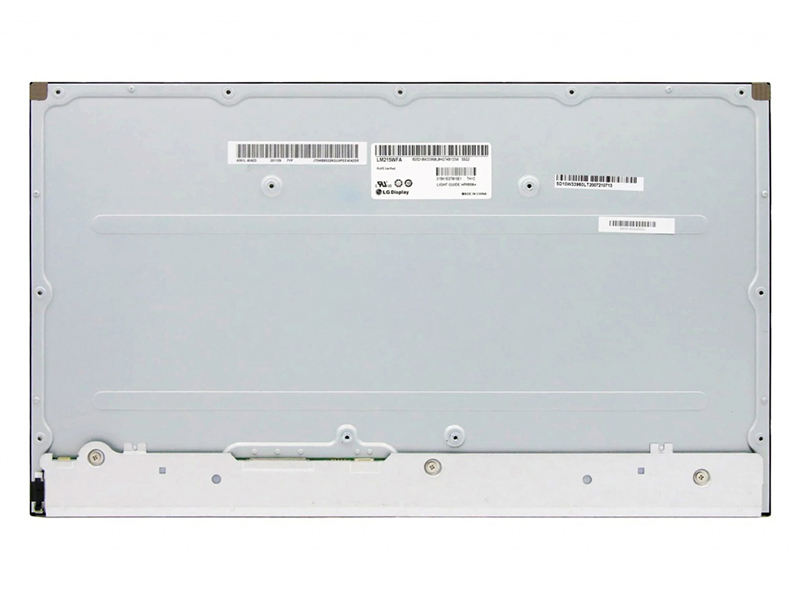
LM215WFA-SSG2 LG Display 21.5 inch 1920*1080 LCD panel
LM215WFA-SSG2: A Deep Dive into LG Display’s 21.5-Inch FHD Industrial LCD Panel
In the landscape of flat-panel displays, the 21.5-inch form factor remains a cornerstone for a wide range of professional and industrial applications. While consumer-grade monitors focus on high refresh rates and HDR gimmicks, the LM215WFA-SSG2 from LG Display represents a different breed of technology—one built for reliability, precision, and longevity. This article provides a comprehensive, expert-level analysis of this specific panel, examining its technical architecture, performance characteristics, and optimal deployment scenarios.
Technical Architecture and Panel Technology
Resolution and Aspect Ratio: The panel delivers a native resolution of 1920 x 1080 pixels (Full HD) with a 16:9 wide-screen aspect ratio. This ensures a pixel density of approximately 102 PPI—a sweet spot for readability in office and medical environments without requiring scaling.
Backlight System: This module is equipped with a WLED (White Light Emitting Diode) edge-lit backlight. The standard version offers a typical brightness of 250 cd/m², though some industrial variants may support up to 400-500 cd/m² for high-ambient-light environments. The rated lifetime for the backlight is typically 50,000 hours under standard conditions.
Interface and Connectivity: The panel supports an LVDS (Low-Voltage Differential Signaling) interface, specifically a 2-channel, 8-bit connection. This is a mature, highly reliable interface standard favored in embedded systems and digital signage controllers due to its inherent noise immunity and long cable-run stability.
Optical Performance and Visual Fidelity
Viewing Angles: The panel offers 89°/89°/89°/89° (typical) viewing angles at a contrast ratio of 10:1. This is a hallmark of true IPS technology, ensuring that the image remains color-accurate and non-inverted even when viewed from extreme horizontal and vertical positions.
Color Gamut and Depth: The LM215WFA-SSG2 covers 72% of the NTSC color space (typical), which is equivalent to roughly 96% sRGB. While not a wide-gamut panel for professional photo editing, this coverage is more than adequate for industrial HMIs, medical imaging (PACS), and business applications where color fidelity within the standard space is sufficient.
Contrast Ratio and Uniformity: The specified static contrast ratio is 1000:1 (typical). More critical than the peak ratio is the panel’s luminance uniformity, which LG Display tightly controls to ±1.3% (max 5 points). This ensures that a white screen appears evenly lit without distracting "flashlighting" or "clouding" effects at the edges.
Mechanical Design and Integration Considerations
Dimensions and Weight: The active display area measures 476.64 x 268.11 mm (H x V). The overall module dimensions are slightly larger to accommodate the driver PCB and mounting brackets. The panel weighs approximately 1.2 kg, making it suitable for lightweight wall-mount installations or mobile medical carts.
Mounting Mechanism: The panel utilizes side-locking tabs and screw holes conforming to the industry-standard VESA 75 x 75 mm or 100 x 100 mm pattern, depending on the specific application bracket. This allows for rapid integration into existing enclosure designs.
Environmental Tolerance: As an industrial-grade component, it operates within a temperature range of 0°C to 50°C and a storage range of -20°C to 60°C. Its humidity tolerance (90% RH non-condensing) makes it viable for high-moisture environments like production floor control rooms.

Comparative Analysis and Market Positioning
Medical Monitors: Patient monitoring and PACS diagnostic workstations require the consistent grayscale performance of IPS.
Industrial HMIs (Human-Machine Interfaces): Factory automation panels benefit from the LVDS interface’s noise immunity.
Digital Signage: Narrow-bezel configurations allow for seamless tiling in video wall setups.
Gaming and Point-of-Sale Terminals: The wide viewing angle ensures visibility from various player or customer positions.
Longevity, Repairability, and Total Cost of Ownership
Conclusion: The Right Panel for the Right Environment
The LM215WFA-SSG2 is not a flashy consumer product; it is a workhorse of the industrial display world. Its strength lies in its engineered reliability, optical uniformity, and robust interface support. For system integrators and procurement specialists, it offers a predictable, high-yield solution for any 21.5-inch Full HD requirement. While it lacks the high dynamic range or extreme brightness of newer technologies, its proven track record and serviceable design make it a sound investment for mission-critical visual systems that must operate consistently for years.
Whether you are designing a patient vital signs monitor, an industrial process controller, or a high-uptime digital kiosk, this LG Display panel warrants serious consideration. It embodies the E-E-A-T principle of Trustworthiness—a product specification you can rely on, backed by decades of display engineering excellence.