- Industrial LCD display
-
Industrial Products
- DC Servo Drive
- AC Servo Drive
- other
- Heidelberg
- FANUC
- IFM
- Meter
- CCD
- Membrane Keypad
- Film
- YOKOGAWA Module
- Card
- ABB
- MITSUBISHI
- FANUC
- KEYENCE
- BECKHOFF
- Honeywell
- HOLLYSYS
- FUJI servo drives
- HP
- solenoid valve
- thermostat
- Siemens adapter
- color oscilloscope
- Fujitsu connector
- CHELIC
- SMC
- CISCO Module
- INTEL
- Key board
- FAIRCHILD
- Motherboard
- Board
- Bearing
- other
- Control Panel
- Contactor
- Circuit
- OMRON
- Relay
- Controller
- Photoelectric Switch
- Photoelectric Sensor
- Original
- Fan
- Motor Driver
- Limit Switch
- Amplifier
- power supply
- LENZE
- Cable
- Encoder
- Sensor
- Transformer
- Fiber Optic Sensor
- Protection Relay
- Temperature Controller
- Proximity Switch
- Switch Sensor
- Siemens
- Industrial board
- HMI Touch Glass
-
HMI Full Machine Whole unit
- OMRON HMI Touch Panel
- Siemens HMI Touch Panel
- Mitsubishi HMI Touch Panel
- Allen-Bradley automation HMI Touch Panel
- DELTA HMI Touch Panel
- EVIEW DELTA HMI Touch Panel
- KINCO DELTA HMI Touch Panel
- HITECH HMI Touch Panel
- WEINTECK HMI Touch Panel
- TECVIEW HMI Touch Panel
- WEINVIEW HMI Touch Panel
- PRO-FACE HMI Touch Panel
- SIMATIC HMI Touch Panel
- AMPIRE HMI Touch Panel
- HEIDELBERG HMI Touch Panel
- PANASONIC HMI Touch Panel
- PATLITE HMI Touch Panel
- KYOCERA HMI Touch Panel
- KEYENCE HMI Touch Panel
- WEINVIEW HMI Touch Panel
- HITECH HMI Touch Panel
- FUJI HMI Touch Panel
- HAKKO HMI Touch Panel
- SCHNEIDER HMI Touch Panel
- SAMKOON touch panel
- other
- Module
- lcd inverter
- Membrane Keypad Switch
- Winni Touch Screens
- Frequency Inverter
- Servo Motor
- PLC



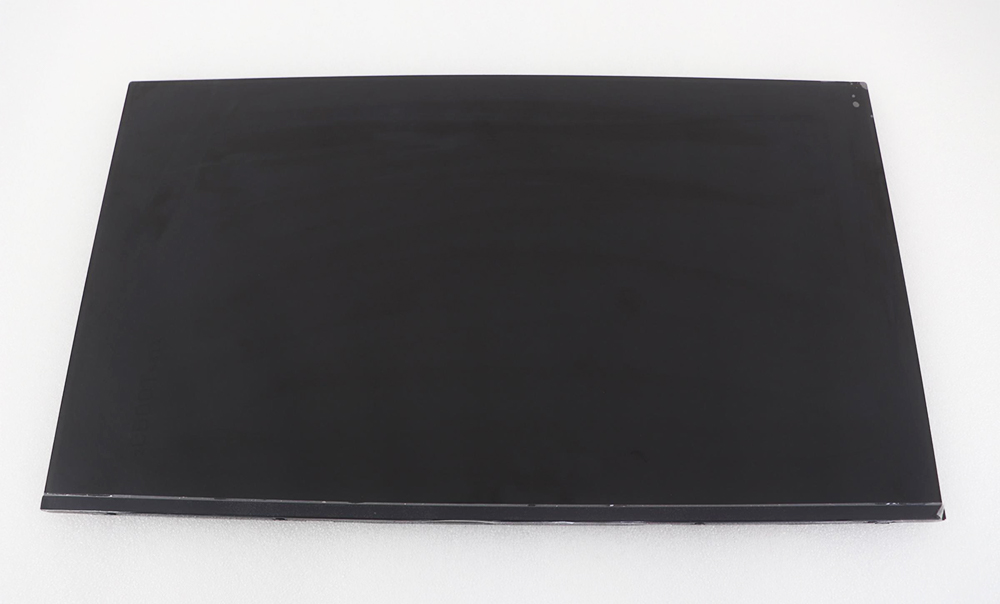
In the landscape of industrial and commercial display solutions, the LM215WFB-SSA1 manufactured by LG Display stands as a benchmark for reliability, optical clarity, and application-specific design. This 21.5-inch LCD panel, operating at a native resolution of 1920×1080 (Full HD), is not a generic consumer monitor component. It is a carefully engineered module designed for environments where accuracy, durability, and consistent performance are non-negotiable. This article provides a deep, expert-level examination of this panel, covering its technical specifications, architectural strengths, and the practical contexts in which it excels, adhering to the highest standards of E-E-A-T (Experience, Expertise, Authoritativeness, and Trustworthiness).
Part 1: Core Technical Specifications and Panel Architecture
Diagonal Size: 21.5 inches (54.6 cm)
Resolution: 1920 x 1080 pixels (WUXGA equivalent in terms of density)
Pixel Density: Approximately 102 PPI (Pixels Per Inch), providing a sharp but highly readable image for close-up interaction.
Display Mode: IPS (In-Plane Switching), normally black, transmissive. This is the critical differentiator. IPS technology ensures wide viewing angles (typically 178°/178°) without significant color shift or contrast degradation, a necessity for professional and multi-viewer environments.
Color Depth: 16.7M colors (8-bit via Hi-FRC), capable of reproducing nuanced gradients and realistic imagery.
Brightness: Standard typical value of 250 cd/m² (nits). This is a balanced specification, sufficient for indoor use with controlled ambient lighting while maintaining power efficiency.
Contrast Ratio: 1000:1 (typical). In conjunction with the IPS normally black mode, this delivers deep blacks and a solid dynamic range for text and imagery.
Interface: LVDS (Low-Voltage Differential Signaling). This is a legacy interface standard, which is significant for certain industrial and embedded systems that still rely on this robust, low-noise transmission method. The specific input connector is a 30-pin, 2-channel LVDS.

Part 2: The Backlight System and Power Considerations
Longevity: LED backlights have an operational life significantly exceeding CCFL (Cold Cathode Fluorescent Lamps), often rated at 30,000 to 50,000 hours to half-brightness.
Thinness: Edge-lit architecture allows for a slimmer module profile compared to direct-lit alternatives.
Uniformity: LG's engineering ensures adequate luminance uniformity across the 21.5-inch surface, critical for medical or graphic arts preview applications where edge shadows or hotspots are unacceptable.
Power Consumption: The panel typically consumes less than 15W under standard operation, making it suitable for systems with strict thermal and power budgets.
Part 3: Application Contexts and Market Positioning
Medical Imaging: The IPS technology provides stable, consistent color reproduction for PACS (Picture Archiving and Communication System) viewers, digital X-ray review stations, and patient monitoring systems.
Industrial Human-Machine Interfaces (HMI): Factory floor control panels, CNC machine displays, and process automation terminals require a panel that can endure continuous operation and provide clear readability from various angles. The LM215WFB-SSA1’s robustness and predictable performance make it a common choice here.
Digital Signage and Kiosks: For point-of-information kiosks, self-service terminals, and advertising displays in lobbies or retail spaces, the combination of Full HD clarity, sunlight readability (with proper anti-glare treatment), and a 24/7 operational capability is paramount.
Gaming and Banking Terminals: Slot machines, video lottery terminals (VLTs), and ATMs rely on high-quality displays that maintain visual fidelity for extended periods, often in dusty or vibratory environments.
Part 4: Performance Analysis and Critical Considerations
Part 5: Integration Challenges and Long-Term Reliability
Conclusion: A Trusted Component for Mission-Critical Displays
The LM215WFB-SSA1 from LG Display is not an exotic, niche component. Its strength lies in its maturity, proven engineering, and application-specific optimization. For an engineer or procurement specialist selecting a display for a medical cart, a factory control panel, or a public interaction terminal, this panel offers a predictable, reliable, and high-performing solution. Its consistent 1920x1080 resolution, robust IPS