- Industrie-LCD-Display
-
Industrial Products
- DC Servo Drive
- AC Servo Drive
- other
- Heidelberg
- FANUC
- IFM
- Meter
- CCD
- Membrane Keypad
- Film
- YOKOGAWA
- Card
- ABB
- MITSUBISHI
- FANUC
- KEYENCE
- BECKHOFF
- Honeywell
- HOLLYSYS
- FUJI servo drives
- HP
- solenoid valve
- thermostat
- Siemens adapter
- color oscilloscope
- Fujitsu connector
- CHELIC
- SMC
- CISCO
- INTEL
- Key board
- FAIRCHILD
- Der Aufsichtsrat
- Board
- Bearing
- other
- Control Panel
- Contactor
- Circuit
- Omron
- Relais.
- Der controller
- Optoelektronische schalter
- Optoelektronische sensoren
- Original
- Fan
- Motortreiber
- Endschalter
- Verstärker
- power supply
- LENZE
- Cable
- Encoder
- Sensor
- Transformator
- Fiber Optic Sensor
- Schutzrelais
- Temperaturregler
- Näherungsschalter
- Switch Sensor
- Siemens
- PCB
- HMI Touch-Glas
-
HMI-Vollautomat Ganze Einheit
- OMRON HMI Touch Panel
- Siemens HMI Touch Panel
- Mitsubishi HMI Touch Panel
- Allen-Bradley Automatisierung HMI Touch
- DELTA HMI Touch Panel
- EVIEW DELTA HMI Touch Panel
- KINCO DELTA HMI Touch Panel
- HITECH HMI Touch Panel
- WEINTECK HMI Touch Panel
- TECVIEW HMI Touch Panel
- WEINVIEW HMI Touch Panel
- PRO-FACE HMI Touch Panel
- SIMATIC HMI Touch Panel
- AMPIRE HMI Touch Panel
- HEIDELBERG HMI Touch Panel
- PANASONIC HMI Touch Panel
- PATLITE HMI Touch Panel
- KYOCERA HMI Touch Panel
- KEYENCE HMI Touch Panel
- WEINVIEW HMI Touch Panel
- HITECH HMI Touch Panel
- FUJI HMI Touch Panel
- HAKKO HMI Touch Panel
- SCHNEIDER HMI Touch Panel
- SAMKOON touch panel
- andere
- Module
- LCD Wechselrichter
- Membran Tastenfeld Schalter
- Winni Touch Screens
- Frequenzumrichter
- Servo Motor
- PLC


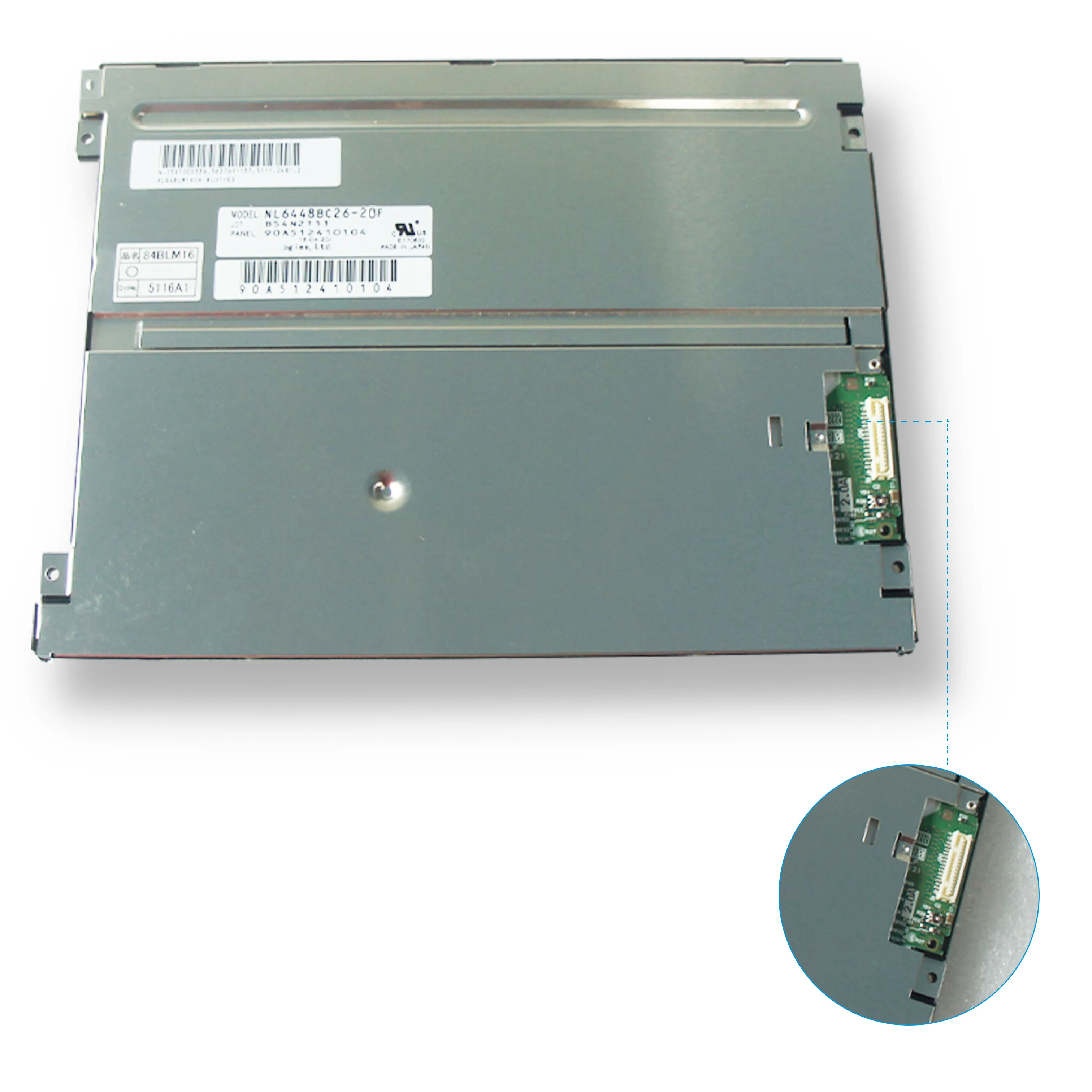


In the intricate world of industrial and embedded display technology, the choice of a panel is seldom about flashy specs alone; it's about reliability, compatibility, and performance under pressure. At the heart of countless mission-critical systems, from medical devices and industrial control panels to transportation and point-of-sale terminals, lies a workhorse component: the Mitsubishi 10.4" TFT-LCD AA104VC14 LCD Panel. This isn't a consumer-grade screen for casual browsing; it's a precision-engineered module built for environments where failure is not an option.
This article delves deep into the technical essence and practical applications of the AA104VC14. We will move beyond basic datasheet parameters to explore what makes this specific panel a enduring choice for engineers and system integrators. From its core electrical and optical characteristics to its mechanical integration challenges and ultimate application landscapes, we will construct a comprehensive understanding of its role in the embedded ecosystem and why it continues to be a relevant solution in an ever-evolving market.
Core Architecture and Electrical Interface
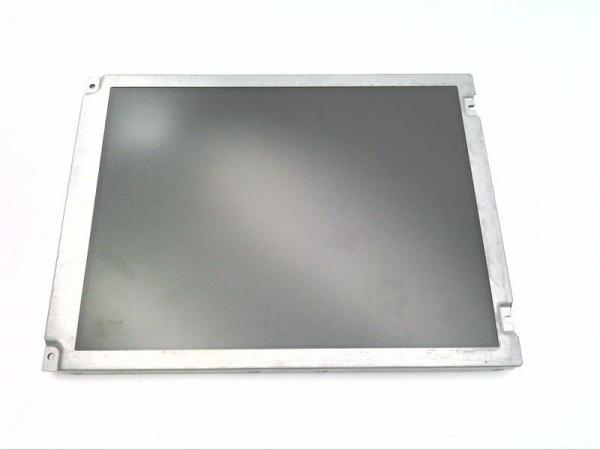
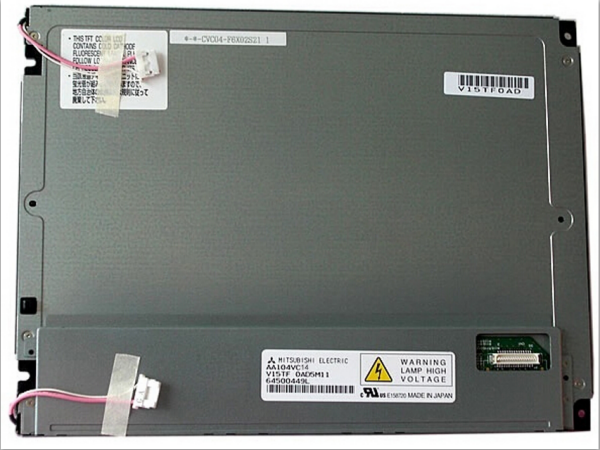
The Mitsubishi AA104VC14 is built around a 10.4-inch diagonal active matrix TFT (Thin-Film Transistor) LCD. Its native resolution is 800 x 600 pixels (SVGA), a 4:3 aspect ratio that remains the standard for many legacy and modern industrial interfaces, ensuring perfect compatibility with a vast array of software and hardware systems. The panel utilizes a CCFL (Cold Cathode Fluorescent Lamp) backlighting system, a technology prized for its even illumination and stable performance over a wide temperature range.
Electrically, the interface is a critical factor for integration. The AA104VC14 typically employs an analog RGB interface. This requires a controller board to generate the precise timing signals (like HSYNC, VSYNC) and analog color voltages to drive the panel. Understanding the pinout and signal requirements, detailed in its datasheet, is the first step for any design-in project. The power requirements for both the LCD logic and the CCFL backlight inverter must be carefully isolated and regulated to avoid noise and ensure longevity.
Optical Performance and Environmental Specifications
Optical performance defines usability. This panel offers a brightness typically around 300 nits (cd/m²), sufficient for most indoor industrial settings. Its contrast ratio provides clear differentiation between shades, crucial for reading data and graphs. One of its standout features is its wide operating temperature range, often spanning from -10°C to +70°C or similar. This ruggedness allows deployment in non-climate-controlled factories, outdoor kiosks, or vehicular applications where temperature fluctuations are severe.
Furthermore, the viewing angles are specified as wide, often 70/70/60/70 degrees (Left/Right/Up/Down), ensuring the display remains readable from various positions—a key requirement for control panels monitored by multiple operators. The use of CCFL backlighting, while less energy-efficient than modern LEDs, offers a proven track record of consistent color temperature and output over its long lifespan, which is a calculated trade-off for many engineers.
Mechanical Integration and Form Factor
The AA104VC14 isn't just a glass screen; it's a mechanical assembly. Its dimensions, bezel size, and mounting hole patterns are standardized but require precise attention. The panel is usually supplied as a module, including the LCD glass, driver circuits, and the CCFL backlight unit, all housed in a metal frame. This frame is the primary point of attachment for the system integrator.
Designing a chassis to securely hold this module, while managing heat dissipation from the backlight and control electronics, is a critical engineering task. Additionally, considerations for front-end design—such as adding a protective glass or polycarbonate overlay, sealing it for dust and moisture resistance (potentially achieving an IP rating), and integrating touchscreen technology (like resistive or capacitive films)—are all built upon this mechanical foundation. The robustness of the module's construction directly influences the final product's durability.
Typical Application Ecosystems
The specific combination of SVGA resolution, 4:3 format, rugged specs, and proven technology earmarks the AA104VC14 for specific verticals. In industrial automation, it is the face of PLC (Programmable Logic Controller) interfaces, CNC machine controls, and SCADA (Supervisory Control and Data Acquisition) systems, where legacy software compatibility is paramount. The medical field utilizes it in diagnostic equipment and patient monitoring systems, valuing its stability and clear display of critical data.
Transportation and infrastructure applications include in-vehicle information displays for buses or trains, and control units for utility management. Even in the retail and hospitality sectors, it finds life in ruggedized point-of-sale terminals and kitchen display systems. These are environments where the display is an interface for productivity and decision-making, not entertainment, and reliability trumps ultra-high resolution.
The Challenge of Legacy Components and Sourcing
As a product that has been on the market for many years, the AA104VC14 faces the universal challenge of legacy technology: long-term availability. Mitsubishi may have declared End-of-Life (EOL) for this specific model, pushing procurement towards authorized distributors' remaining stock or the broader aftermarket. This introduces risks related to component authenticity, quality consistency, and price volatility.
For ongoing production, companies must make strategic decisions: Do they last-time-buy a significant inventory? Do they seek an approved alternative or clone module with identical form, fit, and function? Or do they undertake a more costly but forward-looking redesign to migrate to a newer panel technology (like LED-backlit TFTs with LVDS interfaces)? This sourcing puzzle is a key part of the lifecycle management for any product incorporating this panel.
Modern Alternatives and Migration Considerations
The natural evolution in display technology points towards LED-backlit panels with digital interfaces like LVDS or eDP. These offer benefits: lower power consumption, thinner profiles, and often wider availability. However, a direct "drop-in" replacement for the AA104VC14 is rare. Migration involves more than just swapping screens; it requires a new interface board (controller), potential changes to power supply design, and rigorous re-testing of optical performance and software compatibility.
The decision to migrate hinges on a cost-benefit analysis. For existing, field-deployed systems requiring maintenance, finding original AA104VC14 modules might be the most economical path. For new designs, starting with a modern equivalent is almost always preferable. The value in understanding the AA104VC14 lies in defining the performance envelope and integration requirements that any successor must meet or exceed.
FAQs: Mitsubishi 10.4" AA104VC14 LCD Panel
10. How do I replace a failing AA104VC14 in an existing system?Source a replacement from a reputable supplier ensuring form/fit/function compatibility, or consider a controlled redesign using a modern panel and interface converter.
Conclusion
The Mitsubishi AA104VC14 10.4" TFT-LCD panel exemplifies the enduring value of robust, purpose-built engineering in the embedded world. Its significance extends beyond its technical specifications to its role as a reliable interface in critical systems across industries. Analyzing this module provides a masterclass in the practical considerations of industrial display integration—from electrical interfacing and optical requirements to mechanical design and environmental hardening.
While the march of technology inevitably introduces more advanced alternatives with LED backlights and digital interfaces, the legacy and ongoing use of the AA104VC14 underscore a vital principle: in industrial and professional contexts, proven reliability, compatibility, and total cost of ownership often outweigh raw technological novelty. Understanding this panel is to understand the foundational needs of an entire class of applications, guiding both the maintenance of legacy systems and the informed development of their successors.