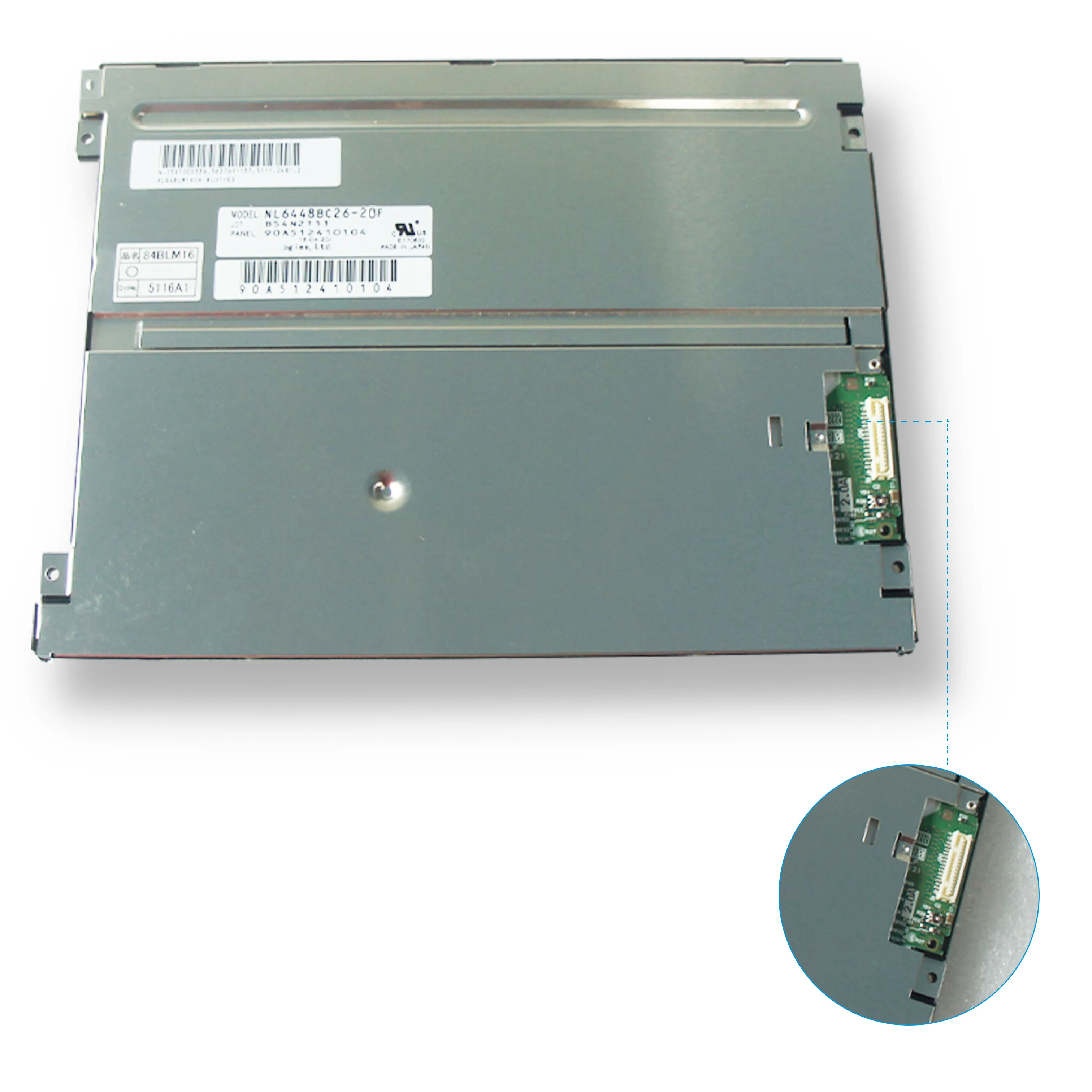
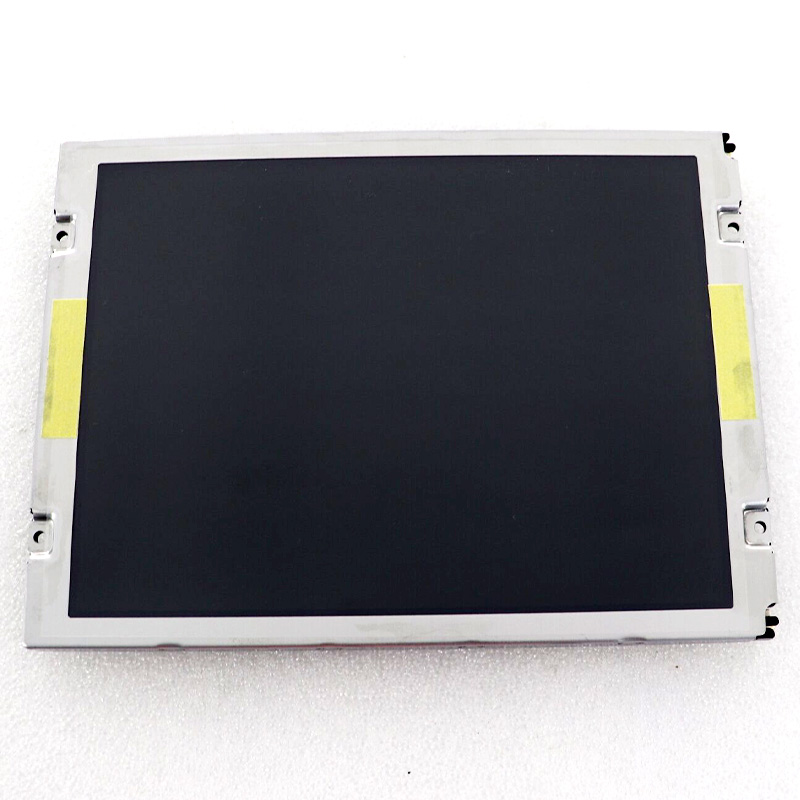
Mitsubishi 8.4 inch LCD Display AA084VC03
In the intricate world of industrial automation, medical equipment, and high-reliability human-machine interfaces (HMIs), the display panel is far more than a simple window to data. It is the critical touchpoint where digital commands meet physical action, where clarity, durability, and precision are non-negotiable. At the heart of many such demanding applications lies a component known for its robust performance: the AA084VC03, an 8.4-inch LCD display module engineered by Mitsubishi Electric.
This article delves deep into the technical essence and practical significance of the AA084VC03. Moving beyond basic specifications, we will explore why this particular module has become a trusted solution across diverse sectors. From its underlying display technology and defining characteristics to its integration challenges and ideal application landscapes, we aim to provide a comprehensive resource for engineers, procurement specialists, and industry professionals seeking to understand the value proposition of this Mitsubishi display. The discussion will illuminate not just what the AA084VC03 is, but how it enables reliability in environments where failure is not an option.
Unpacking the Core Technology: A Deep Dive into the TFT-LCD Panel
The AA084VC03 is built around an Active Matrix Thin-Film Transistor (TFT) Liquid Crystal Display (LCD). This technology is the cornerstone of its performance. Unlike passive matrix displays, each pixel in a TFT-LCD is controlled by its own dedicated transistor, allowing for faster response times, higher contrast ratios, and superior color fidelity. The 8.4-inch diagonal screen provides a balanced viewing area, large enough for detailed information presentation yet compact enough for integration into space-constrained industrial panels or medical devices. The module typically features a resolution of 800 x 600 pixels (SVGA). This resolution offers a sharp pixel density for its size, ensuring that text, graphics, and user interface elements are rendered with clarity. The use of a CCFL (Cold Cathode Fluorescent Lamp) backlight in standard versions provides bright, even illumination, which is crucial for readability in various lighting conditions. The technology stack within the AA084VC03 is designed for stability and longevity, forming a predictable and consistent visual output platform for critical systems.

Defining Characteristics and Key Specifications
The AA084VC03 is distinguished by a set of specifications that cater to industrial rigor. Its high brightness level, often reaching 450 cd/m² or more, ensures visibility even under strong ambient light. The contrast ratio delivers deep blacks and bright whites, essential for distinguishing fine details. Furthermore, the module offers wide viewing angles, both horizontally and vertically, ensuring that the display content remains consistent for operators viewing from different positions. Beyond the visual specs, its mechanical and electrical interface is a key characteristic. It utilizes a standard LVDS (Low-Voltage Differential Signaling) interface. LVDS is renowned for its robustness against electromagnetic interference (EMI), a common challenge in industrial settings with heavy machinery. This noise resistance ensures signal integrity and a stable image. The module operates on a single power supply voltage, simplifying power design for integrators. These characteristics collectively define the AA084VC03 as a module built not just for performance, but for resilience.
The Industrial and Medical Application Landscape
The true test of any industrial component is its performance in the field. The AA084VC03 finds its home in environments where reliability is paramount. In factory automation, it serves as the primary HMI for Programmable Logic Controllers (PLCs), CNC machine controls, and robotic system interfaces. Its durability withstands constant use, temperature variations, and vibrational stresses found on the factory floor. In the medical sector, the stakes are even higher. The display is integrated into diagnostic equipment, patient monitoring systems, and surgical assistance devices. Here, its consistent color reproduction can be vital for image interpretation, while its reliability ensures critical patient data is always visible. The module's design and manufacturing standards often align with the stringent requirements for medical electronic equipment, making it a preferred choice for designers in this field.
Integration Considerations and Design Challenges
Successfully integrating the AA084VC03 into an end-product requires careful planning. Engineers must account for several factors. The LVDS interface necessitates a compatible controller board or a graphics controller chip on the main system PCB. The design must include precise timing controllers and power sequencing circuits as per the module's datasheet to avoid damage during power-up/power-down. Thermal management is another critical consideration. While CCFL backlights generate more heat than modern LEDs, the overall thermal output must be managed within the end product's enclosure to ensure long-term component life and prevent overheating. Mechanical integration involves designing a secure bezel or mounting frame that protects the glass substrate from physical stress and environmental contaminants, while also ensuring proper electromagnetic shielding.
Comparative Analysis: CCFL Backlighting and the LED Alternative
A defining aspect of the classic AA084VC03 is its CCFL backlight system. CCFLs offer excellent brightness uniformity and a wide color gamut, which contributed to the module's early adoption. However, this technology has largely been superseded by LED backlighting in newer designs. LEDs offer significant advantages: they are more energy-efficient, have a longer operational lifetime, generate less heat, and allow for thinner display profiles. They also do not contain mercury, making them more environmentally friendly. When evaluating the AA084VC03, understanding this technological context is key. For existing systems designed around this module, its performance remains excellent. For new designs, engineers might seek equivalent Mitsubishi or other-brand modules with LED backlights for improved efficiency and longevity. The choice often hinges on legacy system support, specific brightness/color requirements, and thermal design constraints.
Long-Term Value: Reliability, Sourcing, and Legacy Support
In industrial and medical markets, product lifecycles span decades. The long-term value of a component like the AA084VC03 is measured by its reliability in operation and the stability of its supply chain. Mitsubishi's reputation for quality manufacturing translates into a display module known for consistent performance over thousands of hours of operation. This reliability reduces maintenance costs and system downtime. However, as a product that has been on the market for many years, sourcing can become a consideration. While available through authorized distributors and specialized electronic component suppliers, planning for potential end-of-life (EOL) scenarios is prudent for long-term product support. This underscores the importance of engaging with reputable suppliers who can provide authentic components and support, or having a qualified alternative module vetted for replacement. Its enduring use is a testament to its well-engineered design.
FAQs: AA084VC03 Mitsubishi 8.4-Inch LCD Display
1. What is the AA084VC03?It is an 8.4-inch TFT-LCD display module manufactured by Mitsubishi Electric, designed for industrial and medical applications.
2. What is its screen resolution?The standard resolution is 800 x 600 pixels (SVGA).
3. What type of interface does it use?It uses an LVDS (Low-Voltage Differential Signaling) interface for robust data transmission.
4. What is the backlight technology?The classic AA084VC03 uses a CCFL (Cold Cathode Fluorescent Lamp) backlight. LED-backlit versions may exist under different model codes.
5. Where is it commonly used?Common applications include industrial HMIs, PLC operator panels, CNC machines, medical monitoring, and diagnostic equipment.
6. What are its key advantages?High brightness, robust LVDS interface, wide viewing angles, and Mitsubishi's reliability for demanding environments.
7. What are the main integration challenges?Designing the LVDS controller circuit, managing power sequencing, and addressing thermal output from the CCFL backlight.
8. Is it still a good choice for new designs?For new designs, an LED-backlit equivalent is generally preferred for efficiency and longevity. The AA084VC03 remains excellent for maintaining or replicating existing systems.
9. How do I ensure I get a genuine module?Source from authorized Mitsubishi distributors or highly reputable specialized suppliers to avoid counterfeit components.
10. What should I consider for long-term supply?Plan for component lifecycle management, including identifying potential alternative modules for future product servicing needs.
Conclusion
The Mitsubishi AA084VC03 8.4-inch LCD display stands as a testament to engineering focused on durability and performance. More than just a collection of specifications, it represents a solution trusted in critical applications where visual clarity and operational resilience are inseparable from system success. Its robust TFT-LCD technology, coupled with the noise-resistant LVDS interface, has made it a workhorse in factories and medical facilities worldwide. While display technology continues to evolve toward LED backlighting and higher resolutions, the enduring relevance of the AA084VC03 lies in its proven track record. For engineers and organizations maintaining long-lifecycle equipment, understanding this module's capabilities, integration nuances, and sourcing landscape is invaluable. It serves as a benchmark for reliability, reminding us that in specialized industrial contexts, the most advanced component is often the one that performs flawlessly, day after day, for years on end.