- Industrial LCD display
-
Industrial Products
- DC Servo Drive
- AC Servo Drive
- other
- Heidelberg
- FANUC
- IFM
- Meter
- CCD
- Membrane Keypad
- Film
- YOKOGAWA Module
- Card
- ABB
- MITSUBISHI
- FANUC
- KEYENCE
- BECKHOFF
- Honeywell
- HOLLYSYS
- FUJI servo drives
- HP
- solenoid valve
- thermostat
- Siemens adapter
- color oscilloscope
- Fujitsu connector
- CHELIC
- SMC
- CISCO Module
- INTEL
- Key board
- FAIRCHILD
- Motherboard
- Board
- Bearing
- other
- Control Panel
- Contactor
- Circuit
- OMRON
- Relay
- Controller
- Photoelectric Switch
- Photoelectric Sensor
- Original
- Fan
- Motor Driver
- Limit Switch
- Amplifier
- power supply
- LENZE
- Cable
- Encoder
- Sensor
- Transformer
- Fiber Optic Sensor
- Protection Relay
- Temperature Controller
- Proximity Switch
- Switch Sensor
- Siemens
- Industrial board
- HMI Touch Glass
-
HMI Full Machine Whole unit
- OMRON HMI Touch Panel
- Siemens HMI Touch Panel
- Mitsubishi HMI Touch Panel
- Allen-Bradley automation HMI Touch Panel
- DELTA HMI Touch Panel
- EVIEW DELTA HMI Touch Panel
- KINCO DELTA HMI Touch Panel
- HITECH HMI Touch Panel
- WEINTECK HMI Touch Panel
- TECVIEW HMI Touch Panel
- WEINVIEW HMI Touch Panel
- PRO-FACE HMI Touch Panel
- SIMATIC HMI Touch Panel
- AMPIRE HMI Touch Panel
- HEIDELBERG HMI Touch Panel
- PANASONIC HMI Touch Panel
- PATLITE HMI Touch Panel
- KYOCERA HMI Touch Panel
- KEYENCE HMI Touch Panel
- WEINVIEW HMI Touch Panel
- HITECH HMI Touch Panel
- FUJI HMI Touch Panel
- HAKKO HMI Touch Panel
- SCHNEIDER HMI Touch Panel
- SAMKOON touch panel
- other
- Module
- lcd inverter
- Membrane Keypad Switch
- Winni Touch Screens
- Frequency Inverter
- Servo Motor
- PLC


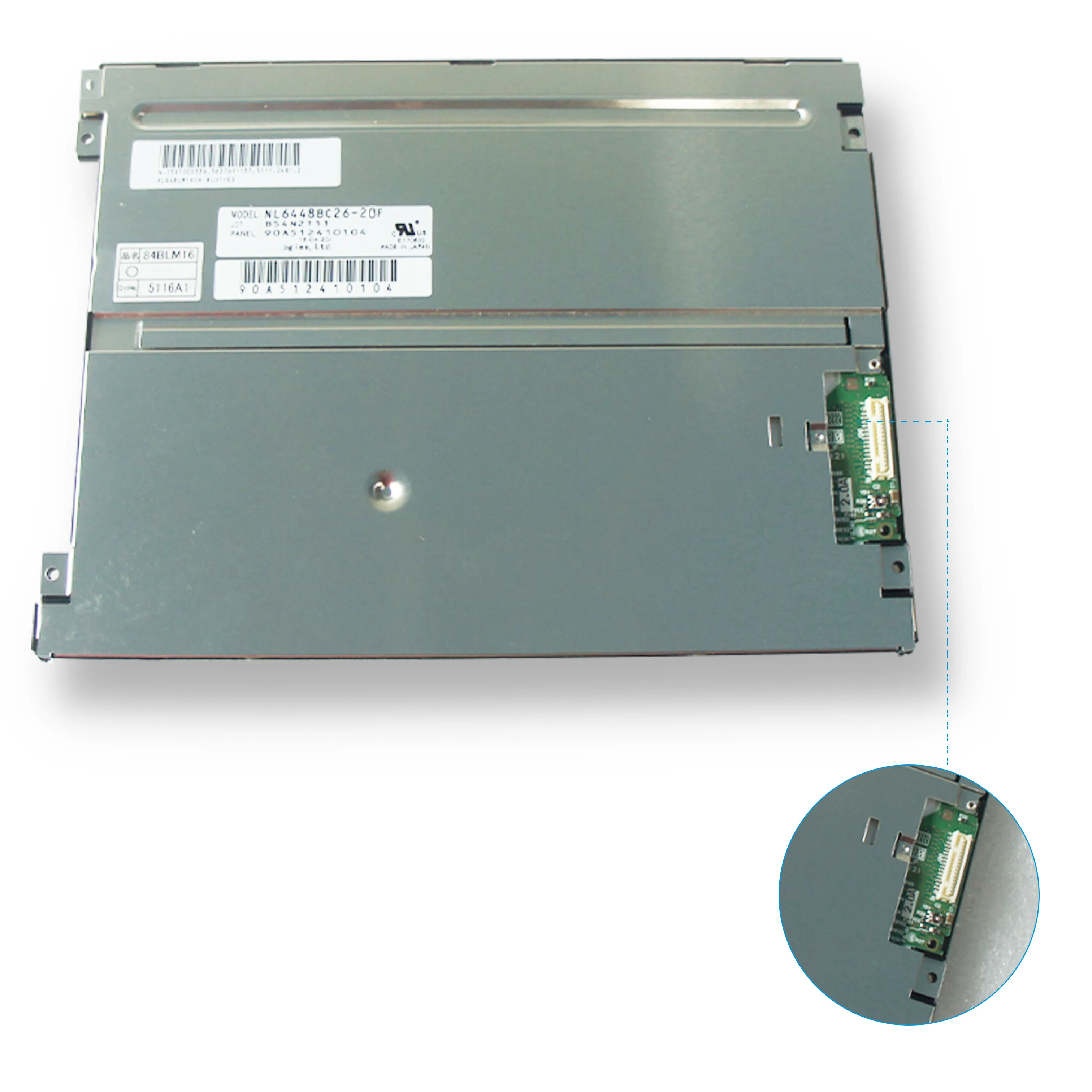


In the intricate world of industrial automation, human-machine interfaces (HMIs) serve as the critical bridge between complex machinery and human operators. The clarity, reliability, and performance of the display unit are paramount, directly influencing operational efficiency and decision-making. This article delves deep into the AA090MF11, a 9-inch TFT-LCD module from Mitsubishi Electric, designed to meet the rigorous demands of industrial environments. With its 800 x 480 resolution and robust construction, this display is more than just a component; it is a cornerstone for building intuitive and resilient control systems.
We will explore its technical specifications in detail, uncovering the engineering choices that define its performance. Beyond the datasheet, we will analyze its practical applications across various sectors, from factory floors to specialized machinery. Furthermore, this guide will provide crucial insights into integration best practices, compatibility considerations, and a balanced evaluation of its strengths against potential limitations. Our goal is to offer a comprehensive resource for engineers, system integrators, and procurement specialists seeking to understand the true value and implementation nuances of the Mitsubishi AA090MF11 display module.
Technical Specifications and Core Architecture
The Mitsubishi AA090MF11 is built upon a high-performance a-Si TFT (Amorphous Silicon Thin-Film Transistor) LCD panel. The 9-inch diagonal screen offers an 800 x 480 pixel resolution (WVGA), a format that provides an optimal balance between display detail and the processing power required in industrial computing contexts. This resolution is sufficient for rendering clear schematics, data trends, and control buttons without overburdening the host controller.
At its heart, the module incorporates an LVDS (Low-Voltage Differential Signaling) interface. This technology is critical for industrial applications as it ensures high-speed data transmission with excellent noise immunity, minimizing signal degradation over longer cable runs typical in control cabinets. The display boasts a brightness of approximately 450 cd/m², ensuring readability even under strong ambient lighting conditions. A comprehensive range of supported operating and storage temperatures underscores its design for harsh environments where fluctuations are common.

Designed for Industrial Resilience
Unlike commercial-grade displays, the AA090MF11 is engineered with durability as a core principle. Its construction is tailored to withstand the common adversaries in industrial settings: vibration, dust, electromagnetic interference (EMI), and temperature extremes. The use of robust connectors and a rigid frame mitigates the risk of failure caused by constant machine vibration.
The optical bonding technology, often employed in such modules, is a key differentiator. This process laminates the touch panel (if equipped) directly to the LCD, reducing internal air gaps. This not only enhances optical clarity by minimizing reflection but also creates a more solid, resistant structure that is less prone to condensation and damage from physical shock. This inherent ruggedness translates directly into reduced downtime and lower total cost of ownership, as the display can endure the rigors of a 24/7 operational cycle.
Primary Applications and Use Cases
The AA090MF11 finds its niche in a wide array of industrial and embedded applications. Its most prominent role is within Programmable Logic Controller (PLC) based HMI systems, where it serves as the local operator panel for monitoring and controlling machinery on the factory floor. It is equally vital in building automation, providing the interface for climate control, security, and energy management systems.
Medical Devices: For non-critical patient monitoring or equipment control interfaces where reliability is non-negotiable.
Transportation and Fleet Management: As displays in vehicle terminals or logistics tracking systems.
Specialized Industrial Machinery: Including packaging machines, CNC controllers, and test & measurement equipment, where a compact, reliable display is essential for operator guidance.
Integration and Compatibility Considerations
Successfully integrating the AA090MF11 requires careful planning. The LVDS interface necessitates a compatible graphics controller on the host system's motherboard or single-board computer (SBC). Engineers must ensure the signal timing and voltage levels match the display's requirements, often detailed in its controller datasheet. Power supply design is another critical factor; a clean, stable power source within the specified voltage range is crucial for longevity and preventing flicker.
Furthermore, mechanical integration involves designing a bezel or enclosure that not only secures the module but also provides an appropriate IP rating for the intended environment. Compatibility with touch solutions (resistive or capacitive), if required, adds another layer to the integration process, involving driver support and calibration. Proper electrostatic discharge (ESD) protection circuits are also recommended during installation.
Comparative Advantages in the Market
Positioned within Mitsubishi's extensive portfolio, the AA090MF11 offers distinct advantages. Its primary strength lies in the Mitsubishi brand assurance of quality, consistency, and long-term availability—a critical factor for industrial products with multi-year lifecycles. Compared to generic off-the-shelf TFT modules, it provides guaranteed performance parameters and reliability metrics that are validated for industrial use.
When evaluated against similar modules from other industrial automation leaders, it often excels in its balanced feature set: a sharp WVGA resolution on a 9-inch screen, high brightness, and robust construction without unnecessary frills that drive up cost. This makes it a cost-effective and reliable workhorse for applications where ultra-high resolution or extreme color fidelity are secondary to unwavering reliability and clear visibility.
Potential Limitations and Mitigation Strategies
No component is without its considerations. The fixed 800x480 resolution, while adequate for most industrial tasks, may be limiting for applications requiring dense information display or complex graphical user interfaces. The reliance on an LVDS interface, while beneficial for noise immunity, may require additional design effort compared to more plug-and-play HDMI or VGA solutions, though this is standard for embedded industrial design.
Potential buyers must also consider the lead times and supply chain aspects typical for specialized industrial components, which can differ from consumer electronics. The mitigation strategy involves early design-in, thorough testing with the exact host hardware, and sourcing from authorized distributors to ensure genuine product availability. For resolution constraints, careful UI design focused on clarity and hierarchy is essential.
FAQs
Q10: Can I replace a failed display with this module easily?A10: It depends on the original system's compatibility. You must match the physical dimensions, mounting, interface (LVDS pinout), and power requirements for a successful replacement.
Conclusion
The Mitsubishi AA090MF11 9-inch TFT-LCD display stands as a testament to purpose-driven industrial design. It masterfully balances essential performance metrics—clarity, brightness, and robustness—within a compact and reliable form factor. As we have explored, its value extends far beyond its basic specifications; it lies in the guaranteed durability, noise-resistant LVDS interface, and the engineering foresight that allows it to thrive in challenging environments where consumer displays would rapidly fail.
For system designers and engineers, selecting this module is not merely a component choice but a strategic decision for long-term system reliability. By understanding its technical architecture, integration requirements, and ideal use cases, professionals can leverage the AA090MF11 to build HMIs that are not only functional but also resilient. In the demanding landscape of industrial automation, such reliability is not just a feature; it is the foundation of operational continuity and efficiency.