All Categories
- Industrial LCD display
-
Industrial Products
- DC Servo Drive
- AC Servo Drive
- other
- Heidelberg
- FANUC
- IFM
- Meter
- CCD
- Membrane Keypad
- Film
- YOKOGAWA Module
- Card
- ABB
- MITSUBISHI
- FANUC
- KEYENCE
- BECKHOFF
- Honeywell
- HOLLYSYS
- FUJI servo drives
- HP
- solenoid valve
- thermostat
- Siemens adapter
- color oscilloscope
- Fujitsu connector
- CHELIC
- SMC
- CISCO Module
- INTEL
- Key board
- FAIRCHILD
- Motherboard
- Board
- Bearing
- other
- Control Panel
- Contactor
- Circuit
- OMRON
- Relay
- Controller
- Photoelectric Switch
- Photoelectric Sensor
- Original
- Fan
- Motor Driver
- Limit Switch
- Amplifier
- power supply
- LENZE
- Cable
- Encoder
- Sensor
- Transformer
- Fiber Optic Sensor
- Protection Relay
- Temperature Controller
- Proximity Switch
- Switch Sensor
- Siemens
- Industrial board
- HMI Touch Glass
-
HMI Full Machine Whole unit
- OMRON HMI Touch Panel
- Siemens HMI Touch Panel
- Mitsubishi HMI Touch Panel
- Allen-Bradley automation HMI Touch Panel
- DELTA HMI Touch Panel
- EVIEW DELTA HMI Touch Panel
- KINCO DELTA HMI Touch Panel
- HITECH HMI Touch Panel
- WEINTECK HMI Touch Panel
- TECVIEW HMI Touch Panel
- WEINVIEW HMI Touch Panel
- PRO-FACE HMI Touch Panel
- SIMATIC HMI Touch Panel
- AMPIRE HMI Touch Panel
- HEIDELBERG HMI Touch Panel
- PANASONIC HMI Touch Panel
- PATLITE HMI Touch Panel
- KYOCERA HMI Touch Panel
- KEYENCE HMI Touch Panel
- WEINVIEW HMI Touch Panel
- HITECH HMI Touch Panel
- FUJI HMI Touch Panel
- HAKKO HMI Touch Panel
- SCHNEIDER HMI Touch Panel
- SAMKOON touch panel
- other
- Module
- lcd inverter
- Membrane Keypad Switch
- Winni Touch Screens
- Frequency Inverter
- Servo Motor
- PLC

Recommended Products




Home » News
Mitsubishi AA104SL02 10.4 inch LCD Display
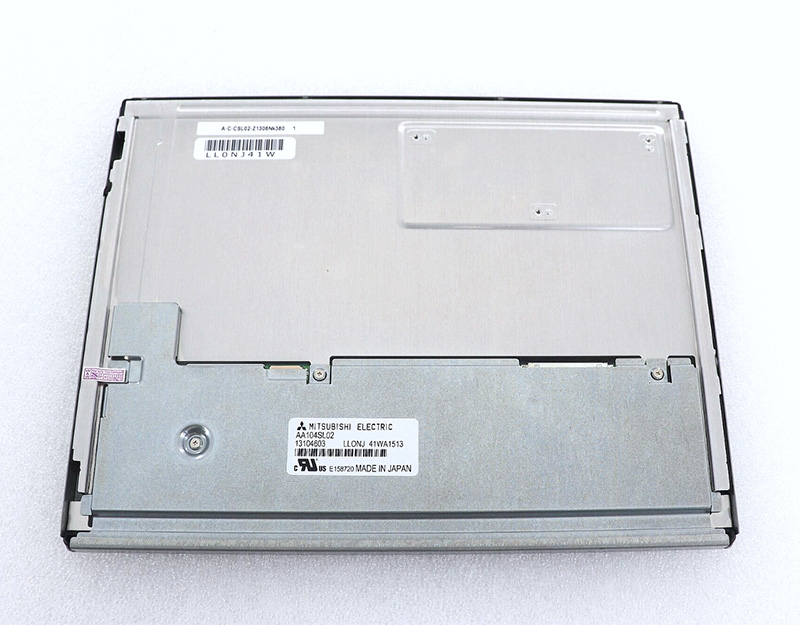
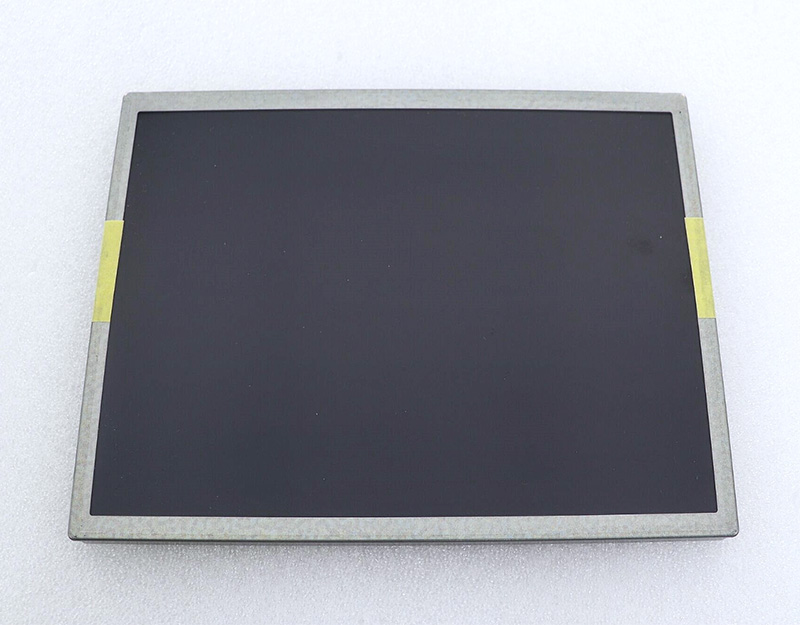
In the intricate world of industrial and commercial display solutions, certain components stand out not merely as parts, but as benchmarks of reliability and performance. The Mitsubishi AA104SL02 is one such component—a 10.4-inch LCD display module that has carved a significant niche in demanding applications. This article delves deep into this specific display, moving beyond basic specifications to explore its technological DNA, inherent strengths, and the precise scenarios where it delivers unparalleled value.
While countless displays flood the market, the AA104SL02 represents a philosophy of engineering built for endurance and clarity. We will dissect its core attributes, from its rugged construction and superior optical performance to its versatile interface and power profile. Understanding this module is crucial for engineers, product designers, and procurement specialists seeking a display solution that guarantees stability under pressure, ensuring that the human-machine interface remains a point of trust, not failure, in critical systems.
Unpacking the Core Specifications and Architecture
The Mitsubishi AA104SL02 is fundamentally a 10.4-inch diagonal TFT-LCD module with a native resolution of 800 x 600 pixels (SVGA). This 4:3 aspect ratio is a classic format, particularly well-suited for legacy systems and modern industrial interfaces where vertical screen real estate is as valuable as horizontal. At its heart lies an a-Si (amorphous Silicon) TFT active matrix, a mature and highly reliable technology known for its consistent performance over long operational lifetimes.
Beyond the panel itself, the module integrates a robust CCFL (Cold Cathode Fluorescent Lamp) backlight system. While newer technologies like LED exist, this CCFL system is engineered for longevity and stable luminance output, often rated for tens of thousands of hours. The module presents a comprehensive set of interfaces, primarily accepting LVDS (Low-Voltage Differential Signaling) input, which ensures clean signal transmission resistant to noise—a critical factor in electrically noisy industrial environments. This foundational architecture sets the stage for its renowned durability.
The Hallmarks of Ruggedized Reliability
Where the AA104SL02 truly distinguishes itself is in its built-for-purpose ruggedness. This is not a consumer-grade display repurposed for industry; it is designed from the ground up to withstand harsh conditions. Its operational temperature range is notably wide, typically from -20°C to +70°C, allowing deployment in unheated warehouses, under direct sunlight, or next to heat-generating machinery where ordinary displays would falter or fail.
Furthermore, the module is constructed to resist vibrations and shocks, a necessity in transportation, manufacturing, and military applications. The combination of a sturdy metal frame, secure component mounting, and carefully selected materials ensures mechanical integrity. This inherent toughness minimizes downtime and maintenance costs, providing a total cost of ownership that is favorable despite a potentially higher initial investment compared to less robust alternatives.
Optical Performance in Challenging Environments
A display's usefulness is nullified if it cannot be seen clearly. The AA104SL02 addresses this with exceptional optical characteristics tailored for challenging viewing conditions. It boasts a high brightness level, typically around 450 nits or more, which is essential for combating ambient light and glare in outdoor or brightly lit indoor settings. The contrast ratio is equally impressive, delivering deep blacks and bright whites for sharp, legible imagery.
Perhaps most critically, the module offers a wide viewing angle, both horizontally and vertically, often exceeding 140 degrees. This ensures that information remains accurate and discernible to operators who may not be directly in front of the screen—a common scenario on a factory floor or in a control room with multiple viewing positions. This optical resilience ensures that critical data is always communicated effectively.
Interface and Integration Considerations
Successful integration is key to any component's adoption. The AA104SL02 simplifies this process through its standardized and robust interface scheme. The primary LVDS interface reduces electromagnetic interference (EMI), a common pitfall in dense electronic assemblies. The pinout and signal timing are well-documented, allowing engineers to design compatible controller boards with predictability.
The module also typically includes onboard power inverters for the CCFL backlight, streamlining the power supply design. Engineers must account for the separate logic and backlight power requirements, but the documentation provides clear guidance. This design philosophy minimizes peripheral component count on the host system, saving space and reducing potential points of failure, thereby accelerating development cycles for new equipment.
Target Applications and Industry Use Cases
The specific blend of features makes the AA104SL02 indispensable in several high-stakes sectors. In industrial automation, it serves as the face of PLCs, CNC machine controls, and test/measurement equipment, where 24/7 operation is the norm. The transportation sector utilizes it in railway control systems, aviation ground support, and marine navigation due to its vibration resistance.
It is also a fixture in medical devices (diagnostic and monitoring equipment), where color accuracy and reliability are non-negotiable. Furthermore, point-of-sale (POS) systems and kiosks in demanding environments benefit from its wide viewing angles and longevity. In each case, the display is chosen not for being the cheapest, but for being the most dependable link in the human-machine interaction chain.
Longevity, Obsolescence, and the Supply Chain
Mitsubishi has a track record of supporting its industrial display products for extended lifecycles, which is a paramount concern for manufacturers who design products meant to last a decade or more. The AA104SL02 benefits from this philosophy. However, with the broader industry shift toward LED backlighting and newer interfaces, understanding the supply chain is crucial.
While still available through authorized distributors and specialists, proactive procurement and lifecycle planning are advised. For legacy systems, the module remains a direct replacement savior. For new designs, engineers must weigh its proven performance against newer technologies, considering factors like future availability, power efficiency (where CCFL draws more power than LED), and potential need for form-factor compatibility with existing tooling.
Frequently Asked Questions (FAQs)
Q1: What is the screen size and resolution of the Mitsubishi AA104SL02?A1: It is a 10.4-inch display with an SVGA resolution of 800 x 600 pixels.
Q2: What type of backlight does it use?A2: It uses a CCFL (Cold Cathode Fluorescent Lamp) backlight system known for stable, long-life luminance.
Q3: What is the primary interface for this LCD module?A3: The primary input interface is LVDS (Low-Voltage Differential Signaling).
Q4: Can it operate in extreme temperatures?A4: Yes, it is designed for a wide operating temperature range, typically from -20°C to +70°C.
Q5: Is this display suitable for outdoor use?A5: Its high brightness (~450 nits) and wide temperature range make it suitable for many outdoor and high-ambient-light environments, though direct sunlight may still require a protective bezel or hood.
Q6: What are the main advantages over consumer-grade displays?A6: Key advantages include a wider temperature range, superior ruggedness against shock/vibration, longer guaranteed lifespan, and stable performance in electrically noisy settings.
Q7: In which industries is it commonly used?A7: Common applications include industrial automation, transportation systems, medical equipment, and ruggedized POS/kiosks.
Q8: Is the AA104SL02 still a good choice for new product designs?A8: It depends. For applications requiring proven ruggedness, wide temperature operation, and direct replacement, it is excellent. For ultra-low power or the thinnest profiles, newer LED-backlit modules may be considered.
Q9: How does its viewing angle performance rate?A9: It offers wide viewing angles (often >140°), ensuring good visibility from various positions, which is critical in industrial and public settings.
Q10: Where can I source this display module?A10: It is available through specialized electronic component distributors and display module suppliers who focus on industrial and professional markets.
Conclusion
The Mitsubishi AA104SL02 10.4-inch LCD display is far more than a simple screen; it is a testament to engineered resilience. Through its robust architecture, exceptional optical performance in adverse conditions, and proven reliability across a spectrum of demanding industries, it has established itself as a trusted component in critical systems. Its value proposition lies not in fleeting technological trends, but in unwavering performance where failure is not an option.
For designers and engineers, choosing this module represents a commitment to quality and longevity. It underscores an understanding that the display interface is a vital point of communication between complex machinery and human operators. In a world increasingly filled with disposable electronics, the AA104SL02 stands as a durable, dependable workhorse, ensuring clarity and control in the environments that need it most.