- Industrie-LCD-Display
-
Industrial Products
- DC Servo Drive
- AC Servo Drive
- other
- Heidelberg
- FANUC
- IFM
- Meter
- CCD
- Membrane Keypad
- Film
- YOKOGAWA
- Card
- ABB
- MITSUBISHI
- FANUC
- KEYENCE
- BECKHOFF
- Honeywell
- HOLLYSYS
- FUJI servo drives
- HP
- solenoid valve
- thermostat
- Siemens adapter
- color oscilloscope
- Fujitsu connector
- CHELIC
- SMC
- CISCO
- INTEL
- Key board
- FAIRCHILD
- Der Aufsichtsrat
- Board
- Bearing
- other
- Control Panel
- Contactor
- Circuit
- Omron
- Relais.
- Der controller
- Optoelektronische schalter
- Optoelektronische sensoren
- Original
- Fan
- Motortreiber
- Endschalter
- Verstärker
- power supply
- LENZE
- Cable
- Encoder
- Sensor
- Transformator
- Fiber Optic Sensor
- Schutzrelais
- Temperaturregler
- Näherungsschalter
- Switch Sensor
- Siemens
- PCB
- HMI Touch-Glas
-
HMI-Vollautomat Ganze Einheit
- OMRON HMI Touch Panel
- Siemens HMI Touch Panel
- Mitsubishi HMI Touch Panel
- Allen-Bradley Automatisierung HMI Touch
- DELTA HMI Touch Panel
- EVIEW DELTA HMI Touch Panel
- KINCO DELTA HMI Touch Panel
- HITECH HMI Touch Panel
- WEINTECK HMI Touch Panel
- TECVIEW HMI Touch Panel
- WEINVIEW HMI Touch Panel
- PRO-FACE HMI Touch Panel
- SIMATIC HMI Touch Panel
- AMPIRE HMI Touch Panel
- HEIDELBERG HMI Touch Panel
- PANASONIC HMI Touch Panel
- PATLITE HMI Touch Panel
- KYOCERA HMI Touch Panel
- KEYENCE HMI Touch Panel
- WEINVIEW HMI Touch Panel
- HITECH HMI Touch Panel
- FUJI HMI Touch Panel
- HAKKO HMI Touch Panel
- SCHNEIDER HMI Touch Panel
- SAMKOON touch panel
- andere
- Module
- LCD Wechselrichter
- Membran Tastenfeld Schalter
- Winni Touch Screens
- Frequenzumrichter
- Servo Motor
- PLC


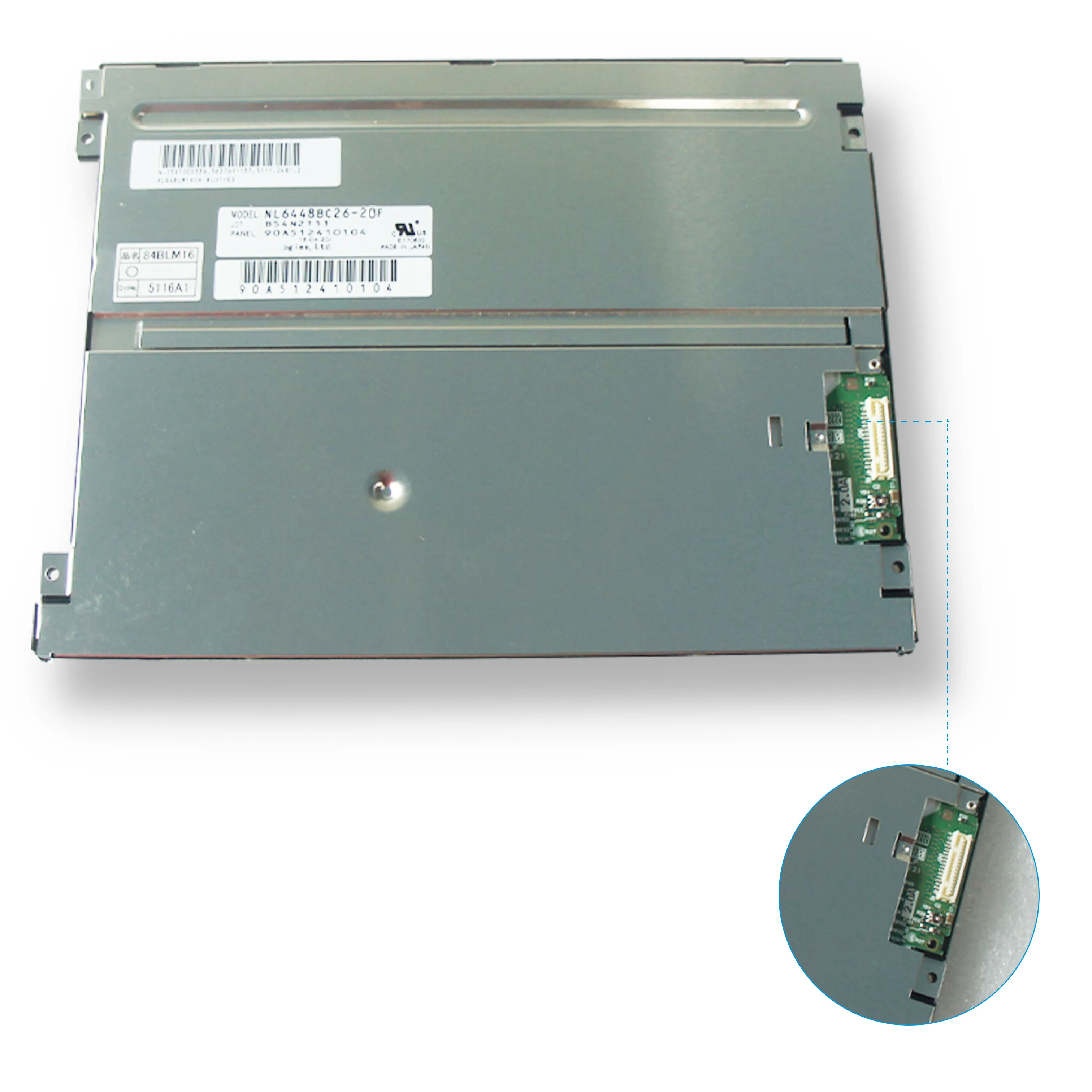


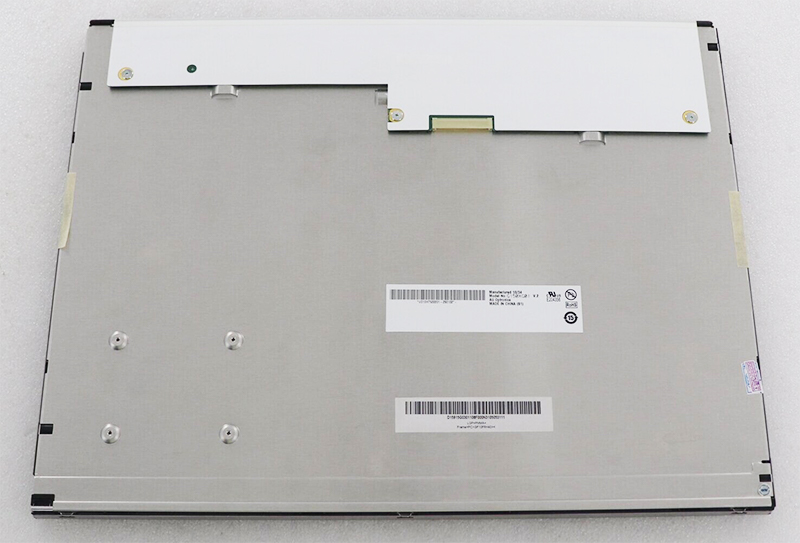
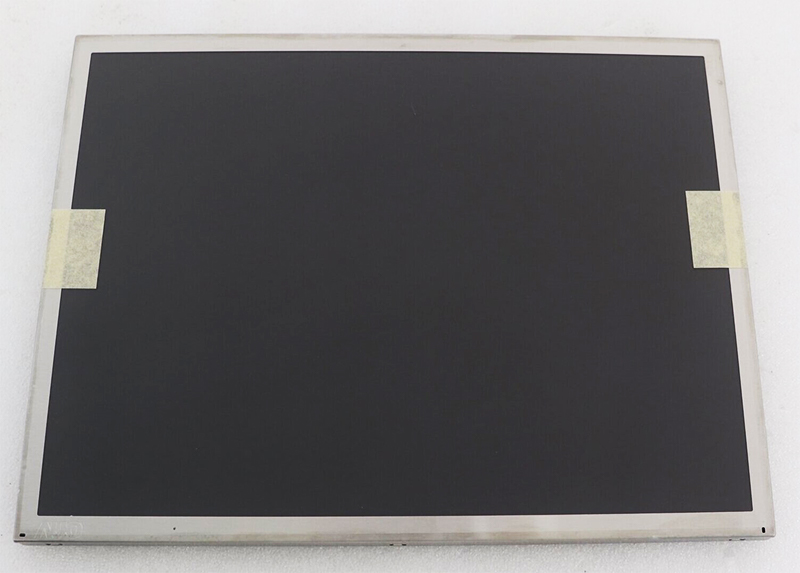
New AUO 15 inch 1024*768 Display LCD screen G150XG01 V.2
In the ever-evolving landscape of display technology, where 4K and OLED often dominate headlines, there exists a niche yet profoundly important segment dedicated to reliability, longevity, and specific industrial applications. This article delves deep into one such component: the AUO 15-inch 1024x768 LCD screen, model G150XG01 V.2. At first glance, its XGA resolution might seem antiquated in a world of ultra-high-definition panels. However, this perception belies its critical role and sophisticated engineering.
Our exploration will move beyond basic specifications to uncover the true value proposition of this display. We will analyze its technical DNA, the rationale behind its seemingly "standard" resolution, and the specific market demands it fulfills. From industrial control systems to medical monitors and legacy device servicing, the G150XG01 V.2 represents a cornerstone of stability. This article is designed for procurement specialists, engineers, product developers, and technical enthusiasts seeking a comprehensive understanding of a display that prioritizes durability, compatibility, and consistent performance over fleeting consumer trends.
Decoding the G150XG01 V.2: More Than Just Numbers
The model number G150XG01 V.2 is a precise identifier encoding its key attributes. "G15" signifies a 15-inch diagonal size, while "0XG01" points to AUO's internal design and feature set, with "V.2" indicating a revision or improved version over its predecessor. The core specification—a 15-inch active area with a native resolution of 1024 x 768 pixels—places it squarely in the XGA (Extended Graphics Array) format. This 4:3 aspect ratio is a defining characteristic.
Unlike widescreen panels, this squarer format is not an oversight but a deliberate design choice for vertical data presentation, forms, and legacy software interfaces that do not accommodate wide screens efficiently. The panel utilizes a Twisted Nematic (TN) or potentially an Advanced-TN technology, offering fast response times, high brightness (typically around 300 nits or more), and excellent contrast ratios for monochrome or data-centric applications. Understanding this foundation is crucial to appreciating its application fit.
The Enduring Relevance of XGA in a High-Definition World
In an era of diminishing pixel visibility, why does a 1024x768 resolution remain not just relevant, but essential? The answer lies in system compatibility, cost optimization, and human-factors engineering. Countless industrial, medical, and point-of-sale systems were architected around XGA output. Upgrading the display often means overhauling the entire software and hardware stack, a prohibitively expensive and complex endeavor.
Furthermore, for applications displaying text-based data, diagnostic waveforms, or schematic diagrams, excessive pixel density can be counterproductive, causing eye strain or requiring problematic scaling. The XGA resolution provides a clear, legible pixel structure that matches the output of legacy systems perfectly, ensuring a sharp, 1:1 pixel mapping without blurry interpolation. It represents the optimal balance between information density and clarity for its target uses.
Engineering for Extreme Environments: Durability Features
The G150XG01 V.2 is built to withstand conditions that would cripple a consumer-grade monitor. Its value is engineered into its robustness. Key durability features often include an extended operating temperature range, allowing it to function reliably in both freezing cold and intensely hot industrial settings. The backlight system is designed for long-life operation, often exceeding 50,000 hours, minimizing downtime and maintenance costs.
Physically, these panels are constructed with stronger substrates and often feature hardened surfaces to resist scratches, chemicals, and abrasion common in factories, laboratories, or medical environments. Connectors are securely fastened, and the overall assembly prioritizes resistance to vibration and shock. This focus on endurance transforms the display from a commodity into a critical, reliable system component.
Core Application Ecosystems: Where This Panel Excels
The specific attributes of the AUO G150XG01 V.2 make it the display of choice for several well-defined verticals. Industrial Human-Machine Interfaces (HMIs) and control panels are a primary application, where its 4:3 ratio fits control software layouts and its durability ensures 24/7 operation. In medical diagnostics, such as patient monitors or ultrasound devices, the consistent color performance (often in grayscale) and high brightness are vital for accurate readings.
Furthermore, it serves as a direct replacement part in Point-of-Sale (POS) systems, kiosks, and specialized instrumentation. Its role in the aftermarket and repair sector is also significant, providing a lifeline for extending the serviceable life of expensive equipment whose original displays are no longer in production, thus preventing premature obsolescence.
The V.2 Advantage: Analyzing Revisions and Improvements
The "V.2" suffix signifies an evolutionary step. While core specifications like size and resolution remain constant, revisions typically target enhanced performance and reliability. Improvements in the G150XG01 V.2 over an initial version may include a wider color gamut for better visual representation, reduced power consumption through more efficient LED backlighting, or enhanced dimming capabilities.
Manufacturers might also refine the optical bonding process to reduce glare and improve readability in high-ambient light, or tweak the driving electronics for better signal compatibility and reduced electromagnetic interference (EMI). These incremental upgrades are critical for users, as they ensure the replacement or new-integration panel offers the latest available performance within the same form and function factor, future-proofing the integration.
Integration and Sourcing Considerations for Buyers
Successfully integrating or replacing with a G150XG01 V.2 requires careful planning. Technically, integrators must verify mechanical compatibility (mounting holes, bezel dimensions, depth) and interface matching (typically LVDS with a specific pinout and voltage). The driving board or controller must be configured for its exact timing parameters.
From a sourcing perspective, working with authorized or highly reputable distributors is paramount to avoid counterfeit or refurbished panels sold as new. Buyers should request detailed datasheets, confirm the exact version (V.2), and inquire about warranty and lifecycle status. Understanding the panel's End-of-Life (EOL) forecast is also crucial for long-term product planning, potentially guiding decisions to purchase lifetime buy quantities.
FAQs: AUO G150XG01 V.2 Display Panel
10. Where can I reliably source this panel?Through authorized electronic component distributors or specialized display module suppliers who can provide authenticity guarantees and technical support.
Conclusion
The AUO G150XG01 V.2 15-inch XGA display is a compelling case study in purpose-driven engineering. It demonstrates that technological value is not defined solely by the highest pixel count, but by how perfectly a component meets the stringent, often unglamorous demands of its operational environment. Its continued production and refinement underscore the enduring need for reliability, compatibility, and durability in sectors where equipment failure is not an option.
For engineers and procurement professionals, understanding this panel's specifications is just the starting point. True insight comes from appreciating its role within larger systems, its economic rationale in extending product lifecycles, and its engineered resilience. In a world chasing the next visual breakthrough, the G150XG01 V.2 stands as a steadfast testament to the critical importance of getting the fundamentals exceptionally right.