- Industrial LCD display
-
Industrial Products
- DC Servo Drive
- AC Servo Drive
- other
- Heidelberg
- FANUC
- IFM
- Meter
- CCD
- Membrane Keypad
- Film
- YOKOGAWA Module
- Card
- ABB
- MITSUBISHI
- FANUC
- KEYENCE
- BECKHOFF
- Honeywell
- HOLLYSYS
- FUJI servo drives
- HP
- solenoid valve
- thermostat
- Siemens adapter
- color oscilloscope
- Fujitsu connector
- CHELIC
- SMC
- CISCO Module
- INTEL
- Key board
- FAIRCHILD
- Motherboard
- Board
- Bearing
- other
- Control Panel
- Contactor
- Circuit
- OMRON
- Relay
- Controller
- Photoelectric Switch
- Photoelectric Sensor
- Original
- Fan
- Motor Driver
- Limit Switch
- Amplifier
- power supply
- LENZE
- Cable
- Encoder
- Sensor
- Transformer
- Fiber Optic Sensor
- Protection Relay
- Temperature Controller
- Proximity Switch
- Switch Sensor
- Siemens
- Industrial board
- HMI Touch Glass
-
HMI Full Machine Whole unit
- OMRON HMI Touch Panel
- Siemens HMI Touch Panel
- Mitsubishi HMI Touch Panel
- Allen-Bradley automation HMI Touch Panel
- DELTA HMI Touch Panel
- EVIEW DELTA HMI Touch Panel
- KINCO DELTA HMI Touch Panel
- HITECH HMI Touch Panel
- WEINTECK HMI Touch Panel
- TECVIEW HMI Touch Panel
- WEINVIEW HMI Touch Panel
- PRO-FACE HMI Touch Panel
- SIMATIC HMI Touch Panel
- AMPIRE HMI Touch Panel
- HEIDELBERG HMI Touch Panel
- PANASONIC HMI Touch Panel
- PATLITE HMI Touch Panel
- KYOCERA HMI Touch Panel
- KEYENCE HMI Touch Panel
- WEINVIEW HMI Touch Panel
- HITECH HMI Touch Panel
- FUJI HMI Touch Panel
- HAKKO HMI Touch Panel
- SCHNEIDER HMI Touch Panel
- SAMKOON touch panel
- other
- Module
- lcd inverter
- Membrane Keypad Switch
- Winni Touch Screens
- Frequency Inverter
- Servo Motor
- PLC


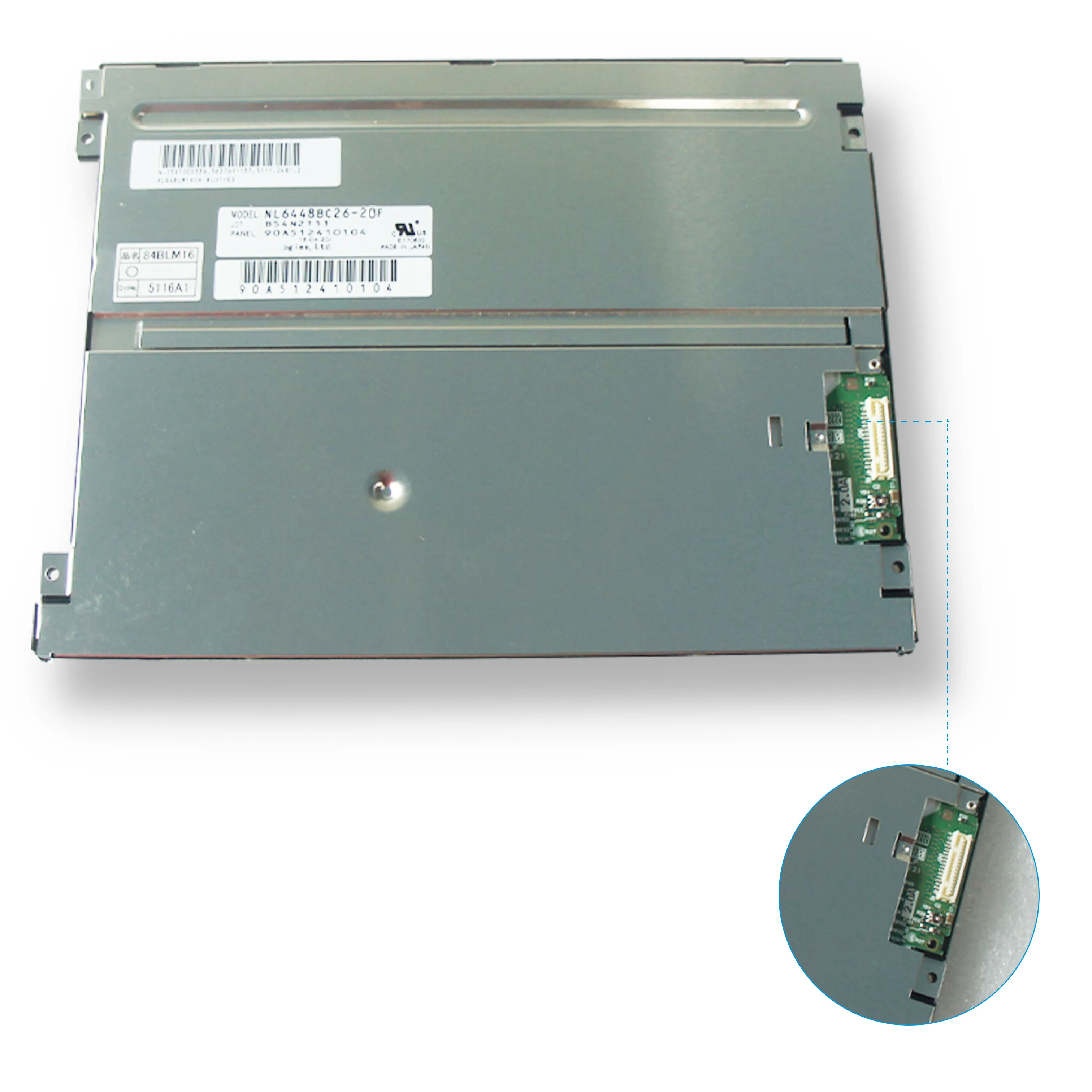


New AUO 15INCH 1024*768 LCD Display G150XG01 V3
In the intricate ecosystem of industrial and specialized display solutions, certain components achieve a quiet, legendary status. The AUO G150XG01 V3, a 15-inch LCD panel with a 1024x768 (XGA) resolution, is one such component. While consumer markets chase 4K and OLED, this display module represents a different paradigm of value: unwavering reliability, exceptional longevity, and perfect suitability for its intended mission-critical environments.
This article delves deep into the technical essence and practical applications of the AUO G150XG01 V3. We will move beyond basic specifications to explore the engineering rationale behind its design, the specific industrial niches it serves, and the tangible benefits it offers over both newer consumer panels and older legacy displays. Our analysis aims to provide engineers, procurement specialists, and system integrators with a comprehensive understanding of why this "classic" panel remains a relevant and powerful choice in an ever-evolving technological landscape.
Decoding the Specification: A Legacy of XGA Clarity
The AUO G150XG01 V3 is built around a 15-inch diagonal active area with a native resolution of 1024 x 768 pixels, adhering to the XGA (Extended Graphics Array) standard. Its 4:3 aspect ratio is immediately distinctive in a world dominated by widescreens. This format is not an anachronism but a deliberate design choice, offering optimal vertical space for viewing documents, diagnostic interfaces, and control system dashboards without wasteful black bars or distorted scaling.
The panel utilizes a high-performance a-Si TFT LCD process and typically features a CCFL backlighting system (in its standard variant), known for its stable performance and wide operating temperature range. With a brightness often around 300 nits and a contrast ratio suitable for indoor industrial settings, its specifications are curated for readability and endurance rather than cinematic flair. The inclusion of a robust LVDS (Low-Voltage Differential Signaling) interface ensures reliable, noise-resistant data transmission in electrically complex environments.


The Engineering Philosophy: Reliability Over Novelty
At its core, the G150XG01 V3 embodies an engineering philosophy where mean time between failures (MTBF) and long-term availability trump the latest display trends. Its design prioritizes thermal stability, component durability, and consistent performance over a typical lifespan that far exceeds that of commercial monitors. The use of proven, mature manufacturing processes for the TFT array and backlight unit results in high production yield and exceptional panel uniformity.
This reliability is further cemented by its wide operating temperature range, often spanning from -20°C to 70°C, allowing deployment in unheated warehouses, factory floors, or medical transport vehicles. The panel's construction resists vibration and is less susceptible to electromagnetic interference (EMI), crucial for integration into larger machinery or diagnostic equipment. Every aspect is engineered to minimize the total cost of ownership by reducing downtime and maintenance needs.
Prime Application Environments: Where This Panel Excels
The true value of the AUO G150XG01 V3 is realized in its application domains. It is a staple in industrial human-machine interfaces (HMIs), providing a clear, reliable window into manufacturing processes and machine control. In the medical field, it is found in patient monitoring systems, diagnostic ultrasound devices, and laboratory analyzers, where color consistency and 24/7 operation are non-negotiable.
Furthermore, it serves critical roles in point-of-sale (POS) systems, kiosks, and banking ATMs, where its 4:3 aspect ratio is ideal for form-based applications. Transportation and logistics utilize it in fleet management terminals and warehouse control systems. In each case, the panel is valued not for its pixel density, but for its predictable performance, easy integration, and ability to function flawlessly for years in demanding conditions.
The V3 Designation: Evolution and Backward Compatibility
The "V3" suffix signifies the third version or revision of the G150XG01 model line. This evolution typically incorporates subtle but important improvements over earlier versions, such as enhanced power efficiency, a thinner mechanical profile, or refinements to the optical stack for better viewing angles. Crucially, these revisions are managed with a strong emphasis on backward compatibility.
For system integrators, this means a later V3 panel can typically drop into a product originally designed for a V1 or V2 module without requiring a costly redesign of mounting brackets, driver boards, or firmware. This long-term product lifecycle management is a critical feature for industrial and medical OEMs (Original Equipment Manufacturers) who must support their products in the field for a decade or more.
Integration Considerations and Supply Chain Dynamics
Integrating the G150XG01 V3 requires attention to its specific power requirements, LVDS signal mapping, and mechanical footprint. Designers must source or design a compatible controller board to convert video signals to the panel's native LVDS format. The CCFL backlight necessitates an inverter, adding to the power design complexity compared to modern LED-backlit panels, though LED variants may also be available in the series.
From a supply chain perspective, this panel is often classified as a long-lifecycle or industrial-grade component. While it may not be on the shelf at consumer electronics retailers, it is available through specialized distributors and B2B channels that cater to the industrial display market. Understanding lead times, minimum order quantities, and potential for end-of-life (EOL) management is a key part of procurement planning for this component.
Comparative Analysis: Versus Modern Consumer Panels
Comparing the G150XG01 V3 to a contemporary 15-inch consumer laptop panel highlights divergent design goals. A consumer panel prioritizes high resolution (Full HD or higher), wide color gamut, slim bezels, low power consumption, and a 16:9 aspect ratio for media consumption. Its lifecycle is short, often 12-18 months before model refresh.
The AUO industrial panel, in contrast, trades ultimate pixel density for ruggedness, longevity, and stability. Its 4:3 aspect ratio is more functional for data display. Its value is measured in decades of service, not color saturation for movies. Choosing between them is not about which is "better," but which is fit for purpose. For a home office, the consumer panel wins. For controlling a semiconductor fabrication line, the G150XG01 V3 is the unequivocal choice.
FAQs: AUO G150XG01 V3 LCD Display
Conclusion
The AUO G150XG01 V3 is far more than a simple 15-inch LCD. It is a testament to a different set of engineering values where durability, longevity, and specialized functionality reign supreme. In a market obsessed with the new, it serves as a powerful reminder that for critical systems in industrial, medical, and commercial infrastructure, proven reliability is the ultimate innovation.
For engineers and integrators, selecting this panel is a strategic decision that prioritizes system uptime and total cost of ownership over fleeting specifications. It represents a reliable, long-life component that forms the dependable visual interface for the machines and systems that power our essential services. In its specific domain, the G150XG01 V3 remains not just a viable choice, but often the optimal one.