- Industrie-LCD-Display
-
Industrial Products
- DC Servo Drive
- AC Servo Drive
- other
- Heidelberg
- FANUC
- IFM
- Meter
- CCD
- Membrane Keypad
- Film
- YOKOGAWA
- Card
- ABB
- MITSUBISHI
- FANUC
- KEYENCE
- BECKHOFF
- Honeywell
- HOLLYSYS
- FUJI servo drives
- HP
- solenoid valve
- thermostat
- Siemens adapter
- color oscilloscope
- Fujitsu connector
- CHELIC
- SMC
- CISCO
- INTEL
- Key board
- FAIRCHILD
- Der Aufsichtsrat
- Board
- Bearing
- other
- Control Panel
- Contactor
- Circuit
- Omron
- Relais.
- Der controller
- Optoelektronische schalter
- Optoelektronische sensoren
- Original
- Fan
- Motortreiber
- Endschalter
- Verstärker
- power supply
- LENZE
- Cable
- Encoder
- Sensor
- Transformator
- Fiber Optic Sensor
- Schutzrelais
- Temperaturregler
- Näherungsschalter
- Switch Sensor
- Siemens
- PCB
- HMI Touch-Glas
-
HMI-Vollautomat Ganze Einheit
- OMRON HMI Touch Panel
- Siemens HMI Touch Panel
- Mitsubishi HMI Touch Panel
- Allen-Bradley Automatisierung HMI Touch
- DELTA HMI Touch Panel
- EVIEW DELTA HMI Touch Panel
- KINCO DELTA HMI Touch Panel
- HITECH HMI Touch Panel
- WEINTECK HMI Touch Panel
- TECVIEW HMI Touch Panel
- WEINVIEW HMI Touch Panel
- PRO-FACE HMI Touch Panel
- SIMATIC HMI Touch Panel
- AMPIRE HMI Touch Panel
- HEIDELBERG HMI Touch Panel
- PANASONIC HMI Touch Panel
- PATLITE HMI Touch Panel
- KYOCERA HMI Touch Panel
- KEYENCE HMI Touch Panel
- WEINVIEW HMI Touch Panel
- HITECH HMI Touch Panel
- FUJI HMI Touch Panel
- HAKKO HMI Touch Panel
- SCHNEIDER HMI Touch Panel
- SAMKOON touch panel
- andere
- Module
- LCD Wechselrichter
- Membran Tastenfeld Schalter
- Winni Touch Screens
- Frequenzumrichter
- Servo Motor
- PLC



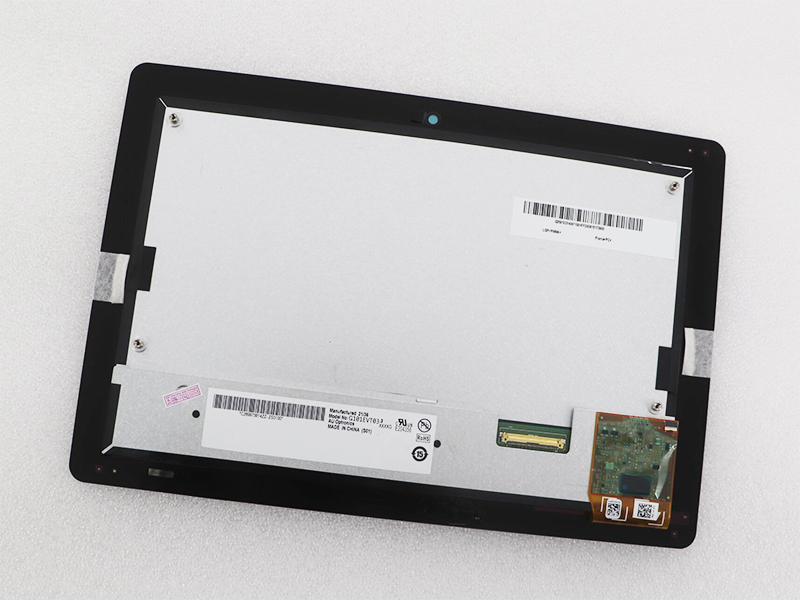
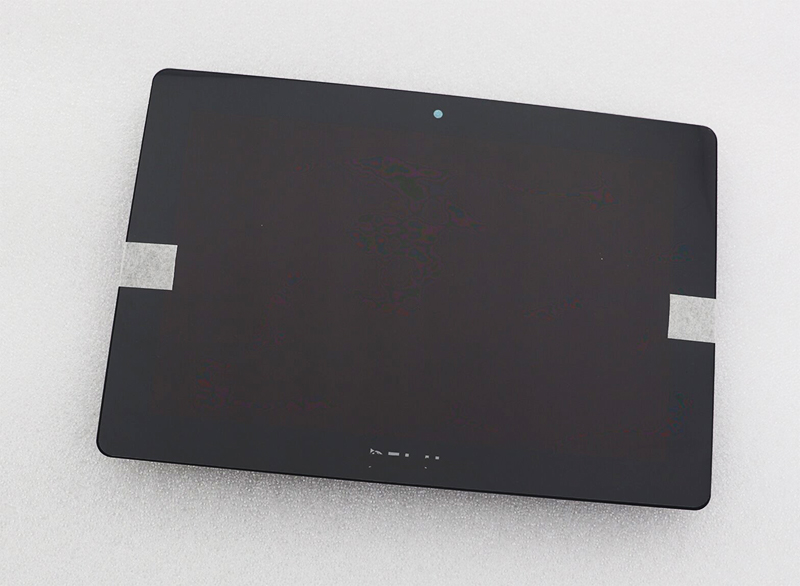
NEW G101EVT03.3 10.1-inch LCD display panel
In the intricate world of electronic devices, the display panel serves as the critical nexus between user and machine, defining the quality of interaction. Among the myriad of components that populate this landscape, the NEW G101EVT03.3 emerges as a specialized solution, a 10.1-inch LCD panel engineered for applications where reliability, clarity, and performance under specific conditions are paramount. This article delves deep into this particular display module, moving beyond basic specifications to explore its architectural nuances, technological underpinnings, and ideal application ecosystems.
We will dissect the panel's core characteristics, from its fundamental TFT-LCD structure and interface logic to its optical performance metrics like brightness, contrast, and viewing angles. Further, we will investigate its mechanical and electrical design, highlighting the features that ensure durability and stable operation. Understanding where and why this panel is deployed—from industrial HMIs to portable medical devices—reveals its true value proposition. By providing a comprehensive analysis, this guide aims to equip engineers, procurement specialists, and tech enthusiasts with the knowledge to evaluate the G101EVT03.3 not just as a component, but as a pivotal element in product design and user experience.
Unpacking the Core Specifications and Architecture
The NEW G101EVT03.3 is built on a mainstream yet robust a-Si TFT (Thin-Film Transistor) LCD technology. Its 10.1-inch diagonal active area, with a resolution of 1280 (RGB) x 800 pixels (WXGA), offers a balanced pixel density suitable for displaying detailed graphics and readable text without excessive power draw. The aspect ratio of 16:10 provides slightly more vertical space compared to the common 16:9 format, beneficial for certain dashboard interfaces or document viewing.
At its heart lies an LVDS (Low-Voltage Differential Signaling) interface, a mature and reliable standard for transmitting high-speed video data with minimal electromagnetic interference. This choice indicates a design priority for signal integrity over longer cable runs or in electrically noisy environments. The panel typically operates on a single power supply voltage (often 3.3V or 5V), simplifying system power design. These foundational specs paint a picture of a module designed for clarity, stability, and integration ease in embedded systems.
Optical Performance: Brightness, Contrast, and Viewing Angles
Optical characteristics define the visual experience. The G101EVT03.3 commonly features a luminance level in the range of 300 to 500 nits, making it clearly viewable in typical indoor office or industrial lighting. Its contrast ratio, often around 500:1 or higher, ensures discernible differences between dark and light areas, crucial for reading graphs or diagnostic images. The panel employs specific LCD mode technology (like TN or IPS variants) which dictates its viewing angle performance.
A wide viewing angle specification (e.g., 80/80/80/80 degrees) is essential for applications where the screen may be viewed from off-center positions, such as a shared kiosk or a device on a movable arm. The backlight unit, typically composed of LED arrays, is engineered for uniform brightness across the entire surface, avoiding distracting hotspots or dim edges. These optical parameters are not just numbers; they directly impact usability, readability, and user comfort over prolonged periods.
Mechanical Design and Durability Considerations
The physical construction of the G101EVT03.3 is tailored for integration and resilience. Its outline dimensions, bezel width, and mounting hole patterns are precisely defined to fit into standard chassis or custom enclosures. The module is often constructed with a metal frame for enhanced rigidity, protecting the delicate glass substrate from flexing and shock. The surface treatment, usually a polarizer with an anti-glare (matte) finish, is critical for reducing reflections from ambient light, a key feature in brightly lit environments.
Durability is further addressed through a wide operating temperature range (commonly -20°C to 70°C or similar). This robustness allows deployment in non-climate-controlled settings like warehouses, factories, or transportation vehicles. The connector type and its placement are designed for secure cable attachment, resisting vibration-induced disconnection. This mechanical fortitude ensures the display panel can withstand the physical demands of its target applications beyond a typical consumer device's lifecycle.
Electrical Interface and Signal Integration
Seamless integration into a host system is paramount. The LVDS interface of the G101EVT03.3 requires a compatible controller, often found on system-on-chip (SoC) platforms or via separate bridge chips. The interface definition includes specific pin assignments for data lanes, clock, enable signals, and power. Understanding the timing requirements—such as pixel clock frequency, horizontal/vertical sync pulses, and blanking intervals—is essential for generating a compatible video signal that the panel can correctly interpret and display.
Designers must also account for the backlight driver circuit. While the LEDs may be powered directly, a dedicated backlight driver IC is often used to provide constant current for uniform brightness and to implement dimming controls, either via PWM (Pulse Width Modulation) or analog voltage. Proper power sequencing (the order in which panel power, logic power, and signals are applied) is also a critical detail to prevent potential damage during startup or shutdown.
Target Applications and Ecosystem Fit
The specific combination of features makes the G101EVT03.3 a strong candidate for specialized markets. Its primary domain is industrial human-machine interfaces (HMIs) for factory automation, process control, and machine operation panels, where readability and 24/7 reliability are non-negotiable. In the medical field, it finds use in portable diagnostic devices, patient monitoring equipment, and laboratory instruments, benefiting from its stable performance and clean image.
Point-of-Sale (POS) systems and kiosks: Requiring durability and consistent performance in public spaces.
Transportation and logistics: For in-vehicle infotainment, fleet management terminals, or handheld scanners.
Test and measurement equipment: Where precise data visualization is critical.
This panel is not typically aimed at high-end consumer tablets or laptops, but rather at embedded systems where function triumphs over flash.
Comparative Analysis and Selection Guidance
When selecting a display like the G101EVT03.3, engineers must weigh it against alternatives. Compared to newer IPS panels, it may offer a more cost-effective solution if ultra-wide viewing angles are not the top priority. Against smaller or larger panels, the 10.1-inch size represents a sweet spot for portability and information density. Key selection criteria should include:
Environmental specs: Does the operating temperature range match the deployment environment?
Interface compatibility: Does the host system support LVDS, or is an adapter needed?
Long-term availability: For industrial products, the panel's supply lifecycle is crucial.
Total cost of integration: Including the panel, driver board, cabling, and mechanical adaptation.
FAQs
Conclusion
The NEW G101EVT03.3 10.1-inch LCD panel exemplifies a mature, reliable, and purpose-driven component in the display technology spectrum. Its value lies not in cutting-edge consumer features, but in its proven performance, robust construction, and suitability for demanding embedded applications. From its LVDS interface ensuring signal integrity to its wide operating temperature range guaranteeing reliability, every aspect is tuned for integration into systems where failure is not an option.
For product developers and engineers, understanding this panel's full profile—from optical specs to mechanical fit—enables informed decision-making. It serves as a reminder that in the world of industrial and specialized electronics, the optimal component is often the one that delivers consistent, dependable performance over a long lifespan, seamlessly enabling the human-machine interface that sits at the core of so many critical technologies.