- Industrial LCD display
-
Industrial Products
- DC Servo Drive
- AC Servo Drive
- other
- Heidelberg
- FANUC
- IFM
- Meter
- CCD
- Membrane Keypad
- Film
- YOKOGAWA Module
- Card
- ABB
- MITSUBISHI
- FANUC
- KEYENCE
- BECKHOFF
- Honeywell
- HOLLYSYS
- FUJI servo drives
- HP
- solenoid valve
- thermostat
- Siemens adapter
- color oscilloscope
- Fujitsu connector
- CHELIC
- SMC
- CISCO Module
- INTEL
- Key board
- FAIRCHILD
- Motherboard
- Board
- Bearing
- other
- Control Panel
- Contactor
- Circuit
- OMRON
- Relay
- Controller
- Photoelectric Switch
- Photoelectric Sensor
- Original
- Fan
- Motor Driver
- Limit Switch
- Amplifier
- power supply
- LENZE
- Cable
- Encoder
- Sensor
- Transformer
- Fiber Optic Sensor
- Protection Relay
- Temperature Controller
- Proximity Switch
- Switch Sensor
- Siemens
- Industrial board
- HMI Touch Glass
-
HMI Full Machine Whole unit
- OMRON HMI Touch Panel
- Siemens HMI Touch Panel
- Mitsubishi HMI Touch Panel
- Allen-Bradley automation HMI Touch Panel
- DELTA HMI Touch Panel
- EVIEW DELTA HMI Touch Panel
- KINCO DELTA HMI Touch Panel
- HITECH HMI Touch Panel
- WEINTECK HMI Touch Panel
- TECVIEW HMI Touch Panel
- WEINVIEW HMI Touch Panel
- PRO-FACE HMI Touch Panel
- SIMATIC HMI Touch Panel
- AMPIRE HMI Touch Panel
- HEIDELBERG HMI Touch Panel
- PANASONIC HMI Touch Panel
- PATLITE HMI Touch Panel
- KYOCERA HMI Touch Panel
- KEYENCE HMI Touch Panel
- WEINVIEW HMI Touch Panel
- HITECH HMI Touch Panel
- FUJI HMI Touch Panel
- HAKKO HMI Touch Panel
- SCHNEIDER HMI Touch Panel
- SAMKOON touch panel
- other
- Module
- lcd inverter
- Membrane Keypad Switch
- Winni Touch Screens
- Frequency Inverter
- Servo Motor
- PLC


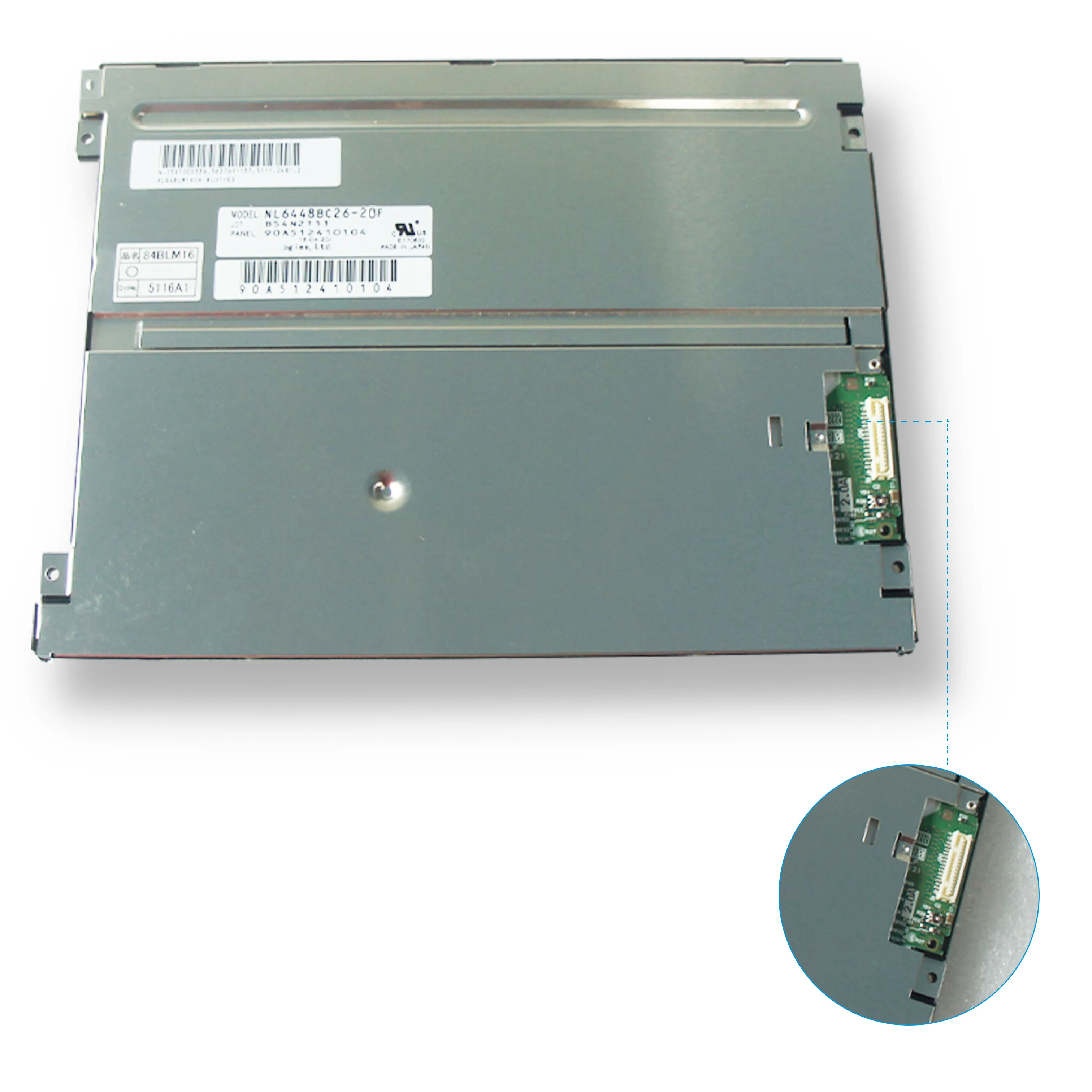

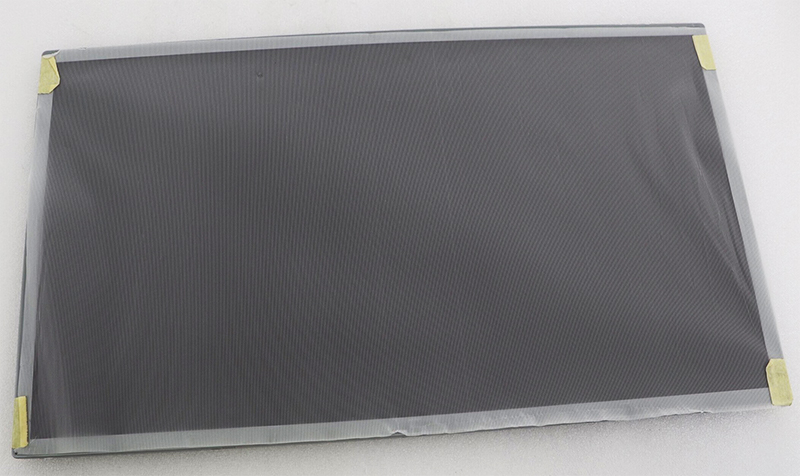
NEW G270QAN01.2 FOR AUO 27-inch 2560*1440 LCD display panel
In the rapidly evolving landscape of industrial and commercial display technology, the demand for specific, high-performance components often outpaces the general consumer market. One such component that has garnered significant attention from system integrators, medical equipment manufacturers, and digital signage professionals is the NEW G270QAN01.2, a 27-inch LCD panel from the renowned Taiwanese manufacturer AUO (AU Optronics). While the market is flooded with 27-inch monitors, the G270QAN01.2 occupies a distinct space defined by its precise 2560x1440 (WQHD) resolution, robust industrial specifications, and unique interface requirements. This article aims to deliver a deep-dive analysis of this specific model. We will move beyond surface-level specifications to explore its architecture, intended application environments, compatibility nuances, and the strategic reasons why a professional might choose this panel over a more common consumer-grade alternative. The following analysis is structured to provide a comprehensive understanding of the panel's value proposition, from its physical layer to its long-term lifecycle.
The foundation of the G270QAN01.2 is its 27-inch diagonal a-Si TFT-LCD active matrix, operating at a native resolution of 2560 x 1440 pixels. This WQHD (Wide Quad High Definition) resolution is a strategic middle ground, offering a pixel density of approximately 109 PPI. This density is significantly sharper than standard Full HD (1920x1080) for detailed medical imaging or CAD work, yet it avoids the scaling challenges and higher bandwidth requirements associated with 4K (3840x2160) in an industrial environment. Unlike gaming monitors that may prioritize high refresh rates, the G270QAN01.2 typically operates at a standard 60Hz refresh rate, which is optimal for static or semi-static content in control rooms and diagnostic displays where flicker-free images are paramount.
The panel employs Vertical Alignment (VA) technology. This choice is deliberate. VA technology offers superior native contrast ratios—often exceeding 3000:1—compared to IPS panels. This deep black performance is critical for applications like radiology or financial trading dashboards, where distinguishing subtle luminance differences is essential. The viewing angle is rated at 89 degrees in all four directions (CR≥10), ensuring consistent color and brightness across a wide audience. This is a specification tailored for multi-viewer environments, such as a command center where operators view the screen from oblique angles.
The true value of the G270QAN01.2 becomes evident when examining its target ecosystems. Its primary application is not as a general-purpose desktop monitor, but as an integrated component within a larger system. The most prominent sectors include medical imaging, specifically for PACS (Picture Archiving and Communication Systems). The panel's adherence to the DICOM (Digital Imaging and Communications in Medicine) Part 14 Grayscale Standard Display Function is a critical differentiator. This ensures that the luminosity of medical X-rays, CT scans, and MRIs is displayed with clinical accuracy, a feature that consumer monitors lack.
A second major ecosystem is industrial automation and human-machine interfaces (HMI). In factory floors or process control facilities, the panel's wide operating temperature range (typically 0°C to 50°C) and high reliability are more critical than aesthetic design. Unlike a consumer display designed for a 2-3 year lifespan, the G270QAN01.2 is built for 50,000 hours of continuous operation. Thirdly, it finds a home in high-end digital signage and kiosks where 24/7 uptime and consistent image quality are non-negotiable. The panel's anti-glare surface (with a haze value typically around 25%) is optimized for bright ambient light conditions often found in public spaces.
A defining technical characteristic of the G270QAN01.2 is its use of a 2-channel LVDS (Low-Voltage Differential Signaling) interface. This is a crucial detail for system integrators. LVDS is an older, yet highly robust and low-noise interface standard, common in embedded systems and industrial equipment. It transmits data via a 30-pin connector using a specific timing controller. This means the panel cannot be directly plugged into a standard PC with an HDMI, DisplayPort, or DVI output. Integration requires a dedicated LVDS driver board or a system-on-module (SoM) with native LVDS output.
This interface choice presents a trade-off. On one hand, LVDS is highly reliable for fixed installations and offers excellent signal integrity over moderate cable distances (up to a few meters). On the other hand, it adds complexity to upgrades. If a system using this panel fails, a replacement must also be an LVDS panel or an adapter board must be used. The panel supports a color depth of 16.7M (8-bit) and has a specific power consumption profile, typically around 23.4W (with LED backlight). The LED backlight itself is an edge-lit array, and its driver is integrated into the panel's internal logic board, requiring a specific 12V power supply input.
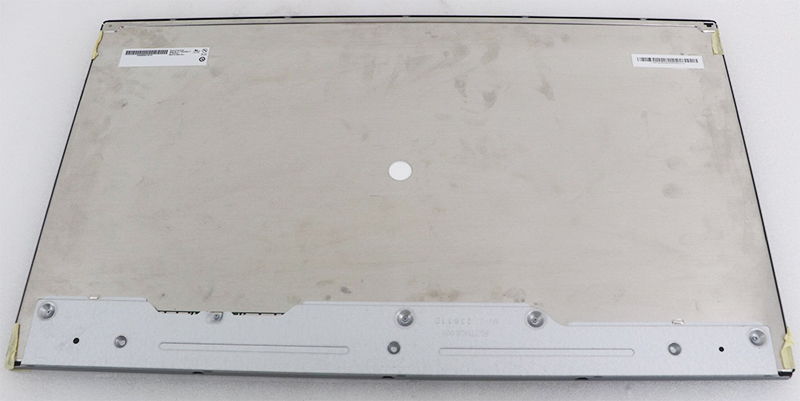
The physical construction of the G270QAN01.2 reflects its industrial heritage. The panel features a specific mechanical outline dimension (typically 630.0 x 368.2 x 11.7 mm), with an active area of 596.736 x 335.664 mm. It is designed to be mounted securely within a metal bezel or enclosure, not a plastic consumer housing. The mounting holes are likely to be standard VESA 100x100mm, but it is critical to verify the specific drawing for this model, as some industrial panels have non-standard mounting points.
Environmental resistance is a key strength. The panel is designed to operate in a temperature range of 0°C to 50°C and a storage range of -20°C to 60°C. Crucially, it can tolerate high humidity levels of up to 95% RH (non-condensing). This makes it suitable for environments like marine navigation consoles or pharmaceutical labs. The panel also boasts high shock and vibration tolerance, often tested to 100G (half-sine wave) for 6 ms in the non-operating condition. This robustness is essential for equipment that may be transported frequently or installed in moving vehicles, such as in ambulances or field-deployed command posts.
A direct comparison between the G270QAN01.2 and a typical consumer-grade 27-inch WQHD monitor reveals a divergence in design philosophy. A $300 consumer monitor prioritizes aesthetics, features like built-in speakers and USB hubs, and fast pixel response for gaming. It uses a generic IPS panel with a display interface (HDMI/DP) and an off-the-shelf power supply. It is built for a 3-5 year lifecycle and an ambient office temperature of 10°C to 35°C.
In contrast, the G270QAN01.2 is a component, not a complete product. It sacrifices convenience for reliability, accuracy, and longevity. Key differences include: 1) Luminance Stability: The G270QAN01.2 maintains a stable luminance profile over time, crucial for DICOM compliance, whereas consumer monitors drift. 2) Thermal Management: The industrial panel is designed to dissipate heat efficiently without active fans, reducing noise and failure points. 3) Quality Control: AUO's industrial-grade panels undergo a more rigorous QA process, including burn-in testing, to ensure a lower defect rate (e.g., dead pixels) than consumer panels. The cost is also significantly higher, reflecting the extended warranty, rigorous testing, and specific tolerances required for professional use. For a mission-critical application, the G270QAN01.2 is the correct choice; for a home office, it is over-specification and technically difficult to integrate.
For a business reliant on equipment containing this panel, sourcing is a strategic issue. The G270QAN01.2 is not a retail item stocked by major consumer electronics stores. It is distributed through specialized industrial display distributors like Digi-Key, Mouser, or dedicated panel brokers. Lead times can be longer, and minimum order quantities (MOQs) may apply. Furthermore, the model number itself may have revisions (e.g., G270QAN01.2 Rev.A, Rev.B), which can affect compatibility with existing driver boards. A professional must check the revision history to ensure a perfect match for a repair or replacement.
The LED backlight on this panel is rated for 50,000 hours (half-brightness) under a specific drive current. In a 24/7 operation, this translates to approximately 5.7 years of continuous use before the backlight degrades to 50% of its original luminance. After this point, the panel's value in a medical or color-critical environment diminishes. However, the panel is often designed with a replaceable backlight or, at the least, a known part number for the LED bar, allowing for a field replacement rather than a full panel swap. This repairability is a key advantage over many sealed consumer monitors. Professionals planning for a 7-10 year lifecycle should factor in the potential cost of a mid-life backlight replacement.
Q: Can I use the G270QAN01.2 as a standard PC monitor?
A: No, not directly. It requires a specialized LVDS-to-HDMI/DP driver board because it uses an LVDS interface, not standard PC connectors.
Q: What is the typical lifespan of this panel?
A: The LED backlight is rated for 50,000 hours to half-brightness, meaning about 5.7 years of continuous operation. The LCD matrix itself can last longer under proper conditions.
Q: Is the G270QAN01.2 suitable for medical-grade diagnostic imaging?
A: Yes, it is designed for PACS systems and can be calibrated to the DICOM Part 14 standard, making it suitable for primary diagnosis of X-rays, CT, and MRI.
Q: What is the exact resolution and aspect ratio?
A: The resolution is 2560 x 1440 (WQHD), with a 16:9 aspect ratio.
Q: What is the contrast ratio of this panel?
A: It features a high static contrast ratio, typically 3000:1 or higher, thanks to its VA (Vertical Alignment) technology.
Q: What type of backlight does it use?
A: It uses a WLED (White Light Emitting Diode) edge-lit backlight, which is energy-efficient and mercury-free.
Q: What is the operating temperature range?
A: It is typically 0°C to 50°C (32°F to 122°F), making it suitable for industrial environments.
Q: How many pixels are on this panel?
A: The total number of pixels is approximately 3.7 million (2560 x 1440).
Q: Is the G270QAN01.2 a touchscreen panel?
A: No, it is a bare LCD glass panel. It can be integrated with a touch overlay for specific projects.
Q: What is the typical power consumption?
A: The panel consumes approximately 23.4W at typical operating conditions, excluding the driver board's power draw.
Conclusion: A Strategic Investment in Performance and Reliability
The NEW G270QAN01.2 from AUO is not a product for the casual buyer; it is a precision component for the discerning professional. This analysis has demonstrated that its true value lies not in flashy specs, but in its architectural integrity, environmental resilience, and application-specific accuracy. From the deep blacks of its VA panel to the reliability of its LVDS interface, every design choice serves a purpose within the demanding ecosystems of medical imaging, industrial control, and professional signage. While the barrier to entry—technical integration knowledge and higher cost—is significant, the return on investment is measured in years of dependable, error-free operation. For system integrators, this panel represents a known quantity; a building block that, when properly implemented, delivers clinical-grade performance and industrial-grade durability. It is a testament to the philosophy that in professional environments, reliability is not a feature—it is the product.