- Industrie-LCD-Display
-
Industrial Products
- DC Servo Drive
- AC Servo Drive
- other
- Heidelberg
- FANUC
- IFM
- Meter
- CCD
- Membrane Keypad
- Film
- YOKOGAWA
- Card
- ABB
- MITSUBISHI
- FANUC
- KEYENCE
- BECKHOFF
- Honeywell
- HOLLYSYS
- FUJI servo drives
- HP
- solenoid valve
- thermostat
- Siemens adapter
- color oscilloscope
- Fujitsu connector
- CHELIC
- SMC
- CISCO
- INTEL
- Key board
- FAIRCHILD
- Der Aufsichtsrat
- Board
- Bearing
- other
- Control Panel
- Contactor
- Circuit
- Omron
- Relais.
- Der controller
- Optoelektronische schalter
- Optoelektronische sensoren
- Original
- Fan
- Motortreiber
- Endschalter
- Verstärker
- power supply
- LENZE
- Cable
- Encoder
- Sensor
- Transformator
- Fiber Optic Sensor
- Schutzrelais
- Temperaturregler
- Näherungsschalter
- Switch Sensor
- Siemens
- PCB
- HMI Touch-Glas
-
HMI-Vollautomat Ganze Einheit
- OMRON HMI Touch Panel
- Siemens HMI Touch Panel
- Mitsubishi HMI Touch Panel
- Allen-Bradley Automatisierung HMI Touch
- DELTA HMI Touch Panel
- EVIEW DELTA HMI Touch Panel
- KINCO DELTA HMI Touch Panel
- HITECH HMI Touch Panel
- WEINTECK HMI Touch Panel
- TECVIEW HMI Touch Panel
- WEINVIEW HMI Touch Panel
- PRO-FACE HMI Touch Panel
- SIMATIC HMI Touch Panel
- AMPIRE HMI Touch Panel
- HEIDELBERG HMI Touch Panel
- PANASONIC HMI Touch Panel
- PATLITE HMI Touch Panel
- KYOCERA HMI Touch Panel
- KEYENCE HMI Touch Panel
- WEINVIEW HMI Touch Panel
- HITECH HMI Touch Panel
- FUJI HMI Touch Panel
- HAKKO HMI Touch Panel
- SCHNEIDER HMI Touch Panel
- SAMKOON touch panel
- andere
- Module
- LCD Wechselrichter
- Membran Tastenfeld Schalter
- Winni Touch Screens
- Frequenzumrichter
- Servo Motor
- PLC



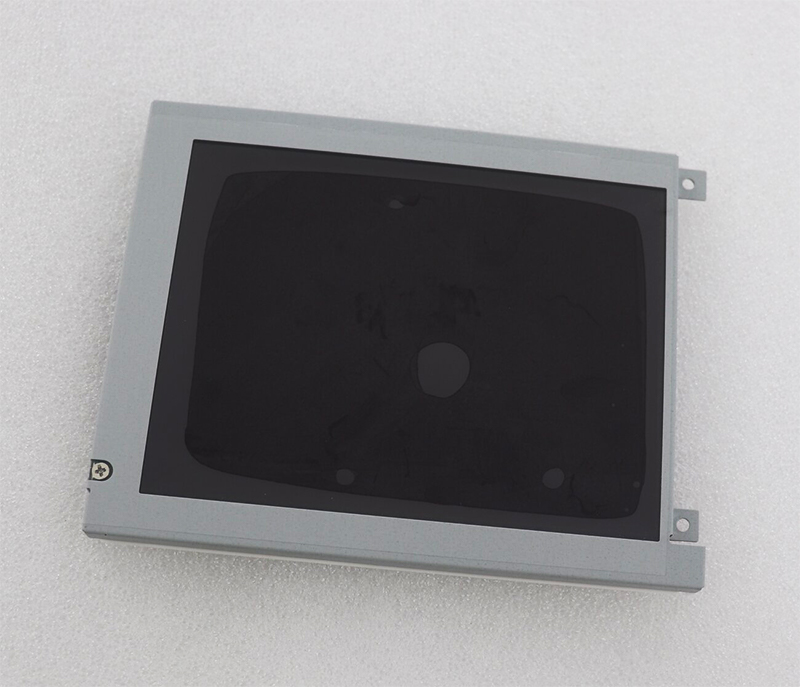
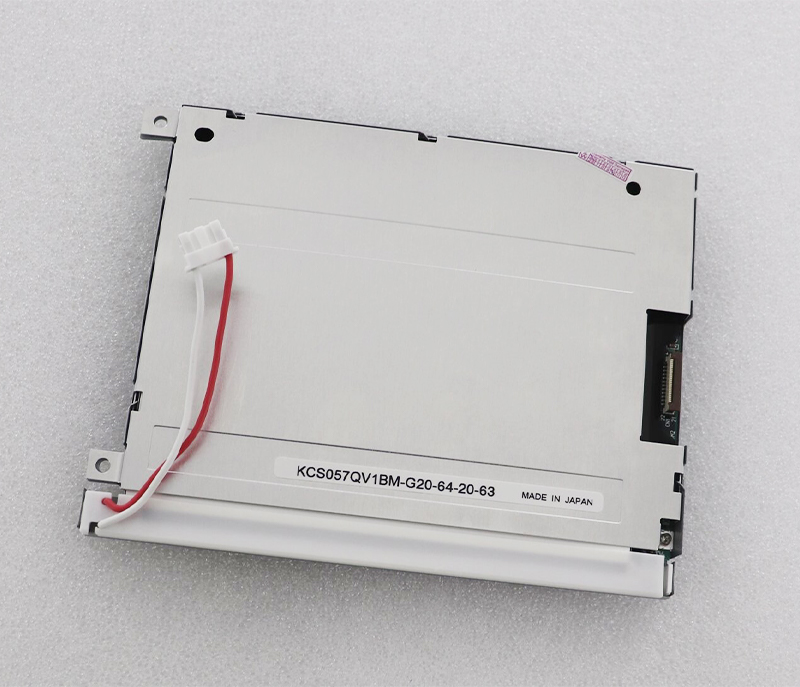
new Kyocera KCS057QV1BM-G20 5.7" 320*240 industrial LCD
In the demanding world of industrial automation and embedded systems, the choice of a display module is far from trivial. It is a critical decision that dictates operator efficiency, system reliability, and long-term maintenance costs. Among the myriad of options, the Kyocera KCS057QV1BM-G20 emerges not as a consumer novelty, but as a disciplined workhorse. This 5.7-inch diagonal LCD panel, with its classic 320x240 resolution (QVGA), represents a refinement of a proven standard rather than a leap toward high-resolution flashiness.
This article delves deep into the technical architecture and practical applications of this specific model. We will move beyond the basic spec sheet to explore why such a seemingly "low-resolution" display remains indispensable in factory floors, medical equipment, and outdoor kiosks. We will dissect its passive matrix LCD technology (STN), its optimal signal interface, and its unique optical characteristics, including the potentially critical transmissive/reflective design options. By understanding the engineering trade-offs embedded in this panel, engineers and procurement specialists can make an informed decision that aligns with their system's core requirements for longevity, readability, and thermal stability.
In a world obsessed with 4K and 8K resolutions, the 320x240 (QVGA) standard of the Kyocera KCS057QV1BM-G20 may appear anachronistic. However, this resolution is a deliberate choice rooted in industrial pragmatism. The key lies in the nature of the Human-Machine Interface (HMI) for machines. Most industrial processes require the display of clear, readable text, simple icons, status bars, and alphanumeric values—not high-definition photos. A 5.7-inch diagonal at QVGA offers an excellent balance: characters are large enough to be read from a typical operator distance (arm's length to three feet), without the need for scaling or complex font rendering.
Furthermore, this resolution directly impacts system performance. A lower pixel count reduces the data throughput required on the parallel RGB or digital interface, allowing older or more cost-effective microcontrollers to refresh the screen without dedicated high-bandwidth graphics processing. This minimizes BOM cost and power consumption. More critically, for this specific panel size, a QVGA matrix achieves a balance where individual pixels are large enough to maintain a high aperture ratio in passive matrix technology, resulting in a brighter, more contrast-rich image than an artificially higher-resolution panel of the same size would produce. The Kyocera KCS057QV1BM-G20 is optimized for this exact niche: clarity at the expense of pixel density.
Beneath the glass surface, the KCS057QV1BM-G20 typically employs STN (Super-Twisted Nematic) LCD technology, often in a passive matrix configuration. This is a crucial differentiator from the more common TFT active matrix found in smartphones. TFT panels require a thin-film transistor for each sub-pixel, making them more complex and expensive to produce in smaller, specialized batches. STN, in contrast, is simpler to manufacture, inherently more robust against certain electrical stresses, and—most importantly—offers superior performance in extreme environments.
While STN is often associated with slower response times and limited viewing angles, Kyocera's engineering has pushed this technology to its limits. The "BM" suffix often indicates a specific color or backlight configuration (e.g., Blue Mode or high-contrast black/white mode). The 8-color or monochrome capability of this panel is not a limitation but a strength. In applications like medical pumps or industrial controllers, color is used for binary status: red for alarm, green for normal. A deep, true monochrome or pseudo-color STN display offers better readability under direct sunlight compared to a washed-out TFT. The passive matrix nature also means fewer points of failure; a single transistor failure in a TFT creates a dead line, whereas STN panels are more forgiving of localized defects. This legacy technology is chosen for its deterministic reliability.
A defining characteristic of the Kyocera KCS057QV1BM-G20 is its illumination strategy. Industrial LCDs operate in vastly different lighting conditions—from dimly lit control rooms to brightly sunlit outdoor kiosks. The "G20" designation likely refers to the backlight type, often a CCFL (Cold Cathode Fluorescent Lamp) or an LED array. The choice between these is critical. CCFL provides a warm, uniform white light but has a limited lifespan (typically 20,000-50,000 hours). LED backlights in this model offer longer lifespans, lower power draw, and instant-on performance, but require careful thermal management.
Beyond the backlight, the design of the LCD glass itself is paramount. This model is likely available in one of three configurations: Transmissive, which relies entirely on the backlight for visibility (ideal for indoor use); Reflective, which uses ambient light to illuminate the image (ideal for high-brightness outdoor use with no backlight); or Transflective, a hybrid that combines both. A transflective version of the KCS057QV1BM-G20 would be a game-changer for outdoor applications, as it remains readable in direct sunlight (reflective mode) while still allowing backlight use in darkness. This optical duality is a key selling point for systems requiring sunlight readability without the power consumption of a high-brightness TFT.
Integrating the Kyocera KCS057QV1BM-G20 into a larger system requires careful attention to its signal interface. Most 5.7" QVGA STN panels use a parallel digital interface, typically 6-bit or 8-bit RGB, combined with horizontal/vertical sync signals (HSYNC/VSYNC), a clock (DCLK), and data enable (DE). The "BM" variant may have a specific pinout or require a specific negative voltage for the LCD drive (VGL or VEE). Engineers must verify the exact timing parameters—such as front porch, back porch, and pulse width—which are critical for generating a stable image.
The absence of an integrated touch panel or controller IC means the designer has full control over the display driver. This is both a burden and a blessing. It allows for customized gamma correction and contrast tuning, which is vital for achieving optimal readability in specific industrial environments. However, it requires a deep understanding of the panel's electrical characteristics. The operating voltage for the logic (typically 3.3V or 5V) and the LCD drive voltage (often higher, up to 15-20V) must be generated by the host board. Kyocera provides detailed datasheets with timing diagrams. A common mistake is assuming compatibility with standard TFT timings; STN panels often require different AC drive waveforms to prevent image sticking (burn-in). Proper integration ensures a crisp, flicker-free image over the product's lifetime.
The final, and perhaps most crucial, aspect of the KCS057QV1BM-G20 is its mechanical and thermal ruggedness. Industrial environments are hostile to consumer electronics. This panel is built to withstand vibration, shock, and temperature extremes. The operating temperature range typically spans from -20°C to +70°C, or even wider, which is essential for use in refrigeration, foundries, or outdoor enclosures. The passive matrix glass is inherently less susceptible to thermal expansion stress than the complex layers of a TFT panel.
Mechanically, the display often includes mounting holes or a metal frame for secure attachment to a bezel, preventing warping under vibration. The backlight unit is designed for easy replacement in field-serviceable units, a hallmark of industrial design. Furthermore, the MTBF (Mean Time Between Failures) for such panels is often rated in the hundreds of thousands of hours. Kyocera's engineering ensures that the polarizer and color filter are resistant to UV degradation and high humidity. For mission-critical systems in medical, military, or heavy machinery, the material choices—from the ITO (Indium Tin Oxide) coating to the sealant—are selected for 15+ year lifecycles, far exceeding the 2-3 year lifespan of consumer-grade displays.
Q1: What is the resolution of the Kyocera KCS057QV1BM-G20?
A: It is a QVGA (Quarter VGA) display with a resolution of 320 x 240 pixels. This provides a square-like aspect ratio (4:3) ideal for industrial controls.
Q2: What type of LCD technology does it use?
A: It typically uses STN (Super-Twisted Nematic) passive matrix LCD technology, not TFT. This provides better contrast for simple graphics and excellent sunlight readability in transflective variants.
Q3: Is it a color display?
A: It is capable of displaying color, typically 8-color or pseudo-color (depending on the exact variant), or it may be monochrome. It is not a full-color 262k TFT panel.
Q4: What type of backlight does it use?
A: The "G20" suffix usually denotes a specific backlight, often a CCFL or LED array. The user must check the datasheet for the exact configuration.
Q5: What is the typical operating temperature range?
A: Industrial STN panels generally operate from -20°C to +70°C, but the specific rating should be confirmed with the production code.
Q6: What is the signal interface?
A: It uses a parallel digital interface (RGB 6-bit/8-bit) with HSYNC, VSYNC, and DCLK signals. It is NOT HDMI or LVDS.
Q7: Is it sunlight readable?
A: Yes, if it is a transflective version. The "BM" code may indicate a specific polarizer designed for this purpose. A transmissive version will wash out in direct sunlight.
Q8: How durable is the screen?
A: It is very durable, with high resistance to vibration, shock, and thermal stress. It is designed for a 15+ year lifespan in industrial settings.
Q9: Is the touch panel integrated?
A: No, the KCS057QV1BM-G20 is a bare LCD panel. A separate touch screen (resistive or capacitive) must be added by the integrator.
Q10: Why would I choose this over a TFT display?
A: For its superior sunlight readability, lower power consumption, wider operating temperature range, and proven longevity in harsh environments where a TFT would fail.
Conclusion: The Strategic Value of a Legacy Workhorse
The Kyocera KCS057QV1BM-G20 is not a display for every application. It is a specialized tool designed for environments that punish generic hardware. Its 320x240 resolution is not a limitation but a deliberate parameter optimizing for readability, reliability, and thermal stability. The enduring value of this STN panel lies not in pixel density but in its engineering for the long haul.
For the design engineer, choosing this display means prioritizing deterministic performance over flashy specs. It means accepting a slower response time in exchange for a wider viewing angle under sunlight. It means investing in a platform that will operate reliably for a decade or more in a factory, a hospital, or an oil rig. In an industry increasingly driven by obsolescence, the Kyocera KCS057QV1BM-G20 stands as a testament to the principle that the best component is often the one that remains invisible, performing its function flawlessly for years on end. When a system must not fail, and must be readable in any condition, this humble QVGA panel is a profoundly intelligent choice.