- Industrial LCD display
-
Industrial Products
- DC Servo Drive
- AC Servo Drive
- other
- Heidelberg
- FANUC
- IFM
- Meter
- CCD
- Membrane Keypad
- Film
- YOKOGAWA Module
- Card
- ABB
- MITSUBISHI
- FANUC
- KEYENCE
- BECKHOFF
- Honeywell
- HOLLYSYS
- FUJI servo drives
- HP
- solenoid valve
- thermostat
- Siemens adapter
- color oscilloscope
- Fujitsu connector
- CHELIC
- SMC
- CISCO Module
- INTEL
- Key board
- FAIRCHILD
- Motherboard
- Board
- Bearing
- other
- Control Panel
- Contactor
- Circuit
- OMRON
- Relay
- Controller
- Photoelectric Switch
- Photoelectric Sensor
- Original
- Fan
- Motor Driver
- Limit Switch
- Amplifier
- power supply
- LENZE
- Cable
- Encoder
- Sensor
- Transformer
- Fiber Optic Sensor
- Protection Relay
- Temperature Controller
- Proximity Switch
- Switch Sensor
- Siemens
- Industrial board
- HMI Touch Glass
-
HMI Full Machine Whole unit
- OMRON HMI Touch Panel
- Siemens HMI Touch Panel
- Mitsubishi HMI Touch Panel
- Allen-Bradley automation HMI Touch Panel
- DELTA HMI Touch Panel
- EVIEW DELTA HMI Touch Panel
- KINCO DELTA HMI Touch Panel
- HITECH HMI Touch Panel
- WEINTECK HMI Touch Panel
- TECVIEW HMI Touch Panel
- WEINVIEW HMI Touch Panel
- PRO-FACE HMI Touch Panel
- SIMATIC HMI Touch Panel
- AMPIRE HMI Touch Panel
- HEIDELBERG HMI Touch Panel
- PANASONIC HMI Touch Panel
- PATLITE HMI Touch Panel
- KYOCERA HMI Touch Panel
- KEYENCE HMI Touch Panel
- WEINVIEW HMI Touch Panel
- HITECH HMI Touch Panel
- FUJI HMI Touch Panel
- HAKKO HMI Touch Panel
- SCHNEIDER HMI Touch Panel
- SAMKOON touch panel
- other
- Module
- lcd inverter
- Membrane Keypad Switch
- Winni Touch Screens
- Frequency Inverter
- Servo Motor
- PLC


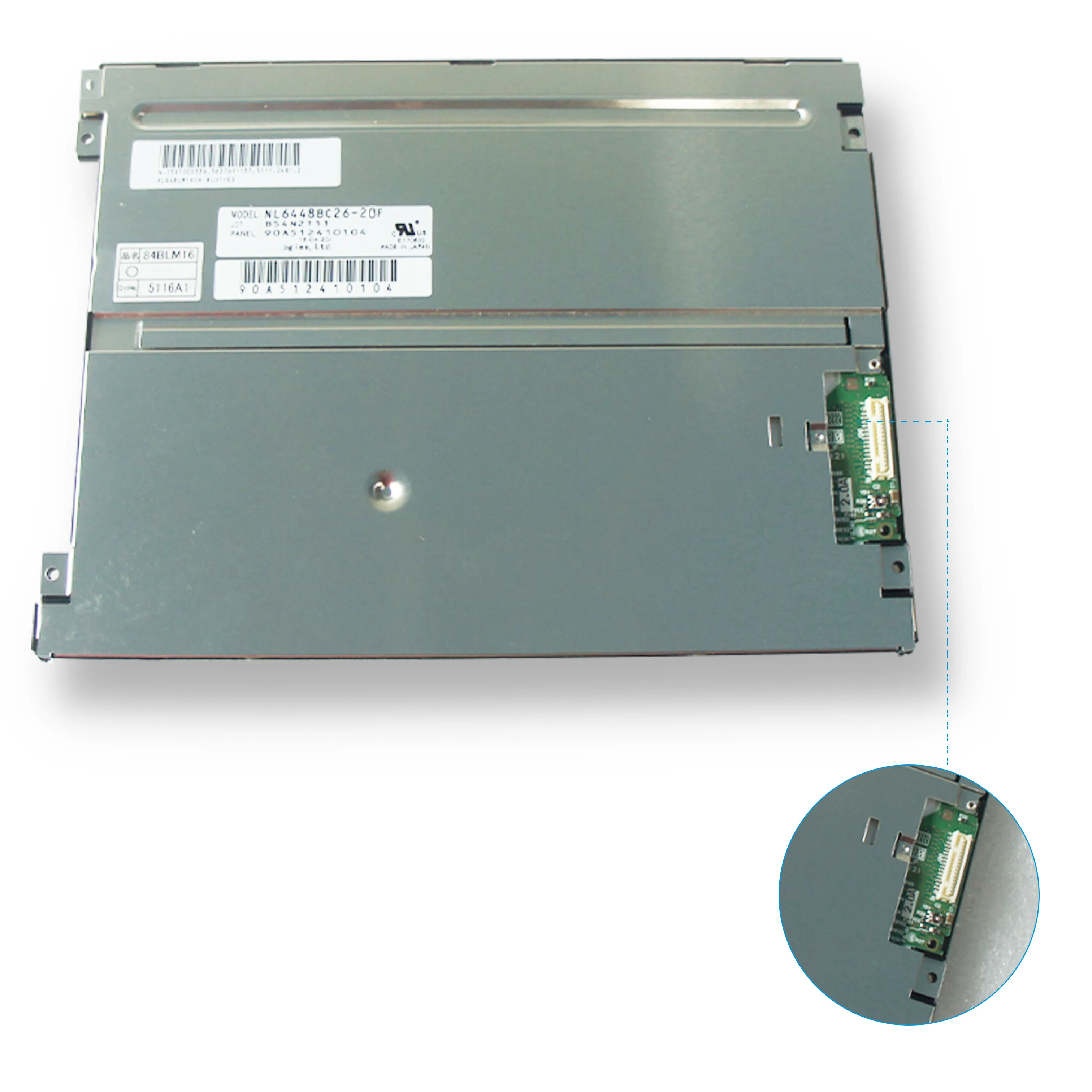


15.0 inch 1024*768 TFT LCD SCREEN G150XGE-L04
In the intricate ecosystem of electronic components, the display panel often serves as the critical interface between machine and user. Among the myriad of options available to engineers and product designers, the 15.0-inch 1024x768 TFT LCD screen, model G150XGE-L04, stands out as a mature and remarkably resilient solution. This specific panel, with its XGA resolution and 4:3 aspect ratio, represents a cornerstone technology that continues to find vital applications in industrial, medical, and commercial sectors long after its consumer counterparts have moved on to wider screens and higher pixel densities.
This article delves into a comprehensive analysis of the G150XGE-L04. We will move beyond basic specifications to explore its underlying technology, the enduring relevance of its form factor, and the precise market niches where its advantages are most pronounced. From its electrical characteristics and mechanical robustness to its competitive positioning and practical integration considerations, we will uncover why this particular LCD module remains a trusted component in demanding environments where reliability, readability, and cost-effectiveness are paramount.
Unpacking the G150XGE-L04: Core Specifications and Technology
The G150XGE-L04 is a 15.0-inch diagonal TFT (Thin-Film Transistor) LCD module with an active area of 304.1mm x 228.1mm. Its native resolution is 1024 x 768 pixels, known as XGA (Extended Graphics Array), with a square pixel pitch of 0.297mm. The panel utilizes a twisted nematic (TN) or similar technology, offering fast response times suitable for dynamic content. It features a standard RGB stripe arrangement and typically employs a CCFL (Cold Cathode Fluorescent Lamp) backlighting system, providing high brightness levels, often around 250 nits or more, ensuring good visibility.
Key interface options for this module usually include LVDS (Low-Voltage Differential Signaling), a robust and noise-resistant standard perfect for the industrial settings this screen is designed for. The mechanical design is framed, meaning it comes with a sturdy metal bezel, simplifying mounting and providing structural integrity. Understanding these foundational specs is crucial, as they directly dictate compatibility, performance boundaries, and the types of applications the screen can effectively serve.


The Enduring Relevance of the 4:3 XGA Format
In an era dominated by 16:9 widescreens, the 4:3 aspect ratio of the G150XGE-L04 might seem anachronistic. However, this perception overlooks its functional superiority in specific contexts. The taller, more square format provides vertical screen real estate that is invaluable for displaying documents, code, diagnostic software interfaces, and vertical lists of data without excessive scrolling. Many legacy industrial control systems (ICS), medical monitoring devices, and point-of-sale (POS) terminals were designed around this aspect ratio.
Furthermore, the XGA resolution (1024x768) strikes a critical balance. It offers sufficient detail for complex graphical user interfaces and data visualization while remaining computationally less demanding than higher-resolution panels. This reduces the burden on embedded system processors and allows for smoother graphical performance. For system upgrades or replacements, the G150XGE-L04 serves as a perfect drop-in solution, ensuring compatibility with existing software and hardware enclosures designed for the 4:3 era.
Industrial and Medical Application Domains
The true strength of the G150XGE-L04 is revealed in harsh and critical operating environments. In industrial automation, it is commonly found on factory floor machine HMIs (Human-Machine Interfaces), PLC programming stations, and test equipment. Its rugged construction resists vibration, and the high-brightness CCFL backlight remains readable under strong ambient light. The reliable LVDS interface is less susceptible to electromagnetic interference common in industrial plants.
In the medical field, this display module is often integrated into patient monitoring systems, diagnostic ultrasound machines, and laboratory analyzers. While newer medical devices may use higher-resolution panels, the G150XGE-L04 remains a workhorse for equipment where proven reliability, long-term supply chain stability, and clear monochrome or color data presentation are more critical than ultra-high pixel density. Its performance in displaying waveforms and numerical data is excellent.
Advantages of Maturity: Reliability and Supply Chain
A significant, often underappreciated advantage of a component like the G150XGE-L04 is its technological maturity. Having been in production for many years, the manufacturing process is highly refined, leading to consistent quality and high yields. Most initial design flaws and "teething problems" have been resolved generations ago. This translates to exceptional field reliability, a non-negotiable requirement in industrial and medical applications where downtime is costly or dangerous.
Additionally, a mature product often has a more stable and predictable supply chain. While it may eventually reach End-of-Life (EOL), during its active production period, sourcing is generally easier than for the latest, cutting-edge panels which can face allocation issues. For companies manufacturing products with long lifecycles (10+ years), choosing a mature, reliable display like this mitigates future sourcing risks and simplifies long-term service part planning.
Integration Considerations and Potential Challenges
Integrating the G150XGE-L04 requires careful attention to several factors. First is the power requirement for the CCFL backlight, which necessitates an inverter circuit capable of delivering high voltage AC. This adds complexity to the power design compared to modern LED-backlit panels. Thermal management is also important, as CCFL backlights generate more heat than LEDs.
Second, designers must ensure their system's graphics controller supports the LVDS output with the correct pinout and voltage levels. The physical integration must account for the module's framed design, depth, and connector location. A potential challenge is the gradual industry-wide shift away from CCFL towards LED backlighting due to energy efficiency and environmental (RoHS) regulations. While the G150XGE-L04 is a superb solution, designers must evaluate its long-term availability against their product's roadmap.
Competitive Landscape and Alternative Solutions
While the G150XGE-L04 is a benchmark, alternatives exist. Direct competitors are other 15-inch XGA 4:3 modules from manufacturers like AUO, Innolux, or Panasonic, which may offer slight variations in brightness, contrast, or interface. The more significant trend is the migration to 15.6-inch widescreen (16:9) panels with HD (1366x768) or Full HD (1920x1080) resolution, often with LED backlights. These are more readily available and offer wider viewing angles (IPS technology) and lower power consumption.
The choice, therefore, is not merely between panels but between design philosophies. Opting for a G150XGE-L04 is a decision to prioritize backward compatibility, proven ruggedness, and vertical screen space. Choosing a modern widescreen LED panel prioritizes future availability, energy efficiency, and a wider viewing angle. The decision hinges entirely on the specific requirements of the end application and the ecosystem in which the device will operate.
FAQs: G150XGE-L04 15.0-inch LCD Screen
10. Is this panel still being manufactured?Availability varies. It is a mature product, so checking with distributors or the manufacturer for current production status is essential for new designs.
Conclusion
The 15.0-inch G150XGE-L04 TFT LCD module is far more than a relic of past display standards. It is a specialized tool engineered for durability and clarity within specific, demanding vertical markets. Its XGA resolution and 4:3 aspect ratio, often viewed as limitations in the consumer world, become distinct advantages in industrial control rooms, medical bays, and on factory floors where information density and legacy compatibility are key.
Choosing this display represents a strategic decision rooted in pragmatism. It prioritizes field-proven reliability, mechanical robustness, and seamless integration into established ecosystems over the latest trends in consumer aesthetics. For designers and engineers working on products where failure is not an option and long-term operation is paramount, the G150XGE-L04 remains a compelling, high-value component that expertly fulfills its designated role.