- Industrial LCD display
-
Industrial Products
- DC Servo Drive
- AC Servo Drive
- other
- Heidelberg
- FANUC
- IFM
- Meter
- CCD
- Membrane Keypad
- Film
- YOKOGAWA Module
- Card
- ABB
- MITSUBISHI
- FANUC
- KEYENCE
- BECKHOFF
- Honeywell
- HOLLYSYS
- FUJI servo drives
- HP
- solenoid valve
- thermostat
- Siemens adapter
- color oscilloscope
- Fujitsu connector
- CHELIC
- SMC
- CISCO Module
- INTEL
- Key board
- FAIRCHILD
- Motherboard
- Board
- Bearing
- other
- Control Panel
- Contactor
- Circuit
- OMRON
- Relay
- Controller
- Photoelectric Switch
- Photoelectric Sensor
- Original
- Fan
- Motor Driver
- Limit Switch
- Amplifier
- power supply
- LENZE
- Cable
- Encoder
- Sensor
- Transformer
- Fiber Optic Sensor
- Protection Relay
- Temperature Controller
- Proximity Switch
- Switch Sensor
- Siemens
- Industrial board
- HMI Touch Glass
-
HMI Full Machine Whole unit
- OMRON HMI Touch Panel
- Siemens HMI Touch Panel
- Mitsubishi HMI Touch Panel
- Allen-Bradley automation HMI Touch Panel
- DELTA HMI Touch Panel
- EVIEW DELTA HMI Touch Panel
- KINCO DELTA HMI Touch Panel
- HITECH HMI Touch Panel
- WEINTECK HMI Touch Panel
- TECVIEW HMI Touch Panel
- WEINVIEW HMI Touch Panel
- PRO-FACE HMI Touch Panel
- SIMATIC HMI Touch Panel
- AMPIRE HMI Touch Panel
- HEIDELBERG HMI Touch Panel
- PANASONIC HMI Touch Panel
- PATLITE HMI Touch Panel
- KYOCERA HMI Touch Panel
- KEYENCE HMI Touch Panel
- WEINVIEW HMI Touch Panel
- HITECH HMI Touch Panel
- FUJI HMI Touch Panel
- HAKKO HMI Touch Panel
- SCHNEIDER HMI Touch Panel
- SAMKOON touch panel
- other
- Module
- lcd inverter
- Membrane Keypad Switch
- Winni Touch Screens
- Frequency Inverter
- Servo Motor
- PLC


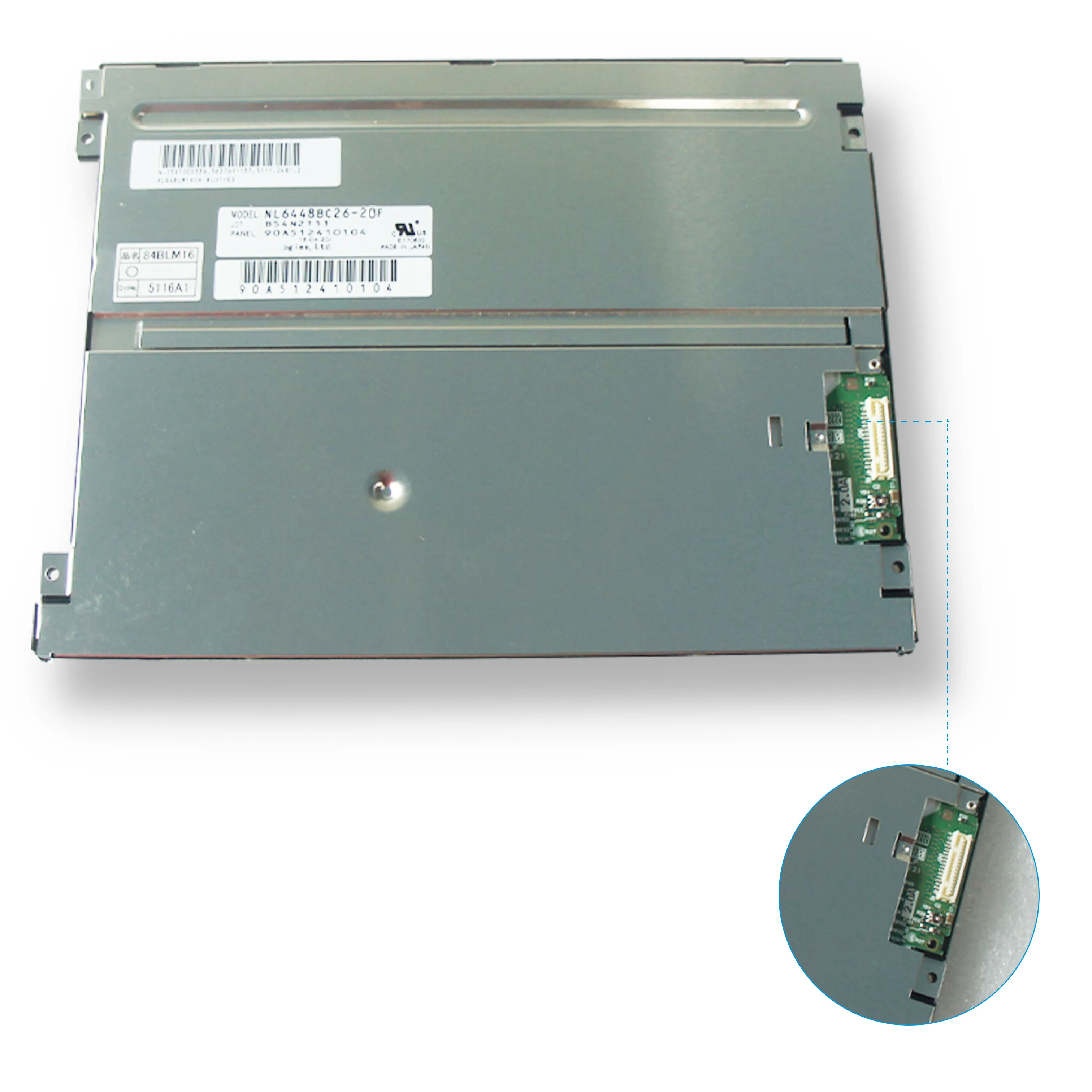


G150XNE-L01 Innolux 15inch 1024*768 LCD PANEL
In the intricate ecosystem of industrial and embedded display solutions, certain components stand out not for flashy consumer appeal, but for their unwavering reliability and precise adaptation to demanding environments. The Innolux G150XNE-L01 15-inch LCD panel is one such workhorse. This article delves deep into this specific display module, moving beyond basic datasheet specifications to explore its true significance in the market.
We will dissect the engineering rationale behind its core 1024x768 (XGA) resolution in an era of 4K, examine the panel's fundamental technology and performance characteristics, and map its ideal application landscapes. Furthermore, we will analyze its critical interface and compatibility considerations, compare it within the broader competitive field, and provide practical guidance for integration and sourcing. This comprehensive analysis aims to provide engineers, procurement specialists, and system integrators with the insights needed to evaluate the G150XNE-L01 not just as a component, but as a strategic choice for stable, long-term operation.
The Enduring Relevance of XGA: A Resolution Engineered for Clarity
At first glance, a 1024x768 (XGA) resolution on a 15-inch diagonal might seem like a relic. However, in industrial and specialized applications, this specification is a deliberate and powerful choice. The G150XNE-L01's XGA resolution offers a perfect balance between sufficient information density and exceptional readability. Its native 4:3 aspect ratio is inherently suited for legacy machine interfaces, diagnostic equipment, and control systems that were designed for this format, avoiding the distortion or inefficient screen use common when scaling to widescreen displays.
More critically, the lower pixel count compared to higher-resolution panels reduces the computational load on the system's graphics controller. This leads to lower power consumption, less heat generation, and faster, more reliable rendering—critical factors in 24/7 operational environments. The larger pixel pitch inherently enhances character and graphic legibility from a distance or in suboptimal lighting, reducing operator eye strain. This resolution represents not obsolescence, but optimized functionality for its target domain.
Core Technology and Performance Profile of the G150XNE-L01
Built on a Twisted Nematic (TN) technology platform, the Innolux G150XNE-L01 prioritizes response time, cost-effectiveness, and wide-temperature robustness over the superior viewing angles of IPS panels. Its typical response time of 14ms (Tr+Tf) ensures minimal motion blur for basic graphical updates and interface interactions. The panel delivers a brightness of 300 nits and a contrast ratio of 500:1, specifications calibrated for indoor use under controlled or ambient lighting rather than direct sunlight.
A key strength lies in its operational temperature range. Rated from -20°C to 70°C, it is engineered to withstand the thermal challenges of factory floors, transportation systems, and outdoor enclosures with climate control. The backlight, typically utilizing LED arrays, offers a long lifespan, often exceeding 30,000 hours, which is paramount for reducing maintenance cycles in embedded systems. This performance profile paints a picture of a panel designed for endurance and stability above all else.
Ideal Application Landscapes and Use Cases
The G150XNE-L01 finds its home in applications where reliability trumps flashy specs. It is a staple in Industrial Human-Machine Interfaces (HMIs) for manufacturing machinery, process control stations, and SCADA systems, where its readability and 4:3 ratio are assets. In the medical field, it serves in specific diagnostic devices, patient monitoring equipment, and laboratory instruments that do not require ultra-high-definition imaging but demand continuous, fault-free operation.
Furthermore, it is well-suited for point-of-sale (POS) terminals, kiosks, and digital signage in fixed-content scenarios, as well as in transportation and logistics for fleet management displays and warehouse control systems. Its wide-temperature capability also makes it a candidate for thin-client terminals and specialized equipment in challenging environments. In each case, the panel is valued as a dependable visual conduit for critical data and controls.
Interface, Compatibility, and Integration Essentials
Successful integration hinges on understanding the panel's connectivity. The G150XNE-L01 features a single-channel LVDS (Low-Voltage Differential Signaling) interface. This is a standard, robust interface for industrial displays, offering good noise immunity. The specific pin configuration and power requirements (typically 3.3V for logic and a backlight voltage, e.g., 20V) must be meticulously matched with the compatible controller board.
Integrators must source or design a controller board that supports XGA resolution, the panel's exact timing parameters, and the LVDS signal format. Compatibility extends beyond electrical connections to mechanical mounting; the panel's outline dimensions and screw hole patterns must align with the chassis. Attention to these details—interface matching, power sequencing, and mechanical fit—is crucial for a stable, flicker-free implementation.


Competitive Landscape and Alternative Considerations
Within its niche, the G150XNE-L01 competes with similar panels from manufacturers like AUO, BOE, and LG Display. Alternatives may offer slight variations in brightness (e.g., 250 or 400 nits), contrast ratio, or a wider temperature range. Some may use IPS technology for wider viewing angles at a higher cost and potentially different response times.
The decision matrix involves weighing factors like long-term availability (critical for product lifecycles), total cost of ownership (including the controller board), exact performance thresholds, and supply chain robustness
Sourcing, Lifecycle Management, and Practical Implementation Tips
For engineers and buyers, sourcing the G150XNE-L01 involves partnering with authorized distributors or reputable suppliers specializing in industrial displays. Verify the panel's revision and lot code to ensure consistency. Given that such panels often support products with multi-year lifecycles, inquire about End-of-Life (EOL) forecasts and consider buffer stock or last-time-buy agreements.
During implementation, ensure proper ESD protection during handling. Design the system for adequate heat dissipation around the panel, even with its wide-temperature rating, to maximize longevity. Test the complete system across its intended operational temperature range to validate performance. Finally, secure a reliable source for replacement units or identify a qualified alternate panel with a compatible interface and mechanical footprint to mitigate future supply risk.
FAQs: Innolux G150XNE-L01 LCD Panel
Conclusion
The Innolux G150XNE-L01 15-inch LCD panel exemplifies the principle that in specialized engineering, the optimal component is not always the one with the highest specifications, but the one most precisely aligned with the application's fundamental requirements. Its XGA resolution, TN technology, robust temperature range, and LVDS interface form a cohesive package designed for durability, clarity, and long-term reliability in controlled and industrial environments.